In 1974, six solar believers walked into the basement of the Washington Hilton. The room was noisy. The business was barely a business. Their proposed trade association had no vast constituency, no mature supply chain, and no obvious reason for a member of Congress to care about a device that still belonged, in the public imagination, somewhere between a satellite and a California science fair.
They wrote down what they wanted anyway: the “prompt, orderly, widespread and open” growth of solar energy. The adjectives are wonderfully bureaucratic. Prompt, because the energy crisis felt urgent. Orderly, because even revolutionaries need interconnection rules. Widespread, because a niche is not an industry. Open, because the people in the basement understood their first problem before they understood almost anything else: solar needed a market, and markets need rules.
The product is coordination
Today the Solar Energy Industries Association represents roughly 1,200 companies. They do not naturally agree. A domestic module maker may want trade barriers that an installer, hungry for inexpensive equipment, considers ruinous. A rooftop contractor thinks in kitchen-table sales and utility bills; a utility-scale developer thinks in transmission queues, tax equity and thousands of acres. Add financiers, battery firms, recyclers, software vendors and labor questions, and “the solar industry” begins to look less like a sector than a crowded airport departure board.
SEIA’s job is to decide which destinations everyone can share. It lobbies Congress and federal agencies, argues cases in statehouses and regulatory proceedings, tracks tariffs and tax guidance, publishes market data, convenes committees, develops technical standards and co-owns a major conference business. The customer is usually not the homeowner buying rooftop panels. It is the company whose project economics can be altered by one paragraph in a Treasury notice.
The price of a voice
The membership ladder reveals the business better than a mission statement. In 2025, the public entry price was $900. That bought a company a directory listing, one of six operating divisions, newsletters, webinars, a federal tax manual and advocacy toolkits. Watt membership cost $5,000. Kilowatt was $16,000. Megawatt was $66,000 and put a company on what SEIA called the inside track of state and federal policy, including weekly federal-affairs discussions and biweekly regulatory work.
Influence, measured in watts
Not a pay-per-vote scheme. A ladder of access, working groups, intelligence, visibility and policy participation.
The naming is playful, but the economics are serious. SEIA is a tax-exempt business league, not a venture-backed startup. Its latest public filing reported $37.6 million in 2024 revenue and $36.1 million in expenses. Almost all revenue came from program services rather than donations. Membership is one piece; paid research, standards, sponsorship, advertising and events are others. RE+, the conference portfolio jointly owned with the Smart Electric Power Alliance, creates a marketplace where the industry meets itself and returns proceeds to the two nonprofit owners’ work.
A chart is an argument wearing a tie
SEIA’s most portable product may be U.S. Solar Market Insight, produced with Wood Mackenzie. The report counts what was installed, what it cost, where factories opened and what may happen next. Investors use it to size opportunity. Companies use it to plan. Journalists use it to explain. Lawmakers encounter its findings in testimony and briefing papers.
That circulation matters. A trade group saying “solar is important” is lobbying. A quarterly dataset showing solar supplied 54% of new U.S. generating capacity in 2025 feels like a fact the political system must metabolize. SEIA did not invent the underlying projects, but it became one of the institutions that names their collective scale.
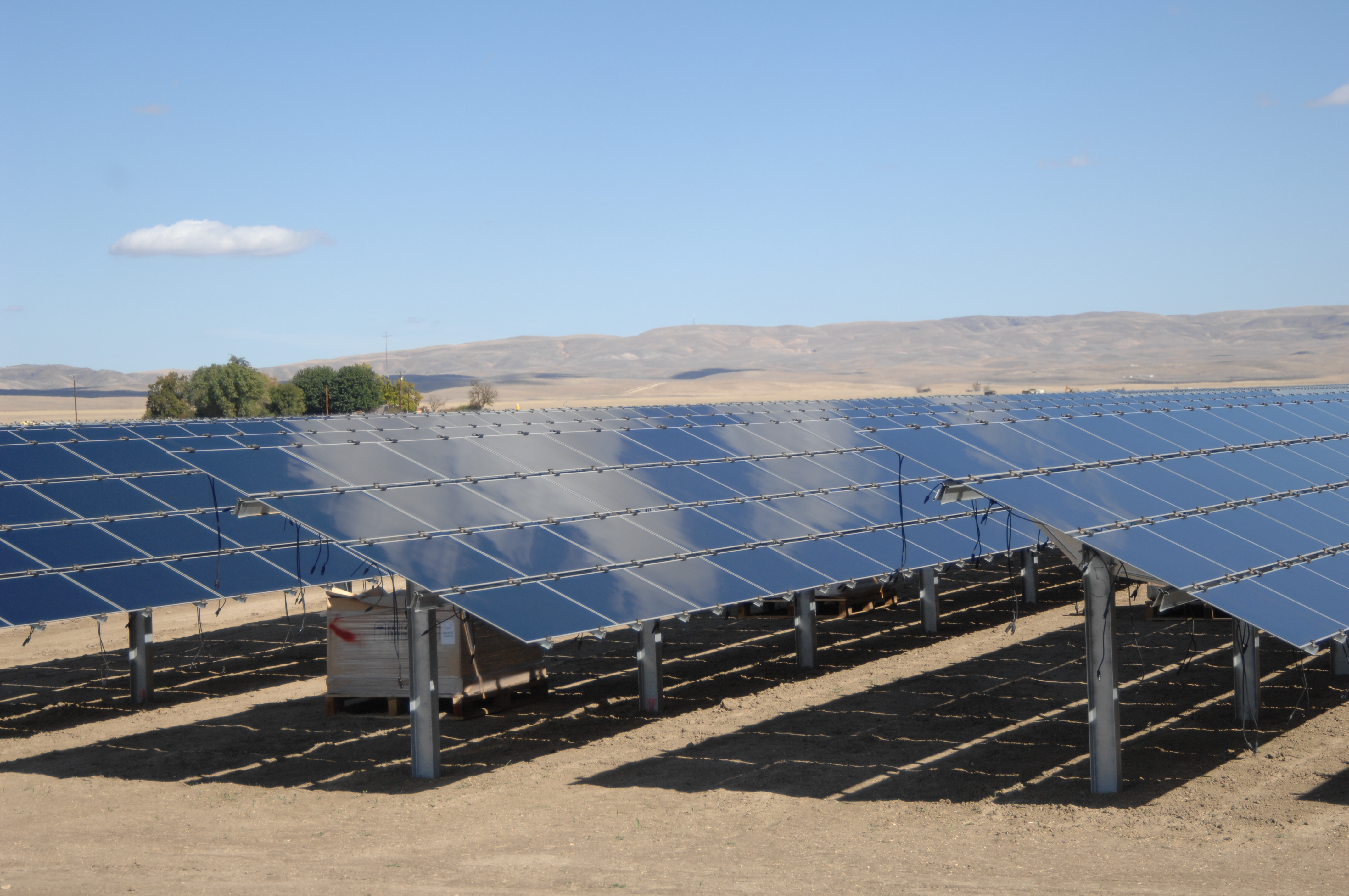
The win that came with an expiration date
For years, the central solar-policy request was certainty. Developers can tolerate many rules; they struggle with rules that change midway through financing. The Inflation Reduction Act of 2022 appeared to provide the long runway SEIA had pursued: extended clean-energy credits, support for storage and strong incentives for domestic manufacturing.
Then came 2025. SEIA warned that proposed cuts could erase factories, jobs and local investment. The warning did not stop the core reversal. The One Big Beautiful Bill Act accelerated deadlines for solar tax credits and ended the residential credit for customer-owned systems after 2025. Deployment still reached 43.2 gigawatts that year, but it fell 14%. Project developers switched attention from finishing projects to “safe harboring” them before eligibility windows closed. The failure was not solar technology. It was the assumption that a decade of policy certainty would remain a decade.
Climate action, emissions cuts and a durable federal incentive.
Reliability, lower bills, domestic factories, AI demand and energy security.
Same electrons, different politics
The setback did not change SEIA’s preferred technology. It changed the sales pitch. In 2026, the association increasingly described solar and storage as homegrown infrastructure - fast to build, immune to fuel-price shocks and necessary for data centers and rising power demand. Its storage work became especially useful. Batteries could be discussed as reliability equipment, manufacturing opportunity and national competitiveness, not simply as an accessory to renewable power.
That expansion produced a new quarterly Energy Storage Market Outlook with Benchmark Mineral Intelligence. The first-quarter 2026 edition counted 9.7 gigawatt-hours of new capacity, up 32% from a year earlier, and forecast more than 610 gigawatt-hours through 2030. SEIA had found another shared fact pattern - and another reason for members to gather around it.
From advocate to rule-maker
Growth creates a less glamorous problem: bad installations, confusing contracts, opaque supply chains and old equipment that eventually needs somewhere to go. In 2023, SEIA became an ANSI-accredited standards developer. It has since published standards for supply-chain traceability, residential and small-commercial installation, maintenance training and consumer protection, with more work aimed at decommissioning and recycling.
This is a meaningful difference from an ordinary lobby. Advocacy asks government to set favorable rules. Standards ask an industry to discipline itself. The gain is trust with customers, insurers, regulators and investors. The risk is obvious: a trade association must prove that its standards protect the public rather than merely decorate its members. ANSI’s balanced, consensus-driven process - producers cannot constitute a majority - is meant to manage that tension.
What another industry can copy
- Price participation in layers. Give small firms a useful entry point and large firms deeper working access.
- Own a recurring dataset. A quarterly cadence turns anecdotes into a market and makes the association its interpreter.
- Build a convening engine. Events create revenue, relationships and a place where commercial disagreement can become a common agenda.
- Turn maturity into standards. Once growth creates reputational risk, publish rules before scandals write them for you.
- Translate without disguising. Keep the objective, but express it through the listener’s concern - climate, cost, factories, reliability or security.
The formula is not universal. It needs a sector large enough to pay for coordination, fragmented enough to need it, and dependent enough on public rules that shared advocacy has value. It also needs credible common numbers. If members’ interests are irreconcilable, if the market can hide from government, or if the association’s data looks like a press release with decimals, the flywheel stalls.
A bigger roof
SEIA now sits among overlapping clean-energy organizations: the American Clean Power Association spans technologies; Advanced Energy United represents a broader advanced-energy field; the Smart Electric Power Alliance works closely with utilities and is also SEIA’s event partner. SEIA’s distinction is coverage of nearly the whole solar-and-storage chain, from a residential sales contract to a utility project, from a factory tax credit to a recycling standard.
Its planned combination with the Coalition for Community Solar Access makes the roof wider again. Community solar had its own specialist advocates because its problems - subscriptions, state programs, access for renters and low-income households - were specific. Folding that expertise into SEIA suggests the industry now values one larger negotiating table more than another logo.
The six people in the hotel basement wanted solar growth to be prompt, orderly, widespread and open. They got widespread. They are still working on the other three. That may be the most honest description of SEIA’s business: it is paid to make a fast-growing industry look organized long enough for the rules to catch up.