The easiest way to misunderstand Alabama Trucking Association is to picture a parking lot. There are no association tractors idling in Montgomery, no dispatchers routing its freight, no driver waiting on its bill of lading. The organization owns no commercial fleet. What it owns, after 88 years, is something harder to park and more useful to share: a place where rival carriers can agree that some problems are too large to solve as rivals.
A regulation applies across fleets. A shortage of diesel technicians inconveniences everyone. A highway crash can damage the reputation of an entire industry. A small carrier may need a safety expert only occasionally, but when it does, the question is urgent. The association exists in this awkward territory between the private interest and the common one. It turns recurring industry headaches into shared infrastructure.
Its stated mission is plain: advance Alabama trucking through advocacy, safety and compliance support, education, and public relations. The interesting part is how those four jobs reinforce one another. Training produces safer operators. Safer operators make a stronger case at the statehouse. Better policy and public regard make trucking careers easier to recruit for. A larger, better-trained workforce gives the industry more credibility. Then the loop starts again.
The product is the rehearsal
Consider the free mock Federal Motor Carrier Safety Administration compliance review. The phrase sounds bureaucratic because the underlying risk is bureaucratic: logs, qualifications, maintenance records, controlled-substance programs, accident files. For a fleet, an official review can expose mistakes after they have become expensive. A mock review changes the order. The uncomfortable questions arrive while there is still time to fix the answers.
That is a much better description of the association's product than “networking.” It sells rehearsal. The Safety and Maintenance Management Council runs regional education and roadside-inspection events. Fleet professionals can stand beside motor-carrier troopers and enforcement agents as Level 1, 2, and 3 inspections are conducted. Rules stop being a PDF and become a brake chamber, a logbook, a sequence of decisions. The association also connects members with online training from Vertical Alliance Group, compliance materials from J. J. Keller, and an endorsed workers' compensation fund.
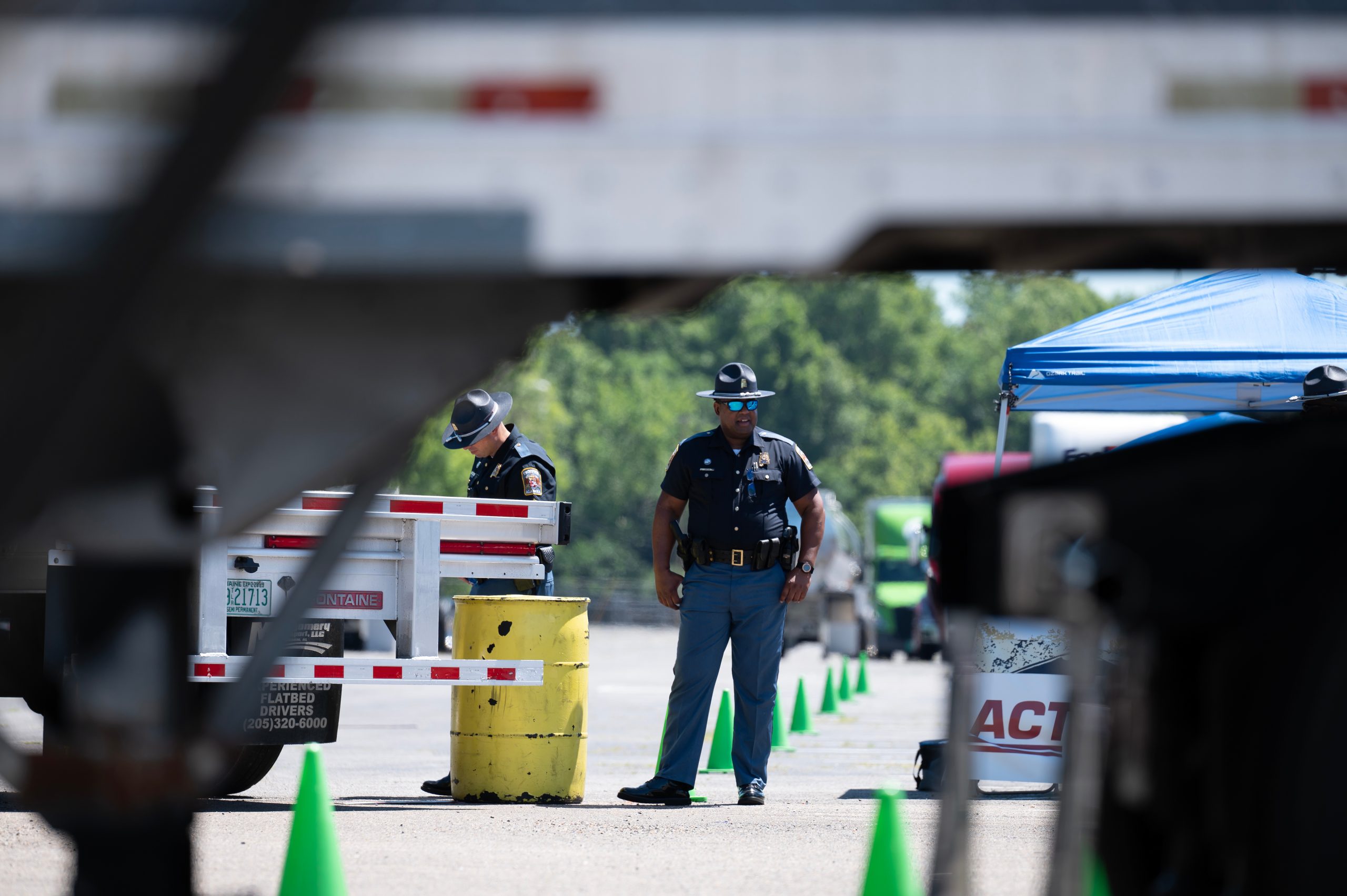
The annual Truck Driving Championships apply the same idea with more theatre. Nearly 100 drivers competed in the 2025 event at Garrett Coliseum. They took written tests, inspected equipment, and threaded large vehicles through a precision course. The winners advanced; everyone else returned to work in an occupation whose best performance is usually invisible because nothing goes wrong.
A good trade association makes the invisible competence of an industry visible.That is why cones, trophies, and magazine covers matter
The customer has a truck - or keeps one moving
The paying constituency includes for-hire carriers, private fleets, household-goods movers, logistics businesses, and companies that sell to them. The human constituency is wider: owners, safety directors, maintenance teams, drivers, technicians, students, and job seekers. Policymakers and regulators are not customers, but they are an essential audience. So is the Alabama motorist who may never think about trucking until a tractor-trailer fills the mirror.
This breadth separates the association from a single-purpose consultant. A lobbying firm can work a bill. A compliance specialist can audit records. A training vendor can deliver lessons. A chamber can convene business owners. Alabama Trucking Association bundles those functions around one narrow industry and its unusually connected problems.
The business model follows the bundle. Member dues support the core association. Events, sponsorships, partnerships, and magazine advertising add revenue and reach. Political work has its own fundraising engine. The 2025 Golf Classic drew 356 golfers and raised a record $511,000 for TRUK PAC. Here, a day on three courses was less a leisure product than a visible census of industry commitment.
Workforce and public-image programs have a different vehicle. The Alabama Trucking Foundation, created in 2018 as the association's charitable arm, supports scholarships, research, highway safety, and campaigns intended to make trucking careers legible to people outside the industry. Its TITANS supporters make an unusually crisp promise: $5,000 a year for three years.
The image problem was really a labor problem
Many trade groups treat public relations as decoration applied after the practical work. Alabama Trucking treats it as part of the labor supply. If parents, students, and career changers imagine trucking as one lonely job in one truck, then fleets struggle to recruit drivers, technicians, dispatchers, safety managers, and operations leaders. The association's answer has included “Real Faces of Alabama Trucking,” career promotion, magazine profiles, and scholarships tied to truck-related education.
The change is subtle but important. Instead of advertising “the industry” as an abstraction, the campaign shows recognizable people and several ways into the business. A diesel technician and a fleet manager now belong in the same picture as a professional driver. The reader does not have to fall in love with an 80,000-pound machine; the reader has to recognize a plausible working life.
Partnerships make that proposition concrete. Community colleges supply classrooms and credentials. Employers expose students to actual operations and, in one workforce program, a food-service distributor donated a trailer and hosted trainees. An Appalachian Regional Commission grant funded scholarships for early CDL classes. The copyable idea is not “run a campaign.” It is to connect the campaign to a seat, an instructor, an employer, and a job offer.
Failure is part of the dues
Advocacy rarely offers the tidy satisfaction of a completed training class. In its own review of 2024, the association noted that the Lawsuit Fairness Act it supported did not pass. It also described the proposal as groundwork for the following legislative session. That is trade-association time: a defeat becomes a draft, a coalition, and a reason to return.
This patience helps explain why a carrier might pool resources with competitors. One fleet can complain to a legislator; an association can maintain a policy staff, circulate legislative bulletins, coordinate with the national American Trucking Associations, and appear again after the first answer is no. In 2026, Alabama Trucking and the Specialized Carriers & Rigging Association jointly commented on proposed state rules for oversize and overweight movements. Permit procedures are not cinematic. For a specialized carrier with equipment waiting to move, they are the plot.
The association has also spent more than a decade working with Truckers Against Trafficking. It distributed materials, promoted training, hosted coalition-building work, and supported legislation requiring trafficking instruction in CDL schools. In 2025, the nonprofit named Alabama Trucking its Champion in the association category. The award recognized consistency more than novelty - precisely the quality most coalition work requires.
The useful part is the mechanism
Other industries can copy the mechanics without borrowing the truck imagery. Start with a risk members all share but cannot efficiently staff alone. Create a rehearsal, not another webinar. Invite the regulator into an educational setting. Reward the behavior the industry claims to value, with judging independent enough to be credible. Give workforce philanthropy a separate vehicle and a specific multiyear commitment. Publish the people doing the work, not only the executives discussing it.
The approach has limits. It depends on members trusting the convenor, participating with real operating knowledge, and accepting common standards even when enforcement is uncomfortable. It also works best when an industry is locally dense enough to gather, regulated enough to need a collective voice, and economically connected enough that one operator's reputation affects the rest. Without those conditions, the bundle unravels into events, newsletters, and a logo.
Alabama Trucking Association's distinction is not that every program is unique. Many state associations lobby, train, publish, and give awards. Its distinction is the fit between them. The mock audit supports the safety record. The safety record supports the public argument. The public argument supports recruitment. The workforce campaign supports the carrier that pays the dues. No truck bears the association's name, but a surprising amount of Alabama trucking carries its fingerprints.