The first useful thing to know about Patti Betts is that, before the software demonstrations and healthcare workforce plans, there were weddings. Not ordinary weddings, exactly. These came with flamingos, safari views, botanical gardens and the delicate question of whether a guest might wander off while looking for the reception. At the San Diego Zoo and Safari Park, Betts sold events inside an institution that was both familiar and complicated. Couples arrived with a picture in their heads. Her work was to translate the picture into gates, menus, schedules, spaces and a day that still felt romantic after logistics had finished with it.
In a 2014 wedding-industry feature, she compressed the atmosphere into three words: “Awe-inspiring, exotic and world-famous.” It is the sort of neat phrase that looks effortless only after someone has spent years learning what people are really buying. Nobody purchases a venue because its operational plan is impressive. They purchase the confidence that a meaningful day can happen there without becoming an administrative hostage situation.
Betts stayed in the zoo's event-sales operation from 2010 to 2019, moving from intern to office coordinator to sales manager. Nine years is a generous education in expectations. A wedding has a deadline that refuses to negotiate, a committee whose membership expands without warning and customers who will remember details long after the invoice has been filed. Enterprise sales eventually gave her different nouns. The emotional grammar was already in place.
A résumé with animals in the first act
The route from event manager to technology account executive does not resemble a ladder. It resembles a series of rooms connected by doors that become obvious only after they close. Betts left the zoo for the San Diego Tourism Authority, where she worked as a site experience manager. Then, in 2021, she joined Twilio as an outbound sales development representative. Within little more than a year, she had progressed through a senior SDR role into a mid-market account executive seat.
Former colleagues remembered more than her quota work. One described her creating documentation and lessons that helped counterparts hit their metrics. She collaborated with sales development representatives beyond her own group, devised plays useful to several teams and participated in Twilio's Women in Sales mentorship program. Another colleague praised her determination to improve how work was done and the inclusive energy she brought to a team.
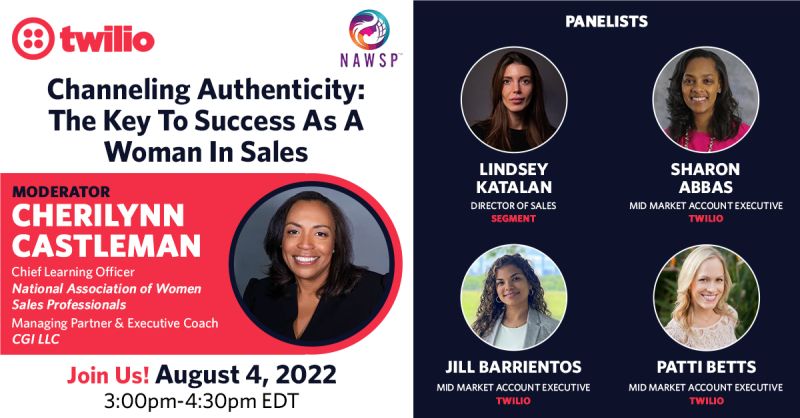
There is an appealing practicality in that record. Process improvement can sound grand in a conference room. In practice, it is often one person noticing that everyone keeps tripping over the same loose board, then writing down where it is. Betts's public profile begins, “I've built my career at the intersection of people and process.” The phrase earns its keep because her career supplies the receipts: guest experiences, playbooks, mentoring, pipeline conversations and jobs in which a technical product must become a human decision.
Invest in people at the start of their careers, and they'll invest in you long-term.Patti Betts, on employer-backed loan repayment
The founding seat and the moving target
In January 2024, Betts became a founding account executive at ReflexAI, a company building conversation-performance tools. A founding sales role is part seller, part cartographer. The market exists, but the useful map is still being drawn. What prospects say, where they hesitate, which promises survive contact with the product and what the next hire needs to know all travel back through the first commercial team.
Her next stop was Asana in 2025, where she worked as an emerging enterprise account executive. By February 2026, she had joined Clasp as Director of Healthcare Partnerships. The work sits in familiar territory: a complex offering, several stakeholders and a decision whose consequences last longer than the sales cycle.
Events, weddings and guest experience
From outbound development to mid-market sales
Founding account executive
Emerging enterprise accounts
Healthcare partnerships
Clasp connects healthcare students with employers willing to help repay education loans in exchange for an employment commitment. Its favorite shorthand is “ROTC, but for healthcare.” The analogy does considerable labor. An unfamiliar structure becomes recognizable in five words: support comes early, service follows, and both sides know the arrangement before graduation.
For Betts, the pitch is also a process argument. Health systems have spent years leaning on signing bonuses, salary adjustments and expensive recruiting campaigns while shortages persist. In one public post she began with the feeling of a system overdue for repair: “Ever worked for a company with a process that NEEDS to change? Like, it's paaaainful.” The extra vowels are doing useful tonal work. Corporate frustration, after all, is still frustration.
Selling earlier, planning longer
Her example was Rochester Regional Health, which announced up to $7.2 million in student-loan repayment support, with as much as $180,000 available for certified registered nurse anesthetists. Candidates can apply while still in school. The proposition shifts recruitment upstream, before a graduate has chosen an employer and before a vacancy has spent months acquiring agency fees.
The broader company proposition is that education financing can be workforce infrastructure. Clasp says employers on its platform have committed more than $130 million toward loan repayment. Hospitals and health systems get a recruiting and retention mechanism. Students get terms they can inspect before taking a job. The tidy sentence contains a thicket of budget approvals, eligibility rules, timing questions and personal calculations. That is precisely why the translator matters.
Betts is not the founder of this model, nor its public chief executive. Her place in the story is closer to the ground. She is the person in the market, helping an institution decide whether a different approach belongs inside its existing machinery. Enterprise work is full of magnificent strategy diagrams. Eventually, somebody must ask the practical questions in a real meeting.
Her own phrasing keeps returning to the beginning of the relationship. Invest at the start of a career, she argues, and a person has reason to invest in the employer for the long term. This is sales language, certainly. It is also the language of reciprocity. A bonus offered on day one can feel like a transaction. Help offered while someone is still studying arrives as a vote of confidence.
The endurance file
Betts's public life outside work contains two episodes that make the word commitment difficult to avoid. In 2022 she joined Climb Against the Odds on Mount Shasta. Extreme wind set the day's high point at 13,700 feet. Organizers reported Betts and the other climbers heading down, then safely back at base camp after a slow descent. In 2024 she ran the New York City Marathon as part of a charitable team and raised $7,500.
It would be too convenient to claim that mountains explain enterprise sales. Mountains have suffered enough from business metaphors. The more modest observation is that Betts repeatedly chooses projects with visible finish lines and a great deal of unphotogenic work before them. Training schedules, fundraising asks, account research, internal coordination: none makes the triumphant picture, and all make the picture possible.
She has also taken on the institutional version of that work. Before technology, she served as programs chair and then vice president of the National Association for Catering and Events. At Twilio she mentored and built material other sellers could use. At Clasp she publicly recruits future colleagues and amplifies the people around the company's partnerships. Her style, at least in public, favors exclamation points, plainspoken analogies and a generous supply of congratulations. Reserve is not compulsory for seriousness.
The résumé looks like reinvention from a distance. Up close, it is one craft practiced in increasingly complicated rooms.The through-line
The room where “yes” has to live
A wedding sale closes long before the wedding works. A software contract closes before adoption. A workforce partnership closes before the first student becomes a long-tenured employee. In each case, “yes” is only the start of the evidence.
That may be the cleanest way to understand Betts's career. She is interested in the room after the promise, where process must justify enthusiasm. Her path from the zoo to Clasp is unusual enough to be memorable and coherent enough to be useful. Hospitality taught her that the customer experiences the whole system, not the org chart. SaaS taught her to make the system repeatable. Healthcare partnerships give that discipline a longer horizon.
From Denver, she now represents a Boston company in a national argument about education, employment and who should carry the cost of preparing a workforce. The numbers can become very large. The decision still arrives person by person: a student considering a commitment, an employer trying to plan past the next vacancy, a seller making the complicated thing clear enough to discuss honestly.
The flamingos are gone. The stakes are different. The old lesson remains. People do not commit to a mechanism simply because it is clever. They commit when they can see themselves inside it, understand what happens next and trust that someone has paid attention to the details.