The Pitch
A loan you don't pay back. Someone hires you and it just goes away.
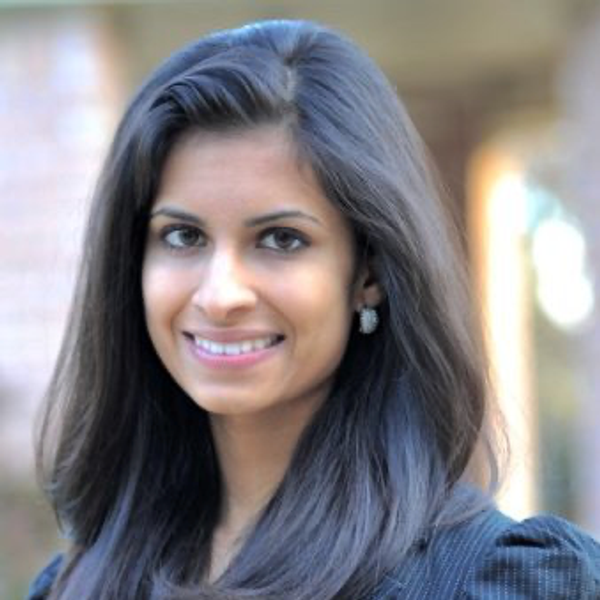
There are roughly three million open clinical roles in the United States and about $1.7 trillion in student debt sitting on top of the people who could fill them. Most founders would pick one of those numbers to attack. Tess Michaels wired them together. Clasp, the Boston fintech she runs, gets employers to commit to clinical students before they graduate, then pays down their student loans over time in exchange for years on the job. She calls it "ROTC, but for healthcare." The student gets relief. The hospital gets a nurse who stays. The debt becomes the deal.
It is a tidy inversion of how student lending usually works. Normally a lender bets on you and you spend a decade proving them right. Here the employer makes the bet, up front, and the repayment is a function of whether you show up and stick around. Clasp says retention among loan-linked hires runs more than 2.5 times higher than traditional hiring, and that employers have already committed north of $130 million in repayment. In March 2026 the company raised a $20 million Series B led by Crosslink Capital and Digitalis Ventures and roughly doubled its team.
The company had a different name first
Clasp used to be Stride Funding. The original product was student-first: income share agreements and income-triggered installment contracts for graduate students who balked at the cost of going back. No interest while in school, no co-signer, payments that paused for unemployment or a gap year. It worked - Stride supported more than 10,000 students and grew several times over in a single year - but Michaels kept pulling the thread. If the real bottleneck was employers desperate for clinical talent, why not put them on the hook for the education in the first place? The rename to Clasp is the pivot made visible: from financing students to clasping students and employers together.
She built one before this, and it taught her the hard part
At 19, while still an undergraduate at the University of Pennsylvania, Michaels founded SOCEANA, a software platform that put analytics around corporate philanthropy and volunteering - bridging, as she framed it then, a $330 billion philanthropy market with a $180 billion volunteering market. It got traction. It did not get liftoff. SOCEANA was acquired by Encast in 2018, and Michaels is unsentimental about the lesson: "we didn't get the lift that I had expected," she has said, and "momentum is half the battle." The second company is built around momentum on purpose.
Before any of that she was a science kid. Michaels grew up in Philadelphia, spent a decade in New York, then landed in Plano, Texas as a teenager, and somewhere in there spent summers doing Alzheimer's research in Italy and Korea. Her mother worked in healthcare; her father in business. The dual degree she eventually took at Penn - impact investing and operations from Wharton, biology from the College - reads like a deliberate refusal to choose between the two households she grew up in. Clasp, a healthcare company that is really a finance company, is the same refusal at scale.
The detour through finance was on purpose too
After Penn she did two years in investment banking at Goldman Sachs and a year in private equity at Vista Equity Partners, working on SaaS deals. She describes it as building "a foundation for whatever else I wanted to do next" rather than a career she meant to keep. She had already been accepted to Harvard Business School through the 2+2 program while still an undergrad, so the clock was always running toward the next company.
The idea arrived the way good ideas usually do - by listening. At HBS, Michaels interviewed classmates and kept hearing the same sentence: "I want to go back to school but it is so expensive." Stride was the answer to that sentence. Clasp is the answer to the bigger question underneath it: who should actually pay for the education a profession depends on?
Three products, one heresy: maybe debt isn't the only tool
The Stride era was an argument that a loan could behave more like a partnership. The company offered three financing products: income share agreements, where you repay a fixed percentage of income rather than a fixed dollar amount; installment contracts with income triggers, so payments only kicked in once you were earning; and traditional principal-and-interest loans for people who wanted them. The common thread was risk-sharing. No interest accrued while a student was in school. No co-signer was required. Payments paused for unemployment, maternity leave, or a gap year. Michaels has described education financing as a "mix of debt and equity" instead of a one-way obligation - a small heresy in a market that mostly sells the one-way kind. Clients spanned Carnegie Mellon, the University of Pennsylvania, Northeastern, and a range of bootcamps and Texas institutions across MBA and other graduate programs.
That foundation is what made the Clasp pivot possible. Once you have built the machinery to underwrite outcomes rather than just balances, pointing it at employers is a feature, not a rebuild. The loans behind Clasp are issued through FinWise Bank, a Utah-chartered FDIC member, with servicing handled by Launch Servicing - the unglamorous plumbing that lets a mission-driven idea actually move money.
The first proof points are in clinics, not slides
Clasp aims at the roles hospitals and clinics struggle most to fill: radiologic technologists, respiratory therapists, nurse anesthetists, nurses, veterinarians, physical therapists, dentists, optometrists. In 2025 the company launched what it called a first-of-its-kind student loan repayment program with Confluent Health, built specifically to attract the next generation of physical, occupational, and speech therapy professionals. The framing Clasp uses for these deals is blunt and a little contrarian: in an industry that treats staff debt as a private burden, Clasp treats it as a loyalty lever - a thing an employer can pull to turn a chronic staffing shortage into a multi-year commitment.
The loan is the front door, not the house
Ask Michaels where this goes and she talks about wedges. Education financing, in her telling, is an entry point into a much longer relationship - the moment a person first needs a financial partner, with decades of needs stacked behind it, from the first job through retirement. The ambition is to turn the company into a trusted brand that follows a clinician across a career, not a lender that disappears once a balance hits zero. It is a big claim from a company that, even after a $20 million Series B, is still early. But the pattern of her career - first company at 19, a banking-and-PE detour she always meant to leave, a pivot that renamed the whole enterprise - suggests someone who treats each stage as scaffolding for the next. As she puts it, the trick is to stay in rooms where you are not the smartest person, and to be bold regardless of how old you are. She has been taking her own advice since 19.