The Austin engineer who gave up a tenured seat at San Jose State to sell one box that does the work of three.
Mohamed Badawy runs a hardware company in Austin called Scalvy, which builds a small modular box that Scalvy calls a "Power Neuron," and which does three jobs at once. In a normal electric vehicle those three jobs - inverting DC power into AC to spin the motor, regulating DC to feed the low-voltage bus, and charging the battery pack from the wall - are done by three separate systems built by three separate Tier-1 suppliers and wired together by an OEM engineer who has probably filed a change order about it in the last week.
Badawy's pitch, roughly, is that this arrangement was a mistake that persisted because nobody wanted to be the first to fix it. He would like to be the first. In March 2026 investors gave him $13.9 million to keep trying, in an oversubscribed Series A co-led by Silicon Badia with Azolla Ventures, Climate Capital, and SkyRiver Ventures.
He is 34 employees and change into the effort. He has more than six patents. He has customers among Fortune 500 companies and OEMs in electric trucks and off-road vehicles. He also, and this is the interesting part, has a résumé that until 2024 said "Associate Professor" on it. Tenure is not a thing most people walk away from. Badawy walked away from it to sell what he had been teaching.
Scalvy's modules offer a range of functionalities, including the ability to invert DC power to AC, regulate DC output, and charge batteries - all without the need for additional electronic systems in vehicles.- Mohamed Badawy, on Scalvy's Power Neuron architecture
The Scalvy pitch is architectural, not incremental. Ordinary EV power delivery is centralized - one big inverter, one big charger, one big DC-DC converter, each with its own case, cooling loop, harness, and ISO paperwork. Scalvy distributes the function across smaller modules that talk to each other and to a software layer. Think of it as moving from a mainframe to a fleet of well-behaved servers.
The immediate benefits are the ones any engineer can list on a whiteboard: fewer parts, fewer failure modes, simpler thermal management, a shorter bill of materials, and a supply chain that stops depending on the last man in a Tier-1 catalog. The interesting benefit, the one that pulled data-center customers into the tent, is that the same architecture works when you scale it up and pipe it into a rack of GPUs.
The numbers Scalvy publishes for its modules - 250 W/in³, more than 99% efficiency, output range from 400V to 3kV, grid-interactive - are the kind of numbers that make a power-electronics researcher put down their coffee. Which, incidentally, is what Badawy was until 2024.
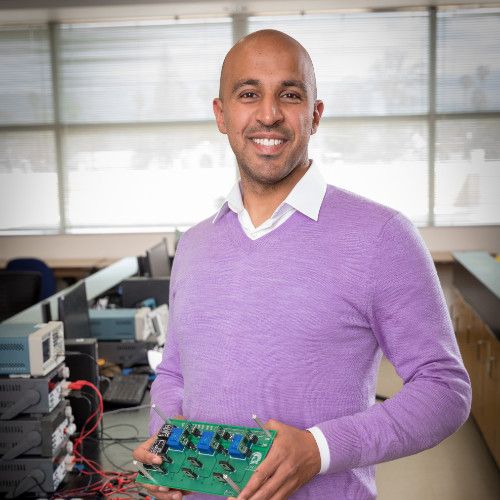
Fig. 1 - Scalvy's Power Neuron, per company materials.
Before Scalvy, Badawy spent eight years teaching electrical engineering at San Jose State University, arriving as an assistant professor in August 2016 and reaching associate professor before he left in July 2024. He founded the campus's Center of Power Electronic Converters, or CPEC, which is the sort of thing academics do when they want their students to have a lab worth showing to industry visitors.
The Center did what centers are supposed to do. It attracted grants from the National Science Foundation, the U.S. Department of Transportation, and the U.S. Department of Energy. It ran research collaborations with Delta Electronics, EiQ Energy, and Texas Instruments. It gave graduate students a place to fail at power converter designs without failing a course. In one 2020 write-up on the department blog, Badawy was described as "enlightening photovoltaic convertors," which is department-blog English for "he made the solar side work."
The through-line from CPEC to Scalvy is not subtle. The research center published on modular topologies. The company sells modular topologies. What separates the two is what Badawy told the Climate Capital podcast, roughly: the mission was always to "commercialize innovative technology that addresses real-world problems." The technology existed. It needed a company.
Investors chosen by a hardtech founder are a kind of coded message. Scalvy's Series A investor list reads as follows: Silicon Badia as co-lead, and Azolla Ventures, Climate Capital, and SkyRiver Ventures on the follow. Silicon Badia is the operator-adjacent money that likes engineering-first businesses. Azolla is climate. Climate Capital is, obviously, climate. SkyRiver leans hardware.
Put together, it's a cap table that says: this company is going to spend real money on real physical objects, and its story is going to be about efficiency at scale rather than about a subscription tier. The oversubscription is the polite version of "we could have raised more but didn't need to." The $16.9M total-raise figure, factoring in earlier rounds, is the sort of number that in EV hardware buys you long enough to get to field testing but not, on its own, a factory.
Which is why the company has been careful to say commercial production starts in 2027, after field testing and certification for mobility, storage, and data centers. ISO-26262, the automotive functional-safety standard the company lists as "certification pending," is the paperwork gate. Everyone in automotive hardware is either through that gate or waiting at it.
Segments and directional weighting drawn from Scalvy's public statements around the March 2026 raise. Not investment advice, just newspaper math.
Scalvy was founded in May 2022 to sell modular powertrains to electric-mobility OEMs. It still does that. But somewhere between the seed round and the Series A, the same architecture the company was pitching to truck makers started getting sniffed at by stationary-storage buyers and, more surprisingly, AI data-center operators.
Badawy has described this on the record as initial skepticism that turned into strong market demand. Founders often say something like this. The interesting thing is what it implies about the technology: if a modular power-delivery unit designed for a 400-volt EV bus is also useful in a 3-kilovolt data-center rack, that suggests the module wasn't really an EV product. It was a power-delivery product, sold first to the market that most obviously needed one.
This is how new hardware categories tend to open. A team builds something narrow, the world uses it for something wider, and by the time the founder finishes explaining why it works for the original use case, three adjacent markets have already put in orders. In Scalvy's case that adjacency is why the company keeps its Austin address for the mobility work and a second office in Sunnyvale, which is where the semiconductor and data-center customers happen to keep their offices.
Scalvy calls its modules "Power Neurons," which is the kind of naming that lands somewhere between clinical and cinematic. It is also honest to the topology: many small nodes, distributed intelligence, one shared job.
Badawy's first job title was Electrical & Instrumentation Field Engineer at PGESCo in Cairo, from 2008 to 2010. A field-engineering year in a country that runs on legacy grid equipment is a good way to learn what power electronics is for.
Scalvy operates out of Austin, Texas and Sunnyvale, California. The Austin office is where the trucks are. The Sunnyvale office is where the chips are. This is not a coincidence.
Filed under
He is the founder and CEO of Scalvy, an Austin-based startup building modular power electronics for electric vehicles, energy storage and AI data centers. He was previously an associate professor of electrical engineering at San Jose State University.
Scalvy builds "Power Neurons" - modular, software-defined power electronics units that combine the functions of an EV inverter, onboard charger and DC-DC converter into a single scalable module, targeting cost reductions of up to 80% and shorter development cycles.
Roughly $16.9M total, including a $13.9M Series A announced in March 2026 co-led by Silicon Badia, with Azolla Ventures, Climate Capital and SkyRiver Ventures participating.
BSc from Cairo University, MSc and PhD in Electrical & Computer Engineering from The University of Akron. He worked as a field engineer at PGESCo in Egypt before joining San Jose State University in 2016, where he founded the Center of Power Electronic Converters.
Headquartered in Austin, Texas, with an additional office in Sunnyvale, California.
Elsewhere on the web
Share this profile