Profile
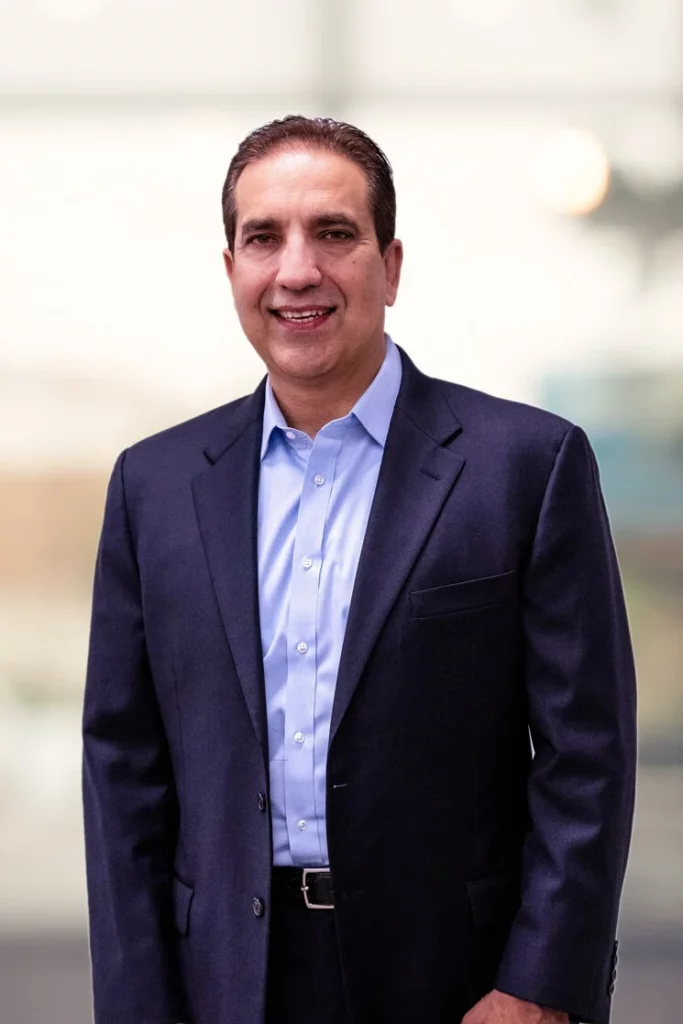
Co-Founder & CEO / Renewance, Inc.
Jamal Burki
Everyone is racing to build batteries. He built the company that answers the question they forgot to ask: then what?
Everyone is racing to build batteries. He built the company that answers the question they forgot to ask: then what?
A battery gets a birth certificate. Someone stamps its chemistry, its capacity, its warranty. Then it goes to work storing the wind and the sun. What almost nobody plans for is the ending - the day that battery stops holding a charge and becomes a heavy, hazardous, valuable problem sitting on somebody's balance sheet. Jamal Burki runs the company that plans for it.
Renewance, based in Elmhurst, Illinois, does the least glamorous work in clean energy. It manages industrial and grid-scale batteries across their entire lifecycle - installation and commissioning, diagnostics and repair, state-of-charge maintenance, then the hard back end: decommissioning, repurposing, recycling. Utilities and storage developers deploy batteries by the gigawatt-hour. Most have no in-house capability to handle the risk and paperwork of what happens after.
That gap is the whole business. As Burki frames it, customers are deploying batteries to power the future but many don't carry the responsibility for the liabilities those assets create over ten or fifteen years. Renewance takes it on. Call it liability as a service.
The company's platform, RenewanceConnect, gives every battery a paper trail - tracking condition, compliance, and end-of-life options in software rather than spreadsheets. In early 2025 the company opened a Monitoring Center in Elmhurst, a control room watching battery state-of-health, temperature profiles, and charge-discharge cycles in real time, throwing automated alerts when something drifts toward a thermal-runaway risk.
In 2025 Renewance tied that monitoring to lifecycle action through a partnership with GreenPowerMonitor, a DNV company. Burki called it the next evolution in battery stewardship. His line about it is the tell for how he thinks: "By linking GPM's powerful monitoring capabilities with our lifecycle services, we're not simply collecting data - we're proactively acting on it."
We're not simply collecting data. We're proactively acting on it.
Three engineers left GE to ask one question nobody wanted to own: then what?
Burki's career runs along two booms. In the 1990s he was at Motorola, moving from software engineering into directing large-scale global telecom deployments - the buildout that put a cell tower in every direction. Then he crossed into energy storage: President of IHI Terrasun Solutions, building solar-plus-storage systems, and Director of Global Projects & Services at GE Energy Storage, where he grew the operation from 3 countries to more than 25 through alliances and partnerships.
In 2015 he and two fellow senior GE Energy Storage leaders, Tom Newhall and Sander Jacobs, saw the same thing from the inside: the industry was shipping batteries into the field with no plan for their end of life. So they left and built the category themselves. The name is a small joke worth catching - "renew" plus "renaissance."
The engineering pedigree is stacked. Burki holds a B.S. in Electrical Engineering and an M.S. in Computer Engineering, both from the Illinois Institute of Technology, plus an M.S. in Engineering Management from Northwestern.
Getting industrial batteries and energy-storage systems online, then keeping them healthy with diagnostics, repair, and state-of-charge maintenance.
The Elmhurst Monitoring Center watches state-of-health, temperature, and charge cycles in real time, flagging risks like overcharging and thermal runaway.
Safely taking systems offline at end of life - the messy, regulated step most operators are not equipped to run themselves.
Giving retired batteries a second act where the chemistry still has useful life left, instead of defaulting straight to disposal.
Recovering materials responsibly - the work behind Renewance's recognition in the U.S. Department of Energy Battery Recycling Prize.
RenewanceConnect turns stewardship into an auditable, trackable record - condition, compliance, and options in software, not spreadsheets.
Three engineering degrees across two universities - two from Illinois Institute of Technology, one from Northwestern.
His career tracks two tech waves: the 1990s telecom buildout at Motorola and the 2010s energy-storage boom.
The business model is contrarian - take on the risk everyone else wants to offload. Liability as a service.
The company name blends "renew" and "renaissance."
At GE he grew a business from 3 to 25+ countries before ever founding his own.
The Elmhurst control room can flag a thermal-runaway risk before a human would notice the drift.
The aspiration is simple to say and hard to build: make responsible, cradle-to-grave battery stewardship a normal part of the clean-energy economy. Every industrial and grid-scale battery managed from the day it's commissioned through its reuse, repurposing, or recycling - not improvised at the last minute when it fails.
Ten years in, the bet looks early rather than wrong. The global storage market keeps multiplying, and every gigawatt-hour deployed today is a decommissioning problem waiting a decade down the line. Burki has been building the cleanup crew the whole time.