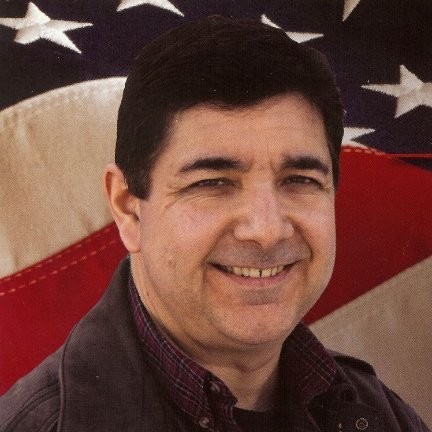
Turn on a light and, somewhere far away, supply and demand have to match to a razor's edge. Too much power on the wire and the frequency drifts up. Too little and it sags down. Let that gap run and equipment trips, lights flicker, and in the worst case the grid falls over. The utility's job is to keep the needle pinned at 60 hertz, second by second, forever. That balancing act is the quiet, unglamorous problem Bob Abboud has built a company around.
As chief executive of Beacon Power, Abboud oversees a technology that most people would not recognize as a battery at all. It is a flywheel: a heavy carbon-fiber rotor spinning inside a vacuum chamber, held aloft on magnetic bearings so it barely touches anything. Feed it surplus electricity and it spins faster, banking the energy as motion. Ask for that energy back and the wheel slows, pushing power onto the grid in milliseconds. No acids, no lithium, no chemical cells that fade after a few thousand charges. Just momentum, stored and returned, over and over.
It is a fitting machine for a man whose whole career has orbited the same question - how do you move energy around without wasting it, and how do you keep a complicated system from tipping over. Abboud came to flywheels the long way, through reactor physics, national labs, a home-grown engineering firm, and, improbably, a stint in elected office. The thread running through all of it is control: understanding a system well enough to hold it steady.
From the reactor to the rotor
Robert G. Abboud - Bob to nearly everyone - was born in Boston in 1956 and moved to the horse-country village of Barrington Hills, northwest of Chicago, when he was four. He is a third-generation Christian Lebanese-American, and he grew up close to the machinery of American finance. His father, A. Robert Abboud, was chairman of First Chicago Bank and later president of Occidental Petroleum, a heavyweight of postwar Chicago business.
The son could have followed the money. He chose neutrons instead. After Lake Forest Academy he took a bachelor's degree in nuclear engineering from Purdue University, then a master's in the same field from Northwestern University. This was a serious technical education, not a resume line. He went on to do research at Argonne National Laboratory and then worked as a nuclear engineer at ComEd, the utility that runs much of Illinois's power. Along the way he served in the U.S. Navy Reserve in the early 1980s and sat on energy committees for the U.S. Department of Energy.
The reactor years left a permanent mark on how Abboud thinks. Nuclear engineering is the discipline of controlled release - vast amounts of energy held in check by careful design, feedback loops, and a deep respect for what happens when control slips. He wrote technical articles on reactor design and control and earned patents in magnetics and superconducting technologies. Those are not scattered interests. Magnetic bearings and high-strength rotating masses are exactly the physics a flywheel runs on. The engineer who once modeled reactor cores was quietly assembling the toolkit for grid-scale storage.
“A flywheel does not care how many times you use it. It just keeps spinning.”
The case for storing energy as motion
Building his own lab
Rather than climb a corporate ladder, Abboud built his own bench. He founded RGA Labs, Inc., an Illinois engineering firm where he serves as president and chief executive. It is the kind of small, technically deep shop that solves hard problems for clients who cannot solve them in-house - the sort of place where a single engineer's name is also the company's reputation. RGA Labs gave Abboud a base to invent from and a track record that would eventually put him in charge of a much larger energy-storage operation.
That operation is Beacon Power. The company pioneered grid-scale flywheel plants for frequency regulation - the fast, second-by-second service that keeps grid frequency locked at its target. Its plants pack hundreds of flywheels into arrays that can soak up or release power almost instantly, which is precisely what a grid needs as it leans harder on wind and solar. Renewables are clean but jumpy; the sun ducks behind a cloud and output drops in seconds. Fast storage smooths those jolts. Beacon's wheels, and the engineer now steering the company, are built for exactly that job.
The detour into democracy
Here the story takes a turn most engineers never take. Abboud did not spend all his energy in the lab. He ran the village he grew up in. For roughly eight years he served as Village President of Barrington Hills, the elected leader of the leafy community where his family had settled decades before. It is one thing to model a reactor; it is another to run a board meeting where neighbors argue about zoning and horse trails. He did both.
Then, in 2008, he aimed higher. Abboud ran as the Democratic nominee for Illinois's 16th congressional district, taking on the Republican incumbent Donald Manzullo. He lost. But the run tells you something about the man - an engineer willing to stand in front of voters and make a case, comfortable moving between the precise world of physics and the messy world of public opinion. Few people can credibly discuss reactor control and constituent services in the same breath. Abboud is one of them.
That range is the through-line. Whether he is balancing a grid, a village budget, or a campaign, the instinct is the same: study the system, find where it wobbles, and build something to hold it steady. The flywheel is almost a metaphor for the man - store the energy, keep spinning, give it back when it counts.
Why the wheel matters
Batteries get the headlines. But every chemical battery has a clock ticking inside it. Charge and discharge it enough and it degrades, loses capacity, eventually dies. For the specific job of frequency regulation - thousands of tiny charges and discharges every single day - that wear adds up fast. A flywheel does not mind. It can cycle almost without limit, and when it is done, there is no toxic chemistry to dispose of. That durability argument is the heart of Abboud's pitch, and it is grounded in the same physics he has worked with since his reactor days.
It is easy to overlook a technology you cannot see. Beacon's flywheels sit in unremarkable buildings, spinning silently underground, doing a job most of us will never notice unless it stops. That invisibility is the point. Good grid engineering is felt as an absence - no flicker, no blackout, no drama. Abboud has spent a lifetime working on the parts of the system that only make news when they fail, and making sure they do not.
He is, in the end, a specific kind of builder: not the founder chasing a splashy consumer app, but the engineer who takes on the slow, physical, deeply technical work of keeping the lights on. The banker's son who chose reactors. The inventor who patented the magnets. The candidate who lost the race and went back to the lab. The chief executive betting that the cleanest battery might be a wheel that never stops turning.