virtual-events
(25)
CourseHorse turns “someday” into a booking
The New York marketplace made local classes easier to find. Its next lesson: the same machinery can bring a remote team together - and give a creative-learning platform another life.
SpotMe wants your event to outlive the applause
The Swiss event platform began with a gadget for meeting strangers. Its bigger bet is that a conference becomes more valuable when the conversation finds its way into the CRM.
vFairs and the art of making the queue disappear
An event can have a brilliant keynote and still lose the room at registration. vFairs has built a business around the small handoffs that decide whether people get in, meet someone useful, and come back.

High Fidelity Built a World. The Useful Part Was Invisible.
After more than $70 million and one bruising VR retreat, High Fidelity discovered that the most valuable piece of its virtual world was the thing nobody could see: the sound of people sharing a room.

The Conference Was Supposed to Hold 4,000 People. Then the Room Disappeared.
Leonard Resource Group built a business around the details most people notice only when they fail. Its best case study began when a public-health conference lost its venue and gained an even larger audience.
The Field Trip That Never Needed a Bus
A small Ohio PR agency found its sharpest idea in a stubborn constraint: people wanted to see modern agriculture, but farms could not simply open the gate. The answer was a live field trip with no bus, no biosecurity breach and, eventually, an audience of more than 1.6 million.
The Event Came Back. The Control Room Stayed.
Digimentors learned to turn conferences into television when rooms went dark. The more interesting trick was knowing which pieces to keep when everybody came back.
Jaguar Design Studio makes the room work. Even when there is no room.
From Cisco’s event graphics to Sumo Logic’s virtual conference, the Aptos studio works where brand design meets the practical business of getting people together.
Bizzabo Survived the Day 1,000 Events Disappeared - Then Put the Internet Back Into the Ballroom
The event-software company started with a networking app, lost its market overnight, and rebuilt around a stubborn idea: a handshake should produce data without feeling like a spreadsheet.

Lalit Mangal Is Building the Room After the Room Disappeared
Before virtual events became compulsory, Lalit Mangal was already bothered by who could not enter the room. Airmeet is his second attempt to turn an everyday exclusion into software - and his clearest argument that proximity is a design problem.
The BlueJeans Playbook: Build the Bridge, Sell for Under $500 Million, and Know When Bundles Win
BlueJeans made incompatible cameras talk, grew to 25 million users, and sold to Verizon at the precise moment video became oxygen. Its shutdown four years later is a useful warning: a brilliant bridge can still lose when the platforms on both sides become the destination.

Bharath Varma Turned Event Chaos Into a Product Brief
Before he sold event software, Varma spent years inside the spreadsheets, sound checks and last-minute saves of live production. Zuddl is his attempt to turn that operator's memory into one system.
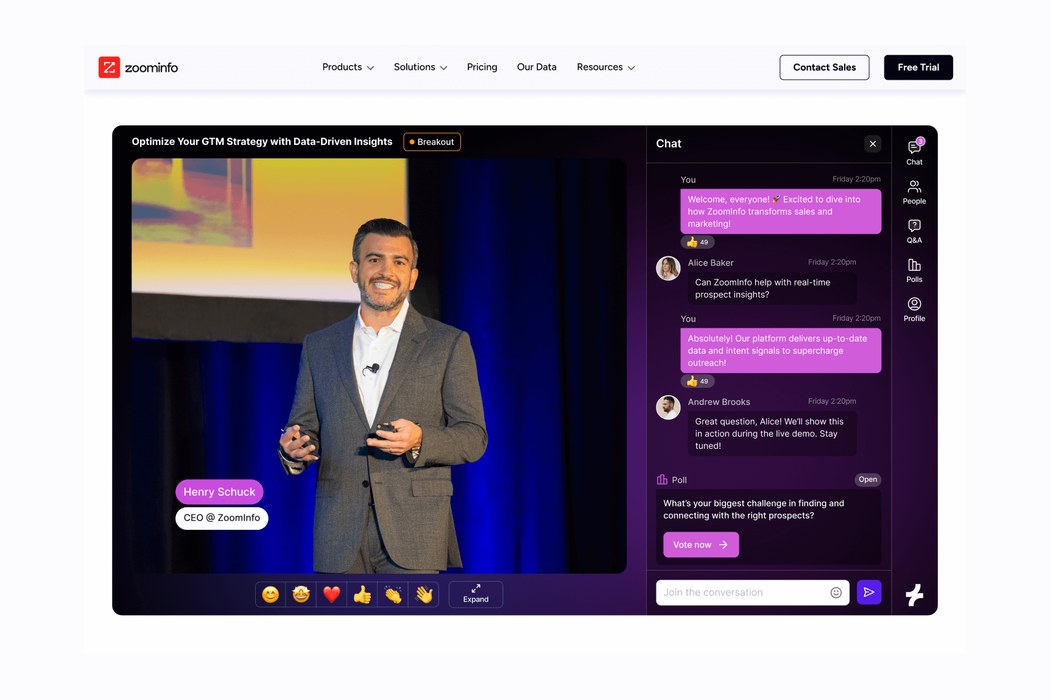
Sequel.io Wants Your Next Webinar to Live Where the Money Is: Your Website
The San Francisco startup moved the webinar out of the anonymous meeting room and onto the customer’s own domain. The payoff is a richer trail of intent - if a marketing team runs enough events to justify the price and operational change.
The College Visit Moved to a Phone. This Atlanta Company Got There First.
StudentBridge turns virtual campus tours into enrollments for 250-plus colleges. Its founder is a former race-car driver who thinks admissions offices have been showing recruits the wrong thing.

Everybody Wants To Own Your Crowd
Uscreen, Bevy, Almabase, Personify, Zendesk and Gradual are all selling the same promise - a place to gather your people - and quietly disagreeing about who those people actually belong to.

Gradual
Gradual is the seamless place to host events, educate and engage members, and grow your brand.

Bevy
Bevy is an enterprise community engagement platform that helps large companies run events, forums, groups, and member programs from one system. Born out of Startup Grind's own struggle to coordinate hundreds of local chapters, Bevy now powers customer and developer communities for brands like Twitch, Salesforce, Adobe, Atlassian, and Notion, and has folded in the CMX professional network and AI 'agents' to help teams grow communities and prove their return on investment.

Goldcast
Goldcast is an AI-first B2B video content platform that helps marketing teams host webinars and virtual events, then automatically turn those recordings into clips, blogs, social posts, and on-demand video that drive pipeline. Founded in 2020 by three Harvard Business School classmates during the pandemic shift to virtual events, the Boston-based company grew past $10M ARR serving 300+ B2B customers before being acquired by events giant Cvent in December 2025.
Scoot
Scoot is a Dallas-based B2B software company that runs an AI sales platform built on top of a customizable virtual meeting environment. Founded in 2017 as Preciate and rebranded to Scoot in 2023, the company puts real-time AI agents inside sales meetings, webinars, and events to coach reps, engage buyers, qualify leads, and automate CRM follow-up. Led by founder and CEO Ed Stevens, Scoot pitches itself as a more engaging, brand-able alternative to static tools like Zoom and Microsoft Teams for go-to-market teams.
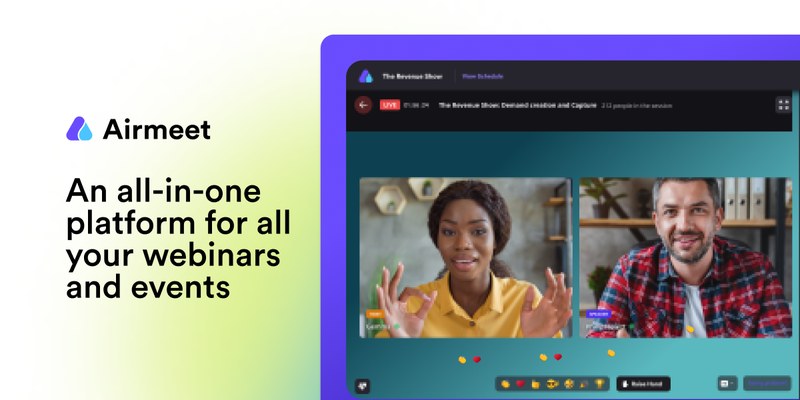
Airmeet
Airmeet is a virtual and hybrid events platform built to help B2B marketing teams run interactive webinars, summits, and conferences that generate pipeline. Founded in 2019 by former CommonFloor founders, the remote-first company pairs engagement-heavy features - virtual lounges, speed networking, and gamification - with AI-powered content repurposing and CRM-connected analytics. More than 5,500 brands, from Comcast and Unilever to the Linux Foundation, have used Airmeet to host events at scale.
Maestro
Maestro is a Los Angeles-based interactive video and live streaming platform that lets brands, creators, and rights holders build their own direct-to-consumer streaming destinations. Instead of renting an audience on someone else's platform, Maestro customers own the experience end to end - custom branded sites, interactive overlays (chat, polls, tip jars), and built-in monetization through ticketing, subscriptions, live shopping, and tips, while keeping their data and most of their revenue. Founded in 2015 by Ari Evans, the company powers streams for names like Billie Eilish, the Grammys, Coachella, Fortnite/Epic Games, and Microsoft.
Provenonce, Inc.
Provenonce, Inc. is a Silicon Valley company building AI-native go-to-market (GTM) infrastructure. Originally launched in 2021 as the virtual-reality metaverse platform NFT Oasis, the company pivoted into agentic AI as generative models matured. Its current platform deploys a coordinated team of semi-sentient AI agents - Sage, Minerva, Glyph, and Logos - that handle lead prioritization, outreach, messaging, and visual content for revenue teams. Founded and led by serial entrepreneur Will O'Brien (ex-BitGo co-founder, ex-Big Fish Games), Provenonce has raised $4.4M and counts Tony Robbins among its advisors and investors.
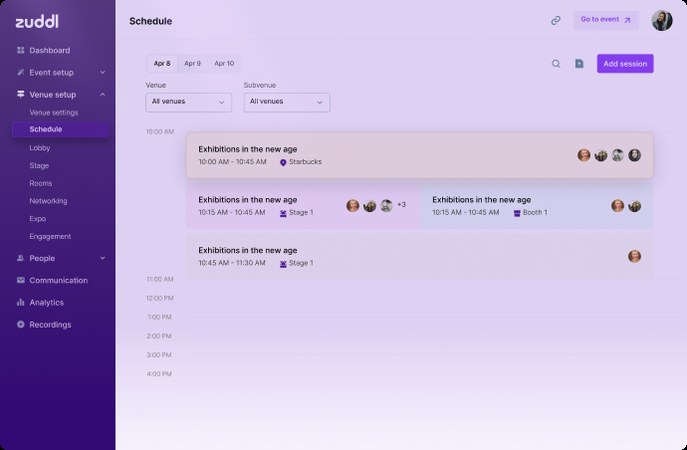
Zuddl
Zuddl is a modular event management platform built for B2B event marketers, unifying conferences, field events, and webinars in one system. It handles the full event lifecycle - registration, ticketing, branded virtual stages, on-site check-in, attendee engagement, and post-event content - while pushing engagement data into CRMs like Salesforce and HubSpot so teams can prove and improve event ROI. Founded in 2020 and backed by Y Combinator, Alpha Wave Incubation, and Qualcomm Ventures, Zuddl serves brands including Google, Microsoft, ServiceNow, and the United Nations.
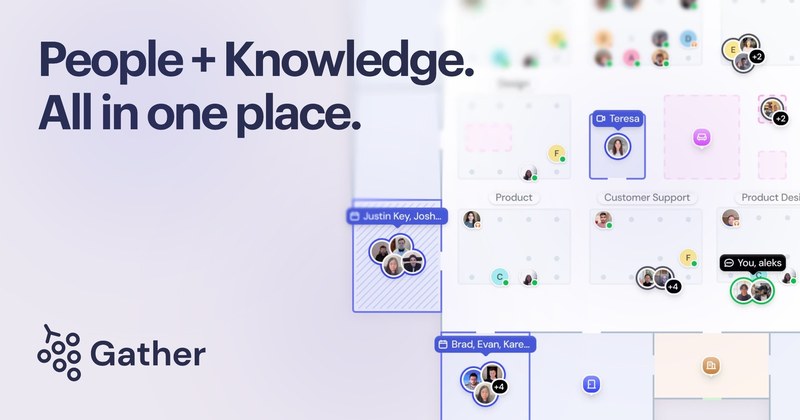
Gather
Gather is a virtual workspace where remote teams can see each other, walk up for spontaneous conversations, and collaborate without scheduling a meeting for everything. Often described as 'Minecraft meets Zoom,' it pairs a customizable 2-D world with spatial audio and video, plus AI meeting notes and async chat. Founded in 2020 and backed by Sequoia and Index, Gather has been used by millions of people for work, conferences, weddings and gatherings.
Joy
Joy is an all-in-one wedding planning platform that helps couples build custom wedding websites, manage registries with zero fees, coordinate guests, and stream virtual events. Founded in 2016 by three former Microsoft and Adobe engineers, Joy has grown to serve hundreds of thousands of couples worldwide with a free-to-use model, 600+ website templates, and a universal registry that pulls from any online retailer. Backed by General Catalyst and Sound Ventures, Joy has raised over $108M and is expanding beyond weddings into all major life milestones.