There is a small absurdity hiding inside the phrase “farm field trip.” The destination is alive, muddy and busy. The visitors are numerous. A modern livestock farm must protect the health of its animals; a school must protect the safety of its children. The bus is expensive, the weather is uncooperative and the good part may be happening somewhere a class cannot stand. Everyone wants transparency. The gate, for sensible reasons, stays closed.
In 2014, a client of a six-year-old Ohio public relations agency wanted people to see its farms without weakening biosecurity. Shift•ology Communication - then still called Wilt Public Relations - responded by moving the visit, not the farm. A farmer carried the audience through barns and fields by live video. Students could ask questions. The unscripted moments stayed. The diesel bus did not.
That first production for the Ohio Pork Council became Virtual Farm Trips®, now a national program of live and on-demand experiences. The company says more than 1.6 million students, consumers and stakeholders have joined from classrooms and screens across the country. They have looked into dairy barns, apple orchards, combine cabs, Christmas-tree farms and processing facilities. The ordinary technology of a video call became, with enough planning, a new kind of agricultural infrastructure.
The gate that changed the brief
The first thing that failed was not a camera. It was the assumption that access had to mean physical presence. Cost, distance and biosecurity made the conventional visit a poor fit. The client’s wish for greater transparency changed the team’s mind about the container. If the real value was a direct encounter with a credible farmer, perhaps the encounter could travel.
This distinction matters. A recording can show a farm; a live experience can let a fourth-grader interrupt one. Shift•ology kept the questions and the farmer’s natural voice, then built production discipline around them: planning, rehearsals, tested technology, prepared presenters and contingencies for the unglamorous things that happen during a live broadcast. In the agency’s own recent hiring language, success is when the audience experiences polish without seeing the considerable coordination behind it.
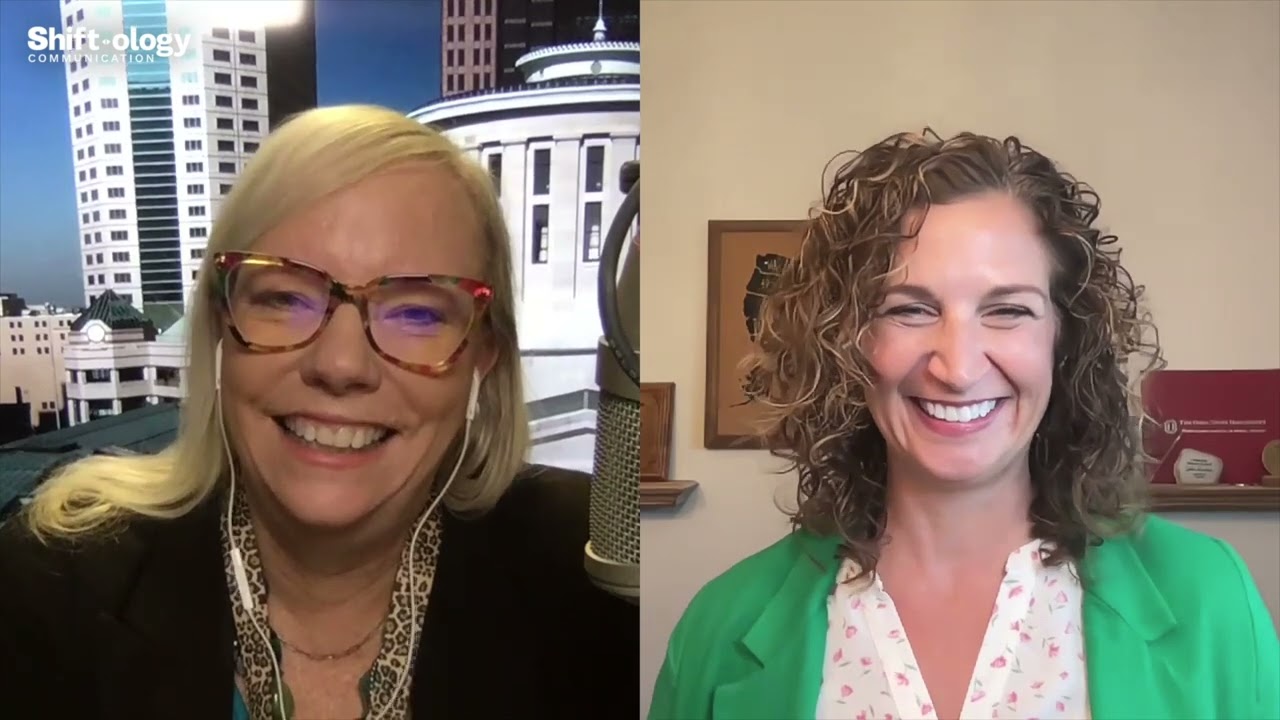
“This platform has provided an opportunity for our partners and their farmers to tell their stories in the most authentic, unscripted way possible.”Dan Toland, Director of Virtual Experiences + Ag Projects02 / The company behind the camera
A general agency shaped like a specialist
Virtual Farm Trips is the memorable product, not the whole business. Shift•ology sells the familiar pieces of an integrated agency: strategic planning, opinion research, message development, media relations, crisis communication, branding, graphic design, websites, video, social media and campaign support. It also trains spokespeople, coaches teams and produces other virtual events.
Its market is narrower than that list suggests. The firm concentrates on agriculture, rural health and community organizations, with energy and education appearing in its portfolio too. These are fields where a technical explanation can be correct and still fail. A farmer, physician, utility or public institution may know exactly what happened and still struggle to make it meaningful to someone outside the profession.
Founder Melanie Wilt knew that problem before she sold services around it. She studied agriculture at Ohio State, worked in agricultural communications, and served as communication director and chief of markets at the Ohio Department of Agriculture. She started Wilt Public Relations in 2008. Nearly a decade later, the company changed its name at the 2017 Agri-Marketing Conference. “Shift•ology,” Wilt said then, was their invented word for “the science of change.” The new name made the agency’s operating theory visible: communication should begin with evidence about an audience, not the author’s enthusiasm for a message.
The part worth copying
The company calls this a brain-based or Why-First approach. Strip away the branded language and the portable method is practical: research the audience, find the emotional and intellectual reason to care, translate complexity, and evaluate what moved. Shift•ology’s own research guidance recommends choosing a method according to certainty, budget and time. A packaging question might need a focus group; a broad measure of public opinion might need a survey. The tool follows the uncertainty.
03 / The price of clarityA service business leaves a few numbers in public
Shift•ology is privately owned and earns fees from projects, ongoing agency relationships, workshops, coaching and productions. Its custom PR and Virtual Farm Trips rates are not posted. Its training menu is more candid. A one-hour small-group presentation starts at $500 plus travel; a large-group hour or keynote is listed at $1,500 plus travel; workshops run from $2,500 to $7,500. A half-day Team WHY.os workshop is $3,500 for ten assessments, while ongoing coaching is listed at $375 an hour.
The published range for presentations and workshops. Custom campaigns, research and live productions are scoped separately.
The wider company numbers are those of a compact specialist. O’Dwyer’s 2026 ranking reported six full-time employees, $1,199,685 in 2025 net fees and 11 percent year-over-year growth. LinkedIn shows a larger orbit of employees, but the essential picture is the same: this is not a global agency network. It is a small professional team with national clients and a product that travels cheaply once the production system is in place.
That model sits between three alternatives. A client can hire a generalist PR firm, an agriculture-focused agency, or build an internal communications team. Shift•ology competes by combining industry fluency with research, creative production and live-event engineering. The advantage is strongest when the subject is technical, the audience is skeptical and the credible messenger is already inside the client’s organization.
specificity
The method is less convincing when a client will not expose real people to real questions, cannot define an audience, or expects one polished event to repair a deeper trust problem. Live authenticity needs preparation; research needs enough time and sample quality; a specialist agency works best when its agriculture, rural-health or community knowledge actually shortens the learning curve.
The same trust problem in a different uniform
In 2023, Shift•ology formally added rural health as a practice area. The move looks less like diversification than pattern recognition. Rural hospitals and clinics face many of the same communication conditions as agriculture: technical language, institutional skepticism, workforce strain, misinformation and audiences connected by place.
For Family Health Services of Darke County, the agency combined internal and external audience research with brand updates, staff workshops, patient education, provider introductions and media relations. The public case study reports more than 100 employees trained, nine new providers introduced, more than ten stories placed and communication materials delivered to a patient base above 26,000. For Cooper Farms, Shift•ology edits, designs and manages production of a quarterly 24-page magazine that reaches nearly 5,000 people; employee surveys identify it as their favorite communication tool.
Those examples reveal the actual product. It is not a press release, a website or a livestream. It is the reduction of distance between an institution and the people expected to trust it. Sometimes the distance is measured in miles from a classroom to a farm. Sometimes it is the gap between a clinician’s vocabulary and a patient’s worry.
The farm gate was never merely an obstacle. It was a design instruction: preserve the encounter, remove the journey.05 / What the small firm kept
From farmhouse to hybrid
Shift•ology began in a renovated farmhouse, moved into downtown Springfield in 2010 and adopted cloud-based work in 2014. In 2020 it moved its headquarters to COhatch and operated as a hybrid team. The company’s staff pages are deliberately informal - “Office Picasso,” “Grammar Gladiator,” “Vision Virtuoso” - but the job descriptions are almost stern about preparation, accuracy and follow-through. The playfulness is decoration. Reliability is the job.
Awards followed the work. VirtualFarmTrips.com won the 2025 national Best of NAMA award for a consumer-directed website. The company says it became a certified Women-owned Business Enterprise in 2022, while its Virtual Farm Trips trademark was registered the year before. Regional NAMA results for 2025-2026 recognized projects including California Virtual Farm Day and trips to real Christmas-tree farms.
The clever idea was to replace the bus. The durable business was built by noticing what the bus had been carrying all along: curiosity, credible witnesses and the delicious possibility that a child might ask the question nobody rehearsed.