Forty minutes into an event, Sarah Delicave noticed something worth remarking on: there were no lines. The Penn Foster customer experience executive described 1,900 registrations, attendees arriving with their codes, and badges printing instantly. In the testimonial published by vFairs, the missing queue gets its own little celebration. A keynote might receive applause. A working check-in desk receives the more flattering tribute of being forgotten.
- vFairs connects event registration, onsite operations, mobile apps, virtual venues, and reporting.
- Its pitch combines software with a dedicated project manager and event support.
- The useful buying question: which handoffs will this remove from your team's day?
That is a useful way into this company. Events are usually sold through their exceptional moments: the speaker, the announcement, the conversation that justifies the flight. Yet those moments depend on ordinary machinery. Someone must recognize a ticket, produce a badge, point a visitor toward a session, and preserve the contact an exhibitor has just made. A splendid conference can acquire the manners of a badly run post office surprisingly quickly.
The badge is the beginning
Founded in 2016, vFairs began with virtual events and has expanded into an event management platform spanning in-person, hybrid, and online gatherings. Muhammad Younas is its co-founder and CEO. Its customers include businesses, universities, nonprofits, and associations - organizations for which an event is a hiring channel, an educational program, a commercial meeting place, or a way to gather members.
Start with registration. Organizers can build branded event websites, configure forms, create ticket categories, collect payments, and send communications to different groups. The same registration information can pass into check-in and badge printing. A speaker and a general attendee need not receive identical forms or identical instructions. This is administrative detail, certainly, but administrative detail is often where hospitality becomes visible.
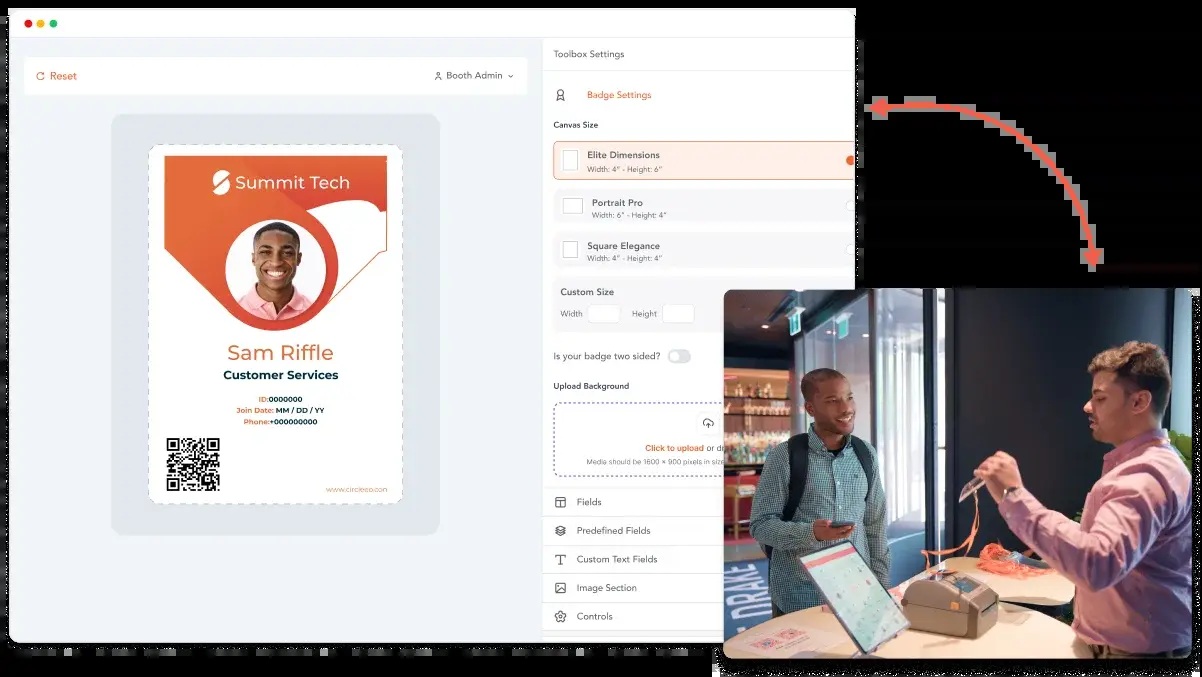
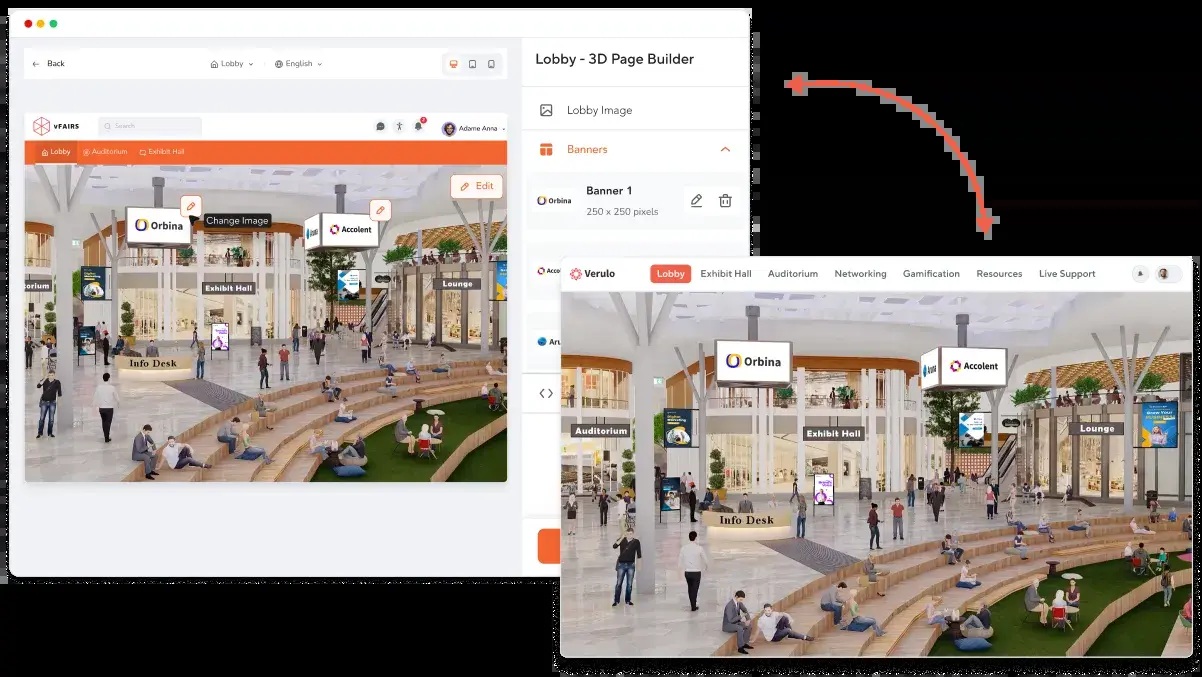
Inside the venue, the mobile app carries agendas, exhibitor information, networking, notifications, and maps. Exhibitors can capture contacts rather than hoping that a stack of business cards survives the journey home. The virtual platform supplies another entrance: online sessions, exhibit booths, content, and places to meet. Its recognizable visual language includes virtual lobbies and halls, giving remote visitors a spatial way to explore.
What failed was the connection between tools
Consider CadenceLIVE Silicon Valley 2024. In vFairs' account of the event, Cadence wanted better interaction among attendees, sponsors, and experts. It also wanted fewer separate applications. Lead capture lived in one tool; session scanning lived in another. The burden was switching between them and keeping the pieces coordinated.
Cadence used vFairs for customized web pages and registration, badges printed on arrival, exhibitor lead capture, and a branded mobile app. Onsite support helped with kiosks and technical issues. The case study reports more than 2,100 registrations, 1,200 app logins, and 1,400 people attending in person. Those figures describe different behaviors; treating them as interchangeable would make the dashboard prettier and the analysis worse.
The revealing detail is Cadence's preference for learning to customize the app itself and training colleagues in other regions. Buying help did not mean surrendering competence. For an organization repeating events, knowledge that stays inside the team can be as useful as assistance on the day.
Conceptual workflow, not a performance claim. Each connection is a place where a team otherwise has to reconcile information.
Airbus buys a common language
Airbus provides a larger version of the problem. The customer story describes roughly 300 events, 2,000 site visits, and participation in 30 trade shows annually. Its previous tools handled separate pieces of event management. The resulting data was difficult to bring together. A busy calendar had produced a busy collection of systems.
The attraction of vFairs was a shared platform for websites, registration, mobile apps, and reporting. In the company's podcast conversation with Oliver Pradelles, Airbus's head of events and protocols, the decision also involved the response to its procurement process, the relationship between cost and capabilities, and the product roadmap. The switch had a practical constraint: Airbus could not keep paying for two platforms simultaneously.
Training mattered. A small group learned the platform first and helped others adopt it. This is the part another event team can copy: establish the workflow with a manageable group, then teach it outward. Consolidation works only when people agree to use the common system. Otherwise, the old spreadsheets acquire a new companion.
“At one point we were 40 minutes in and there were no lines”Sarah Delicave, Penn Foster customer experience executive, in a vFairs testimonial
A room with more than one entrance
The National Urban League shows why virtual capability remains useful alongside a physical venue. Its hybrid conference gave remote attendees access to sessions, exhibitors, networking, and a career fair. Corporate partners gained digital booths for documents, videos, and other material. A virtual collection of saved resources let attendees take information away without carrying a bag full of paper.
vFairs' case study reports more than 11,000 registrations, 5,800 mobile app users, 2,600 onsite check-ins, and 800 job applications. The company describes registrations as four times those of the previous event. That is a reported customer outcome, not a promise that adding software quadruples an audience.
National Urban League conference case study; figures reported by vFairs. Registration measures reach. Applications record a more specific action.
The practical lesson is to decide what participation means before opening registration. A recruiter wants applications. A sponsor wants useful conversations. An association may want members to access education. One event can serve all three, but counting every click as success is a generous fiction.
The invoice includes a relationship
vFairs competes in a market that includes Cvent, Bizzabo, RainFocus, and Accelevents. A broad feature list alone gives buyers little reason to choose. Its more distinctive proposition is the combination of virtual environments, onsite tools, and people helping an event team configure and run the system.
The pricing page says a dedicated project manager is included with all plans. Pricing is customized, with annual licenses and per-event or product packages. Event format, selected features, and attendee volume affect the quote. Additional sessions, booths, attendees, and managed services can expand the scope. There is no free plan.
A useful comparison therefore starts with the same event brief for every vendor. Specify registration volume, ticket rules, session structure, exhibitors, exports, staffing, and onsite assistance. Then compare the total commitment. For a simple gathering with a short guest list, a broad platform may create more setup work than it saves. For a repeating program with several audiences and reporting obligations, coordination becomes a more persuasive reason to pay.
The venue gets a vote
The August 2026 product updates offer a pleasingly practical glimpse of priorities. Lead capture can continue offline and sync when connectivity returns. Floor plans can use real measurements and track booth purchases. Personalized check-in messages can direct particular attendees where they need to go. These are features for the moment when the venue refuses to behave like a sales demonstration.
AI tools cover writing, recommendations, matchmaking, meeting scheduling, and attendee assistance. Their appeal is time saved on repetitive work. Their usefulness still depends on the information supplied: an event assistant needs accurate event content, and recommendations need meaningful attendee profiles. An organizer should test those inputs with the same care given to a microphone.
Rehearse an ordinary arrival and an awkward one. Try a missing record, a late registration, an unavailable connection, and the lead export an exhibitor will need tomorrow. Check who owns each response. vFairs' remote-first employer page emphasizes autonomy and performance; its customer offer emphasizes hands-on support. Across both, the appealing idea is responsibility assigned clearly enough that someone can actually act.
The missing queue is a modest ambition, which is part of its charm. People attend events to spend their time well. Software earns its place when it gives that time back - at the entrance, between sessions, and when the useful conversation needs to become something more.