product-analytics
(19)
Your Feedback Stack Is Making the Questions Harder
Mopinion, Dovetail, Lyssna and PostHog each remove a different kind of research friction. The right choice depends less on feature count than on where evidence enters your team, who must find it and what decision comes next.
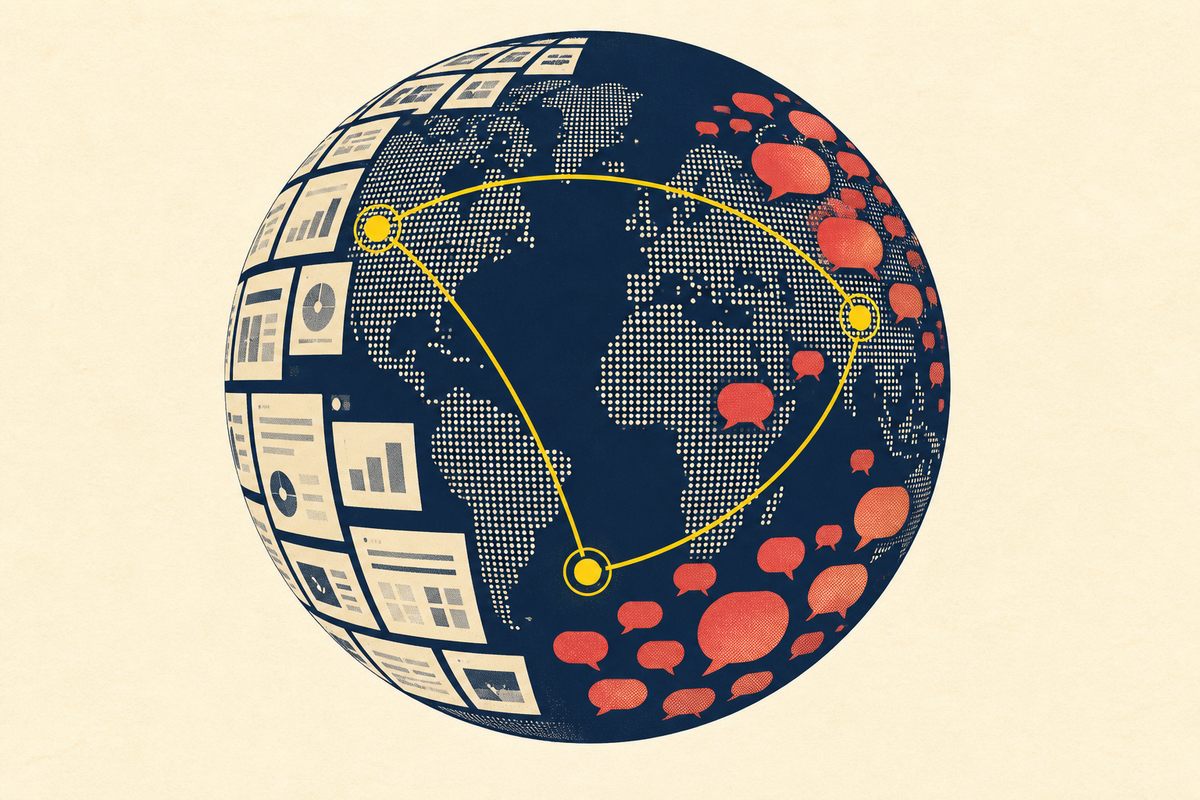
The Global Product Stack Has a Translation Problem
Pendo localizes the product experience. Thematic normalizes the customer voice. Global teams need both jobs done without turning regions into rival versions of the truth.
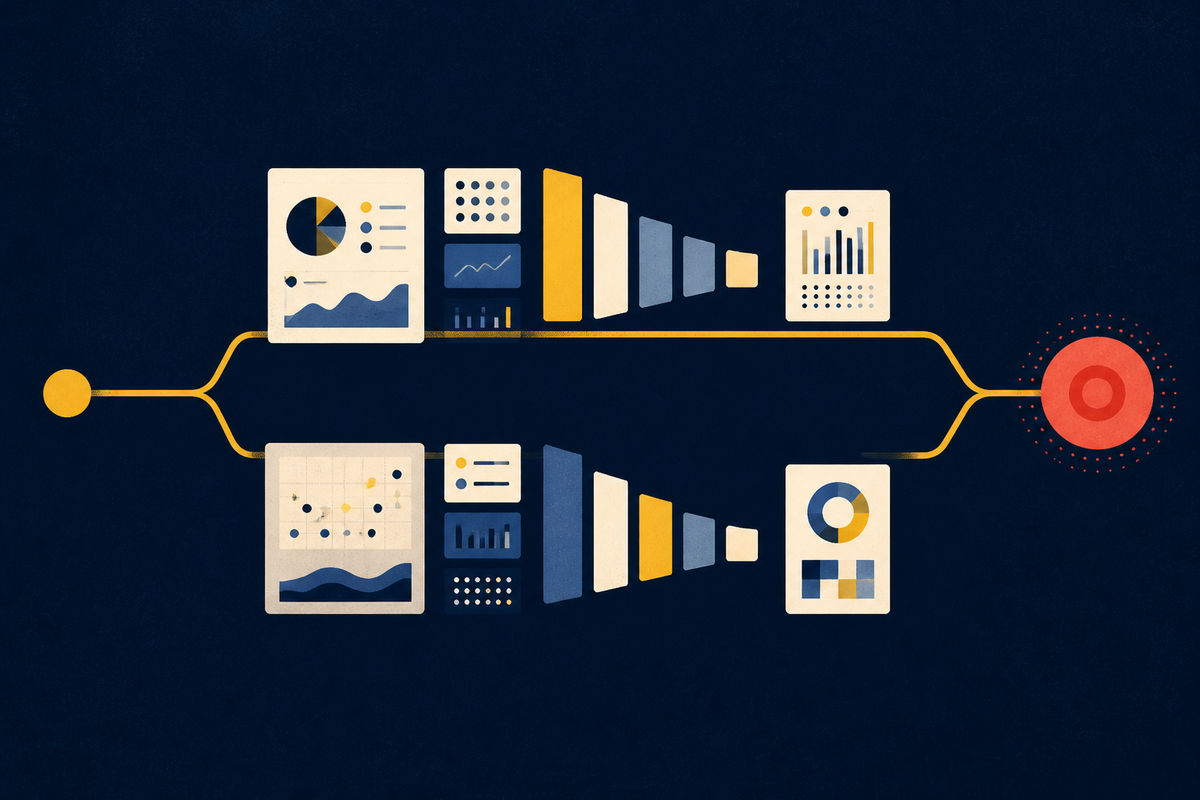
Braze and Amplitude Can't Both Be Your Source of Truth
Braze can now answer more questions without leaving Canvas. The smart response is not to crown another dashboard, but to draw a hard line between campaign optimization and company-wide behavioral truth.

The Quiet War Over Who Names Your Events
Segment and Amplitude usually run side by side, not head to head. The real fight is quieter - which one gets to decide what an event is called before the whole company builds dashboards on top of it.

Your Best Users Are Blowing Up Your Amplitude Bill
Amplitude's pricing has long punished the products that fire the most events. As those bills balloon, high-volume teams are quietly re-instrumenting on Mixpanel.

The Analytics Tool You Choose Changes the Questions You Ask
Amplitude and Mixpanel now overlap almost everywhere. The better choice starts with how your team learns: through a governed experiment loop or fast, self-serve exploration.

Pendo or Thematic? Choose the Feedback Job First
Pendo connects feedback to what users do inside a product. Thematic goes deeper on what customers say across surveys, tickets, calls and reviews - and the right choice depends on which blind spot costs your team more.
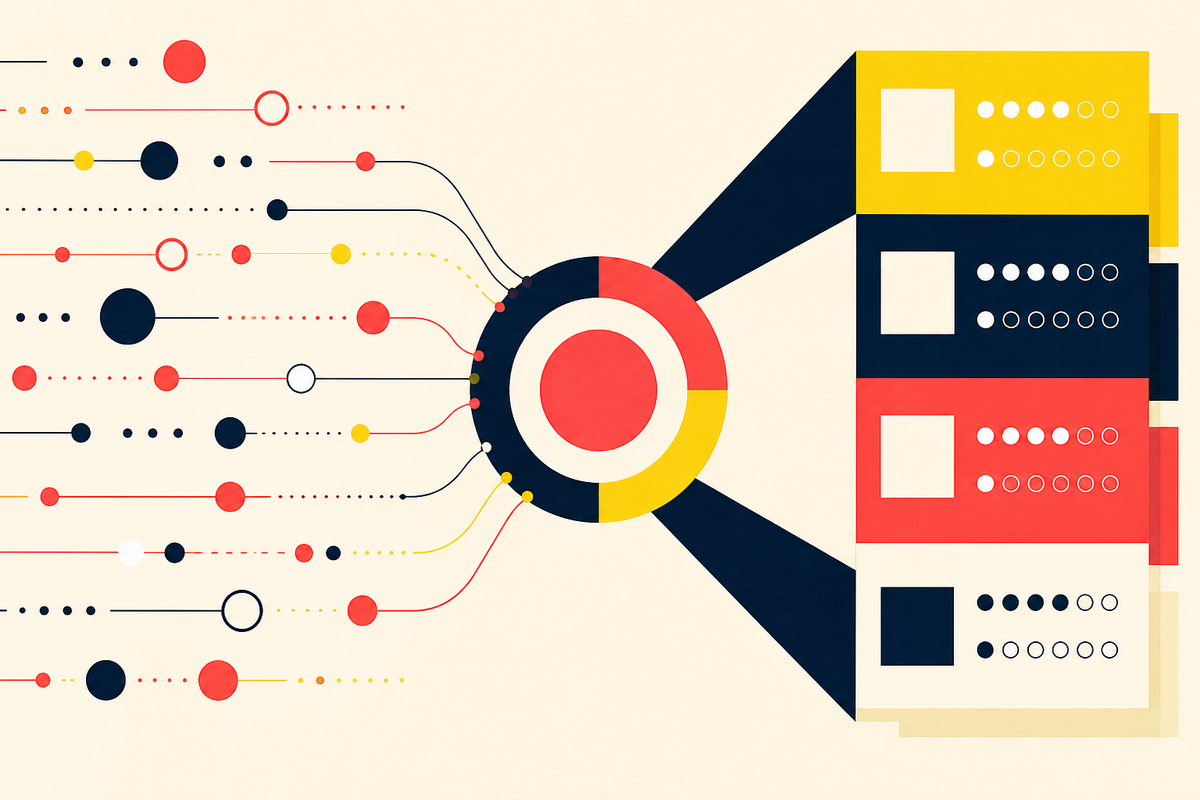
PostHog and Voxco Hear Two Different Customer Truths
PostHog watches what users do inside a product. Voxco asks what people think across channels - and the useful lesson is knowing when each kind of evidence deserves the microphone.

Pendo and Rocketlane Split the Onboarding Job
Two products wear the onboarding label, but they solve different moments. Rocketlane organizes the human work before value arrives; Pendo helps users find value after they enter the product.

Six Customer Success Tools Rewriting the Post-Sale Playbook
Stonly, Cast, ZapScale, Usetiful, Kaizan and Userpilot reveal how customer success is splitting into a stack of guidance, intelligence and action.

Four Ways Software Tries to Hear Your Users
Mopinion, Lyssna, Dovetail and PostHog all promise to tell you what your customers think. They just disagree, deeply, on how to find out.

How Four AI Tools Turn Customer Griping Into Roadmaps
Pendo, Idiomatic, Keatext and Zonka Feedback all promise the same thing - that the pile of reviews, tickets and survey replies your customers leave behind can become a to-do list. Here is how the category actually works, and where each tool fits.
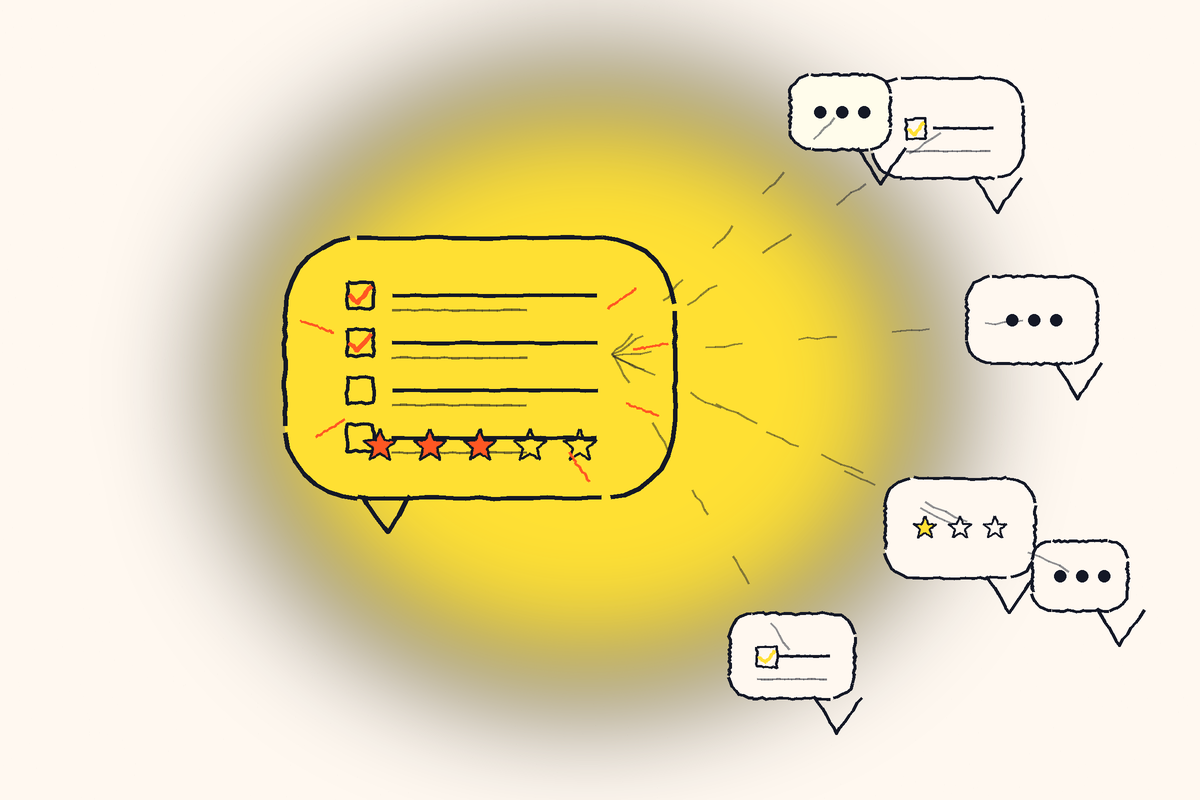
How Survey Software Splintered Into a Dozen Niches
Refiner, Usersnap, Simplesat, PostHog, SurveyLab and a crowd of rivals each grabbed one slice of customer feedback. The old all-in-one survey builder never saw it coming.
Customer Success Software Stopped Advising and Started Doing
For a decade, tools like Pendo and Userlane told humans which accounts to save. Now Hook, Velaris and Cast are shipping the agents that do the saving, and the whole category is quietly picking a side.
How Six Feedback Tools Turn Your Gripes Into Roadmaps
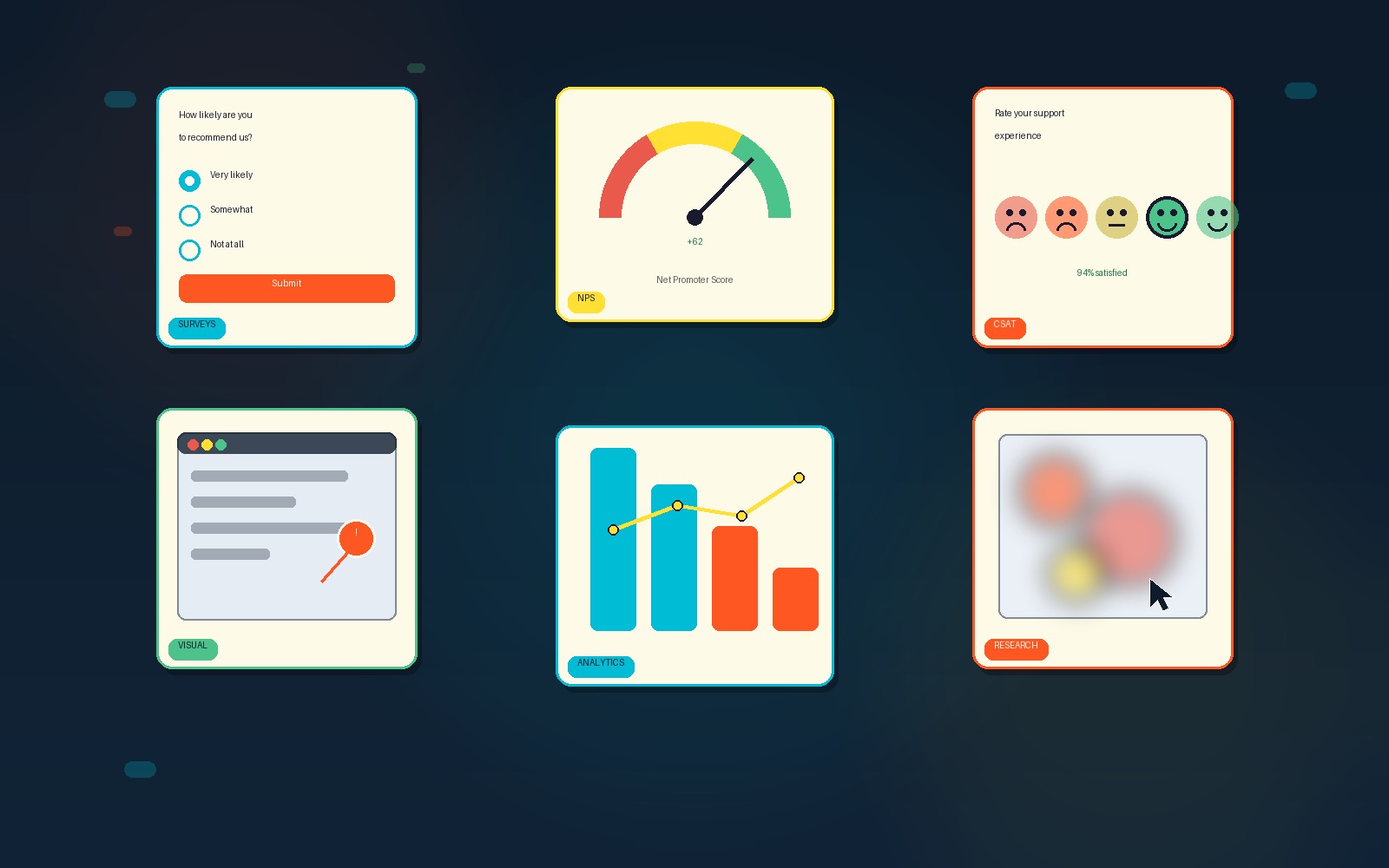
SurveyMonkey, PostHog, Lyssna and a cluster of smaller rivals have built a quiet industry around one question: what do you actually think? Here is how six of them make money from your opinions, and what each does differently.
PostHog, Survicate, Qualtrics and Jotform Walk Into a Survey
Four companies, four completely different answers to the oldest question in business - what do people actually want? We put the survey industry's odd couples side by side.
Four Customer Feedback Tools, Three Just Got Bought
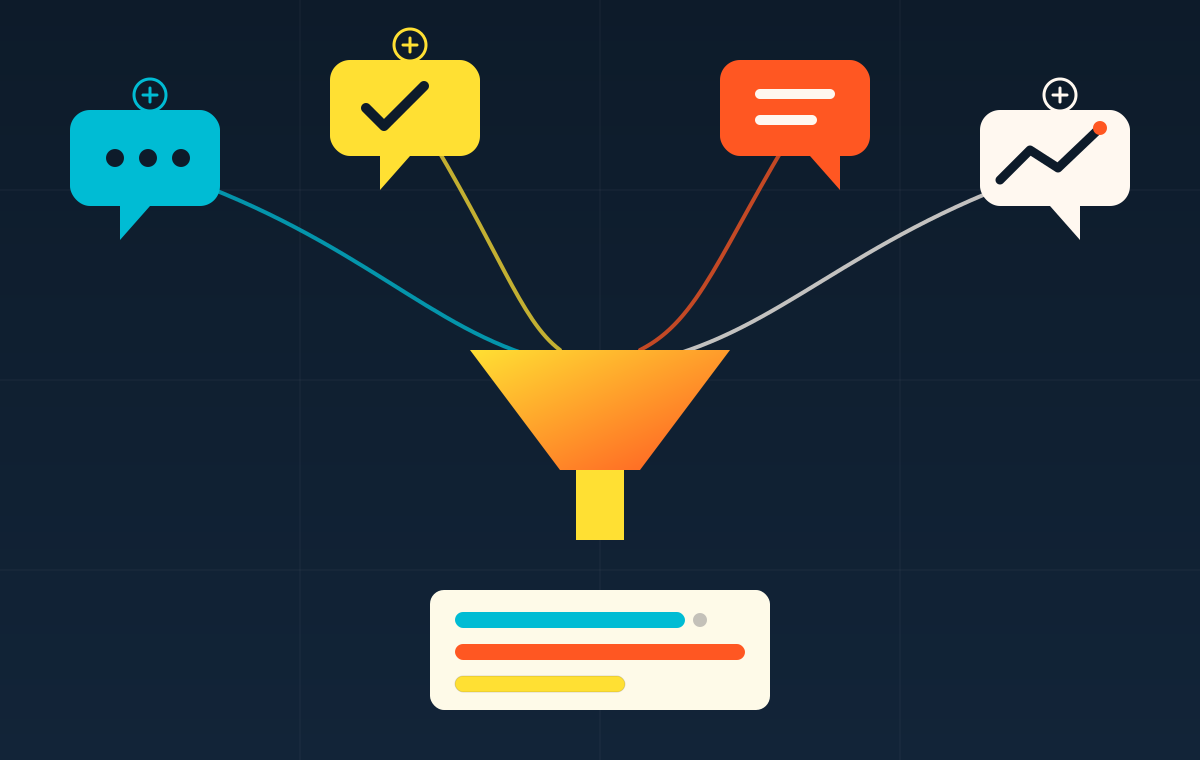
airfocus, UserVoice, Mopinion and Contentsquare all promise to turn user gripes into product decisions. In the space of a year most of them stopped being independent companies - and that tells you where the whole category is heading.
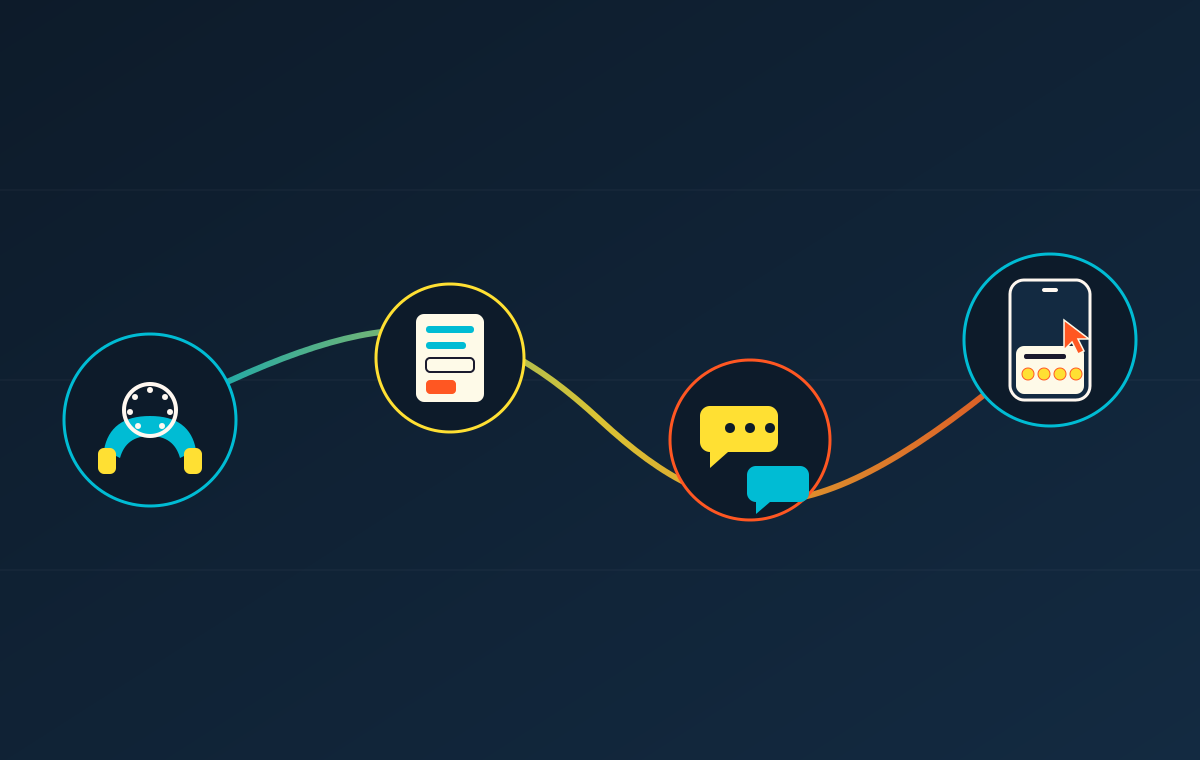
How Surveys Escaped the Phone Bank and Got Into Your App
Survox, LimeSurvey, Typeform and PostHog trace a 50-year shift in how the world asks questions - from punch cards and phone banks to forms that feel like chat and surveys that pop up mid-click.
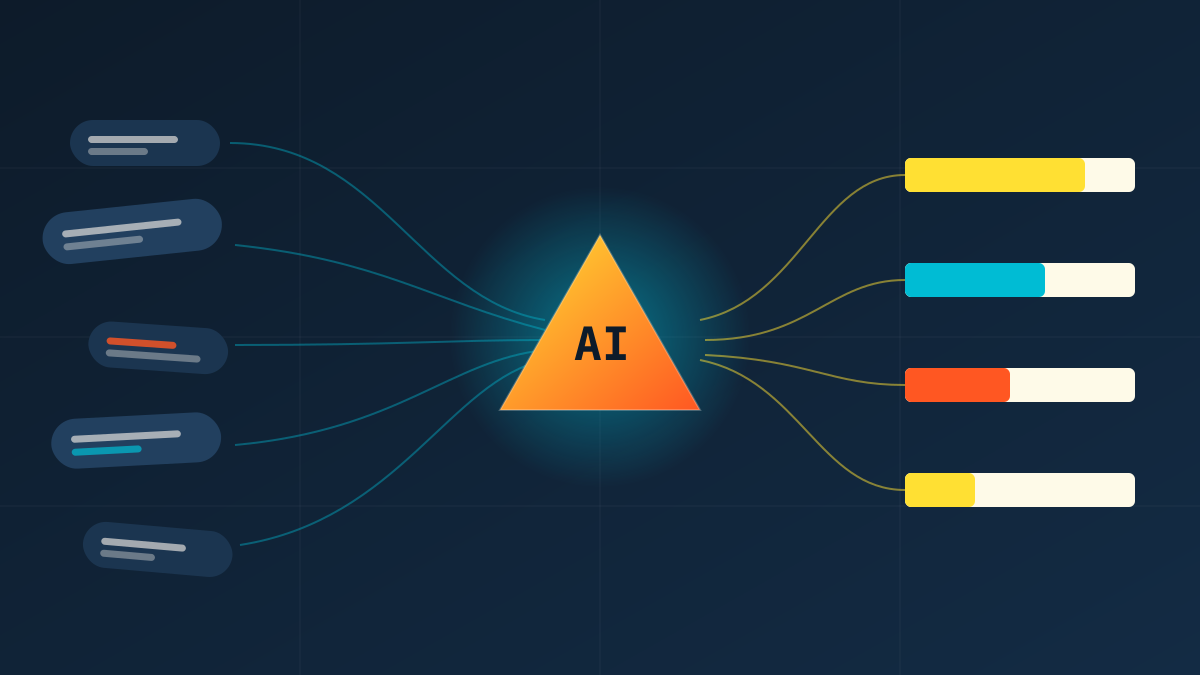
Unwrap Turns Customer Complaints Into a Product Roadmap
The Santa Barbara startup, built by two Amazon Alexa veterans, uses AI to read the reviews, tweets, and support tickets your product team never gets to - and tells them what to build next.