Customer Success Software Stopped Advising and Started Doing
For a decade, tools like Pendo and Userlane told humans which accounts to save. Now Hook, Velaris and Cast are shipping the agents that do the saving, and the whole category is quietly picking a side.
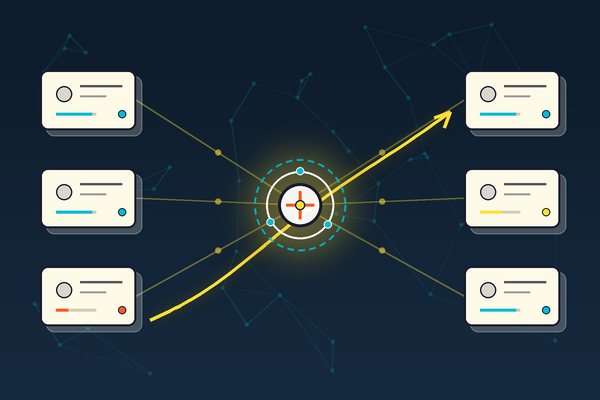
Ask any SaaS founder what keeps them up at night and eventually you get to the same number: net revenue retention. It is the percentage of last year's revenue you kept and grew from the customers you already had. Investors treat it like a credit score. And for about ten years, the software built to defend it has been very good at one thing and quietly bad at another. It was good at telling you which accounts were slipping. It was bad at doing anything about them.
That is the whole story of Userlane, Pendo, Userpilot, Hook, Velaris and Cast in one paragraph. Six companies, one category, and a line running straight down the middle of it. On one side sit the tools that instrument the product and hand a human a very smart to-do list. On the other side sit the newer tools that skip the list and just do the task. The gap between those two ideas is where the money is moving in 2026.
01 / THE ROSTERSix companies, one obsession
Start with the incumbents, because they built the vocabulary everyone else uses. Pendo launched in Raleigh in 2013 and paired two things that used to live in different departments: product analytics and in-app guidance. It could tell you that 4% of users ever touched a feature, then drop a tooltip in front of the other 96%. Userlane, out of Munich, went narrower and deeper on the enterprise side - step-by-step walkthroughs layered on top of clunky internal software, so an employee learns SAP or Salesforce while doing the actual job. Userpilot took the same idea and made it fast and cheap enough that a product manager could ship an onboarding flow in an afternoon without filing a ticket with engineering.
These three are the measuring instruments. They know what every user clicks, where they stall, which feature predicts a renewal. That knowledge was revolutionary in 2015. The problem is what happens next. A dashboard turns red. A health score dips. And then it sits there, waiting for a human customer success manager to notice, prioritize it against forty other red accounts, and send an email. Often nobody does. Green stopped meaning healthy and started meaning “a person will get to this.”
02 / THE OTHER SIDEWhen the software grew a body
Hook is the cleanest example of the turn. Firaas Rashid started it in London in 2020 to attack one thing he called the biggest unsolved problem in SaaS: predictable revenue from existing customers. Hook reads product usage, support, sales and marketing signals and forecasts renewals, net dollar retention and upsells up to 180 days out - with scores it can explain, so a rep sees not just that an account is at risk but why. It is backed by Lightspeed and LocalGlobe. It started as prediction. It is now, increasingly, about acting on the prediction rather than filing it.
Velaris arrived as an AI-native customer success platform for mid-market and enterprise B2B teams, and it is structured like an argument against the old workflow. One license, four jobs: a unified customer record, health scoring and sentiment analysis, orchestration for automations and campaigns, and execution for playbooks and success plans. It ships autonomous agents that monitor accounts, handle meeting follow-ups, and manage the handoff from sales to customer success - the exact seams where accounts usually go cold.
Green used to mean “a human will get to this.” The interesting part of 2026 is that a human no longer has to.The category, out loud
Cast pushes the idea to its logical end. Its pitch is the “Digital CSM” - and in its 3.0 release, that became agentic. Every contact on an account, from the daily user to the executive to the person who signs the invoice, gets a dedicated AI customer success manager that generates personalized business reviews and answers questions in real time. Cast trains those agents on a company's own stack - Salesforce, HubSpot, Gainsight, Zendesk, Snowflake - in minutes, and claims its agents automate 60 to 95% of routine work, with customers citing returns from 12x to 30x. It is the difference between a tool that tells you to run a quarterly business review and a tool that just runs 400 of them.
Instrument & inform
- Lives inside the product
- Measures clicks, adoption, health
- Hands a human a prioritized list
- Userlane · Pendo · Userpilot
Predict & execute
- Sits around the account
- Forecasts churn and expansion
- Agents take the action directly
- Hook · Velaris · Cast
03 / THE MATHWhy the long tail is the whole game
Here is the uncomfortable arithmetic that makes this shift inevitable. A customer success manager carrying 200 accounts can meaningfully touch maybe 30 of them in a quarter. The biggest accounts get the human, and they are usually fine - they have a champion, a Slack channel, a QBR on the calendar. The accounts that actually churn are the ones too small to earn a dedicated person and too quiet to trip an alarm. That long tail was, for years, simply written off as the cost of doing business.
AI changes the unit economics of attention. An agent does not care whether an account pays $2,000 a year or $200,000 - it can send the same well-timed check-in, spot the same drop in usage, and open the same expansion conversation across all of them at once. The value is not that the software is smarter than a good CSM. It is that the software is awake at 11pm on a Tuesday, for every account, at a cost that finally makes the tail affordable.
Directional, not benchmarked — the point is the shape, not the decimals.
04 / THE CATCHWhat the demo doesn't show
A skeptic should sit with the obvious risk. An agent that emails 400 customers is also an agent that can annoy 400 customers, or misread a support ticket as a warning sign, or cheerfully upsell an account that is one bad interaction from leaving. Prediction with an explanation, which is Hook's whole insistence, matters precisely because a black-box score that says “this account is fine” is worse than no score at all when it is wrong. The tools that win will be the ones a human can overrule, audit and trust - not the ones that hide the reasoning behind a confidence number.
There is also a quieter tension inside the category. The instrument-first companies have the data - the actual record of what every user does inside the product. The act-first companies have the intent - the workflow that turns a signal into a saved account. Neither half is complete on its own. A prediction with no reach is a nicely formatted worry. An agent with no product-level signal is a confident guess. The interesting bets over the next two years are the ones that fuse the two, whether by building across the line or acquiring across it.
Visibility was a feature. Closure is a company.The 2026 pitch, compressed
05 / THE FIELD GUIDEWho does what, in one line each
Pendo
AdviseProduct analytics plus in-app guidance. Knows what every user does, then nudges the ones who miss the feature.
Userlane
AdviseEnterprise digital adoption. Guided walkthroughs on top of complex internal software, employee-facing.
Userpilot
AdviseNo-code product growth. Onboarding flows, adoption campaigns and micro-surveys shipped fast, customer-facing.
Hook
ActRevenue prediction. Explainable churn and expansion forecasts up to 180 days out. Backed by Lightspeed, LocalGlobe.
Velaris
ActAI-native CS platform. Health, orchestration and playbooks in one license, with agents on the sales-to-CS seam.
Cast
ActAgentic Digital CSM. A dedicated AI success manager per contact, running reviews and answers at scale.
06 / THE TESTThe eleven-o'clock question
Every SaaS company says it is customer-obsessed. The honest test for 2026 is smaller and harder to fake. When an account you rely on goes quiet late on a Tuesday night - no logins, a support ticket that reads a little sharp, a champion who just changed their LinkedIn headline - does anything actually happen before Monday? For most companies, historically, the answer was no. The signal sat in a dashboard until someone came back to work.
What all six of these companies are really selling, from different angles, is a “yes.” The instrument-first tools make the signal impossible to miss. The act-first tools make the response automatic. Customer success spent a decade learning to measure retention with real precision. The next decade is about closing the distance between noticing and doing - and, increasingly, removing the human step in the middle for everything except the accounts where a human is the point.
The category will not settle into “AI replaces the CSM.” It is settling into something more specific: the routine work gets automated so the human work can get bigger. The best customer success manager on a team in 2027 probably does not spend Tuesday chasing quiet accounts. Software does that. They spend it on the twenty relationships where being a person is still the entire value. The rest of the book of business finally has someone watching it. It just does not have a LinkedIn.
FAQQuestions worth asking
What do these six companies have in common?
They all sell software that protects and grows revenue from existing customers - through product adoption, health scoring, churn and expansion prediction, or automated customer success work. They differ mainly in whether they advise humans or act on accounts themselves.
What's the difference between digital adoption and customer success software?
Digital adoption platforms (Userlane, Pendo, Userpilot) live inside the product and guide users through it. Customer success platforms (Hook, Velaris, Cast) sit around the account, scoring health and driving renewals and expansion. The lines are blurring as both add AI.
What does “agentic” customer success actually mean?
Instead of a dashboard telling a human which account to check, an AI agent monitors accounts, predicts risk, and takes action - sending a review, answering a customer, flagging a renewal - without waiting for someone to log in. Cast and Velaris lead this framing; Hook applies it to prediction.
Is AI replacing customer success managers?
Not wholesale. The current pattern is coverage: AI handles the long tail of small accounts that never had a dedicated CSM and automates routine tasks, so human reps focus on strategic relationships. Vendors report automating 60–95% of routine work, not the whole job.
Why does net revenue retention matter so much here?
Keeping and expanding existing customers is cheaper and more predictable than winning new ones, and net revenue retention is the metric investors watch. These tools exist because most companies don't have enough human CSMs to defend that number - so the software is stepping in.