The gold rush to keep your customers from leaving
Candu, Churn360, Churned, Avoma, Velaris, Apty, Cast - and SAP - are all chasing the same moment: when a customer quietly decides whether to stay. This is the software built to fight churn, and the AI agents now doing the fighting.
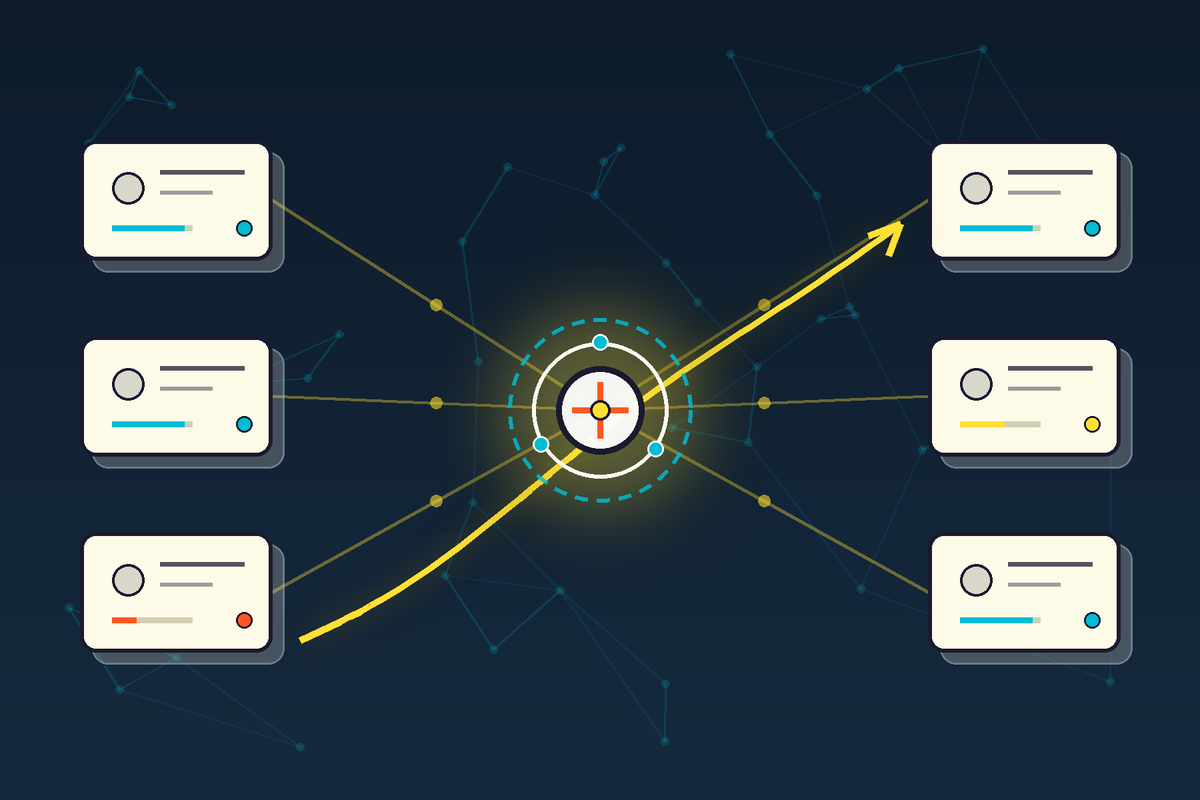
There is a moment in every subscription that nobody schedules. A customer opens a product they've paid for, does a little less than last week, and closes the tab a little sooner. No complaint. No cancellation. Just a quiet drift. Multiply that moment by a few thousand accounts and you get the single most expensive event in software - churn - and an entire industry has grown up around trying to catch it.
Look at the companies gathered here: Candu, Churn360, Churned, Avoma, Velaris, Apty, Cast.app, and looming over all of them, SAP. At a glance they look unrelated. One builds in-app widgets, one scores accounts, one listens to sales calls, one is a German enterprise giant with a fifty-year head start. But they are all pointed at the same target. They want to own the space between a customer signing up and a customer staying. That space used to be filled by a person with a spreadsheet and a good memory. Now it's a product category.
01 // THE METRICThe number that runs everything
To understand why this market exists, you have to understand one metric: net revenue retention, or NRR. It measures how much recurring revenue you keep and grow from the customers you already have, ignoring anyone new. If a hundred customers paid you a dollar last year and this year that same group pays you a dollar-ten, your NRR is 110%. You grew without selling anything to anyone new.
That number is quietly ruthless. Above 100%, a business compounds while it sleeps. Below 100%, every new customer the sales team drags in is partly refilling a bucket that leaks from the bottom. Investors learned to ask about it. Boards learned to obsess over it. And once a metric becomes that important, software shows up to defend it.
Acquisition is a sugar high. Retention is compounding. The uncomfortable math behind every one of these companies
02 // THE MAPEight players, one battlefield
The trick to reading this landscape is to stop thinking about it as a list of competitors and start thinking about it as a timeline of a single customer relationship. Each company sits at a different point on that line. Some try to prevent the drift. Some try to predict it. Some try to run the whole relationship so the drift never starts.
That's also why the market feels crowded but rarely head-to-head. Candu and a churn-prediction engine aren't really rivals - they're neighbors on the same street, one working the front door and one watching for the moving van. The friction, when it comes, is at the seams. A customer's health data lives in one tool, the record of what a salesperson promised lives in another, and the person meant to save the account has to hold both in their head. Most churn doesn't happen because a product failed. It happens in those gaps, where nobody quite owned the relationship.
03 // THE SHIFTFrom dashboards to doing
For a decade, customer success software mostly watched. It collected usage data, painted accounts red or green, and left a human to decide what to do. The interesting move happening now is that the software has stopped only watching and started acting.
Cast.app is the clearest example. It describes itself not as a platform but as an autopilot layer, and it doesn't just flag an at-risk account - it reaches out. Its AI agent will assemble a business review specific to your data, present it with a synthetic voice, answer follow-up questions, and nudge a renewal along. In its own words:
Cast is not a CRM or a CS platform - it's the autopilot layer that makes your existing stack customer-facing. Cast.app
Velaris comes at the same idea from the platform side, promising an AI layer that reads the whole relationship. Churned automates the prediction and even the prescription - its Co-Pilot suggests and applies retention plays. The direction is consistent across the board: less reporting, more doing. Whether that thrills or unsettles you probably depends on whether the customer success manager's job is yours.
04 // THE INCUMBENTWhy SAP wrote a $1.5 billion check
The most revealing data point in this whole landscape isn't a startup pitch. It's a purchase order. In 2024, SAP - the definition of legacy enterprise software - acquired WalkMe, the company that arguably invented the digital adoption category, for around $1.5 billion.
You don't spend that kind of money on a feature. You spend it on infrastructure you were late to build. SAP's bet is that helping customers actually use complex software is no longer a nice add-on but a core part of keeping them. When the incumbent buys the pioneer, it's a signal that the category has stopped being speculative. The startups in this story now compete in a market with a very large, very patient neighbor.
It also reframes what the smaller players are selling. Against a suite that big, focus becomes the pitch. Apty leans into it openly, arguing it can be live in weeks rather than the months a heavyweight rollout takes, at a fraction of the cost. Churned's founders came at churn as a pure prediction problem - the kind of narrow, math-first bet a professor would make - rather than trying to be everything to everyone. In a market with SAP in it, being smaller and sharper isn't a weakness to apologize for. It's the whole reason a buyer would look past the incumbent at all.
05 // THE STAKESWhat you can actually do with this
Strip away the funding rounds and the branding and there's a genuinely useful playbook here for anyone running a subscription business. The eight companies are, in effect, a checklist of where customers slip away.
Shape the first hour, because habits set fast - that's the Candu and Apty lesson. Keep a memory of every promise made on a call, so nothing falls through the handoff between sales and success - that's Avoma. Watch behavior for the early fade and act before the renewal, not at it - that's Churned and Churn360. And accept that most of the routine work of the relationship can now be automated, freeing the humans for the conversations that actually need a human - that's Velaris and Cast.app. You don't need to buy all eight. You do need to know which gap each one fills.
The best customer success tool is invisible. You never see the customer who almost left, because they never quite decided to. The paradox of retention software
There's a quieter theme running under all of it, and it's worth naming. Customer success started as a title, became a team, and is now becoming a product - and in the newest tools, a product that behaves like a person. That's an efficiency story and a jobs story at the same time. The market has decided the renewal matters more than the signup. What it hasn't fully decided is how many of the people who used to protect that renewal get to keep doing it.
For now, the gold rush is on the software. Eight companies, one moment, and a customer somewhere right now with their hand halfway to the cancel button - which, if any of this works, they'll never quite press.