Ask any SaaS founder when they usually find out a customer is leaving, and the honest answer is uncomfortable: on the day they leave. The renewal doesn't come through. The Slack channel goes quiet. The health score, if there even was one, was green until it wasn't. ZapScale, a customer success platform founded in 2021, exists to move that moment of discovery about three months earlier - back to when there is still time to do something about it.
The company builds software for B2B SaaS teams whose entire job is keeping customers. That is a narrower world than it sounds. Customer success sits between sales and support, owns renewals and expansion, and is measured on a metric - net revenue retention - that investors now treat as a proxy for whether a SaaS business actually works. ZapScale's pitch is that most teams manage all of this in spreadsheets and gut instinct, and that the tools built to replace the spreadsheets were designed for enterprises with a six-month rollout budget and a consultant on retainer.
01 / THE PRODUCTOne number, built from a lot of evidence
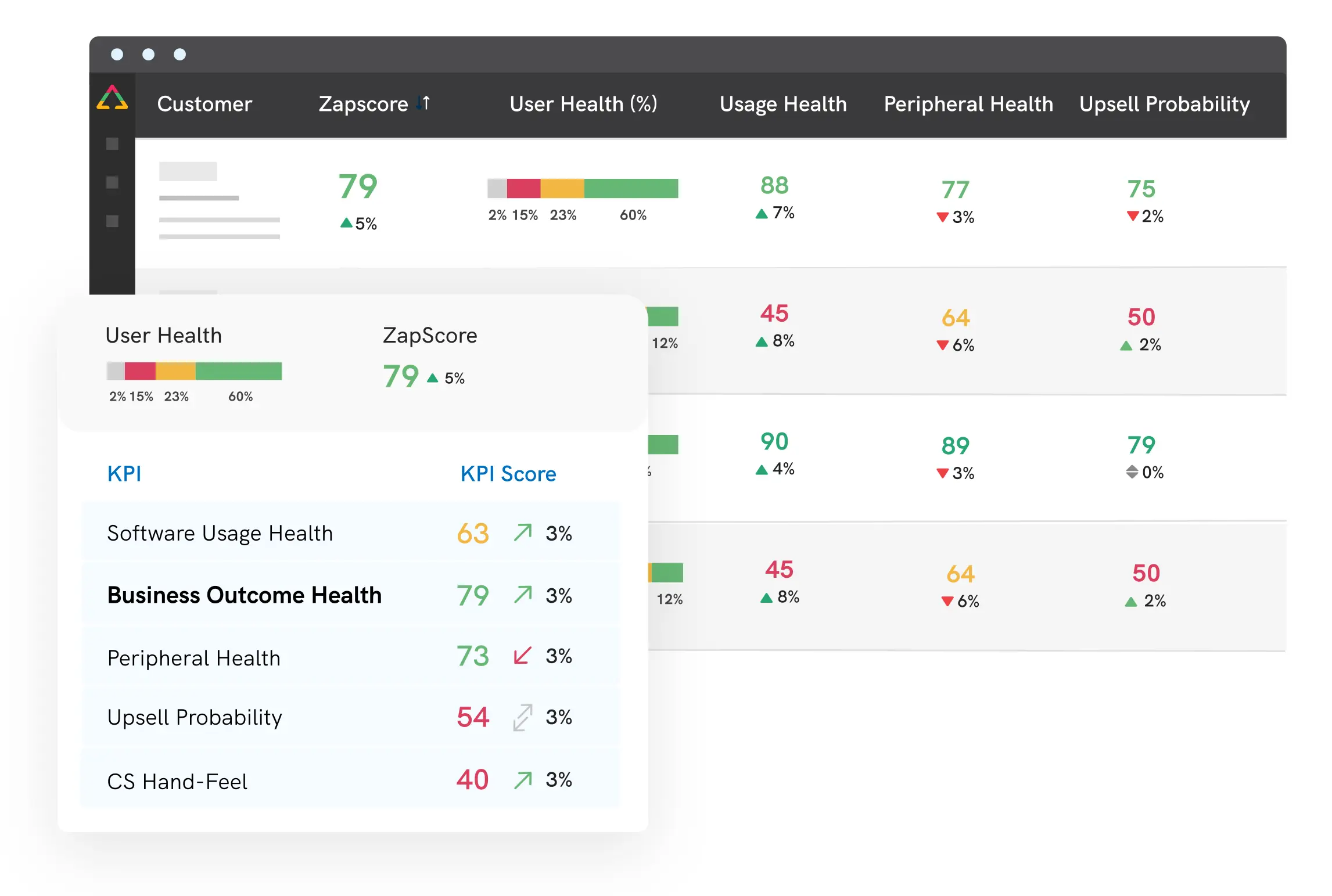
At the center of ZapScale is a customer health score. That is not a new idea - every platform in the category has one. What ZapScale argues is that most of them are guesses dressed up as data. Its version pulls roughly 150 data points from six different sources: product usage, support tickets, financial signals like invoices and payments, survey responses, and more. The result is a score the company calls "evidence-based," spread across 40-plus pre-built KPIs, so that when an account turns yellow a CSM can see why rather than just that it did.
Illustrative weighting of signal categories feeding a single account health score. Actual weights are configurable per team.
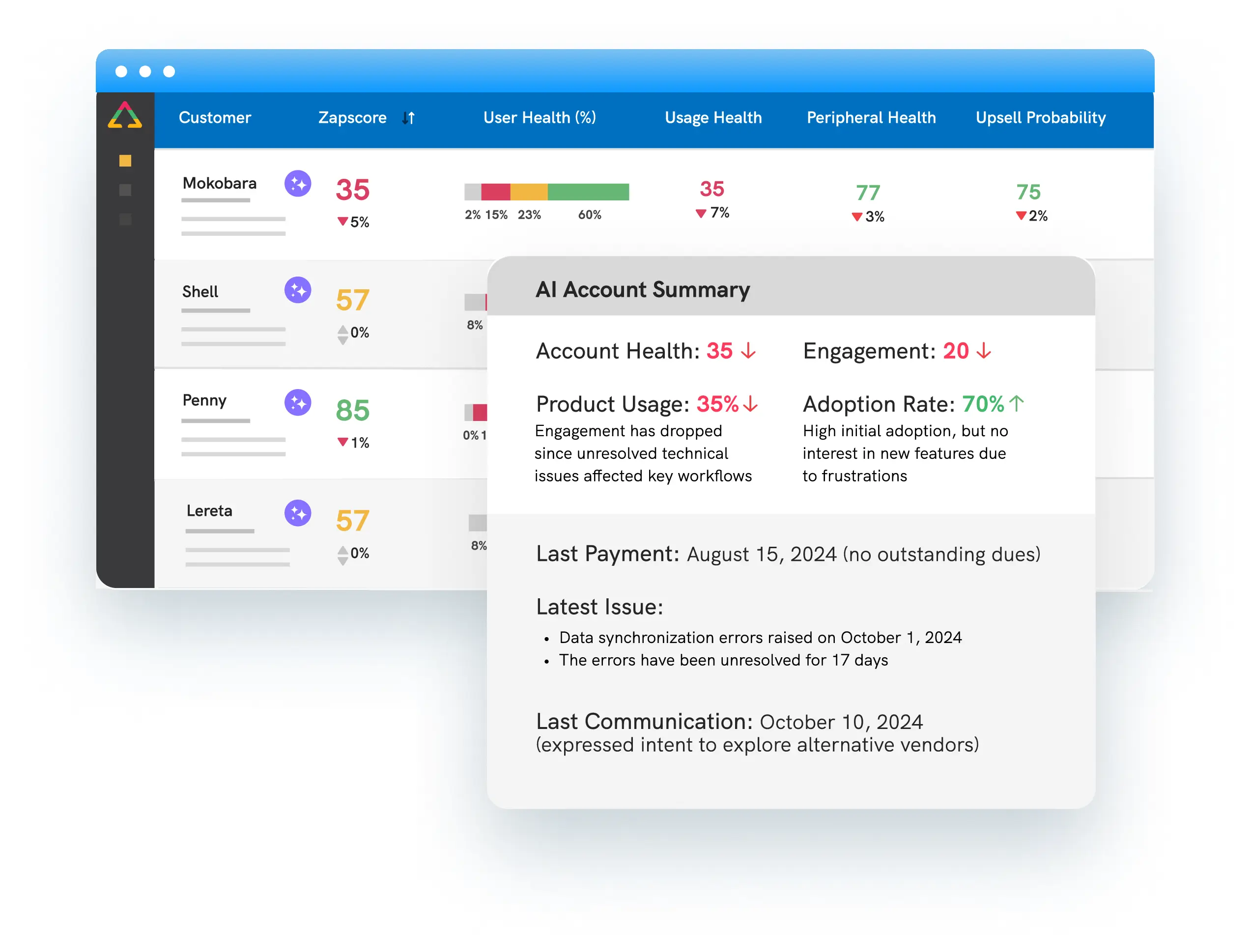
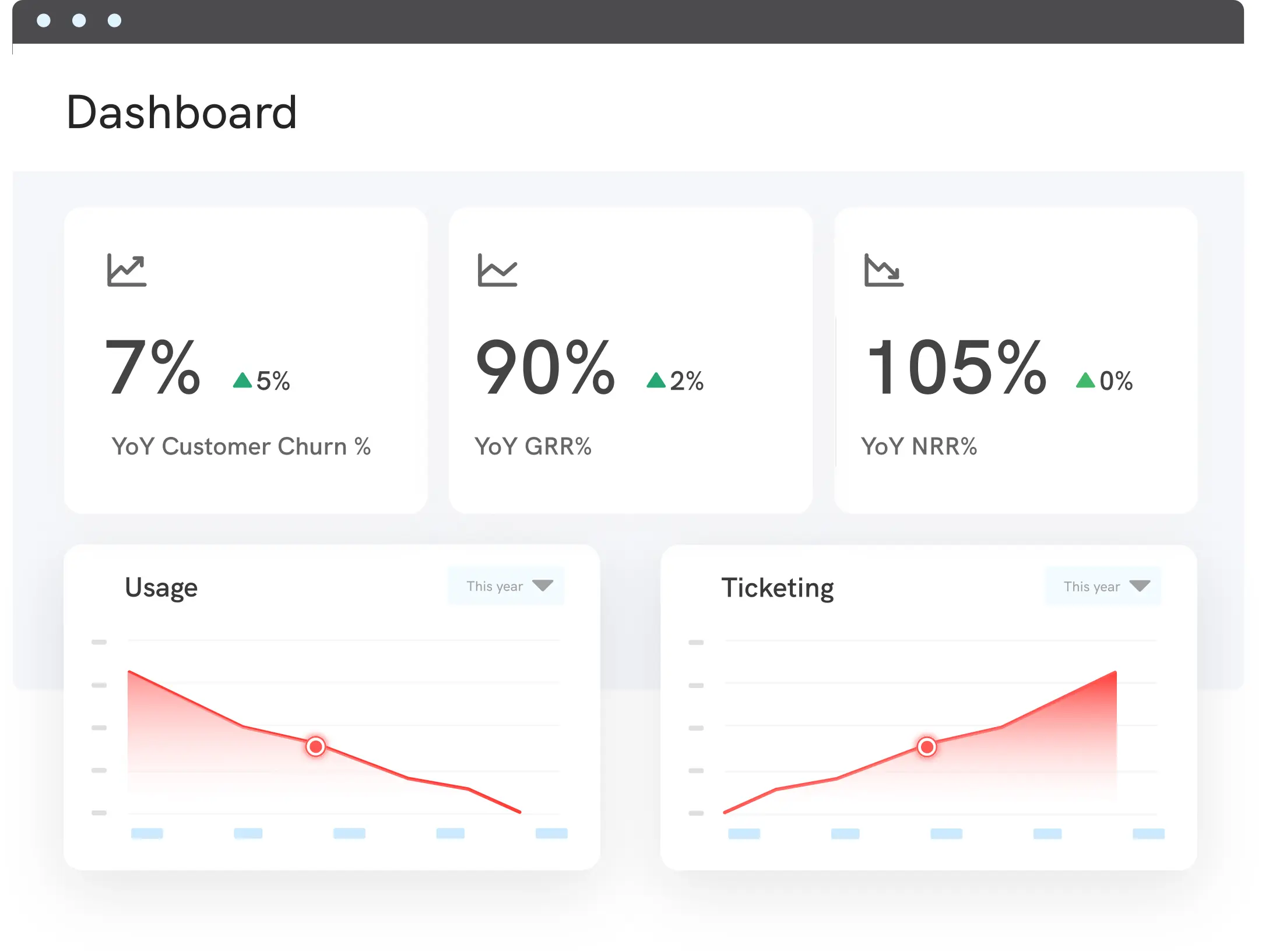
On top of the score sits the part that does the early warning: an AI-driven model that reads more than 40 dimensions to predict churn and, on the happier side, upsell. Around it, ZapScale ships a library of over 50 pre-configured playbooks - the automated sequences that fire when an onboarding stalls, a renewal approaches, or usage drops - plus dashboards for account segmentation, product adoption and CS team performance. More recently the company added AI assists that classify the shared inbox, write account summaries, and gauge customer sentiment.
02 / THE FOUNDERSA playbook, productized
The most useful thing to know about ZapScale is that its founders did not start with a theory about customer success. They started with a scar. Manasij Ganguli (CEO), Mausmi Ambastha (COO) and Bratish Goswami (CTO) had already built a SaaS company together, scaled it to more than 150 customers across 16 countries, and sold it in 2018 - a reported $12 million exit. Along the way they kept annual churn at roughly 1.5% and grew upsell revenue about 35%, largely through a homegrown system for tracking which customers were healthy and which were drifting.
ZapScale is, in effect, that internal system turned into a product other companies can buy. It is a familiar and underrated pattern in software: the best tools are often just someone's operations manual, generalized. Ambastha, a two-time founder with more than two decades in the trenches, has since become one of the more visible voices in the customer success community; the team also runs a podcast, Scale Tale, interviewing CS leaders. That combination - operators who lived the problem, then kept talking to people who still have it - shows up in the product's bias toward the mundane details that actually decide whether software gets used.
03 / THE WEDGEFast, or it doesn't matter
Which brings up the detail that best explains ZapScale's strategy. Most customer success platforms require a "Unique ID" to stitch a customer's records together across systems - a small technical demand that, in practice, turns setup into a multi-week engineering project. ZapScale dropped the requirement. It matches records using whatever it has: name, email, phone, domain, location. The payoff is a platform that can be live in minutes instead of months, and a G2 badge for "Easiest Setup" that the company clearly treats as a core selling point rather than a nicety.
This is the wedge. The incumbents in customer success software - Gainsight most of all - were built for large enterprises and priced and implemented accordingly. ZapScale is going the other direction, at the growing SaaS company that has outgrown the spreadsheet but cannot justify a heavyweight rollout. In a crowded category, "easiest and fastest" is a real position, not a slogan, because the thing that kills customer success tools is not missing features - it is a rollout that stalls before anyone trusts the numbers.
04 / THE MARKETSelling the instrument, not the dashboard
Customer success became a boardroom subject for a simple reason: in subscription software, keeping a customer is far cheaper than winning one, and net revenue retention above 100% means a company grows even if it never signs another logo. Everyone in SaaS now nods along to this. Fewer companies actually sell the instrument to move the number. ZapScale's argument is that its churn-and-upsell prediction is exactly that instrument - not another dashboard to admire, but a system that tells you which specific account to call this week.
Illustrative positioning based on public product descriptions - simpler and faster to deploy, aimed lower in the market than the enterprise incumbents.
The competitive set is not small - Gainsight, ChurnZero, ClientSuccess, Totango, Vitally and Custify all fish in the same pond, and some carry far bigger war chests. ZapScale's answer is not to out-feature them but to be the tool a mid-market team can actually turn on. So far the market has responded: the company has gathered 115-plus reviews and 21-plus badges on G2, and reported roughly $4 million in annual recurring revenue - reached while running lean before it raised outside money.
The people who actually live in the product are a specific bunch. Customer success managers use it to run their book of accounts without keeping a private spreadsheet on the side. CS leaders use it to see the whole portfolio's health at a glance and to defend a renewal forecast to the board. And founders of smaller SaaS companies - who often are the customer success function before they can afford to hire one - use it to answer a question that keeps them up at night: which of my paying customers is quietly unhappy? For all three, the problem ZapScale is solving is less about data and more about attention. There is always more customer signal than any team can read. The platform's job is to point a finite number of hours at the accounts that matter this week, and to make the case for why - so that a save happens while it is still a save, not a post-mortem.
05 / THE BUSINESSLean, cross-border, deliberately unglamorous
ZapScale sells its platform as a subscription, the standard B2B SaaS model, aimed squarely at small and mid-market customer success teams. The company is registered in Wilmington, Delaware, with much of its roughly 36-person team operating out of Noida, India - a cross-border structure that lets it sell into the US while keeping the capital efficiency that got it to meaningful revenue before its seed round.
That seed round arrived in June 2023: $2.5 million led by Blume Ventures, with Veda VC, Java Capital, 100X.VC, T2D3 Capital and Arka Venture Labs joining. The stated use of funds was unsurprising and on-brand - deepen the AI, grow in the United States. For a company whose entire premise is that customer success should be boring, easy and evidence-based, the funding pitch was refreshingly matched to the product: no reinvention, just more of the same, done for more people.
Whether that is enough to win a category with a billion-dollar incumbent is the open question. But ZapScale has picked a fight it can actually have - not "who has the most features," but "who can a growing SaaS team trust by Friday." In software, that has historically been the more winnable one.