How Four AI Tools Turn Customer Griping Into Roadmaps
Pendo, Idiomatic, Keatext and Zonka Feedback all promise the same thing - that the pile of reviews, tickets and survey replies your customers leave behind can become a to-do list. Here is how the category actually works, and where each tool fits.
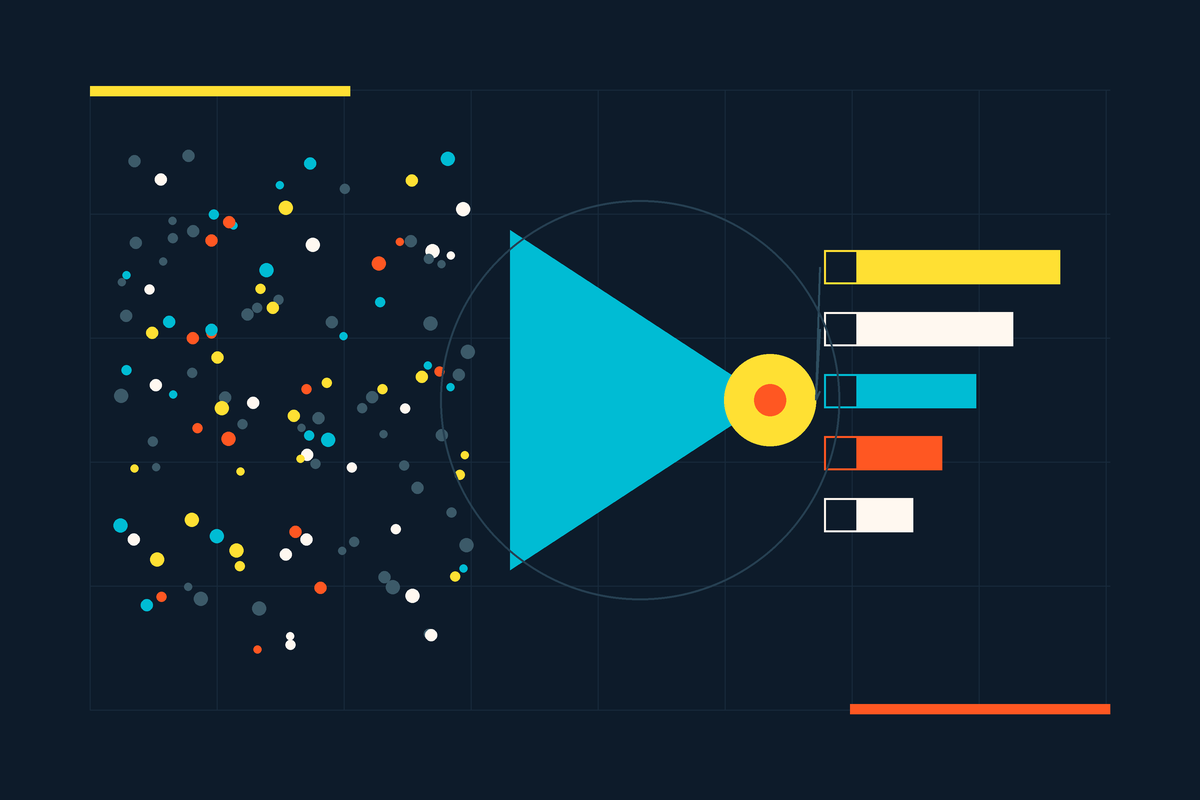
Somewhere in your company right now there is a folder, a spreadsheet, an inbox, or a support queue filling up with things customers have said. Most of it will never be read by a human. Not because anyone is lazy - because there is too much of it, and the person who would read it has a roadmap to ship. This is the quiet, unglamorous problem that Pendo, Idiomatic, Keatext and Zonka Feedback were each built to solve, and it is worth understanding as a category before you shop it as a purchase.
Call it Voice of Customer, call it feedback analytics, call it customer experience intelligence. The label changes; the job does not. A business collects a flood of unstructured opinion - tickets, reviews, NPS comments, survey replies, chat logs - and needs to convert it into a small number of decisions. What do we fix first? What is quietly costing us renewals? What is the loud complaint that is actually rare, and the rare complaint that is actually loud?
01 / THE SETUPThe math that makes this a category
Consider the volumes. A mid-size software company can generate several thousand support tickets a month, plus app-store reviews, plus a couple of NPS or CSAT survey cycles. Reading all of it, tagging it consistently, and turning it into a prioritized list is a full-time job for a team that most companies do not have. So the feedback sits there - collected, stored, and unused. A dashboard that shows you a satisfaction score is not the answer, because a score is a thermometer, not a diagnosis. It tells you the room is cold. It does not tell you the window is open.
What AI changed is the cost of reading. A model can classify ten thousand comments into themes in the time it takes to make coffee, assign each one a sentiment, and quantify how often a given issue shows up. That last word - quantify - is the whole game. Idiomatic built its reputation on exactly this framing: not "store your feedback" but identify and track every issue customers raise, then measure how big each one is so teams have data-driven criteria for where to spend. Once you can count the complaints, you can rank them. Once you can rank them, you have a roadmap.
02 / THE PIPELINEFrom a comment to a decision
Strip away the branding and every one of these tools runs the same basic pipeline. It is worth seeing it laid out, because knowing which stage a tool is strongest at tells you more than any feature list.
The reason there are four tools here and not one is that companies enter this pipeline from different doors. Some already have the feedback and are drowning in it. Some have the behavior data but not the words. Some do not have structured feedback at all and need to go ask for it first. That difference in starting point is what separates the four.
03 / THE FIELDFour tools, four angles
Pendo came at this from product usage. Founded in Raleigh in 2013 by Todd Olson and three co-founders, it pairs analytics about what users actually do inside your software with in-app surveys, guides and feedback prompts. Its bet is that the richest feedback is captured in context - a survey that fires the moment someone abandons a workflow beats a survey emailed a week later. That approach helped it raise around $356 million and cross a billion-dollar valuation by 2019.
Idiomatic came at it from language. Founded in Palo Alto in 2015, it made its name reading written feedback at scale - support inquiries, NPS responses, app reviews - and turning it into quantified, trackable issues for brands like Slack, Pinterest, Instacart, HubSpot and Disney. In November 2024, Front acquired it, folding real-time customer insight into its platform and rebranding the product as Siena Insights. That acquisition is a tell: text analytics has become infrastructure worth buying outright, not just a feature to admire.
Keatext also lives in language, with a sharper focus on recommendations. Its AI centralizes surveys, reviews and support tickets into a single engine, then surfaces the key drivers of satisfaction and the blind spots you were not looking for. Its pitch leans on speed - up and running in minutes, no models to train - and it counts Intuit, Lenovo and Hilton among its users. Where a lot of tools stop at "here are your themes," Keatext tries to hand you "here is what to do about them."
Zonka Feedback starts one stage earlier, at collection. Founded in 2014 by Rajiv and Sonika Mehta, it began as a tablet-based survey app - the kind you would hand a customer at a counter - and grew into an omnichannel platform spanning email, SMS, website embeds and mobile, with a 3.0 release in 2024 that layered AI over the whole thing. If your problem is that you do not yet have structured feedback flowing in, Zonka is built to fix that first, then help you close the loop.
04 / THE SPLITBehavior versus language
If you want one mental model to carry out of here, it is this: there are two schools in feedback analytics. One reads behavior - what users click, where they stall, what they never touch. The other reads language - what they type in a ticket or a review. Pendo is the clearest example of the first. Keatext and Idiomatic are the second. Zonka sits slightly apart because it is more concerned with getting the words out of customers in the first place than with parsing them.
The teams that get the most out of this category tend to use both schools together. Behavior tells you where people struggle; language tells you why. A drop-off on a signup step is a fact. The reviews explaining that the step asks for a credit card too early is the reason. Neither on its own writes the fix. Together they do.
05 / THE TAKEAWAYHow to actually choose
Start with where your feedback already lives. If it is locked up in how people use your product, and you want to survey them in context, Pendo is the natural home. If you are already sitting on a mountain of written feedback and need it read, sorted and counted, the language-first tools - Keatext, or Siena Insights carrying the Idiomatic engine - are built for that exact drowning. If you do not have structured feedback flowing in yet, Zonka Feedback is designed to open the tap and close the loop.
The test that cuts through every demo is simple. A feedback tool is only worth what it changes about what you build next. Judged that way, the score on the dashboard is worth almost nothing, and the short, ranked, quantified list of things to fix is worth almost everything. The four tools here are four routes to that same short list. The griping was always going to happen. The only question the category answers is whether anyone turns it into a plan.
Explore the tools
FAQQuestions worth asking
What is customer feedback analytics?
Software that gathers customer feedback from sources like support tickets, surveys, NPS responses and app reviews, then uses AI to classify it, measure sentiment, and surface the themes and issues worth acting on - so teams can prioritize what to fix or build.
How are Pendo, Idiomatic, Keatext and Zonka Feedback different?
Pendo pairs in-app product usage analytics with feedback and guidance. Keatext and Idiomatic (now Siena Insights) focus on AI text analytics that read written feedback and pull out themes. Zonka Feedback centers on omnichannel survey collection and closing the feedback loop.
What happened to Idiomatic?
Idiomatic, founded in Palo Alto in 2015, was acquired by Front in November 2024 and rebranded as Siena Insights, bringing real-time customer feedback analysis into Front's platform.
Why use AI for customer feedback instead of reading it manually?
Volume. A single company can collect thousands of tickets, reviews and survey replies a month. AI classifies and quantifies that at scale, turning it into a ranked list of issues instead of a backlog no one has time to read.
Which tool should a company choose?
It depends on where your feedback lives. If it is usage-plus-in-app, Pendo fits. If you are drowning in written feedback and want themes and recommendations, Keatext or Siena Insights (Idiomatic). If you need to collect structured feedback across channels first, Zonka Feedback is built for that.