How Survey Software Splintered Into a Dozen Niches
Refiner, Usersnap, Simplesat, PostHog, SurveyLab and a crowd of rivals each grabbed one slice of customer feedback. The old all-in-one survey builder never saw it coming.
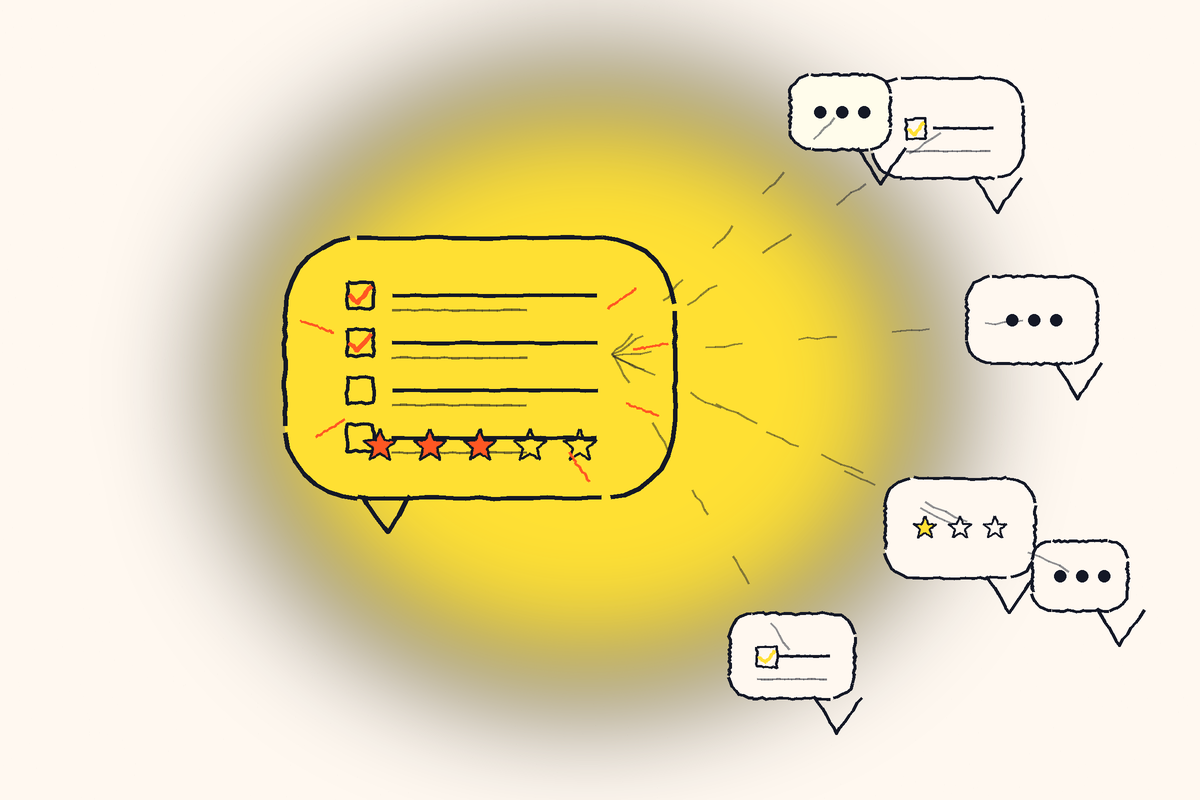
A decade ago, choosing feedback software meant choosing a survey builder. You picked one, you built forms, you emailed a link, you read a bar chart. One tool did the whole job because the job looked like one thing. That era is over, and the way it ended says something useful about how software markets actually mature.
Look at the names on the marquee today: Refiner, Usersnap, Simplesat, PostHog, SurveyLab, Formstack, Microsoft Forms, Checkbox. On paper they are competitors. In practice they barely touch. Each one has quietly claimed a slice of what used to be a single product, and the slices do not overlap the way rivals are supposed to.
The reason is simple once you say it out loud. "Ask the customer a question" was never one job. It was four or five jobs wearing the same label, and each one grew big enough to deserve a tool built only for it.
01The splitWhat the generalist could not do
The old all-in-one builder was good at one shape of feedback: you have a list of people, you have a set of questions, you send the questions to the people. Market research, employee pulse checks, event follow-ups. That shape still exists, and tools like SurveyLab, Formstack, Microsoft Forms and Checkbox serve it well - advanced logic, quotas, offline responses, forms that plug into a wider workflow.
But most of the interesting feedback stopped fitting that shape. A user hits a bug and wants to point at the exact pixel. A product team wants to ask a churning customer one question at the moment they hesitate, not three weeks later in an email. A support agent wants a rating attached to the ticket they just closed. None of those are "email a list a questionnaire." So new tools grew up around them.
02The specialistsFour tools, four different questions
Usersnap started in 2013 by treating a screenshot as feedback. A user circles the broken button, adds a note, and sends a bug report from inside the product. It is used by Canva, Instacart, Microsoft and Facebook - companies that could build this themselves and chose not to. That tells you the visual-feedback slice is real work, not a feature.
Refiner went the other direction. Instead of catching bugs, it catches intent. It runs microsurveys inside web and mobile apps for SaaS teams, firing an NPS or CSAT or CES prompt when a user reaches a specific moment. The whole pitch is context: the same question asked in-app, in the moment, beats the same question asked by email three days later.
Simplesat took the narrowest and clearest slice of all: support. It puts a one-click CSAT or NPS rating right inside the reply your support agent sends, so the survey is the email signature. There is no separate link, no separate page. For a help-desk team, that removes almost all the friction that kills response rates.
And PostHog reframed the whole question. It began in 2020 as open-source product analytics and now ships more than a dozen products - session replay, feature flags, A/B testing, and surveys among them. For a team already living in PostHog, a survey is not a separate tool. It is one more event in the same stream, so the answer to "what did they say" sits next to "what did they do."
03Follow the moneyPricing is the real strategy
If you want to know what a company believes, read its price list. In this market three pricing philosophies sit side by side, and each one encodes a different bet about what surveys are.
PostHog's free tier alone tells the story: around a million events and thousands of survey responses a month at no cost, plus a free self-hosted open-source build. You do not give a product away like that unless it is a feature meant to pull you toward something else. Meanwhile a dedicated builder has to charge for the builder, because the builder is the whole business.
04The takeawayHow to actually choose
Here is the framework worth stealing. Do not start by comparing feature lists. Start by naming the question you are trying to answer, then let that pick the tool. The vendors have already sorted themselves by job, so matching the job to the tool does most of the work for you.
Want to catch bugs your users see but cannot describe? Usersnap. Want to ask a churn-risk user one thing at the right moment inside your app? Refiner, or PostHog if you already run your analytics there. Want to measure how your support team is doing without adding friction? Simplesat. Want a polished questionnaire sent to a list, with logic and quotas? SurveyLab or Formstack. Need something free and already installed? Microsoft Forms.
The tidy story would be that this market consolidates - one winner buys the rest and rebuilds the all-in-one. It might. But the more likely outcome is that the split holds, because the split reflects something true. A bug report and a market-research questionnaire are not the same thing, and pretending they are is how the old generalist ended up mediocre at both.
Open source ate infrastructure, then monitoring, then analytics. PostHog folding surveys into a free tier suggests feedback is next on that list. Whether the specialists hold their slices or get absorbed into platforms, the lesson for anyone building a horizontal tool is the same: check whether your one job is secretly four. If it is, someone is about to build a better scalpel than your Swiss Army knife.
What is the difference between all these customer feedback tools?
They own different jobs. Usersnap handles visual bug feedback and annotated screenshots. Refiner runs in-app and mobile microsurveys (NPS, CSAT, CES). Simplesat focuses on support-team satisfaction. PostHog treats surveys as one product inside a wider analytics platform. SurveyLab, Formstack, Microsoft Forms and Checkbox cover classic standalone survey and form building.
Which survey tool should a SaaS product team choose?
For feedback tied to in-app behavior, Refiner or PostHog fit best - Refiner for dedicated microsurveys, PostHog if you already use it for analytics and want surveys in the same event stream. For visual bug reports, Usersnap. For polished standalone surveys sent to a list, SurveyLab or Formstack.
Is there a free customer feedback tool?
Yes. Microsoft Forms is free with most Microsoft 365 subscriptions, and PostHog has a generous free tier (around 1M events and thousands of survey responses per month) plus a free open-source self-hosted option.
How is survey software priced in 2026?
Three models coexist. PostHog charges per response (from about $0.10, dropping toward $0.01 at high volume). Classic builders like SurveyLab, Formstack and Checkbox price by seat or plan tier. Some, like Microsoft Forms, bundle surveys into a broader subscription at no extra cost.
Why did the survey market split instead of consolidating?
Because "ask the customer a question" was never one job. A bug report, an in-app retention prompt, a post-support rating and a market-research questionnaire need different tools. Each slice grew large enough to support a focused product that beats the generalist at that one task.