expense-management
(43)
Airbase and the Cost of Asking Too Late
A company can approve a purchase in minutes and spend weeks explaining it. Airbase built a business around closing that gap - and gave Paylocity a route from payroll into the rest of the company’s spending.

Finally Wanted to Finish the Books. The Books Outlasted Finally.
Finally put bookkeeping, corporate cards and back-office chores under one roof. Its September 2026 wind-down leaves a sharper question: what, exactly, should survive the company you hire to handle your money?

The Sneaker Bank That Outgrew Sneakers
A banking startup found its first customers in sneaker raffles. When that market fell apart, Slash used the lesson - build around the customer's actual money movements - to pursue a much bigger business.
The Fine Print Behind PayEm's $247 Million Headline
PayEm set out to turn every company purchase into a controlled, traceable decision. Its journey from expense-report frustration to a $500,000 acquisition is also a lesson in reading fintech's biggest numbers carefully.

Serko’s big business is behind your business trip
The Auckland software company put its technology inside Booking.com for Business and bought a bigger seat in corporate travel. Now it must make growing booking volumes pay - while teaching AI to handle the itinerary.
Dext built a business on the receipts nobody wants to type
Receipt Bank grew by tackling the drudgery before the ledger. Now part of IRIS, Dext is expanding into data checks, AI assistance and payments - with a business case that still comes down to minutes saved.
Webexpenses Wants the Receipt to Disappear Before Finance Has to Chase It
The Witney software company has spent 25 years turning the office's least-loved ritual into a controlled flow of data. Its bet is simple: catch the receipt, policy breach and coding error while the purchase is still fresh - not during month-end archaeology.

ANNA Money Put the Accountant Inside the Business Account - Then Made the Card Miaow
Britain did not need another coral-coloured card. ANNA bet that small firms needed the invoices chased, receipts matched and tax calculated around it - all through a chat that knows when to call a human.

BILL Put the Back Office on Autopilot - Then Turned It Into a $371 Billion Money Highway
Small businesses came for fewer checks and cleaner approvals. BILL stayed to build the payment rails - a network moving more than 1 percent of U.S. GDP while quietly turning accounting chores into transaction revenue.

The Expense Report That Refused to Die: How Concur Turned an $8 Million Near-Miss Into SAP’s $8.3 Billion Cloud Bet
Concur began with floppy disks and a universal workplace nuisance. Three pivots, one near-death cloud bet and a record SAP acquisition later, it is trying to make the expense report disappear altogether.
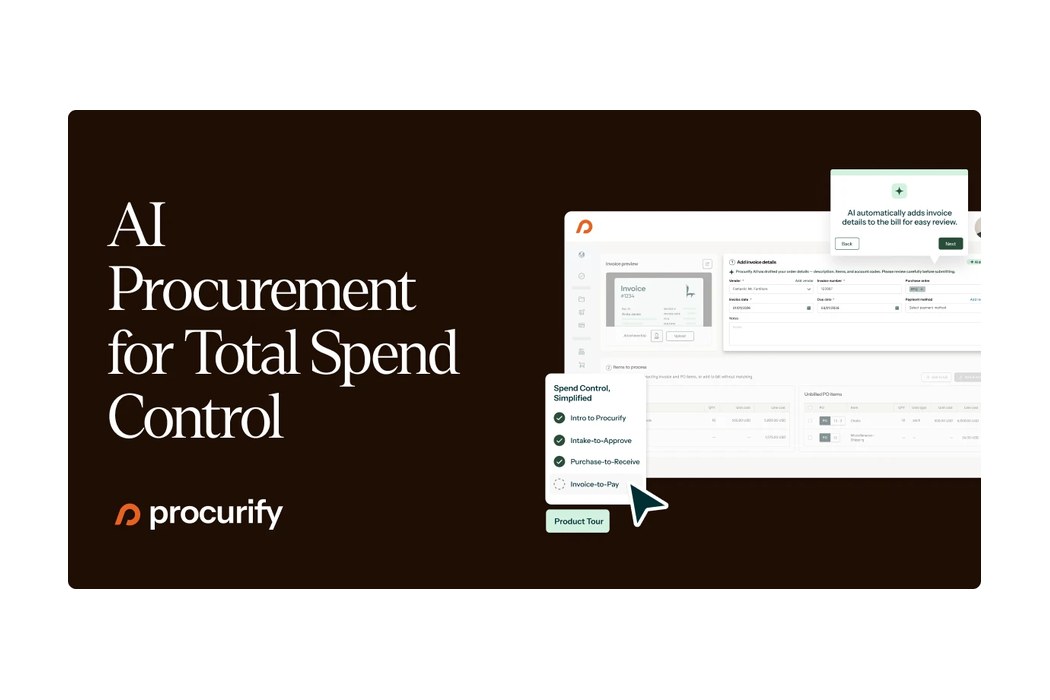
Procurify Wants to Catch Every Bad Purchase Before the Money Moves
The Vancouver company found a valuable gap between spreadsheets and enterprise procurement suites. Now it is betting that a decade of customer spend context can turn AI from a chatty assistant into a careful operator.

Torpago Quit Chasing Ramp - and Turned the Banks Into Customers
Brent Jackson built a credible corporate-card challenger, then decided he was fighting in the wrong arena. Torpago's sharper bet is to give community banks the software, controls and operational muscle to run modern card programs under their own names.

The $99-a-Month On-Ramp to Enterprise Software
Jcurve built a business around the awkward moment when accounting software stops being enough. Its answer is an ERP ladder - start small, connect the moving parts, and keep climbing without ripping everything out again.

Flex
Flex is an AI-native private banking platform for high-net-worth, middle-market business owners. It bundles credit, business and personal banking, payments, AP automation, expense management, and ERP-style tooling into a single super app aimed at owner-operators of $3M-$100M revenue companies.
Corpay
The company once known for fuel cards now sits inside invoices, hotel bookings, foreign-exchange trades and millions of everyday business purchases. Its next act is a deliberate turn toward corporate payments - with AI, APIs and new settlement rails layered onto an unusually physical financial network.

American Express
American Express began by moving parcels, gold and cash. Today, its most valuable cargo may be the information flowing between cardholders, merchants and a network it controls end to end.

Cardda
Cardda is a Chilean fintech (YC W22) building all-in-one spend management for Latin American businesses. It combines virtual and physical corporate cards, automated local and international transfers, reimbursements, and accounts payable in one dashboard, plus a payments API for mass payouts. It plugs into Chile's SII tax service and ERPs like SAP, Oracle, Defontana and Nubox, giving finance teams real-time control over company spending.

Peakflo
Peakflo is a Singapore-founded, Y Combinator-backed (W22) finance automation platform that puts B2B accounts receivable and accounts payable on autopilot. It connects to accounting systems and ERPs to automate invoice collections, bill payments, expense reimbursements and reconciliation, helping finance teams get paid faster, cut vendor payment time and reclaim thousands of hours a month. Positioned as the AI-native alternative to legacy AP/AR tools for the mid-market and Southeast Asia.

Schoolable
Schoolable is a Lagos-based fintech (Y Combinator W'19) building financial infrastructure for African education. Through a web platform for schools and a mobile app for parents, it helps private K-12 schools collect fees on time, reconcile payments, run payroll and manage expenses, while letting families plan, save, borrow and pay school fees in installments. Founded by Henry Chibuzo and Angela Essien, it operates on the premise that access to affordable finance is the biggest barrier to quality education in Africa.

HALA
HALA is a Riyadh-based fintech building the 'bank of the future' for small and medium enterprises across Saudi Arabia and the wider MENA region. Founded in 2018 by Esam AlNahdi and Maher Loubieh, it combines business IBAN accounts, card issuance, POS and soft-POS payment acceptance, expense management and SME financing into a single platform regulated by the Saudi Central Bank (SAMA). HALA serves more than 140,000 businesses, processes over $8 billion in annual transactions, and in September 2025 raised a $157 million Series B - one of the largest fintech Series B rounds in the Middle East - at a reported valuation near $900 million.

Mekari
Mekari is Indonesia's leading business software company, offering a unified SaaS ecosystem that helps companies run HR, payroll, accounting, CRM, expenses, and digital signing on a single connected platform. Formed in 2019 from the merger of Sleekr, Talenta, Jurnal, and Klikpajak, Mekari now serves roughly 300,000 businesses and more than a million users across the country, positioning itself as the operating backbone for Indonesian SMBs and enterprises going digital.
Opsigo
Opsigo is a Jakarta-based travel technology company that helps travel agencies and corporations run business travel end to end. Founded in 2014, its cloud platform bundles an online booking engine, a corporate travel-and-expense management system (Opsicorp), and a mid-to-back office finance engine (Opsifin). Opsigo aggregates content from more than 200 airlines and 300,000+ hotels, connects 40+ Indonesian travel agencies, and processes over IDR 1 trillion in transactions per month, positioning itself as the digital backbone for a market where conventional agencies still dominate.

Plover
Plover is a Singapore-based corporate travel and technology company that simplifies business travel through a wholly owned, cloud-based SaaS platform. Founded in 2017, it combines a full-service travel management company (TMC) with proprietary apps for travel booking, expense management, and workspace management. Plover describes itself as builder of Asia's first fully integrated corporate travel, expense and workspace platform, offering GDS, NDC and Direct Connect airline content plus global hotel aggregators to corporates and travel agencies across the Asia Pacific region.

Wafeq وافِق
Wafeq is a cloud accounting and e-invoicing platform built for small and medium businesses across Saudi Arabia and the UAE. Founded in 2019 by Nadim Alameddine, it gives SMEs and accounting firms ZATCA- and FTA-compliant invoicing, VAT and corporate tax reporting, payroll, inventory, and 40+ financial reports in one Arabic-and-English interface. The platform processes roughly 2 million invoices worth about $400 million every month and serves more than 10,000 customers, with the vast majority of activity in Saudi Arabia.

Weel
Weel (formerly DiviPay) is a Sydney-based fintech that gives Australian and New Zealand finance teams an all-in-one corporate card and spend management platform. It combines virtual and physical Visa cards, budget controls, approval workflows, accounts payable automation and AI-powered receipt and invoice capture so businesses can track every expense - from a coffee to a large invoice - in real time and sync it straight to their accounting system.
WegoPro
WegoPro is a business travel and expense management platform that gives growing companies a single place to book flights and hotels, enforce travel policies through multi-level approvals, and automate expense reporting with real-time analytics. Formerly the Singapore-founded SaaS startup Travelstop, it was acquired by Middle East travel marketplace Wego in September 2023 and relaunched as WegoPro in January 2024, initially across seven MENA markets. The platform pairs consumer-grade booking experience with finance-team controls, aiming to reduce travel costs and administrative overhead for small and mid-sized businesses.

Exponent
Exponent is a New York-based fintech building a financial operating system for America's franchise operators. It combines expansion and acquisition lending, a franchise-focused corporate charge card, and an AI-powered accounting suite so multi-unit operators - the people running dozens of Burger Kings, Dunkins, or Wendy's - can get capital faster and see real-time financials without waiting for month-end reports. Founded in 2023 and led by former Visa and Stripe executive Sohel Roopani, Exponent serves 100+ operators representing over 10,000 locations and raised $40M in equity and credit in 2026.

Hyperbots Inc.
Hyperbots is an agentic AI company building finance and accounting co-pilots for mid-market enterprises. Its platform automates core workflows - procure-to-pay, order-to-cash, expense management and analytics - by converting unstructured financial documents into structured, ERP-ready data. Founded in 2023 and headquartered in Dover, Delaware with engineering in Bengaluru, the company reports 99.8% document accuracy and up to 80% straight-through processing, and in 2025 raised a $6.5M Series A co-led by Arkam Ventures and Athera Venture Partners to expand in the U.S. and launch HyperLM, a large language model trained specifically on finance data.

Lili
Lili is a New York-based financial technology company that runs an all-in-one business banking platform for small businesses. It bundles a fee-free business checking account with built-in accounting, expense management, invoicing, automated tax savings and high-yield savings - collapsing tools that owners would otherwise stitch together. Founded in 2018 by Lilac Bar David and Liran Zelkha, Lili started serving freelancers and solopreneurs and has since repositioned toward growing, multi-employee small businesses. Banking services are provided through partner bank Sunrise Banks, N.A., Member FDIC.

Pliant
Pliant is a Berlin-based B2B fintech that turns corporate payments into programmable infrastructure. Its API-first platform lets companies issue physical and virtual credit cards, automate spend controls and receipt handling, and plug card data straight into accounting systems like DATEV and NetSuite. Through its cards-as-a-service model, banks and software platforms can launch their own branded card programs. Founded in 2020 by Malte Rau and Fabian Terner, Pliant runs on the Visa network across 30-plus countries, serves more than 3,500 businesses, and raised a $40M Series B in 2025 to expand into the United States.