energy-infrastructure
(32)
The Clean-Energy Fight Happens Before the Hearing
Bantam Communications has built a business around an awkward truth: a technically sound energy project can still die in a county meeting. Its answer is part research desk, part political campaign, and part software command center.
MDM Corp.: Before the first shovel, the first conversation
An Arizona job posting asks for a right-of-way agent who speaks Navajo. That small requirement explains a great deal about MDM Corp., the company working where energy projects meet land, people, and permission.
Baker Electric Bought a $4,000 Shop. Then It Rewired Who Owns It.
From cruise-ship shore power to desert batteries, Baker Electric builds the connections behind California’s energy ambitions. Its own big connection is between the people doing the work and the people who own the business.
ATCO’s 15-Trailer Playbook for Building What Everyone Needs - and Surviving What Breaks
ATCO grew from 15 utility trailers into a C$28 billion-asset group by pairing dependable networks with buildings that can move. Its next test is whether that same portfolio logic can absorb grid bottlenecks, policy uncertainty and a C$2.9 billion pipeline bet.
Invenergy’s 38-Gigawatt Trick: Build the Power Plant, the Contract, and the Patience
The Chicago power builder became North America’s largest privately held independent producer by treating energy as a full-stack business. Its advantage is execution across decades - and its latest pivots show exactly where that model bends.
Longroad Energy Stopped Flipping Solar Farms - and Bet Billions on the Boring Part
The Boston renewable-energy builder discovered that the valuable part was not merely finishing projects. It was owning the machines, contracts and operational headaches for decades.
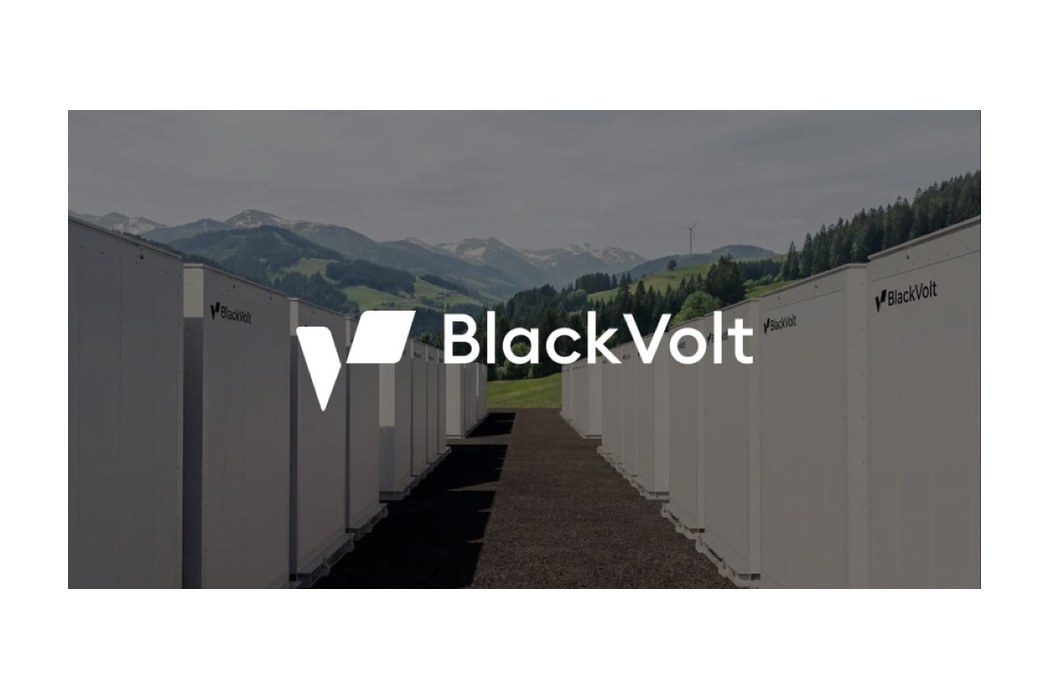
Blackvolt's Bet: Turn Austria's Messy Power Hours Into a Battery Business
Austria makes plenty of renewable electricity at the wrong moments. A capital-heavy infrastructure opportunity begins with one young company, two construction sites and a plan to get paid for moving electrons through time.
Triple Oak Power’s 8-Gigawatt Bet: Turn the Messy Middle of Clean Energy Into Something Banks Can Back
Triple Oak Power does not sell turbines. It sells uncertainty reduction - the patient work that turns wind, land, grid access and local consent into financeable power projects.

Toshiba Lost the Living Room. Can It Win the Infrastructure Underneath Everything?
The 150-year-old Japanese icon survived scandal, a nuclear wipeout and a rejected breakup. Now private, leaner and newly profitable, it is betting that the best place to rebuild a household name is far outside the household.
The Fusion Bet That Looks Like a Barbell, Not a Donut
Most fusion companies bend plasma into a ring. Realta Fusion is betting that a straight magnetic bottle - built for industrial heat first - can make the economics less contorted.
The Climate Investor With an Unfair Advantage: Its Customers Are Already in the Room
Energy Impact Partners built a venture firm around a stubborn fact: energy startups do not scale on capital alone. Its coalition model puts the utilities and industrial companies that might buy, test and deploy new technology inside the investment platform.
The Power Broker Behind the AI Boom
ECP spent two decades learning how electricity actually gets made, moved and financed. Now AI has turned that unfashionable expertise into one of private markets' most valuable specialties.
The Firm That Bet on Boring and Made $41 Billion
Founded in 1984, Kayne Anderson built a $41 billion alternatives platform by specializing in the unglamorous middle market - oil wells, storage units, and student housing - where cash flow, not hype, does the talking.
The Venture Firm Betting the Next Tech Boom Will Wear Steel-Toed Boots
Construct Capital raised $740 million across three fundraising cycles by arguing that factories, freight networks and energy systems deserve the same software ambition once reserved for the screen. Its wager is now colliding with the age of physical AI.
Keel Infrastructure Is Betting the AI Boom Will Be Won Before the Servers Arrive
The company formerly known as Bitfarms has traded Bitcoin mines for a 2.2-gigawatt pipeline of powered sites. Now it has to turn scarce megawatts into long-term tenants.
Tesla Wants to Sell You a Car - Then Replace the Grid Around It
The company that made the electric car feel inevitable is now trying to turn vehicles, batteries, chargers and software into one enormous machine. The cars still pay most of the bills, but Tesla's next argument is about infrastructure.
The Bloom Box Was Built for Mars. AI Made It Urgent.
Bloom Energy spent a quarter-century turning a NASA-inspired ceramic fuel cell into an onsite power business. Now the grid bottleneck - and AI's appetite for electricity - has made the once-futuristic Bloom Box a very practical machine.
Vestas Built 200 Gigawatts of Wind - Now the Real Business Is Keeping It Spinning
The Danish manufacturer sells machines the height of skyscrapers, then stays for decades to keep them productive. Its 200-gigawatt installed base has become both an engineering record and a service network competitors must chase.
The $4.50 Cleaning Bet That Now Runs 6 Billion Square Feet a Day
ABM began with a bucket, a sponge, a mop and $4.50. Today it sells something far more complicated: the promise that airports depart, data centers stay awake and ballparks are ready before the gates open.
Ameresco Found a Way to Make Old Buildings Pay for Their Own Future
The Framingham company sells a practical bargain: modernize the systems everyone depends on, then use the avoided utility bill to help pay for the work. Now data centers are turning that old energy-services idea into a new power-infrastructure business.

Netceed
Netceed sells the unglamorous pieces that make modern networks possible - then adds the engineering, inventory and logistics discipline that keeps thousands of those pieces arriving in the right order.
Tennessee Valley Authority
TVA sells electricity, manages a river and recruits factories - a New Deal institution now being tested by record demand, a multibillion-dollar buildout and the uncertain promise of small nuclear reactors.
Pembina Pipeline Corporation
Pembina spent seven decades turning one Alberta oil line into a continental chain of pipes, plants, caverns and terminals. Now that same network is being asked to move Canadian molecules to Asia, feed petrochemical plants and power the AI economy.

Vela Energy
Vela Energy builds AI execution agents for large-load energy projects, automating the procurement, permitting, and engineering-study work that stalls data center and utility interconnections. Founded by Tarun Batchu and Tony Li and backed by a16z Speedrun and Z Fellows, the company aims to be the intelligence layer that helps developers, utilities, and data centers move projects through the interconnection queue faster while keeping licensed engineers in control of every decision.

Symphony Infrastructure Partners
Symphony Infrastructure Partners is a Sydney-based energy transition infrastructure services platform that develops, delivers, owns and operates high-voltage grid-connection infrastructure for Australia's renewable energy, storage and data-centre projects. Founded in 2022 by Steve Butler, Symphony offers an end-to-end integrated solution - from grid strategy and engineering design through HV construction, commissioning, operations and asset ownership - aiming to eliminate the connection bottlenecks that slow the rollout of wind, solar, battery and digital infrastructure. In 2024 it raised A$488 million in Series A financing led by Blackstone to fund a series of acquisitions and build one of Australia's leading independent connection-infrastructure platforms.

LineVision
LineVision is a Boston-based grid intelligence company that helps electric utilities get more capacity, reliability, and safety out of existing transmission lines. Its patented non-contact sensors mount on transmission towers - not the live wires - and pair LiDAR-based measurements of conductor position with AI-driven, hyperlocal wind forecasting and computational fluid dynamics to calculate a line's real-time thermal capacity. Through its Dynamic Line Rating, situational awareness, and asset-health products, LineVision typically unlocks 30%+ additional capacity on monitored lines at a fraction of the cost and time of building new transmission, supporting faster renewable integration and a more resilient grid.

Gridware
Gridware builds pole-mounted sensors and an analytics platform that give electric utilities real-time awareness of what is physically happening on their power lines. Its Gridscope device measures mechanical, electrical, and environmental signals directly at the pole, and its Active Grid Response platform turns those signals into immediate hazard detection, precise fault localization, and faster outage response. Founded in 2020 by three UC Berkeley graduate students - including a former lineman - Gridware aims to close the 'hazard awareness delay' that leaves utilities blind to fallen limbs and damaged lines until after they spark outages or wildfires.

Orenda, Inc
Orenda, Inc is a Brooklyn-based renewable energy company that develops, builds, and operates standalone battery energy storage projects across densely populated Downstate New York. Founded in 2020, Orenda handles the full lifecycle - site diligence, permitting, interconnection, engineering, construction, financing, and ongoing asset management - and pairs it with an AI/ML software platform that forecasts energy prices and optimizes when its battery fleets charge and discharge. The company claims roughly a 34% market share in New York City with a development pipeline of about 920 MW / 2.7 GWh, and is co-developing roughly 675 MW of distributed storage with the New York Power Authority.
Charge Robotics
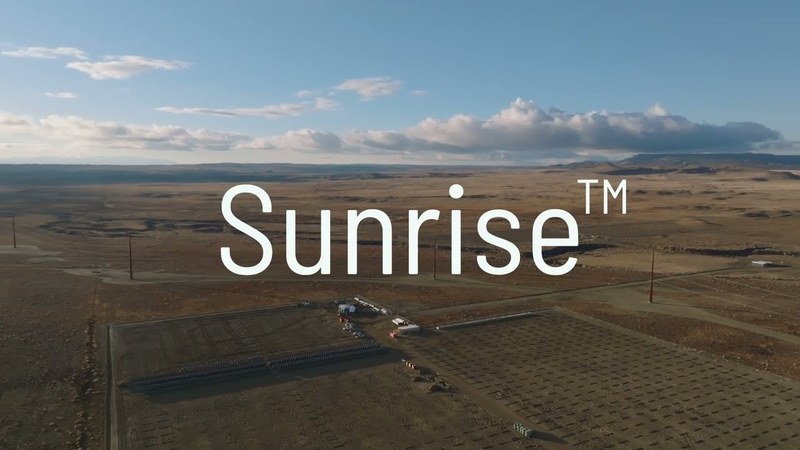
Charge Robotics builds robots that automate the most labor-intensive parts of building solar farms. Its flagship product, Sunrise, is a portable assembly line that ships to a project site, robotically snaps together solar 'bays', quality-checks them with machine vision, and uses an autonomous vehicle to place them in the field. Founded in 2021 by MIT engineers Banks Hunter and Max Justicz, the Y Combinator-backed company aims to be the 'Henry Ford moment for solar', removing the labor bottleneck that limits how fast the grid can go renewable.
Verne
Verne is a San Francisco climate-tech company building high-density cryo-compressed hydrogen (CcH2) storage and power systems. Founded in 2020 by Stanford and UC-Berkeley alumni, Verne developed a method to store hydrogen at up to 73 g/L - roughly 33% denser than liquid hydrogen and 87% denser than 700-bar compressed gas - without the cost of full liquefaction. After proving the technology on the world's first CcH2-powered Class 8 truck in 2024, Verne has expanded into turnkey zero-emission on-site power, targeting data centers, ports, construction sites and EV charging with modular hydrogen-to-power systems.