Breaking: Charge Robotics ships a factory to the desert Sunrise builds 40-foot, 800-pound solar bays autonomously Solar = 81% of new US power capacity in 2024 First field deployment with SOLV Energy ~$39M raised across seed, Series A & Series B The Henry Ford moment for solar Y Combinator S2021 - founded by MIT engineers Breaking: Charge Robotics ships a factory to the desert Sunrise builds 40-foot, 800-pound solar bays autonomously Solar = 81% of new US power capacity in 2024 First field deployment with SOLV Energy ~$39M raised across seed, Series A & Series B The Henry Ford moment for solar Y Combinator S2021 - founded by MIT engineers
Company Dossier · Clean Energy & Robotics

Charge Robotics

Robots that build solar farms. A portable assembly line called Sunrise rolls into the desert and turns the slowest job in clean energy into something that runs around the clock.

solar constructionautonomous robotsclimate techmachine visiony combinator
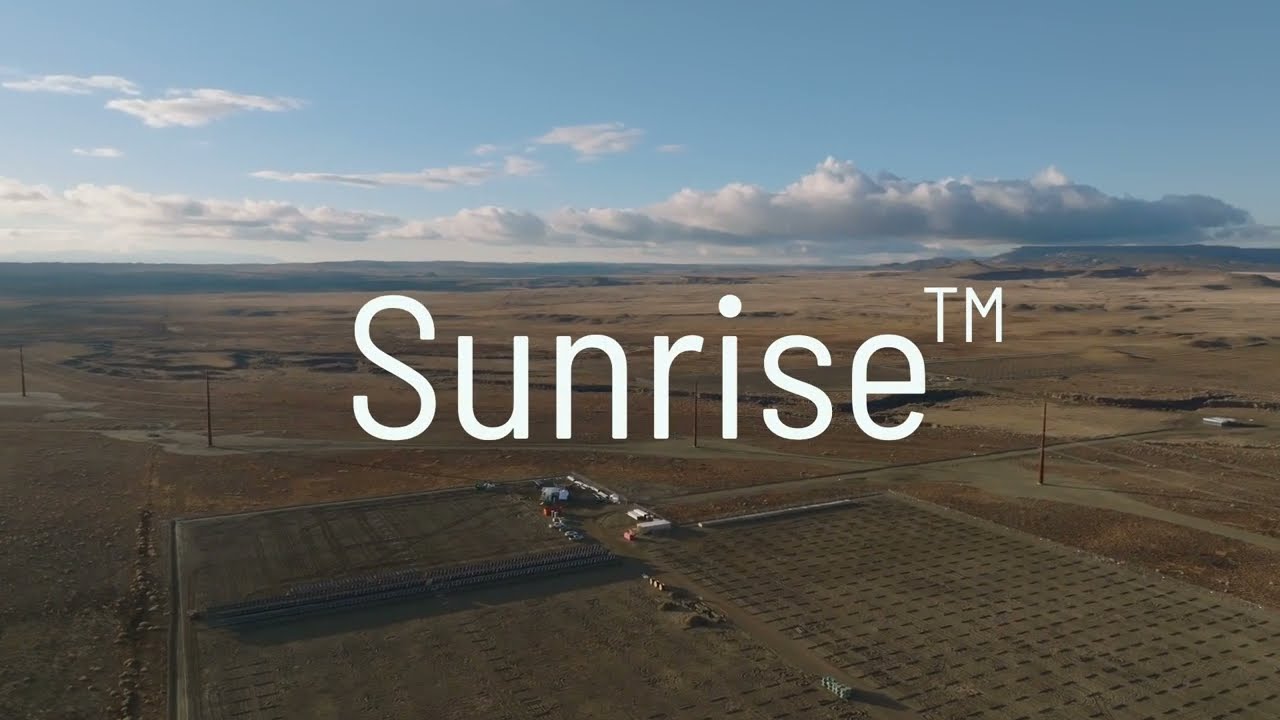
Charge Robotics Sunrise autonomous solar construction system in the field
SUNRISE, AT WORK. The trailer-mounted system that assembles, inspects, and places solar - no overtime, no coffee breaks.
2021
Founded
~$39M
Total Raised
800 lb
Per Solar Bay
24/7
Operation
The Scene

A factory shows up where a factory has no business being.

Somewhere on a flat stretch of California desert, a trailer unfolds into an assembly line. Steel tracks, mounting brackets, fasteners, and panels go in one end. Out the other end come completed solar "bays" - 40 feet long, roughly 800 pounds each - inspected by machine vision and carried into position by a robot that does not get tired, sunburned, or paid overtime. There is no factory floor here. The factory came to the field.

This is Sunrise, the flagship machine from Charge Robotics, and it exists to solve a problem that sounds almost too simple: the world wants more solar than there are hands to build it. In 2024, solar made up about 81% of new electric generating capacity added in the United States. The panels are cheap. The bottleneck is people - skilled crews bolting hardware together under a punishing sun, one bracket at a time.

Charge's founders looked at that and saw an assembly-line problem wearing a construction hat. So they built robots to do the bolting, and shipped the whole operation to wherever the next solar farm is going up.

This is the Henry Ford moment for solar.
- Banks Hunter, Co-founder & CEO
Origin

Two MIT engineers who actually went to the desert.

Banks Hunter ('15) and Max Justicz ('17) met at MIT and talked about starting a company as early as 2017. Hunter had spent five years as the second employee at surgical-robotics startup Vicarious Surgical; Justicz brought an electrical engineering and computer science background. What they didn't do was guess from a whiteboard.

They cold-called hundreds of people across the energy industry. They toured a massive solar site in the Mojave Desert and watched crews assemble hardware by hand. Hunter's reaction became the company's thesis: "There's no way that can scale to transform the energy grid."

Manual installation works fine for one project. It does not work when the grid needs gigawatts, fast, and the labor pool is finite. The founders reframed the whole thing - from bespoke construction to repeatable manufacturing - and in 2021 turned that idea into Charge Robotics, joining Y Combinator's Summer 2021 batch.

How Sunrise Works

An assembly line on wheels.

Ship to site

The portable, trailer-mounted system is delivered straight to the solar project site - no fixed factory required.

Feed & assemble

Tracks, brackets, fasteners and panels go in. Robotic arms place and torque them into completed solar bays.

Machine-vision QC

Cameras scan each bay for quality control, catching errors before anything reaches the field.

Autonomous placement

A self-driving robotic vehicle carries the finished 800-pound bay and sets it in its final position.


What It's For

Build more solar with the crew you already have.

For EPC Contractors

Beat the labor ceiling

Utility-scale solar builders hit a wall when they run out of skilled installers. Sunrise automates the most repetitive mechanical work so a project isn't capped by headcount.

For Developers

Faster, more predictable

A machine that runs 24/7 and assembles consistently means tighter schedules and fewer surprises between groundbreaking and grid connection.

For Safety

Fewer hands in harm's way

Heavy, repetitive lifting moves from people to robots. Crews supervise and handle the work machines can't, with the dangerous repetition automated away.

The Money

Backed to put robots in the field.

Roughly $39M raised to date - from a Y Combinator seed to a $22M Series B in March 2025 aimed at commercial deployments.

Seed (YC '21)
undisc.
Series A '24
~$17M
Series B '25
$22M

Series B investors include Climate Capital, E14 Fund, FoundersX Ventures, ATEL Capital Group & Gaingels. Bars are illustrative of relative round size.


The Trail

From cold calls to commercial deployment.

2021

Founded by MIT engineers Banks Hunter & Max Justicz; joins Y Combinator (Summer 2021).

EARLY 2024

First real-world field deployment of Sunrise, in partnership with SOLV Energy - one of the largest US solar installers.

JULY 2024

Raises a Series A to expand product development and market reach.

MARCH 2025

Publicly launches the Sunrise solar construction robotics system and announces a $22M Series B for commercial rollouts.

The assembly line robotically assembles all those pieces to produce completed solar bays.
- Banks Hunter, on what Sunrise actually does
Watch

See the robots build.

Sunrise: Fully Autonomous Solar Construction
YouTube · product demo
Sunrise Revolutionizes Solar Farm Construction
YouTube · founder walkthrough
Footnotes

Five things worth knowing.


Back to the Desert

The field, after Sunrise.

Return to that flat stretch of California desert. Before, it was a row of workers bending over the same bracket, the same bolt, the same motion - the limiting reagent of the energy transition, measured in aching backs and daylight hours. The panels were never the hard part. The hands were.

Now the trailer hums through the night. Bays roll off the line, get scanned, get carried into place by a machine that treats the thousandth bolt exactly like the first. The crews are still there - they just aren't the ceiling anymore. What used to scale with headcount now scales with machines.

Charge Robotics didn't invent solar. It changed who - or what - shows up to build it. And in an industry where the only thing in short supply was people willing to do the same hard task ten thousand times, that turns out to be the whole game.

Spread the word

in · LinkedIn X · Twitter f · Facebook Instagram
Find Them

Links & sources.