The easiest part of a wind farm is pointing at the wind. The hard part is persuading a rancher to sign a decades-long lease, proving the resource, finding a viable grid connection, studying birds and bats, surviving county meetings, securing a buyer and posting enough collateral that the transmission operator takes the project seriously. Triple Oak Power lives in that hard part.
Founded in Portland in 2020, Triple Oak is a utility-scale power-project developer, not the semiconductor manufacturer suggested by some business databases. Its raw material is an unruly bundle of rights and relationships. Its finished product is a project that an infrastructure investor can finance, build and operate. Sometimes Triple Oak originates the idea. Sometimes it acquires an early project. Either way, the job is to remove expensive reasons for the plan to die.
The product behind the productA project with fewer ways to die
Triple Oak’s economic customers are utilities, large commercial power buyers and the investors that eventually own generation assets. But a developer serves several constituencies before any electron is sold. Landowners supply the site. Counties decide land use. Grid operators decide whether and when a project can connect. Engineers, wildlife specialists and regulators decide whether the design is plausible. Each can halt the sequence.
The de-risking line / value rises as uncertainty falls
That sequence explains Triple Oak’s business model. The company spends time and development capital on land agreements, meteorological equipment, environmental work, engineering, interconnection studies and commercial negotiations. When the bundle becomes ready to build, it can be monetized through a sale or advanced with a capital partner. The exact margin is private, as are most project-level costs. What is public is the risk capital: in September 2025, First Citizens Bank supplied a $60 million credit facility for interconnection security postings across the pipeline.
That money was not the construction budget for 8 GW of power plants. It was closer to a very large, very serious queue ticket. Grid operators require security as projects move through interconnection. Without it, a developer can lose position or fail to meet obligations before construction finance even enters the room. Here the financing tool fits the bottleneck precisely.
“This financing was an important step in advancing our onshore wind portfolio, which is the cornerstone of our hybrid approach.”Kenneth Labeja, co-founder and CFO, 2025
The receiptPrairie Switch made the model real
An 8 GW pipeline is a possibility map, not an operating fleet. The cleanest proof that Triple Oak can move from map to machine is Prairie Switch in Wharton County, Texas. Triple Oak developed the 160 MW wind project and sold it ready-to-build to Fengate Asset Management in 2022. Fengate and Meta signed a long-term power-purchase agreement covering 100 percent of production. Forty-eight GE turbines later, the project reached commercial operation in 2024.
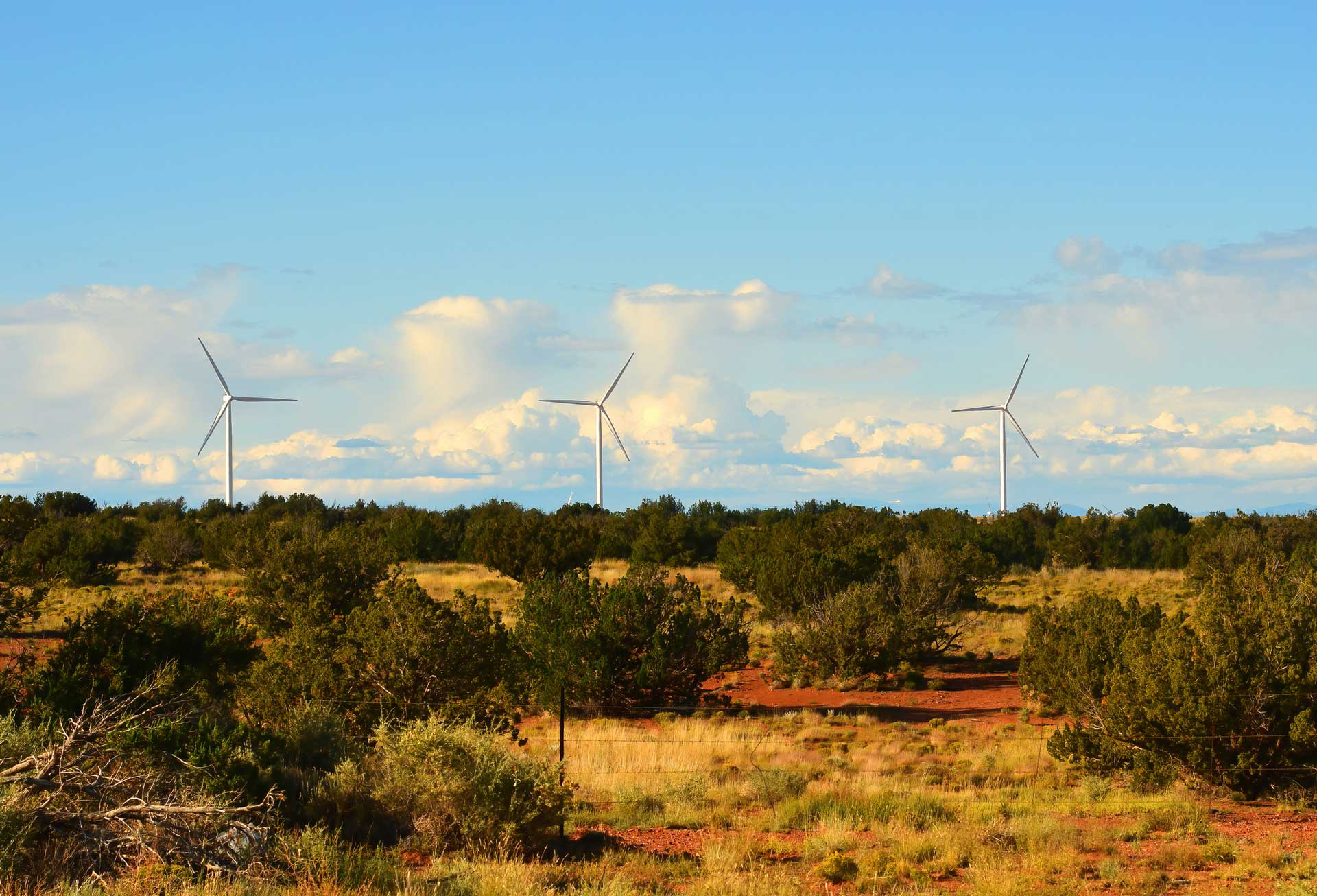
Prairie Switch is now estimated by its owner to produce the clean-energy equivalent of power for 50,000 homes and to avoid about 190,000 tonnes of carbon dioxide emissions annually. It also preserves ongoing farming and ranching around the turbines. For Triple Oak, however, the achievement was upstream: it transformed a prospective site into a contracted asset that another owner could finance.
What failed first? Public records do not identify a collapsed flagship project. The more useful answer is that the founders designed the company around the failure they had watched for years: the gap between an attractive early site and a shovel-ready facility. Early-stage uncertainty kills ideas before steel arrives. Triple Oak’s 2021 description was explicit - fill that gap. Prairie Switch showed the gap could be crossed.
Not all megawatts are equal
Capacity in MW from public project descriptions. Orange is operating; teal projects are proposed. Black Ridge’s public page also describes possible later expansion. Home Range is a multi-technology concept.
The change of mindFrom wind specialist to wind-plus
At launch, Gronner was blunt: Triple Oak focused on onshore wind because it was where the founding team could differentiate. Solar and batteries were possible companions, not the identity. The company still calls wind the cornerstone, but its portfolio now includes solar, battery storage and, in Kansas, planned natural-gas generation. That is a meaningful change rather than a branding flourish.
Home Range Clean Power began in 2021 as a wind development in southwest Kansas. Triple Oak says surging electricity demand changed the design. The current proposal combines wind, 400 MW of solar, a 400 MW battery system and flexible generation in an approximately 1,000 MW campus intended to serve customers that care about round-the-clock availability. Finney County approved special-use permits for the solar and storage pieces in June 2026. Construction remains proposed, with operations targeted for 2029.
The change is commercially legible. Wind can be cheap and abundant but variable. Solar peaks at different hours. Batteries shift production across time but do not create energy. Flexible generation can cover longer gaps. The package gives a developer more ways to match a buyer’s load and a grid’s needs. It also creates more permits, equipment, counterparties and political complexity. Wind-plus works when complementarity is worth that added burden. It does not work merely because a slide looks better with four colored icons.
The human gridFarmers are partners, not background scenery
Triple Oak’s public materials return obsessively to farms and ranches. This is practical. A wind development may cover tens of thousands of leased acres while turbines, roads and related equipment occupy less than 2 percent of that area. Agriculture can continue around the hardware, and lease payments can smooth volatile farm income. At Colorado’s proposed Sentinel project, more than 30 ranchers and landowners have agreed to participate. The company says the project could support roughly 400 construction jobs and 10 to 20 permanent roles.

Local consent is not automatic. Large projects can bring tax revenue and lease income while also raising concerns about views, wildlife, fire, roads, water and industrial development near homes. Opposition around the proposed Camino Madre project in Arizona is a reminder that minimum notice and genuine trust are not synonymous. Triple Oak’s stated values - transparency, experience and diversity - are easiest to print and hardest to practice at a packed public meeting.
The developer has four customers before it has one power buyer: landowner, community, grid operator and capital provider.
The stealable playbookSpecialize first. Bundle only around the constraint.
The idea worth copying is not “build a wind farm.” It is to identify the costly uncertainty between raw potential and a buyer’s yes, then build a repeatable process that removes it. Triple Oak chose onshore wind because its founders had decades of development and power-market experience. It paired that operating knowledge with patient institutional capital: first EnCap, Yorktown and Mercuria; then Energy Capital Partners, which acquired the company in late 2023 for an undisclosed price.
Choose the difficult wedge you know. Triple Oak did not begin as an all-purpose climate platform. It started with onshore wind, where the team had relationships and pattern recognition.
Sell reduced risk, not raw possibility. A windy parcel is interesting. A controlled site with studies, permits, interconnection progress and a buyer is financeable.
Finance the bottleneck. The $60 million facility addresses grid-queue collateral. It is capital shaped around a specific choke point, not a generic growth round.
Expand around customer requirements. Wind-plus earns its keep when complementary resources improve reliability or commercial fit. Otherwise, extra technology is extra risk.
The model has strict conditions. It needs long-duration capital, experienced operators, willing landowners, credible transmission access and buyers ready to sign. It works poorly where the grid is saturated, local opposition is entrenched, resource quality is weak, permitting timelines outrun investor patience or equipment and power prices destroy the economics. A pipeline can shrink quickly as those filters bite.
Triple Oak sits between equipment makers and long-term asset owners, between rural land and corporate demand, and between an appealing map and a working plant. Its competitive set includes Apex, Invenergy, Pattern, Scout, Clearway, EDF Renewables and other developers chasing many of the same sites, queues and buyers. Its defense is not a patent. It is judgment, relationships, speed and the ability to keep paying while a project becomes real.
That is why the operating 160 MW at Prairie Switch matters more than the prospective 8 GW in the pipeline. One is a receipt; the other is inventory moving through a gauntlet. Triple Oak’s bet is that its team can run that gauntlet repeatedly - and that a power-hungry America will pay for the uncertainty it removes.