The public hearing is scheduled for seven o'clock, but the decision began months ago. It began when a neighbor heard a rumor at the feed store. It began when a developer used the word capacity and a resident heard industrialization. It began when the local fire chief wondered what happens if a battery catches fire. By the time everyone takes a plastic chair under fluorescent lights, the engineering may be settled. The politics are not.
This is the territory Bantam Communications chose. Founded in Charlottesville in 2015 by Natasha Kalergis Healey, Bantam works on the awkward middle of American energy development: the stretch between a project that pencils out and a project that people will permit. Its clients include developers, investors, coalitions, philanthropies, and nonprofits working across solar, wind, storage, transmission, geothermal, and other advanced-energy technologies.
Calling it a public-relations firm is accurate in the way calling a campaign headquarters an office is accurate. Yes, there are messages, media calls, websites, videos, ads, and press releases. But there are also canvassers, political maps, county ordinances, local ambassadors, opposition files, supporter counts, and a piece of proprietary software that knows when the next vote is coming. Bantam's product is not publicity. It is a more navigable path through public permission.
The county meeting is the product
The renewable-energy industry has spent years making hardware cheaper and capital more fluent. Neither achievement guarantees a yes from a county board. Local resistance may turn on property values, farmland, fire safety, tax arrangements, mistrust of outsiders, or the simple irritation of being told that a national goal outranks the view from one's kitchen window. A standard communications agency arrives with cleaner language. Bantam arrives with a campaign plan.
The method works backward from the milestone - a permit, an ordinance, a public hearing - and asks who can influence it. Researchers profile decision-makers and trace local relationships. Field organizers find supporters and credible messengers. Media teams turn local benefits into material people might actually encounter. Campaign managers keep the pieces moving. The trick is not to make every person enthusiastic. It is to understand which anxieties are movable, which voices are trusted, and what officials need to see before casting a defensible vote.
That sequence matters because the first thing to fail is often the conventional thing. In Decatur County, Indiana, Bantam says traditional outreach and polished talking points fell flat in a community suspicious of outsiders. The response was not a more polished outsider. The firm recruited a respected local ambassador with bipartisan credibility, then moved that person from a behind-the-scenes liaison role into public view. The ambassador opened doors, advised on community investments, and made the project familiar enough to discuss on local terms.
The overlooked technology in clean energy is a person whom the community already believes.A lesson repeated across Bantam's public case studies
The same logic appears in a battery-storage example. Developers often lead with system performance and safety standards. Bantam's field guide describes a Midwestern project that approached the fire department early, before the public hearing, with training and site tours. When safety concerns surfaced later, the fire chief spoke for the project. It won unanimous approval that night. The winning artifact was not another slide. It was borrowed trust.
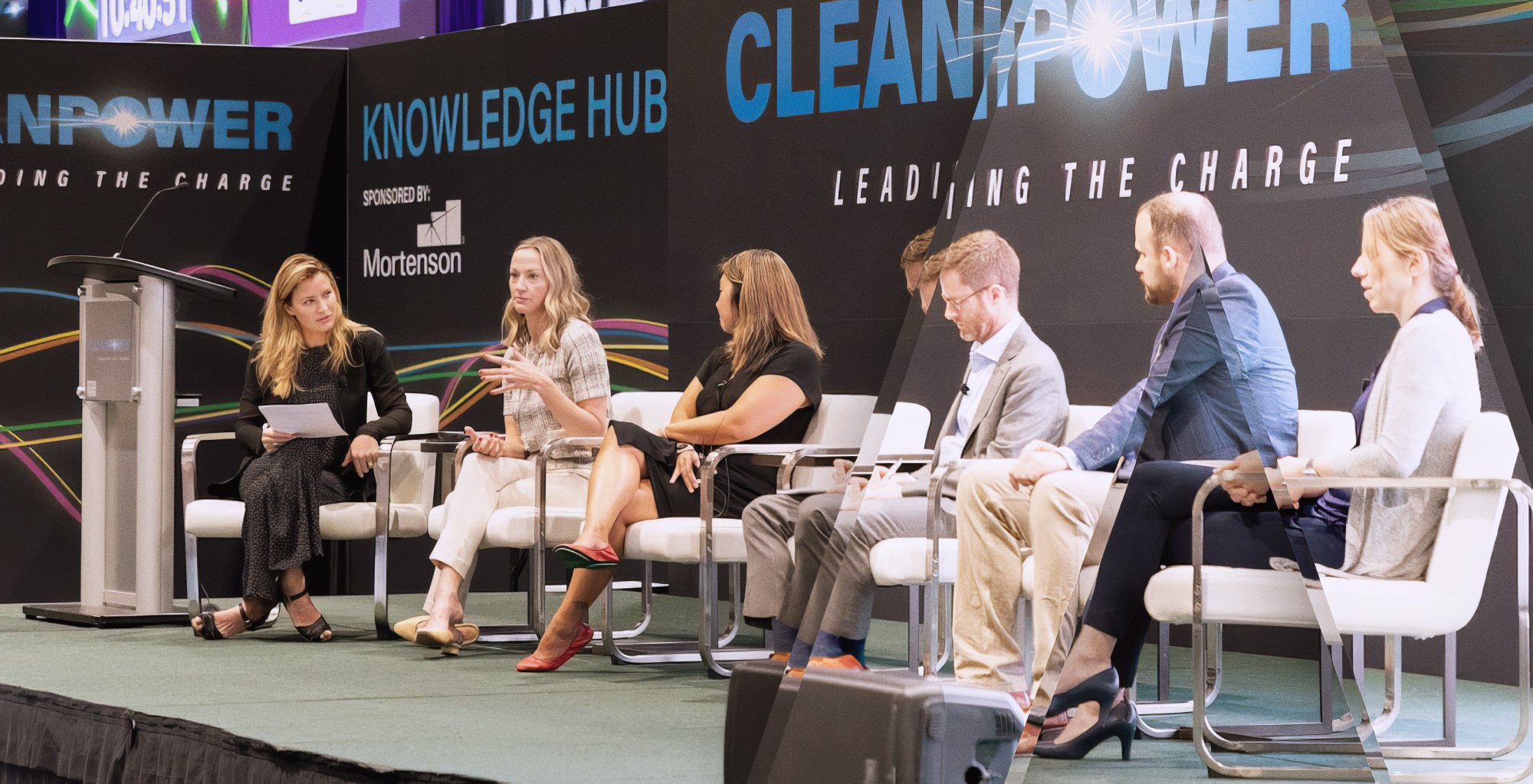
A two-to-one room and a two-to-one vote
In early 2025, officials in Noble County, Indiana considered a moratorium on new solar development. Bantam worked with a developer on targeted education, local mobilization, and disciplined messaging. Supporters wrote letters, signed petitions, and appeared at the deciding meeting. The informational case stayed on economic impact, landowner partnerships, and local investment rather than treating opponents as villains.
Noble County, in two ratios
Supporters outnumbered opponents two to one. A commissioner who had opposed the project changed position, and the moratorium failed 2-1. What changed the mind? Bantam's account points to the contrast inside the room: an orderly coalition offering a constructive case, set against increasingly aggressive opposition behavior. A political abstraction became visible social evidence. The official was no longer choosing between a developer and a protest. He was choosing between two versions of his own constituency.
A newer case from southwestern Colorado is even more revealing. A six-month solar moratorium looked like a technical pause, but Bantam interpreted it as political risk. Canvassers reached nearly 5,000 residents, documented support, and were told to disengage from hostile interactions rather than turn every doorstep into a contest. Officials ultimately voted unanimously to lift the moratorium and adopt a workable solar ordinance. The campaign grew quieter where a conventional campaign might have become louder.
The dashboard for messy reality
The field operation has a digital twin. BantamOne, the firm's campaign command center, collects project milestones, permitting pathways, decision-maker profiles, stakeholder records, advocacy organizations, opposition groups, tasks, supporter totals, and whip counts. Its PowerPal assistant answers questions using research, polling, and communications data. A library organizes cases on property values, land use, agrivoltaics, health, and safety by state and technology.
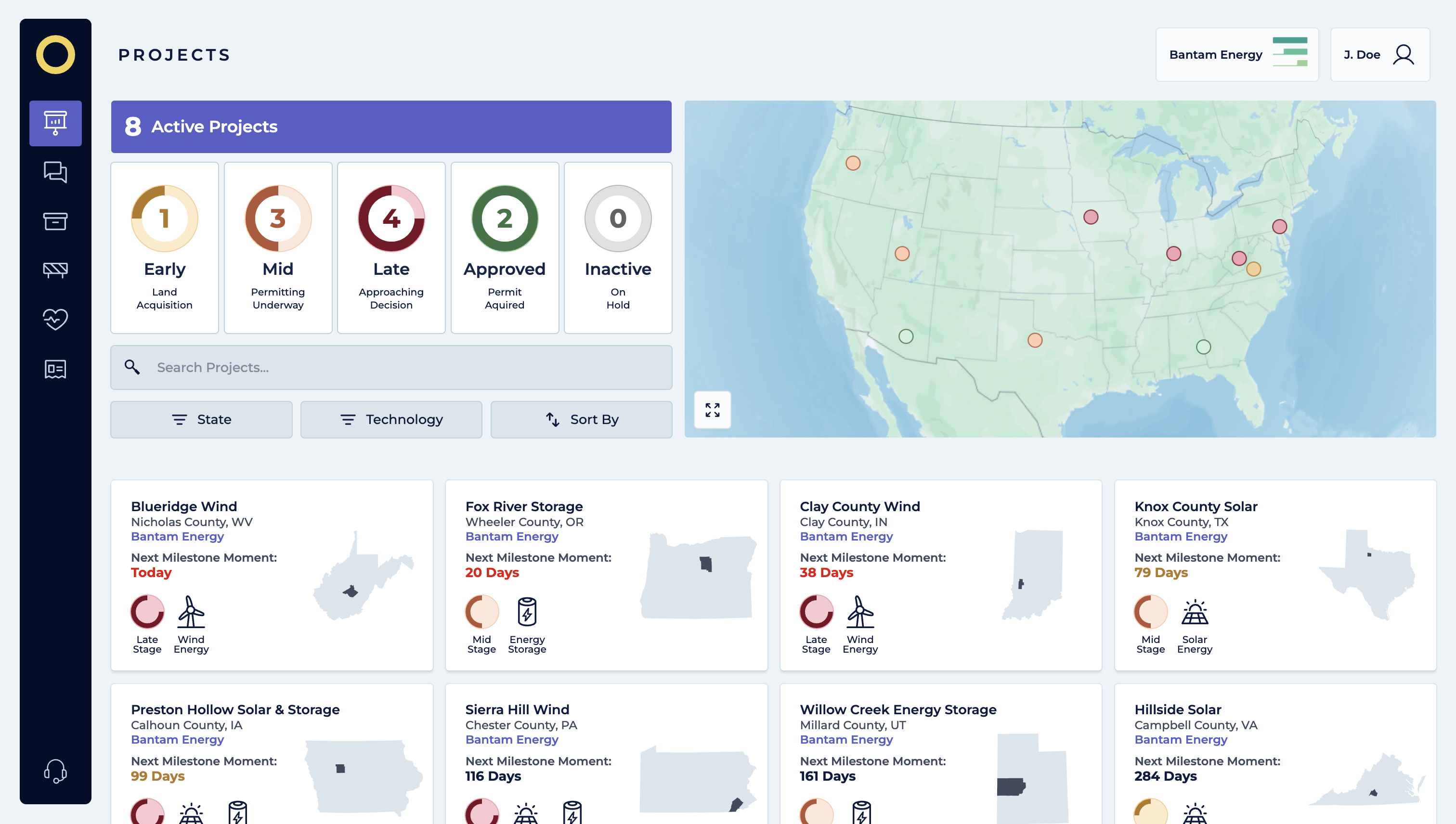
There are plenty of CRMs and dashboards in enterprise software. BantamOne's distinction is the ontology underneath: it treats a commissioner, a local nonprofit, an opposition Facebook page, a permit deadline, and a supportive letter as connected project data. That reflects Bantam's place in the market. A traditional PR firm manages reputation. A political consultancy wins elections. A community-engagement shop convenes meetings. Bantam combines pieces of all three around the fate of physical energy assets, then gives the work a shared operating system.
The business model follows that blend. Bantam sells B2B strategy and execution across research, public affairs, field organizing, media, creative, analytics, and technology. It does not publish its fees. The most useful public cost figure belongs to a client's community commitment, not Bantam's invoice: for a 300 MW Kansas wind project, a scorecard weighed political risk, sentiment, project scale, and local economics. A committee of local leaders prioritized education and childcare. The developer committed $25,000 annually to a rural revitalization nonprofit.
The part worth copying
Bantam's portable idea is that community support is not a final communications task. It is a development workstream. Research the place before announcing the message. Test the developer's assumptions against real sentiment. Find people whose credibility existed before the project. Give officials evidence of support before the hearing, not applause after it. Keep the field notes, stakeholder records, and milestones in the same system.
There are conditions. This approach needs time; arriving after outrage hardens leaves fewer persuadable people and fewer graceful ways for officials to move. It needs a project with defensible local benefits and a developer willing to change behavior, not merely language. A local ambassador cannot rescue a bad-faith process. Better targeting cannot make a dangerous site safe. And the case studies are published by Bantam, so their outcomes show the firm's chosen examples rather than a neutral success rate.
Still, the pattern is useful well beyond energy. Institutions routinely confuse information with permission. They assume that if the facts are made clearer, agreement will follow. County politics asks a more human question: clear according to whom? Bantam's answer is to study the room long before the chairs are unfolded. The public hearing is only the visible moment. The campaign has already happened.