There is a curious thing about political machines: from a distance, they look enormous. Up close, they often turn out to be a handful of people in a modest office, remembering who ran for school board twelve years ago and which neighborhood will answer a phone call after dinner. Western Pacific Research is one of those firms. Its address sits in a Bakersfield office court. Its supplied headcount is twelve. Its influence has traveled much farther.
The company’s name suggests clipboards and cross-tabs. Research is part of the work, but the public record describes something broader: strategy, campaign management, fundraising, voter targeting, mail, phone banks, financial services and the campaign materials that arrive in a mailbox just before an election. It is less a laboratory than a transmission - the component that turns an idea about voters into an actual knock, call, ad or ballot.
The farm boy and the congressional aide
Mark Abernathy arrived in politics by an oblique route. He studied agriculture and biology at Western Illinois University, served as an Air Force electronic-warfare officer in Thailand, and began organizing Republican campaigns while stationed in Sacramento. Cathy Swajian Abernathy knew politics from the inside. She would spend two decades as chief of staff to Congressman Bill Thomas. They married in 1981 and settled in Bakersfield, where the consulting practice they founded became part office, part classroom and part institutional memory for the local Republican Party.
That mixture matters. A consultant can buy polling. A party can rent a phone bank. What is harder to purchase is the memory of a place: who has already been tested, who knows the donors, which message sounds imported, and which twenty-three-year-old intern might become a candidate fifteen years later. Mark’s office biography emphasized mentoring young staff. Former employees described candidate meetings, fundraisers, community events and media work. Western Pacific Research did not merely advise the pipeline. It helped populate it.
It is a small sentence, but it contains the consultant’s creed. A favorable district is not a result. A poll is not turnout. An endorsement is not a vote. In Western Pacific Research’s model, the distance between those things is filled with operations.
The product is the handoff
An old description of the firm said it identified opponents’ strengths and weaknesses, built profiles of voter groups and located undecided voters who could receive particular messages. That sounds conventional until you notice what happens next. The same orbit of people arranged fundraising, shaped media, organized events, produced literature and administered campaign money. The differentiator was not a secret polling question. It was the short distance between diagnosis and delivery.
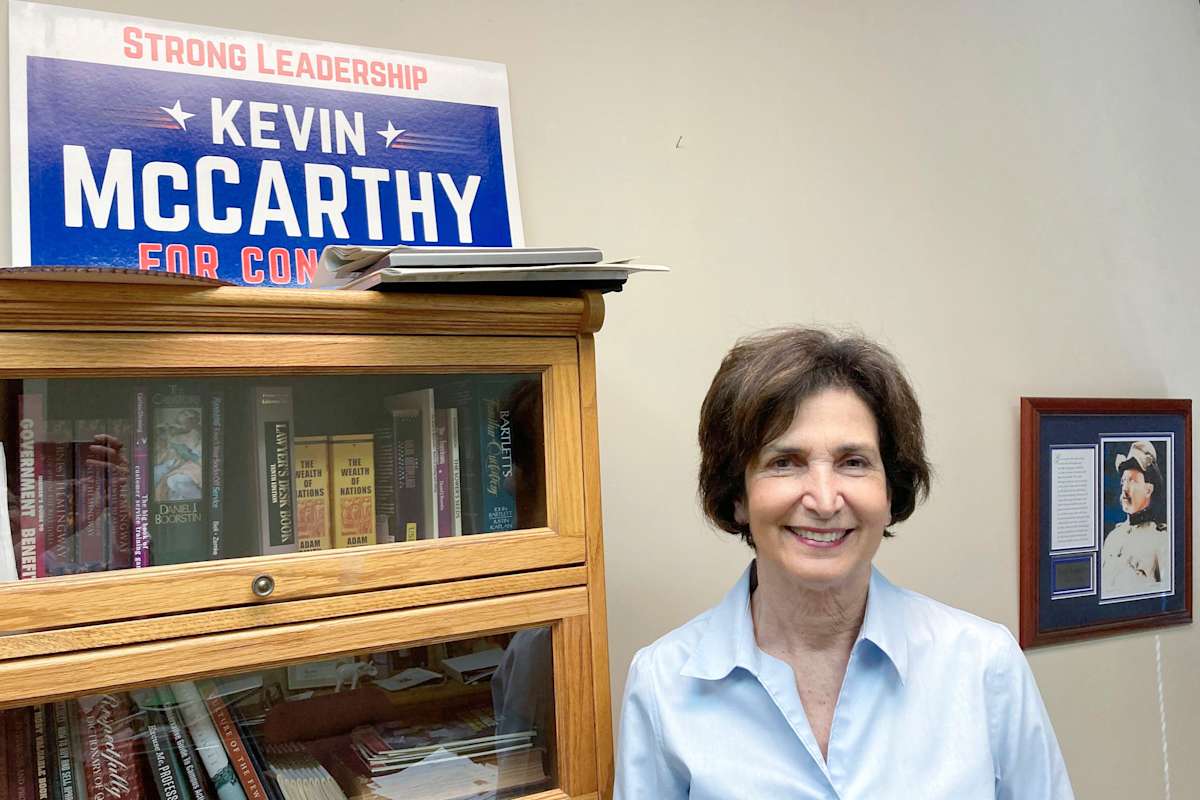
Customers were candidates and committees rather than consumers. The list attached to the firm reads like a tour through Central Valley Republican government: Thomas, Kevin McCarthy, Devin Nunes, Jean Fuller, Shannon Grove, Vince Fong, Bakersfield mayors Karen Goh and Bob Price, county supervisors, city council members and a district attorney. These were not all equivalent jobs. A council race and a congressional race require different money and media. The reusable piece was the local network - talent, trust, voter knowledge and the habit of running the next campaign.
These committee disclosures show the scale of particular transactions, not Western Pacific Research’s standard prices or net revenue. Later federal filings also show recurring $2,500 political-consulting payments.
This is the answer to the blunt question - what did it cost? Whatever the campaign required. The filings show project-like five-figure spending for voter contact and materials, alongside smaller recurring consulting payments. Some money paid the firm for advice; some moved through campaign operations toward production and delivery. A campaign consultancy is part strategist and part general contractor.
The recall that changed the scale
The most consequential project arrived in 2002 and 2003. Mark Abernathy and anti-tax organizer Ted Costa helped conceive the recall of Governor Gray Davis, drafted the petition, gathered signatures and built a statewide effort. The eventual ballot replaced Davis with Arnold Schwarzenegger. For a firm rooted in county politics, the recall demonstrated that its operating method could stretch across California when the issue was vivid, the rules supplied a mechanism and an army of signature gatherers could convert anger into a qualifying petition.
What changed minds was not one cinematic advertisement. First, organizers changed the practical question. Removing a governor went from unthinkable to procedurally possible. Then the petition made private dissatisfaction visible. The lesson is portable: reduce a large ambition to the next measurable act. Draft. Sign. Qualify. Vote. But the conditions were peculiar - a recall law, a deeply unpopular incumbent, celebrity opposition and intense press attention. Copy the sequence, not the prediction.
The first thing to fail was paperwork
Machines fail at their least glamorous junctions. For Western Pacific Research, the clearest public failures were not message tests but disclosures. A California enforcement summary records $22,500 in penalties involving Mark Abernathy, the firm and a 2008 state Senate campaign for late and online reporting violations. A separate school-board campaign matter ended in a 2012 warning after roughly $17,915 in required subvendor information was reported only after the election. The commission noted cooperation and closed that later case without administrative prosecution or a fine.
There is an operational lesson here that applies well beyond politics. Integration increases speed, but it also concentrates responsibility. If the same shop advises, spends and reports, compliance cannot be the desk that receives the plan last. The boring handoff is often the business.
What travels, and what stays in Bakersfield
Western Pacific Research’s advantage is also its constraint. A relationship-rich method works where relationships are dense and political identity is stable enough to organize around. It weakens in a new geography, in a race dominated by a national wave, with a candidate who cannot carry the chosen message, or when the electorate changes faster than the organization’s mental model. The company’s claimed win rate should therefore be read as a statement about selection as well as execution: strong consultants tend to choose winnable races and credible candidates.
Mark Abernathy’s own biography named two unsuccessful candidates he respected, Ann Gutcher and Pedro Rios. That detail is more revealing than another victory lap. It admits that the candidate-consultant relationship is not a vending machine. Good work can lose. Bad conditions do not become good because the mailer is clever.
After Mark died in 2018, Cathy became the public face of the firm. Campaign payments continued to appear in later state and federal disclosures, including 2025 payments for the 2026 cycle. The assembly line survived its inventor because much of it had never been machinery at all. It was memory distributed among people - aides, candidates, vendors and former interns - who knew how the next race began.