endpoint-management
(23)
PDQ sells IT teams their time back
A school technician with a USB stick explains the appeal of PDQ better than any software pitch. The company built its business by making the same job repeatable across hundreds of computers.

UDT knows the laptop is only the beginning
A school can buy a thousand laptops and still have a thousand problems. UDT built its business around everything that happens after the box arrives.

Splashtop found a better place for your computer: right where it is
The company that once helped PCs wake up faster now lets people leave them behind. Its wager: the screen can travel while the expensive machinery stays put.

Iru and the hidden cost of one more IT tool
Kandji made its name managing Apple devices. As Iru, it is betting that the expensive part of IT is the work between the tools - and that one shared system can give that time back.

AmZetta wants your old PC to earn its keep
The company born from American Megatrends is giving existing computers a second job - and tackling the networks, access rules, and storage that make that job possible.
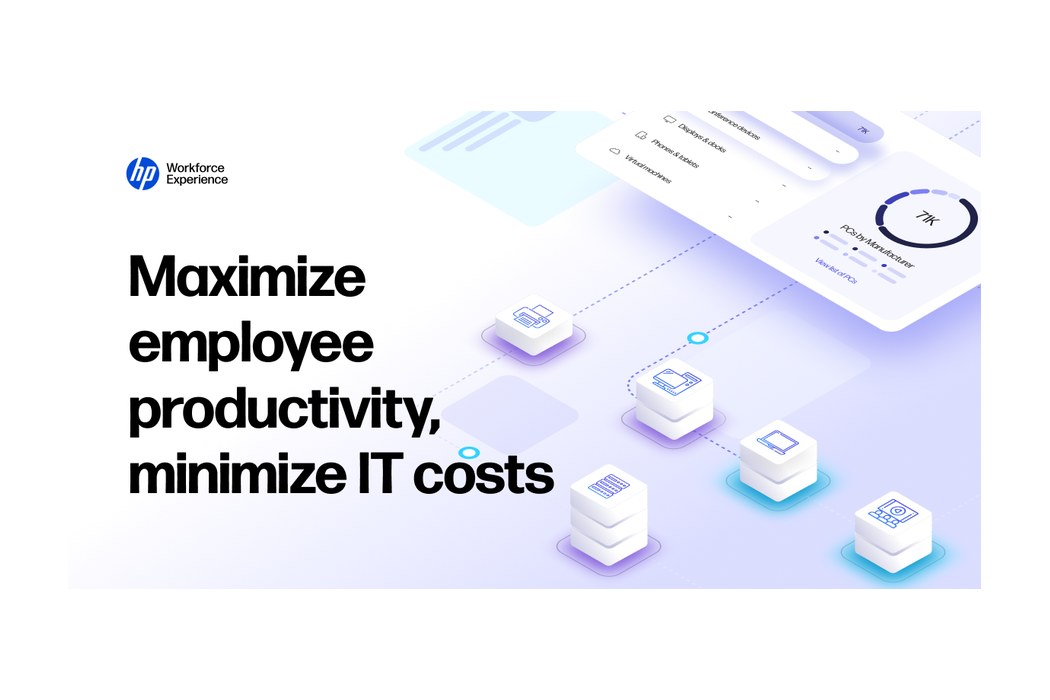
The Office Was Broken Before Anyone Filed a Ticket
HP Workforce Experience sells a curious promise: an IT problem spotted before the worker notices it. Its own meeting rooms offer a revealing test of whether that promise survives contact with a real office.

Fleet taught the IT department to commit
A bad date once sent every Mac at Thumbtack into an immediate update. Fleet’s answer was to give the IT department the habits software engineers already trust: review the change, record who made it, and keep a way back.

The Forty-Year Game Behind NinjaOne
At 12, Christopher Matarese and Sal Sferlazza pooled their money for a strategy board game. Four decades and several exits later, the same partnership controls a profitable IT company valued at $12.3 billion.
TRG Makes a Business of Keeping Your Business Moving
A scanner goes missing. A payment terminal quits. An airline waits for a repair. TRG has built its business around the expensive little interruptions that keep big companies from getting on with the job.
1E and the $720 million case for fixing IT before it breaks
A frozen checkout, a tired laptop, another help-desk ticket. 1E built a business around these small failures. Now TeamViewer is betting on its ability to make them disappear.

Anne Baker Came Back to Make the Invisible Work Visible
The mechanical engineer turned marketer left Adaptiva, learned the machinery of global alliances, then returned to explain a quiet technology problem with enormous consequences.

Adaptiva Deleted 1,500 Servers. Now It Wants to Put Patching on Autopilot
The Kirkland software company turned spare capacity on ordinary devices into an enterprise delivery network. Its next act is harder: convincing security teams that machines can patch machines without losing the human veto.
Action1 Gave Away the First 200 Endpoints. Then Revenue Grew 4,512%.
The Netwrix founders put $20 million of their own money behind a boring problem, narrowed the company to patching, and made the full product free for 200 devices. The wager turned routine maintenance into one of software's more unusual growth stories.

Syncro’s Bet: Charge for the Technician, Not the Machines
Most IT platforms meter every device. Syncro bets a lean technician should be able to manage thousands - and keep the margin. Here is where that math sings, where it squeaks, and what an MSP can copy.
N-able
N-able built a half-billion-dollar subscription business by helping managed service providers do the unglamorous work that keeps small businesses running. Now it is stitching monitoring, security and recovery into one open system - while learning that resilience is a promise tested in public.

Automox
Automox is a cloud-native IT automation and endpoint management company that helps organizations patch, configure, and secure Windows, macOS, and Linux devices from a single platform. Founded in 2015 in Boulder, Colorado, its agent-based, server-free approach automates patch management and vulnerability remediation across distributed fleets, and its Otto generative-AI assistant lets IT teams build automation scripts (Worklets) in plain language. The company serves more than 1,500 customers across 30-plus countries and has raised roughly $154 million, including a $110 million Series C led by Insight Partners in 2021.

Justin Talerico
Justin Talerico is the CEO of Automox, a Boulder, Colorado company building cloud-native autonomous endpoint management software. He stepped into the top job in May 2025 after four years as the company's chief marketing officer, a stretch in which he helped quadruple growth. A lifelong builder who started coding at age nine, Talerico co-founded the interactive content platform ion interactive in 2007 and sold it to ScribbleLive in 2017, and later held leadership roles at Linux Academy and A Cloud Guru. He and his wife Anna run Beacon9, a SaaS best-practices advisory.

SuperOps
SuperOps is an AI-native IT management platform that folds professional services automation (PSA), remote monitoring and management (RMM), unified endpoint management, service desk, patching, and documentation into one system. Founded in 2020 by Arvind Parthiban and Jayakumar Karumbasalam, it targets managed service providers (MSPs) and in-house IT teams, pitching a single pane of glass that replaces the 10-15 tools an MSP typically stitches together. Backed by $54.4M in venture funding, it added an agentic AI assistant, 'Monica,' and expanded from MSP tooling into internal IT teams with a cross-OS UEM product.

Sal Sferlazza
Sal Sferlazza is the co-founder and CEO of NinjaOne, the Austin-based IT and endpoint management platform valued at $12.3 billion in June 2026. A serial entrepreneur, he built and sold four previous companies (Realm Interactive, Lasso Logic, PacketTrap, Anchor) before launching what was originally NinjaRMM in 2013 with his childhood-camp friend Chris Matarese. NinjaOne is profitable, debt-free, and still majority-controlled by its founders.
NinjaOne
NinjaOne is an Austin-based software company that makes an automated, cloud-native endpoint management platform used by IT teams and managed service providers to monitor, secure, patch, back up and control laptops, servers, mobile devices and SaaS data from a single console. Founded in 2013 as NinjaRMM, it now serves more than 30,000 customers and manages over 5 million endpoints, and in 2025 raised $500 million in Series C extensions at a $5 billion valuation while remaining founder-led and debt-free.

Tanium
Tanium is a privately held cybersecurity and systems-management company that built its business on a simple, stubborn idea: you should be able to ask a question of every computer in a large organization and get an accurate answer in seconds. Its Converged Endpoint Management (XEM) platform uses a peer-to-peer 'linear chain' architecture to query and control millions of endpoints in near real time, collapsing the gap between security teams and IT operations. Founded in 2007 by BigFix veterans David and Orion Hindawi, Tanium now secures more than 33 million endpoints for dozens of Fortune 500 companies, major banks, retailers, and government defense agencies, and is pushing into autonomous, AI-driven IT operations with products like Tanium Atlas.

Dan Streetman
Dan Streetman is the CEO and Board Member of Tanium, the enterprise cybersecurity and autonomous endpoint management company. A West Point graduate, Harvard MBA, and Bronze Star-decorated Army Ranger, Streetman brings military-grade discipline to enterprise security — leading Tanium's push into AI-powered autonomous IT operations for the world's largest organizations. Before Tanium, he drove double-digit growth as CEO at TIBCO Software and Allvue Systems, and held senior leadership at BMC Software, Salesforce, and C3.ai.
ControlUp
ControlUp is a digital employee experience (DEX) and autonomous endpoint management platform that helps IT teams see, score, and fix problems on every desktop, virtual session, and SaaS app before users start filing tickets. Born in Israel in 2008 and headquartered in San Francisco, it serves more than 2,000 enterprise customers and was named a Leader in the inaugural 2024 Gartner Magic Quadrant for DEX Tools.