A marketer's answer to a machine-shaped problem
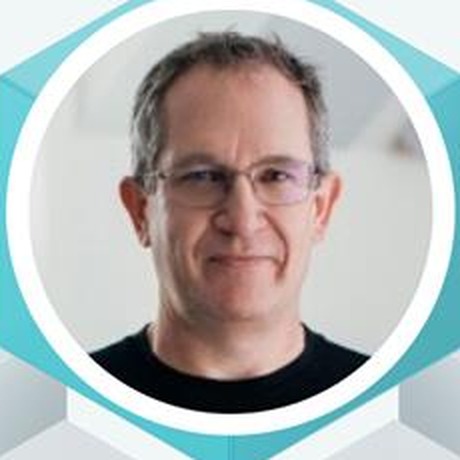
Justin Talerico runs Automox, a company most people outside of IT have never heard of and most people inside it depend on quietly every day. Automox is based in Boulder, Colorado, and sells cloud-native software for what the industry calls autonomous endpoint management - the unglamorous, essential work of keeping every laptop, server, and workstation in an organization patched, configured, and secure without an army of technicians touching each one by hand. In May 2025 the company handed Talerico the CEO title, effective the fifteenth, after four years running its marketing.
That promotion is less surprising than it looks. Talerico spent those four years as chief marketing officer learning the product and the buyer at close range, and Automox credits that stretch with quadrupling its growth. When a company promotes its head of go-to-market into the top seat, it is usually betting that the person who best understands why customers buy can also decide what gets built. Automox made that bet.
His current message is plain and a little contrarian for a security company: the point of the software is to disappear. Automox is pushing toward automation and AI-driven operations that strip repetitive busywork out of IT so teams can spend their attention on outcomes instead of maintenance. Talerico frames the company's recent stretch in blunt operator terms. "Our pace of innovation is translating into direct customer outcomes, overwhelming market enthusiasm, and upmarket momentum," he said around the leadership change - the kind of line that reads like a growth chart turned into a sentence.
"We like to say it frees people of worrying about how things get done, and lets them focus 100% of their energy on what gets done."
Coding before it was a career
The through line in Talerico's story starts early. He was born in New York, raised in Florida, and started writing code at age nine, long before software was an obvious path to anything. He went to the University of Florida and took a degree in advertising, not computer science - a detail that explains a lot about how he thinks. He is a technologist who came up through the language of persuasion, someone equally comfortable with a build pipeline and a positioning statement.
He put both to work quickly. In 1992 he founded his first company, a digital marketing communications firm. By 1996 that business had gone entirely web-based, and by 1998 it had turned into a tech-enabled services shop running a proprietary web content management system he built for clients like Samsung and Fujitsu. This was tech-enabled services before the term existed, a small firm quietly acting like a software company years ahead of the trend.
ion interactive, and a pattern
The clearest chapter of his career is ion interactive. Talerico co-founded it in 2007 and, with his co-founders, launched a marketing SaaS platform aimed at a universal frustration: low conversion rates. "Low conversion rates were a universal problem," he recalled of the early days. "We began addressing the problem the traditional ways - landing pages, deep links and so on - but we couldn't generate the lift that we thought was possible." So they built a platform, LiveBall, designed around a different assumption than most web software of the era.
"Most websites are change averse, whereas LiveBall was designed from the ground up to encourage change, diversity and experimentation."
The business worked. ion interactive landed at #202 on the Inc. 500 in 2010 and #526 on the Inc. 5000 in 2011, serving customers like Dell and DHL, and pushed the marketing world away from one-off PDF projects toward interactive content that was trackable and built to iterate. In 2017 Talerico and his co-founders exited when ScribbleLive acquired the company. It was a clean end to a decade-long build.
What is striking across his resume is the repetition. Talerico builds a company, sells it, and moves to help scale someone else's. After ion interactive he took leadership roles at Linux Academy, which A Cloud Guru acquired in 2019, and then at A Cloud Guru itself, which Pluralsight acquired in 2021. Both were cloud-education SaaS companies riding the same wave of teaching a workforce to operate in the cloud. The subject matter kept changing - marketing content, cloud training, endpoint security - but the instinct stayed the same: find the tedious problem, make it automatic, and package the result so a non-expert can use it.
Teaching people to fish
That instinct shows up in how he talks about customers. At ion interactive he was insistent that a good tool is not enough on its own. "LiveBall is a fantastic and pragmatic tool, but it's still just a tool," he said. "In order for it to be effective, it has to be used properly at both the tactical and strategic levels." His fix was education first. "In many cases that means teaching them how to fish before we give them the pole." It is an unusual thing for a software executive to lead with - the admission that the product is only half the value, and the customer's understanding is the other half.
He also understood his buyers as people, not segments. "We sell to marketers who want to buy from their peers," he said of ion interactive's audience. "They need to have intelligent conversations about this stuff." That peer-to-peer respect for the customer is a habit that travels well from marketing software to security software, where the buyer is a beleaguered IT team that has heard every vendor promise before.
A partnership, on and off the org chart
Talerico rarely builds alone. He and his wife, Anna Talerico, co-founded ion interactive together and today run Beacon9, a SaaS business best-practices advisory where they package the hard-won lessons of building and exiting companies for other founders. It is a genuinely uncommon arrangement - a husband-and-wife team that has co-founded, scaled, and exited a company and then turned that experience into a consulting practice. The two now live in Nashville, Tennessee, with their two children, which means Talerico runs a Boulder company from a different city entirely. In a remote-first software world, that geography is a feature, not a problem.
Heading into 2026, he has been unusually candid in public about the state of his customers' world. On Automox's Autonomous IT live show he laid out an unvarnished forecast for IT - where things are breaking down, why burnout has become an operational risk, and what actually needs to change. It is a notable tone for a CEO whose company sells the fix: less pitch, more diagnosis. That fits the pattern of a leader who came up teaching customers to fish. The message underneath his whole career is steady even as the products change - make the boring, repetitive work automatic, and give people back their attention.