digital-twins
(38)
Esri UK puts the map to work
A sewer maintenance programme reported £1 million in savings. Heathrow is connecting information on half a million assets. Esri UK’s business begins where the pretty map ends.
IQGeo Wants to Fix the Gap Between the Map and the Mud
A network is only as useful as the records behind it. IQGeo is bringing fiber designs, field crews and AI photo checks into the same picture - with a £333 million takeover behind its next act.

PETEX wants the whole oilfield in the equation
A well can improve while the field around it suffers. PETEX built its software business around that awkward fact, connecting reservoirs, wells and pipelines so engineers can see what their decisions really do.
NM Group Sees the Power Grid the Way a Laser Does
Its aircraft collect billions of precise measurements. Its engineers turn them into a practical answer for utilities: which tree, wire or tower needs attention first?

PhysicsX Wants Engineers to Stop Waiting for Physics
Born from Formula One's impatience, PhysicsX turns expensive simulations into near-instant engineering answers. Its real product is not a magic oracle but a carefully governed loop of data, models, validation and engineers who know when to call the old solver back in.
The AI Boom Has a Heat Problem. Vertiv Built the Plumbing.
AI chips get the headlines. Vertiv sells the power, liquid cooling and factory-built infrastructure that determines whether those chips can actually run - and its $15 billion backlog shows how physical the digital boom has become.
The $880,000 Shelf Bet: InContext Solutions Built a Store Where Failure Is Cheap
Before a retailer resets 22,000 displays, InContext Solutions lets the bad ideas lose inside a digital twin. What began as custom virtual-store research is now a software, services and AI business built around one useful proposition: make the expensive mistake on a screen.
The Grid's Boring Bottleneck Is Worth Billions. SBS Automated It.
Utilities do not lose weeks only in the field. They lose them while engineers redraw the same pole, reconcile the same spreadsheet, and retype the same bill of materials. SBS built a business by making that expensive middle disappear.

The $1,100 Map Shop That Became the Operating System for Where
Esri began as a tiny land-use consultancy. Fifty-seven years later, its software helps cities find buried valves, retailers choose corners, and emergency teams see trouble before it spreads - while a difficult desktop transition tests the loyalty of the mapmakers who built their careers on it.
Dopple Wants to Turn Every Complicated Product Page Into a Digital Showroom
The Charleston company makes products spin, swap and appear in your room. Its real trick is less cinematic: turning a snarled catalog into a buying decision people can understand.
arbnco Spent 14 Years Teaching Buildings to Confess - Then the Meter Company Bought It
Landlords do not lack net-zero promises. They lack clean energy data and a sane way to decide which boiler, roof or lease problem to tackle first. arbnco built that decision layer - and in July 2026, IMSERV bought the missing piece between the meter and the retrofit plan.

Switch Automation Learned the Hard Part of Smart Buildings Is the Part Nobody Sees
The Denver proptech company connects old controls, new sensors and portfolio software in one operational layer. Its useful lesson is wonderfully unglamorous: before a building can become intelligent, someone has to make its data trustworthy.

The Startup That Turns Drone Photos of Cell Towers Into Money
Anne Zink built a company that lets you inspect a 300-foot cell tower without climbing it. The trick isn't the drone - it's what happens to the pictures after they land.
The Checkout Vanishes. The Store Starts Talking.
Cloudpick turns a shop into a digital twin that can watch products move, settle the bill, and tell an operator what happened. Its wager is that the most useful AI in retail may be the kind shoppers barely notice.
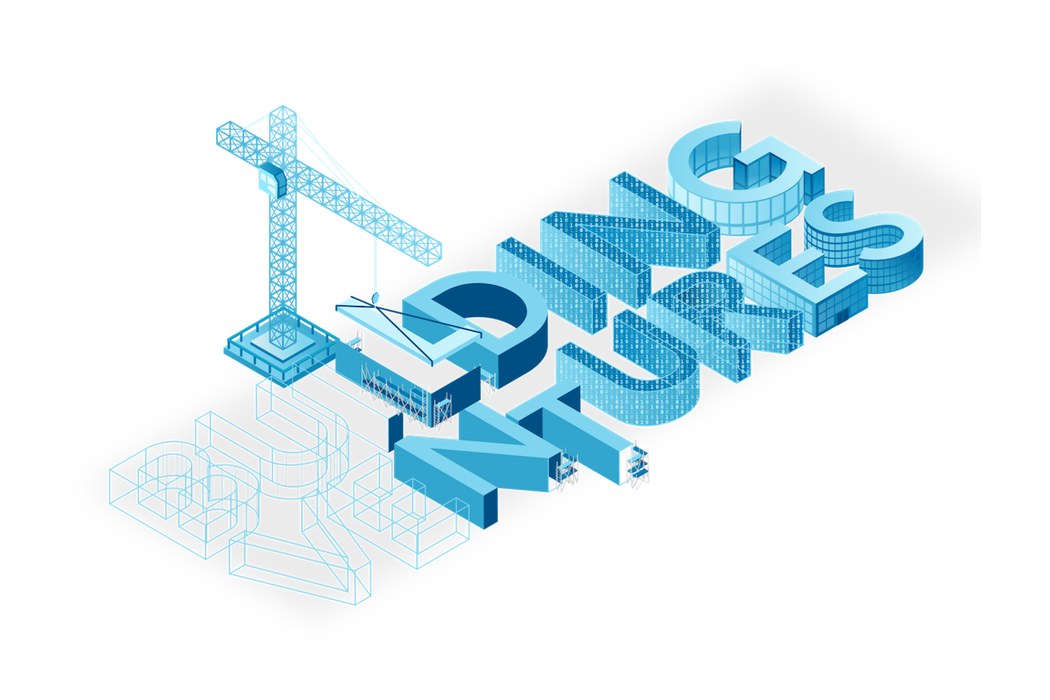
The VC That Bet the Cost Curve of a Building Can Bend
Two lifelong construction-tech investors raised $148 million, then handed their startups something rarer than money - a rolodex of the general contractors, builders, and design firms who become their first customers.
Usetech Wants AI to Leave the Demo Room and Run the Factory Floor
The Dubai-based technology company is betting that enterprise AI matters most when it can spot a failing machine, reconcile a broken data flow or turn a camera feed into an operational decision.
HeyGen
HeyGen wants to make the camera optional. Its digital twins, translation tools and video agents turn one human performance into a production system that can speak to almost anyone.
Bentley Systems
Five brothers, one CAD engine, and four decades later the software running underneath much of the world's roads, rail, and water networks - now being rebuilt around digital twins and infrastructure AI.

Trimble Inc.
Trimble began by betting on satellite navigation before GPS was a household acronym. Today its harder trick is making a construction site, a 3D model and a freight office behave like parts of the same system.
Schneider Electric
The 190-year-old industrial group has become the control layer for an electric economy - linking breakers, factories, buildings and AI data centers to the software that decides how power should move.
Emerson
Emerson spent a century making the machinery of modern life. Now it is assembling something harder to see: the digital nervous system for factories, power grids and process plants.

AiFi Inc.
AiFi began by teaching stores to see a shopping basket without a scanner. Now it wants to make the whole physical world as searchable as the internet - one camera feed, digital twin and disappearing checkout line at a time.
Advanced Engineering Services
AES is the engineering firm behind the engineering firm - simulating heat, stress and flow, then building the automation that makes a design work on the factory floor.
Arga Labs
Arga Labs builds real-world sandboxes for AI agents and agent-facing software. Every time a team opens a pull request, Arga spins up a temporary staging environment that mirrors production, redeploying only the services that changed and routing everything else to prod. It runs code and agents against resettable API 'twins' of third-party services like Stripe, Slack, GitHub, and Gmail, so teams can surface edge cases, simulate failures, and test at scale without touching live data. A YC P26 company founded by Phillip Li and Akira Tong, Arga reached roughly $40K in monthly recurring revenue within seven weeks of launch.

Dovetail
Dovetail is a Sydney-founded customer intelligence platform that pulls scattered customer signals - sales calls, support tickets, surveys, app reviews, usability tests - into one searchable place and uses AI to turn them into themes, dashboards and decisions. Started in 2017 by two ex-Atlassian employees, Benjamin Humphrey and Bradley Ayers, it began life as a repository for user researchers and grew into an organisation-wide intelligence layer used by roughly 40% of the Fortune 500, including AWS, Visa, Atlassian, Canva and Johns Hopkins. Accel led a US$63M Series A in January 2022 at a valuation north of US$700 million.

Avataar
Avataar is a Bengaluru- and San Francisco-based AI company that turns static product pages into 3D visuals, interactive experiences, and AI-generated videos for retailers and brands. Founded in 2014 by Sravanth Aluru and co-founders, it began with computer-vision-driven 3D product visualization for e-commerce and has since expanded into a full-stack agentic AI platform and its own distilled video model, Varya, positioned as a cheaper, culturally aware alternative to models like Veo and Runway. Backed by Tiger Global and Peak XV (formerly Sequoia Capital India), Avataar has raised roughly $55 million and counts HP, Victoria's Secret, Lowe's, and others among its customers.

PraSaga Foundation
PraSaga Foundation is a non-profit blockchain organization building SagaChain, a layer-one blockchain that replaces smart contracts with programmable 'smart assets' - first-class objects that model real-world things directly on-chain. Founded in 2017 by Michael Holdmann and David Beberman, PraSaga pairs a natively sharded architecture with a hybrid Proof-of-Work/Proof-of-Stake consensus and a Python-based developer stack (SagaOS, SagaPython) to target the scalability, cost, and usability limits of first-generation chains. Its native SagaCoin uses a dynamic monetary policy aimed at stable purchasing power. A public development testnet went live in 2025.
MOVRS
MOVRS is a San Francisco- and Los Angeles-based AI and computer vision company building vision models that understand how people move and interact in the real world. It turns ordinary video into high-fidelity 3D human data and biomechanical measurements - no bodysuits, no marker dots, no camera arrays - and applies that data to sports storytelling, athlete training, and machine-learning datasets for industries from healthcare to robotics.

Native AI
Native AI is a New York-based market intelligence platform that uses generative AI to build 'Digital Twins' - AI-powered proxies of real consumers assembled from reviews, interviews, surveys and other first- and third-party data. Brands, agencies and market research firms use the platform to chat with clones of their target audience, track products and competitors across the web, and forecast consumer reactions in real time, compressing research timelines that once took weeks into minutes. Founded in 2019 by Frank Pica and Sarah Sanders, the company raised a $3.5M seed round in 2023 and says clients have generated over 275 million Digital Twins to date.
Pasteur Labs & ISI
Pasteur Labs & ISI is a New York-based public-benefit deep-tech company building 'Simulation Intelligence' - the systematic merger of AI, physics simulation, and scientific computing. Its AI-native, GPU-accelerated, end-to-end differentiable physics platform gives engineers and scientists an in-silico playground to run thousands of what-if scenarios and shrink the gap between digital models and physical reality. Founded in 2021 by AI researcher Alexander Lavin and staffed by veterans of DeepMind, NASA, CERN, Tesla, Nvidia and Ansys, the company targets industrial R&D, energy, climate, and space & defense, and stewards the open-source Tesseract framework for differentiable scientific computing.