The most revealing thing InContext Solutions ever put in virtual reality may have been a cheap cardboard display. A consumer-goods manufacturer was preparing a national promotion: 22,000 displays, multiple design concepts, agency fees, prototypes and all the cheerful certainty of a conference room choosing what shoppers would like. InContext's simulation let actual participants shop the competing ideas before the company committed. The polished, expensive version performed poorly. The least expensive design won. At a reported $40 saved per unit, the arithmetic came to $880,000.
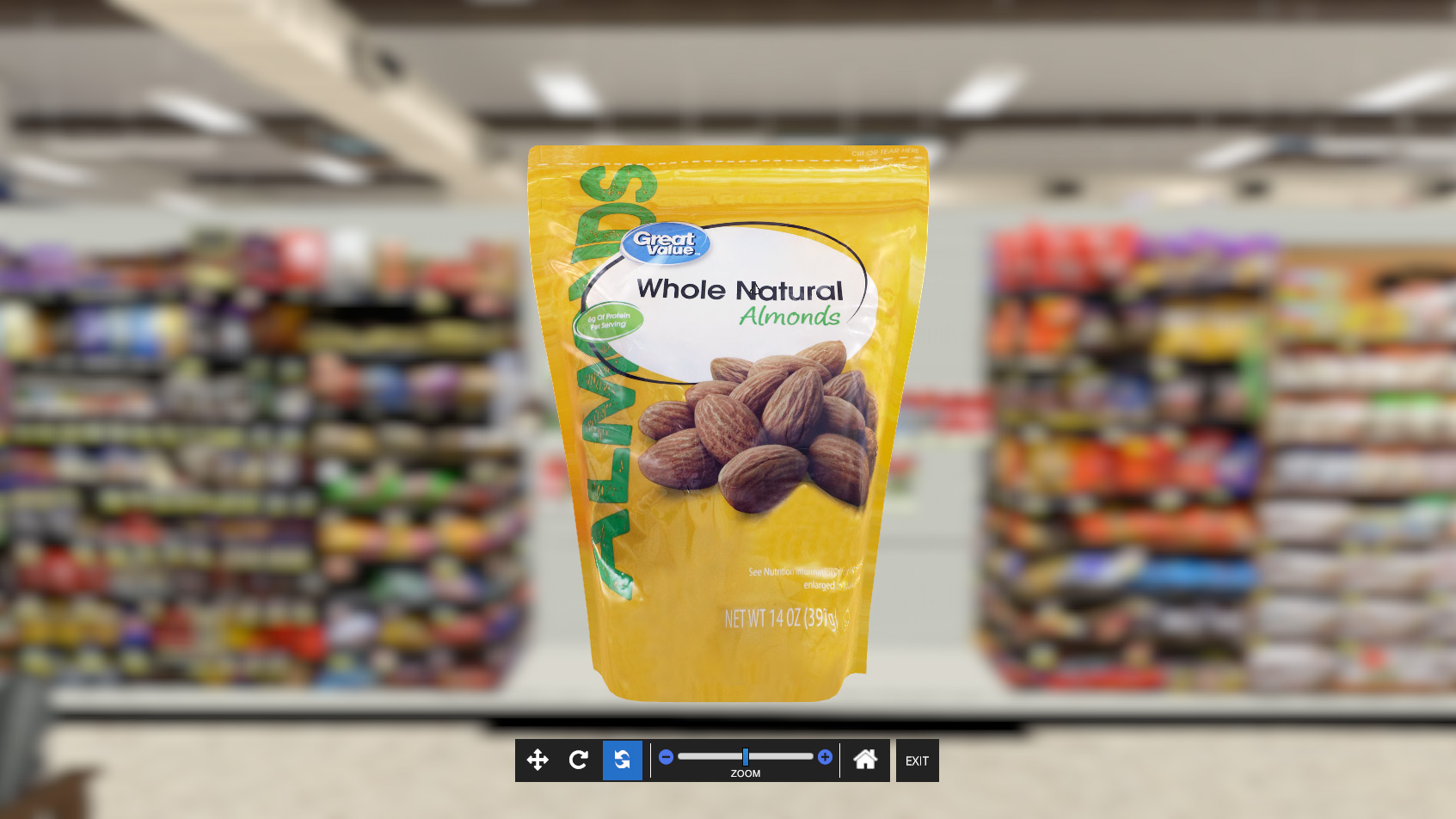
That story explains the Chicago company better than any tour of a headset. InContext does not principally sell escape. It sells rehearsal. Retailers and packaged-goods brands use its 3D stores to move products, change signage, compare prices, walk an aisle together and watch people shop a concept before somebody orders fixtures or interrupts a live store. The glamour is optional. Avoiding an expensive mistake is the point.
Origin storyThe consultancy that gave clients the keys
Rich Scamehorn had been exploring virtual retail simulation by 2007. In 2009, he and technologist Tracey Wiedmeyer founded InContext around a simple combination: market-research discipline plus scalable 3D software. At first, the business looked mostly like a consultancy. The team built the environment, ran the study and delivered the answer.
Then the clients changed the product. More investors and more customers exposed a demand for something repeatable: brands wanted to enter the simulated store themselves, reuse assets and make the tool part of ordinary merchandising. ShopperMX arrived in 2012 as a cloud platform for building, visualizing and testing retail ideas. That shift - from doing every project to giving customers the machinery - is the company's consequential turn.
It also changed what InContext could charge for. The company now operates as a private B2B software-and-services firm: platform access, 3D content, virtual shopper studies, predictive analysis, and research or extended-reality consulting. It does not publish a menu of prices. Its own implementation guidance says scope depends on the number of users, the size of the organization and whether the client already owns usable product imagery. This is enterprise software sold around a workflow, not a $29 checkout button.
The product stackA store that keeps getting new jobs
ShopperMX remains the center. A category manager can make a digital twin of a store, arrange a planogram, add a display, invite colleagues into a shared view and create images or videos for a retailer meeting. A shopper-insights team can field a study and connect what participants say with what they pick up. Sales teams can turn the same scene into a persuasive sell-in story. One 3D asset library starts doing several jobs.
Around it, InContext has built extensions. SMX GO uses augmented reality to place and validate displays or signage in the actual aisle. SnapShelf 3D applies image recognition to capture what is really on the shelf. Virtual-commerce work turns retail scenes toward online shopping. A partnership with MindSpring repurposes stores for employee learning, where a new hire can practice in context rather than stare at another slide deck.
The newer layer is Arrangement AI. Years of virtual studies produced more than 2 million recorded shopping trips. InContext now uses that data to predict which shelf arrangements are likely to lift category or brand sales, often promising an answer in fewer than 10 days. The company reports average predictive accuracy of 80 percent across covered categories and recommends using a category only when accuracy clears 70 percent.
The 3D store attracts attention. The accumulated shopping behavior is the moat.Why InContext looks different after the VR boom
That distinction matters. A convincing grocery aisle can be rebuilt by another studio. A long, labeled history of how shoppers reacted to prices, placements, promotions and assortments is harder to conjure. In 2025, InContext partnered with r4 Technologies to combine that behavioral record with cross-enterprise AI for hyperlocal assortment and arrangement work. The simulation business had quietly produced a data business.
What failed firstOpinion, prototypes and the long walk to shelf
The original failure was not a headset. It was the decision process. Teams reviewed flat agency renderings, debated colors and messaging, commissioned physical prototypes, then inspected those prototypes in an office with none of the clutter or competition of a real aisle. Formal shopper research was often skipped because the calendar and budget had already been consumed. By the time a weak idea met a shopper, too much money had become emotionally attached to it.
A simulated store changes the sequence. Context appears before commitment. Iteration becomes cheap enough to repeat. In one InContext case, a retailer and snack manufacturer reportedly removed six months from category-reset research. Another customer used visual materials from the platform and reported a 19 percent improvement in store sell-in. A broader CPG deployment reported nine times return on investment. These are company-published cases, frequently anonymized, so treat them as evidence of the workflow's possibility rather than a universal forecast.
The buyerFor the meeting where “trust us” is not enough
The users sit wherever a physical shelf creates organizational friction: category management, shopper insights, brand management, sales, store execution and innovation. Retailers use the platform with manufacturers during resets. Research partners can run studies using InContext's stores, product assets and fielding tools. Public materials connect the company with Albertsons, Kellogg's, Qualcomm and Accenture, while many projects preserve the client's anonymity.
Its competitive set is broader than a list of VR vendors. InContext competes with physical mock stores, conventional research agencies, planogram suites, agency renderings, spreadsheets and the executive opinion that wins because testing takes too long. Its advantage is the attempt to close the loop: visualize, test, collaborate, sell in, execute, then feed the result back into the next decision.
The strategy has attracted substantial outside capital. Public reports show a $6.4 million round in 2013, $12 million in 2014 and $15.2 million led by Intel Capital and Beringea in 2016, plus other financings. Intel's involvement came alongside development work on more immersive retail experiences. InContext also appeared on the Inc. 5000 for three consecutive years, from 2015 through 2017.
The copyable bitStart with one costly decision, not a grand transformation
There is a useful playbook here for operators who will never buy a virtual-reality headset. Pick one high-cost, repeated decision. Recreate only enough context to change that decision. Test alternatives before the organization falls in love. Keep the resulting behavioral data in a consistent form. Reuse the digital assets in sales, training and execution so the first project does not carry the entire return on investment.
InContext's practical advice begins with an audit of product images. That detail is almost comic in its modesty, but it is the work. No clean pack shots, no scalable 3D SKU library. No consistent study design, no trustworthy historical data. No workflow owner, no adoption after the demonstration. The “wow” moment is easy; the asset plumbing decides whether a virtual program becomes infrastructure.
The same caution applies to virtual research generally. It works best when visual context drives the choice, the simulated environment faithfully resembles the real one and the rollout is large enough that an avoided error matters. It is less compelling for a tiny test, a sensory purchase dominated by touch or taste, or a business without reusable product content. If the cost of being wrong is low, the twin may cost more than the mistake.
Where it landsThe useful metaverse was a spreadsheet with depth
InContext has lived through WebVR, headsets, mixed reality, the metaverse and now enterprise AI. The labels moved faster than the retail problem. Physical stores are costly to alter, shopper attention is difficult to observe, and brands and retailers need a shared way to argue about the future. A digital twin gives the argument scenery. Research gives it evidence. Execution tools try to keep the approved idea intact on its journey to the aisle.
That is what makes the company distinctive. It did not abandon custom expertise when it became SaaS, and it did not mistake a photorealistic store for a completed decision. The services help frame and field the experiment; the platform makes it repeatable; the data makes some later experiments predictable. The result is less a virtual world than a rehearsal room for commerce.
Somewhere inside that room, an expensive cardboard display is still losing to a cheaper one. Better there than in 22,000 stores.