third-party-logistics
(21)
WareGo wants your warehouse to stop losing the plot
A missing stock update can become a missed sale. WareGo connects orders, inventory and fulfillment - with a particular eye on the warehouses doing the work for everyone else.

IKEA Bought Made4net to Fix the Mess Behind the Box
Made4net spent two decades arguing that warehouse software should bend before operations break. Then IKEA's largest retailer bought the company and put that thesis inside one of retail's most demanding fulfillment systems.
Royal 4 Built Warehouse Software for 42 Years. Now It Has to Outrun Its Own Legacy
The Long Beach software veteran survived four decades by fitting the warehouse instead of forcing the warehouse to fit. A 2026 investment gives it fresh fuel - and makes modernization the next test.

The Warehouse Software Company That Found Its Moat Between the Loading Dock and the Operating Room
Tecsys spent a decade selling someone else’s enterprise system. Then one customer exposed the missing piece - and a quiet Canadian software company built a durable business where inventory errors become operational emergencies.

Magaya Put Freight Forwarders' Messy Back Offices in One Box - Then Learned the Hard Part Was Focus
A trio of Cuban founders wrote software for small freight forwarders from a family apartment. Twenty-five years, four acquisitions and 2,300-plus customers later, Magaya's useful lesson is not about adding features - it is about knowing which mess deserves one system.

eJOOV Started With the Box Nobody Wanted Back - Then Turned Returns Into a Four-Lane Logistics Business
The Louisville 3PL began with ecommerce's least glamorous problem: the return box with missing tags, parts, or packaging. Six years later, eJOOV is applying the same hands-on, software-backed discipline to bourbon, automotive parts, and cold-chain shipments.

Logiwa Bet the Warehouse on Software That Gets Paid When the Boxes Move
The Chicago software company wants 3PLs and high-volume brands to stop treating warehouse complexity as a consulting annuity. Its pitch: faster launches, smarter pick paths, open integrations, and a bill tied to throughput instead of headcount.

GlobalTranz Started With Zero Dollars. Here’s the Freight Playbook That Made It a $930 Million Company
A Navy veteran used prepaid eBay shipments and a homemade rate engine to drag freight brokerage online. The clever part was not owning trucks - it was turning fragmented capacity, independent agents and software into a machine that private equity could not stop buying.

FreightSaver Sold the Middle-Market Freight Playbook - Then Borrowed a Bigger Network
A 52-person California 3PL made freight software feel human, cracked the Inc. 5000 and sold to Echo for an undisclosed price. Its most useful lesson is not about trucks - it is about packaging high-touch service so it can scale.
He Wanted Inventory to Work Like Online Banking. Now It Runs 12 Million Square Feet.
Carl Wasinger started Smart Warehousing with one computer under his desk in 2001. Two decades on, its proprietary software SWIMS quietly moves other companies' products through 30-plus warehouses - and nearly 5,000 customers depend on it.

The Warehouse Next Door: How Crewdible Turned Spare Space Into E-Commerce Infrastructure
Born from one seller's exhaustion with packing orders, Crewdible built a distributed warehouse network for Indonesia's online merchants - pairing software with underused real estate to make fulfillment local, flexible and less capital-heavy.

The $61 Billion Warehouse Brain Hiding in Alpharetta
Deposco’s software handled 1.2 percent of U.S. ecommerce during the 2024 holidays. Its quieter trick is making the warehouse, the storefront and the forecast behave like one system.
The 9 Million-Square-Foot Machine Behind the Stuff That Just Shows Up
Custom Goods Logistics has spent more than six decades turning the least glamorous moments in commerce - customs exams, crowded docks, awkward inventory and urgent freight - into one connected service. Its advantage is not a clever app. It is owning more of the handoffs where supply chains usually come apart.
The Family Warehouse That Learned to Label the Can and Book the Truck
Most logistics firms want one slice of the supply chain. Verst has spent 60 years assembling the whole middle - the warehouse, the robots, the label, the parcel rate and the truck.

The Dubai Freight Company That Turned Customs Paperwork Into a Growth Engine
Al Sharqi Shipping began with customs forms and three people in Bur Dubai. More than three decades later, its pitch is still practical: make every handoff between factory, border, warehouse and buyer feel like one continuous journey.

The Shipping Company That Doesn't Own the Trucks
eShipper built its business in the space between a merchant's checkout button and the customer's front door. Its wager is simple: small and midsize sellers can borrow the buying power, software and supply-chain discipline of a much larger company.

The Truck-Rental Name That Quietly Became a Port-to-Door Machine
Ryder still owns the red logo everyone recognizes. The more consequential business now runs behind it - warehouses, drivers, maintenance bays, software and roughly $10 billion in freight under management.

The 3PL That Pays When the Box Goes Wrong
Red Stag Fulfillment built a warehouse business around the boxes other operators would rather avoid. Its sharpest sales tool is not a robot or a routing map, but a set of guarantees that makes warehouse mistakes cost the warehouse.
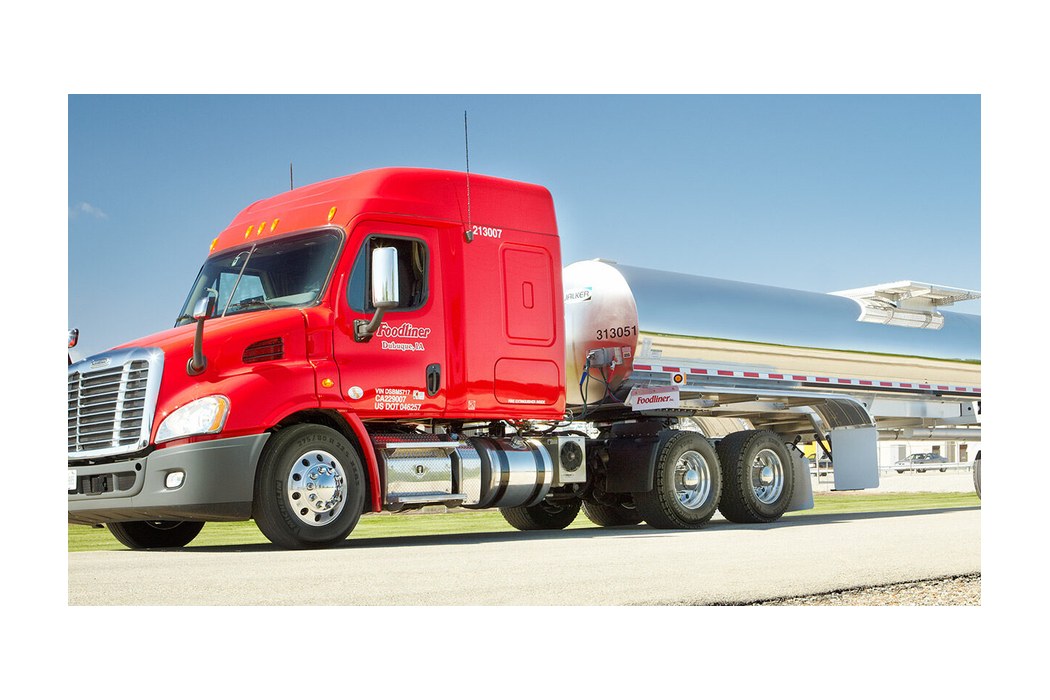
The Trucks Behind the Ingredient List
Flour, sweetener and vegetable oil do not arrive at a factory by magic. Foodliner built a continental business around the sanitary tanks, careful handoffs and local terminals that keep the ingredient economy moving.
Delmar International Inc.
Delmar began with customs forms in Montreal. Sixty years later, the family-run forwarder sells something harder to ship: a clear view across the whole supply chain.
Goodwill Industries of South Florida
Goodwill Industries of South Florida is a Miami-based nonprofit social enterprise that funds training, employment and job placement for people with disabilities and other barriers to work. Founded in 1959, it runs a self-sustaining business model spanning donated-goods retail and thrift stores, technically complex apparel and flag manufacturing for the U.S. military, commercial laundry, janitorial services and third-party logistics. With roughly 3,600 employees and about $196M in annual revenue, it is one of the largest Goodwills in North America and the largest employer of people with disabilities in Florida.