The most expensive moment in a warehouse is often painfully small: a picker walks to the wrong slot, a bill of lading drops a destination, a refrigerated pallet warms while nobody can connect the sensor reading to the shipment. Royal 4 Systems has spent 42 years turning those little failures into software rules. Its WISE platform sits between the loading dock and the back office, telling inventory where to go, workers what to do next and managers what just went wrong.
That makes Royal 4 an unusual technology company. It was founded in California in 1984, before a browser could visit a warehouse and long before software-as-a-service had a name. Today the Long Beach company sells cloud-hosted and on-premise systems for warehouses, yards, third-party logistics billing, manufacturing, financials and enterprise planning. In March 2026, vertical-software operator Cordance made a strategic investment. Royal 4 remains an independent business unit, but now has access to Cordance's product, AI and go-to-market resources.
The warehouse is where neat software diagrams go to die
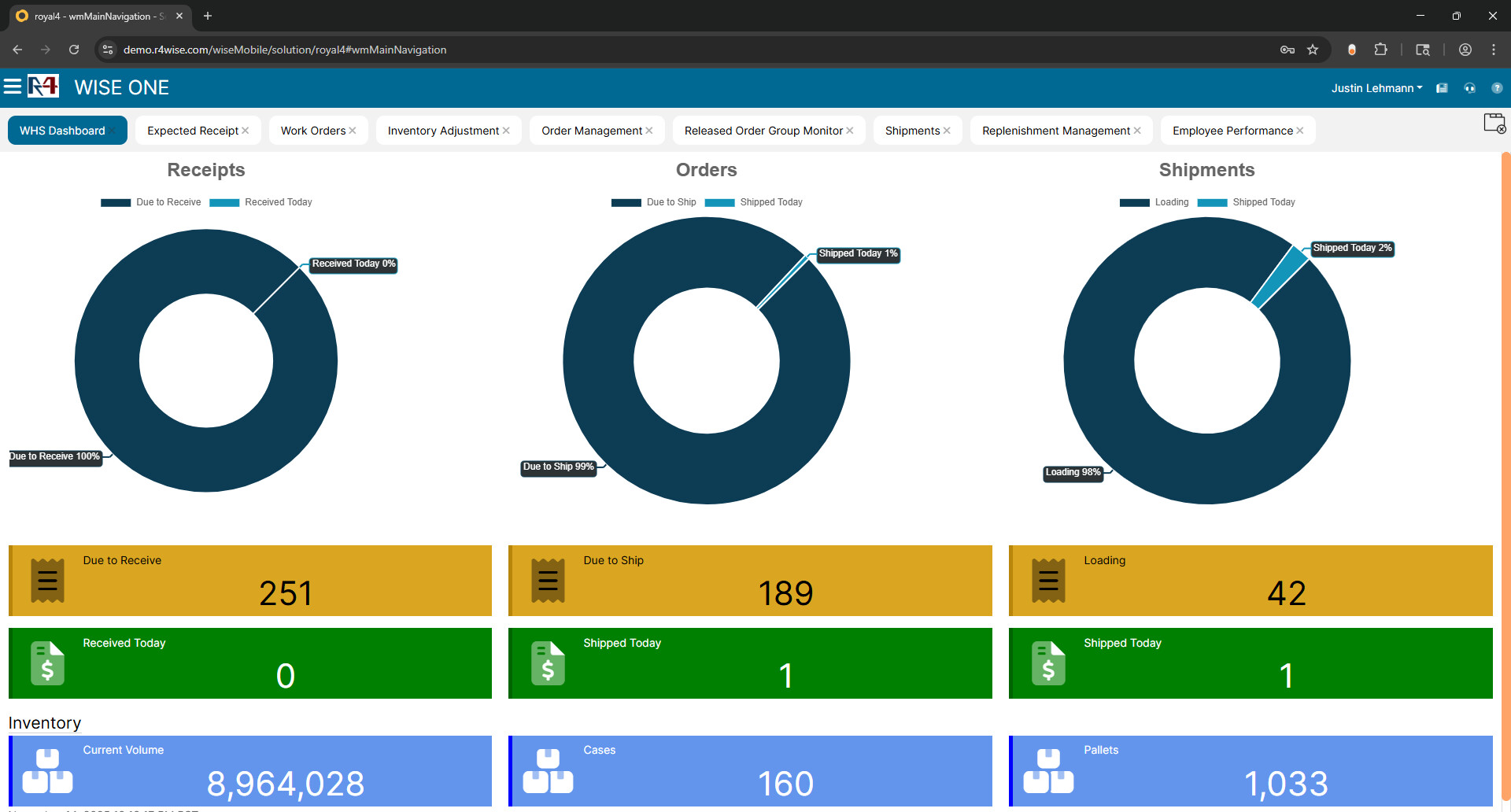
Royal 4's core customer is not trying to make a better slide deck. It is a manufacturer, distributor, retailer, food processor, public agency or 3PL trying to move physical goods without losing the thread. WISE covers receiving, putaway, replenishment, inventory, picking, packing and shipping. Add TITAN yard management and the system can schedule dock doors and direct trailers. Add R4 Enterprise and the same operation can bring in financials, planning, distribution and manufacturing. The Universal Adapter connects those workflows with SAP, Oracle, ecommerce platforms, transport systems and older software that nobody is brave enough to unplug.
The specialization gets more interesting at the edges. A 3PL needs to separate many customers' inventory and bill every value-added service. A tire warehouse cares about size, brand and rapid location logic. A cold-storage operator needs catch weight, lot origin, expiry dates and temperature history. WISE Polar, Royal 4's renamed cold-chain package, combines those records with Zebra sensors that can stream temperature data from vehicles, coolers and containers.
KDC Group shows what that stack looks like when the boxes contain fruit instead of durable widgets. Its Vineland, New Jersey facility spans more than 200,000 square feet, holds over 8,000 pallet positions and uses 29 dock doors. It supports millions of citrus, grape, cherry and stone-fruit boxes sourced across several continents. Royal 4 connected WISE, R4 Enterprise, yard and dock scheduling, wireless infrastructure, forklift scanners, handheld devices and custom labels. The point was not simply knowing that a pallet existed. KDC needed to know its origin, cooler zone, repack status and destination while seasonal volume rose and freshness kept counting down.
That breadth explains why the company talks about a suite rather than a single app. Warehouse software makes a decision, but the yard controls when the truck arrives, the ERP owns the financial consequence, the customer portal expects an answer and the label carries the result into the physical world. Royal 4's wager is that one configurable operational spine reduces the gaps between them. Buyers are paying for fewer handoffs where a person retypes, reconciles or guesses.
See the work
RF scanners, barcodes, RFID and connected sensors turn physical movement into live inventory and task records.
Direct the next move
Configurable rules decide putaway, replenishment, picking, labor and dock activity according to each operation.
Close the loop
EDI, APIs and the Universal Adapter return the result to ERP, billing, ecommerce and transport systems.
Its moat is the exception, not the dashboard
Royal 4 competes with much larger suites from Manhattan Associates, Blue Yonder, Körber, Infor, SAP and Oracle, plus midmarket specialists such as Made4net, Tecsys, Extensiv and Logiwa. Its pitch is configurability and operational attention. US implementations are handled by Royal 4 employees; certified dealers cover international work. Buyers can stay on premises, move to the cloud or connect WISE to an ERP they already own.
The best proof is not a feature count. One Royal 4 customer said the company built and deployed a test system using the prospect's own data before the purchase. That changed the decision because the demonstration handled unusual vault management, commercial project tracking and dispatch work instead of asking the buyer to imagine it. It is a copyable sales move: borrow the buyer's ugliest process, prove it end to end, and let the exception close the deal.
“We began by focusing on outgoing orders first. Once that was up and running, we tackled inventory tracking and control.”Paul Coraggio, International Intimates
International Intimates used the same logic for implementation. The company moved outgoing orders first, then inventory tracking and control. The project took 10 months and, according to its CIO, did not interrupt operations. The lesson is less glamorous than a big-bang launch and much more useful: sequence the flows by operational risk. Get shipping stable before adding every inventory behavior. Keep a small IT team out of an all-at-once migration if the warehouse cannot afford a silent conveyor.
Where the fit gets stronger
Editorial fit index, not a company performance claim. More complexity gives Royal 4's configuration depth room to earn its keep.
The economics hide behind the loading door
Royal 4 does not publish a price card. Third-party software directories tell buyers to request a quote, and no free trial is listed. That is normal for enterprise WMS: cost depends on users, sites, modules, devices, integrations, hosting, implementation and support. The business model mixes software subscriptions or licenses with the services required to make the system match a real facility. For a buyer, the relevant number is not the monthly fee alone. It is the fee plus integration, process redesign, devices, training and the cost of running old and new systems together during cutover.
Royal 4 says many customers recover their investment within a year, while LaborAI says its engineered labor standards can produce a 25 percent operator-productivity improvement when paired with WISE. Those are vendor and partner claims, not universal outcomes. A more grounded example comes from Poiesz Supermarkets in the Netherlands, which reported a 20 to 25 percent lift in warehouse efficiency and productivity. Its WISE configuration added temperature registration and expiration control, improving stock accuracy and reducing product loss.
Where it can break
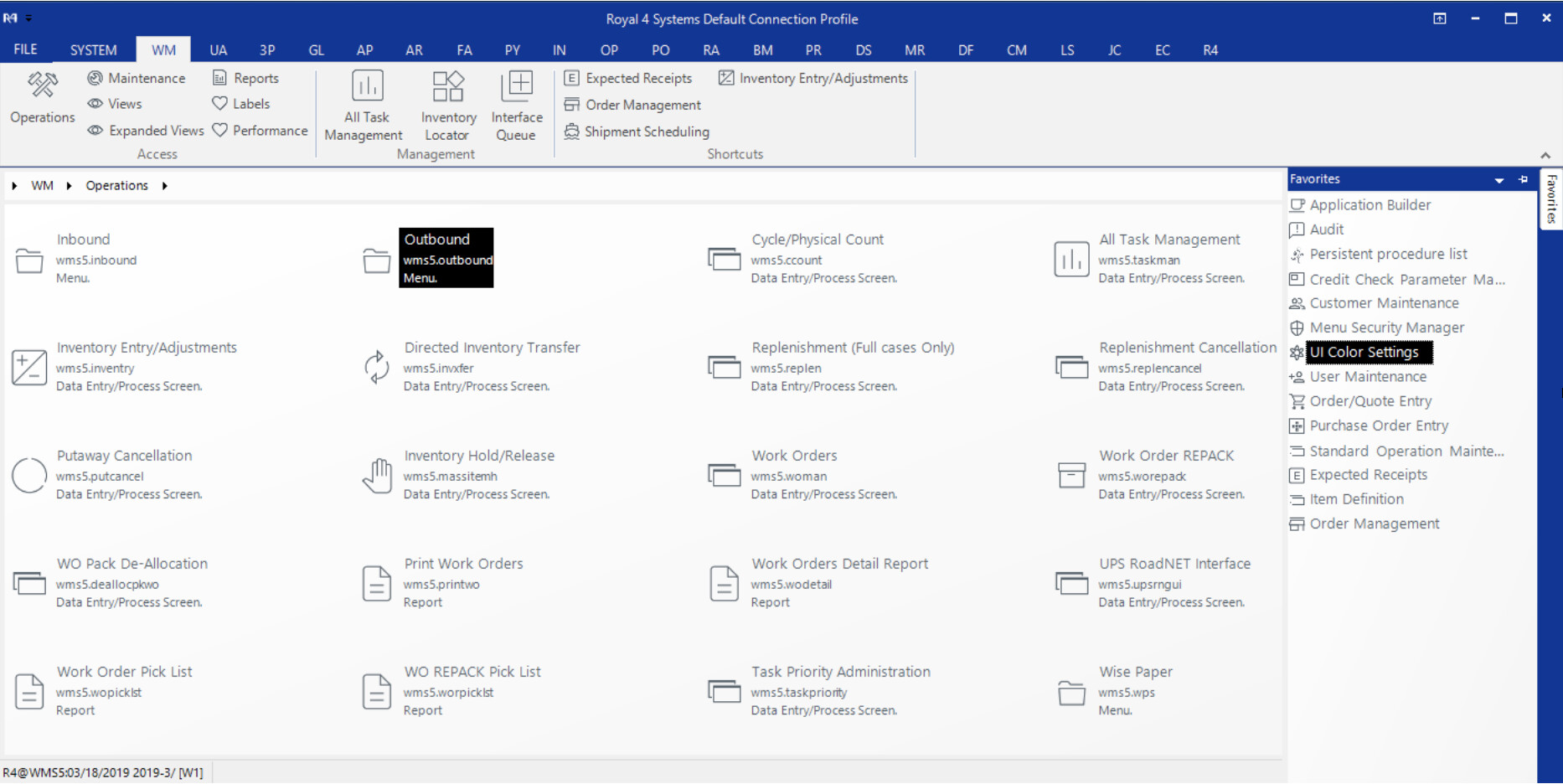
Configuration is only an advantage when the exact workflow is tested. A 2019 reviewer liked the efficiency gains but said a bill-of-lading field required a workaround. More recent public reviews include complaints about catch-weight and EDI behavior. The review samples are small, but the buying lesson is large: validate labels, documents, integrations and exception paths with production-like data before go-live.
Forty years of continuity meets the AI deadline
Royal 4's technical continuity comes from Progress OpenEdge, the application and data platform behind WISE. The relationship began around 1985 and reached its 40-year mark in 2025. Longevity gives Royal 4 a large library of operational rules and a path for customers who value stability. It also creates the central tension of mature enterprise software: every old workflow is either valuable domain knowledge or tomorrow's modernization project, and sometimes it is both.
The recent product releases show how Royal 4 is trying to resolve that tension. WISE 11.0 brought cloud deployment together with LaborAI's engineered standards, which compare expected task time with actual elapsed time while accounting for travel, equipment, congestion and fatigue. WISEagent searches only the customer's operational data inside the Royal 4 environment rather than roaming external sources. Zebra integration turns temperature from a paper trail into a live signal. The 2024 Universal Adapter is the practical glue, connecting these newer layers to older systems.
None of it works well if the underlying data is sloppy. An internal AI assistant can retrieve a wrong location faster; a labor standard can precisely measure a bad process; a sensor can faithfully report a temperature nobody assigned to the right lot. Royal 4 works best where the operator has complex, repeatable workflows, executive patience for discovery and a team willing to clean master data. It is a poorer fit for a tiny warehouse that needs simple inventory tomorrow, wants transparent self-serve pricing or lacks the staff to own an enterprise implementation.
What the Cordance bet has to preserve
Before the 2026 investment, Royal 4 described itself as employee-owned. Cordance now calls it an independent business unit and says it will add capital and expertise without removing the identity that made the company useful. That is the whole bet. Cordance already serves more than 1,500 manufacturing, distribution and 3PL customers across its portfolio. Royal 4 gives it a deeper warehouse execution layer; Cordance gives Royal 4 a larger operating bench and a faster route to modern SaaS development.
The risk is familiar. Make WISE too generic and it loses the odd details that won long customer relationships. Let every exception become custom code and modernization slows under its own weight. The sensible middle is visible in Royal 4's best customer story: configure deeply, prove with real data, then roll out in stages. A 42-year-old software company does not need to pretend it was born yesterday. It needs to make all that accumulated warehouse scar tissue easier to buy, deploy and trust.