A food brand can cross a border and still be a long way from a customer. Somewhere between the arrival of a shipment and the replenishment of a supermarket shelf, somebody must count the cases, track the expiration dates, print the right labels, and get a truck to the right loading dock. Source Logistics built a business inside that unglamorous interval. Its story begins with a simple observation: understanding the product’s destination matters as much as moving the product.
- The customer: brands selling food, beverages, beauty, and other consumer goods, with particular experience serving Latin American businesses.
- The work: storage, fulfillment, freight, retail preparation, and the systems connecting them.
- The bet: a specialist can grow nationally without losing the knowledge that made customers hire it.
First, learn the shelf
In 1999, cousins Marcelo Sada and Raul Villarreal started with a 20,000-square-foot California warehouse. Their backgrounds connected export advice with an understanding of the U.S. distribution system. Fernando Ramirez joined the founding effort; the company now describes him as an early partner. The practical education included unloading trucks and driving forklifts. There was little distance between the people promising the service and the people doing it.
The original opportunity was helping Hispanic brands enter the American market. That remains a useful way to understand Source. A warehouse is available from plenty of operators. Knowledge of how a Latin American supplier’s products reach American retailers, supported by bilingual teams, is a more particular proposition. Source now serves a broader consumer-goods market, while keeping that cross-border specialty close to its identity.


The first thing to break was communication
Consider Cordialsa USA, a distributor bringing products from Colombia, Mexico, Costa Rica, and other markets to American consumers. In Source’s published customer account, Cordialsa’s previous logistics arrangements suffered from poor communication, unreliable reporting, and insufficient geographic capacity. Inventory became harder to see. Expansion became harder to plan. The problem reached the office before it reached the shelf: people could no longer confidently explain where their goods were.
Source’s response combined warehouse-management visibility, transportation, and retail preparation. Cordialsa could monitor inventory, use additional regions as it expanded, and have displays and labeling handled alongside storage. The account reports improved control and confidence, without publishing a measured before-and-after savings figure. It is a concrete example of what customers buy: fewer gaps between the physical shipment and the information used to manage it.
“The difference was immediate: better communication, reliable service, and systems we can trust”
Irma Solis Villatoro, Supply Chain Manager, Cordialsa USA, in Source’s customer case study
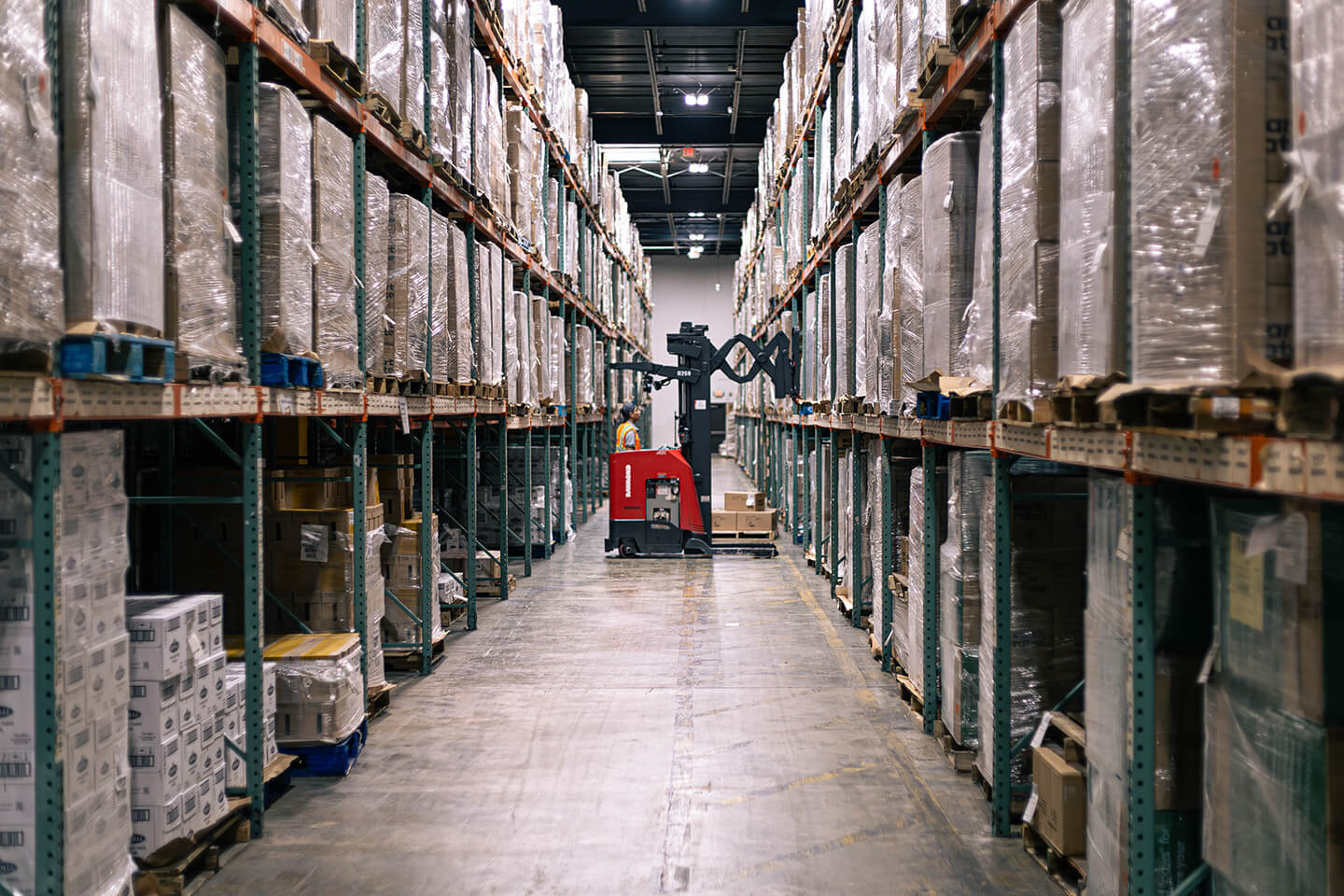
The work extends beyond loading pallets. Source offers mixed-product packs, subscription kits, repacking, retail displays, and lot tracking. A box intended for a club store may need a different configuration from one destined for an online buyer. Keeping that work near the inventory can reduce handoffs. For a growing brand, the attraction is getting several channel requirements handled within one operating relationship.
Chicago changed the menu
Palladium Equity Partners acquired a majority stake in November 2023, investing alongside the founders. In March 2025, Source announced the acquisition of LaGrou Distribution’s warehousing business. Eight greater-Chicago facilities added more than two million square feet and introduced refrigerated and frozen storage to Source’s portfolio. LaGrou’s transportation businesses stayed with their existing owners. Buying the warehouse operation changed both the map and the products Source could accommodate.
- 01Bring it in
- 02Keep it right
- 03Make it retail-ready
- 04Pick the order
- 05Send it out
Cold storage adds a demanding set of routines: temperature monitoring, expiration management, controlled handling, and records that follow the goods. Source advertises those capabilities alongside ambient storage and freight coordination. Its current website reports more than 5.8 million square feet of managed warehouse space. That footprint gives a customer room to expand; the actual fit still depends on the location, temperature band, and handling requirements of the product.
Source earns its business by providing contracted logistics services to other businesses. Storage, order handling, transport, and additional preparation form the service mix. Its sales process asks customers to request a quote. A buyer should build that quote around inventory, order patterns, packaging work, and freight lanes, then compare the whole operating bill. A cheap storage rate tells only a small part of the story.
A warehouse has to come with the small stuff
One of Source’s more revealing ideas is called Warehouse in a Box. The company packages warehouse technology, scanners, printers, connectivity, supplies, equipment, and operational support into a coordinated deployment. Its checklist includes more than 40 items, down to cabling and consumables. The insight is wonderfully mundane: a leased building cannot receive an order just because somebody has signed the lease.
Source advertises typical readiness within seven to ten business days from contract signing. Food Logistics described the original project as suited to pallet-in, pallet-out operations, with qualification, operating permission, and infrastructure readiness among the steps. Seasonal overflow and temporary market entry are sensible uses. Complex automation or specialized processing deserves its own plan. The reusable lesson is to package the dependencies together before urgency makes every missing cable expensive.
Make the second warehouse easier
The same thinking appears in Source’s 2026 software program. It selected IFS Softeon for warehouse management and Alpine Supply Chain Solutions for implementation. Montebello, California, became the foundational site for workflows and templates intended for later facilities. Alpine’s webinar account says the first installation took under five months and reached operational stability within two weeks of going live.
The approach described in that briefing standardized 80 percent of core procedures and reporting, leaving 20 percent flexible for site differences. That is something another operator can copy: decide what repeats, document it, and leave room for the customer whose requirements resist the standard. Source’s expansion makes that discipline consequential. Every new warehouse creates another chance for a promise made in one place to unravel somewhere else.
For a brand choosing a partner, the useful test is equally concrete. Follow one order through receiving, inventory records, preparation, and delivery. Ask who notices an exception and who resolves it. Source’s appeal lives in those answers. The product already has a story. Getting it reliably onto the shelf lets the shopper discover it.