The humble cardboard box has a complicated inner life. Before it reaches a porch or a store aisle, software has to decide where its contents belong, who should pick them, which dock has room, whether a robot or a person should move them, how the truck should be routed and what counts as proof that the trip ended well. Made4net lives in that hidden argument. The New Jersey company makes warehouse management and supply-chain execution software for operations where “it is probably on aisle seven” is not a useful answer.
Its central idea is less glamorous than a delivery drone and more consequential: the operating rules should be configurable. A warehouse changes whenever a retailer adds a channel, a distributor absorbs a customer, a 3PL signs a new contract or an automation vendor rolls in another species of robot. Traditional warehouse systems often answered change with custom code. Custom code solves today's exception and quietly invoices tomorrow's upgrade. Made4net was designed to let operators alter screens, workflows, inventory attributes and rules without rebuilding the core.
That pitch gained an unusually persuasive customer in May 2023. Ingka Group, the largest IKEA retailer, acquired 100 percent of Made4net through its investment arm. The plan was not simply to own a tidy software asset. Ingka said it would integrate Made4net into fulfillment operations across its stores, a project it described as likely the world's largest warehouse-management implementation. Made4net would remain an independent New Jersey subsidiary and continue selling to everyone else. The customer had become the owner, while the product still had to work in the open market.
We will strengthen the fulfilment operations system across all IKEA's stores.Duff Davidson, Made4net CEO, on the Ingka acquisition
The originBuilt after watching rigid systems win
Made4net began in 2005 with three supply-chain technology veterans: Amit Levy, Lonny Avital and Jean David Benkimoun. Their diagnosis was blunt. Warehouse software had become slow to implement, expensive to maintain and brittle when a business changed. The company set out to offer top-tier execution functions at a scale and cost that did not reserve serious WMS capabilities for only the largest operators. Its first customer was a third-party logistics provider, an unforgiving test because a 3PL must accommodate many clients, contracts, inventory models and billing rules under one roof.
The company established a U.S. presence by 2009, moved into additional international markets from 2010 and first appeared in Gartner's WMS Magic Quadrant in 2015. A majority growth investment from Thompson Street Capital Partners arrived in 2021. In 2022, Made4net bought Zethcon, whose Synapse WMS had spent roughly two decades serving 3PL and cold-chain customers. The combination added more than 100 specialist 3PL users and people who understood that a warehouse operator's invoice can be as complicated as its pick path. Financial terms for the investment, Zethcon deal and later Ingka acquisition were not disclosed.
The configurable bet
Three industry veterans build a WMS around changing rules without changing the core.
The analyst threshold
Made4net makes its first Gartner WMS Magic Quadrant appearance.
3PL depth arrives
Zethcon and Synapse add cold-chain and multi-client warehouse expertise.
IKEA moves from buyer to owner
Ingka Group acquires the company and chooses its software for a global fulfillment program.
Mobile, AI and year eleven
SCExpert gets a major interface update and the Gartner streak reaches eleven years.
The productA control room, not a stock counter
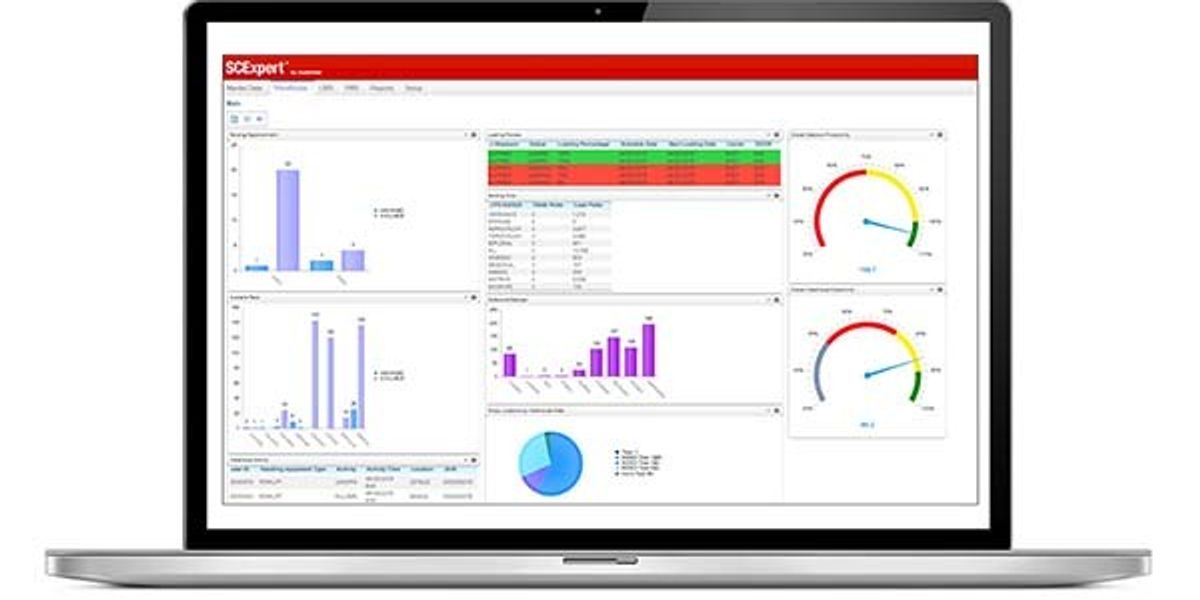
SCExpert is the umbrella. WarehouseExpert handles receiving, putaway, counting, picking, packing and shipping. LaborExpert measures work and sets productivity standards. YardExpert and AppointmentExpert manage trailers, gates and dock schedules. RoutingExpert plans routes; DeliveryExpert follows the load to a signature. Synapse 3PLExpert handles the peculiar demands of outsourced warehousing. The modules can be deployed separately or together, in the cloud or on premises, while sharing data and business logic.
One operating layer / six moving parts
The differentiator is not that Made4net invented each category. Manhattan Associates, Blue Yonder, Oracle, SAP, Infor, Tecsys and other vendors compete across similar territory. Made4net's angle is the combination: one configurable platform, serious midmarket credentials, a purpose-built 3PL product and support for high-volume sites with material-handling equipment, autonomous robots and warehouse control functions. The company says a typical go-live takes about 20 weeks, though complex deployments depend on integrations, data quality, automation and the number of facilities.
It makes money like an enterprise software company. Customers can buy SaaS subscriptions, while on-premise subscriptions and perpetual licenses remain available. Implementation, integrations, training and support surround the license. There is no useful shelf price for a system whose scope can range from one warehouse module to a multi-country network with robotics. For buyers, the relevant cost is the whole program: software, interfaces, process design, devices, testing, training, change management and the labor required to keep master data clean.
The evidenceWhere the paper broke first
Made4net's customer stories tend to begin with wonderfully ordinary villains: paper, spreadsheets, manual entry and an ERP module that outlived its comfortable range. Sprouts Farmers Market hit the wall at about 40 stores. Paper-based work could not keep up with fresh-food traceability, quality checks and next-day deliveries. After implementing Made4net, Sprouts reported a 32 percent improvement in inventory accuracy over the same six-month period a year earlier and up to 25 percent better picking efficiency.
Souto Foods offers a cleaner view of what changed a buyer's mind. The distributor spent nine months evaluating systems before choosing WarehouseExpert. It needed lot and batch controls, expiration-date management, voice picking, NetSuite integration and room to grow. The rollout combined Made4net with Honeywell Voice. Souto later reported a 65 percent increase in cases picked per hour, 95 percent inventory accuracy and a 50 percent efficiency gain. The first failure had not been a spectacular server crash. It was the accumulating drag of a system that could not scale cleanly.
Customer-reported outcomes. Different facilities, baselines and implementations make these proof points, not universal forecasts.
Then there is McKenna, the 3PL that installed Synapse before the pandemic. A new client forecast 50 e-commerce orders a day in February 2020. Within a month, volume reached 1,600. McKenna reported moving from 33 orders per employee to 400, an 1,100 percent productivity increase. This is the case that best explains why adaptability matters. The software did not predict a pandemic. It gave the operation enough structure to survive a forecast that became fiction almost overnight.
Not every buyer arrives optimistically. Acme Distribution entered its current selection after what its president called a failed WMS experience. That history changed the standard from promises to proof. In March 2026, the operator selected Synapse for nine facilities, nearly three million square feet and more than 300 customers. Made4net's U.S. references, 3PL specialists and implementation approach carried more weight than a polished feature recital. The lesson is portable: after failure, evaluate the delivery team and reference architecture as intensely as the product.
The next layerLet the camera check the database
A WMS knows what a worker scanned. It does not automatically know what happened between scans. Made4net's 2025 partnership with Flymingo attacks that gap by connecting live WMS events with computer vision from existing security cameras. At Abaline Supply, a 165,000-square-foot distributor, the combination can flag a process deviation near the moment it occurs. Previously, managers might discover a wrong shipment weeks later and search hours of footage. The intriguing part is not “AI” on the brochure. It is the creation of a visual receipt for a digital transaction, without installing a new camera system.
Other integrations extend the same thesis. Gather AI uses drones and computer vision for inventory checks. Locus robots execute WMS-directed picks at Material Bank. Techdinamics connects order intake and shipping around Synapse for 3PL operations. Cybage is supporting a Made4net rollout across outdoor pipe yards in Dubai and Oman. Made4net's job is increasingly to conduct a mixed orchestra of workers, scanners, robots, cameras, enterprise systems and delivery devices without asking the customer to become an integration company.
The copyable playbookBuy around the exception, not the demo
The practical lesson is to document the ugly day. Ask what fails when order volume jumps 30 times, a new 3PL client has odd billing rules, a food lot expires, a robot stops, a truck misses its appointment or an employee scans the correct carton and loads the wrong one. Build the evaluation around those exceptions. Demand references with comparable volumes and automation. Separate configuration from custom code in writing. Test integrations with realistic data. Give supervisors ownership of workflows, and budget for training the second shift as seriously as the project team.
This is also where the approach can fail. Configurability is leverage only when a company can decide what its process should be. A chaotic operation may simply encode chaos faster. Dirty item data, disputed ownership between IT and operations, weak testing or a refusal to train users can flatten the value of any WMS. A small, stable stockroom with modest volume may be better served by a lighter inventory product or its ERP. And a company seeking a zero-effort rollout will discover that no software can map a warehouse it has not bothered to understand.
Made4net fits when...
- Multiple sites, clients or channels create real exceptions.
- Inventory accuracy and throughput affect service promises.
- Robotics, voice, ERP and carrier systems must coordinate.
- The operation has owners for process, data and training.
Look lighter when...
- The warehouse is small, stable and operationally simple.
- Basic ERP inventory functions already cover the work.
- No team can maintain rules, data or integrations.
- The business wants software to replace process decisions.
Made4net now serves more than 800 customers in 30 countries and 20 languages. In 2026 it announced a React-based mobile interface, new reporting and AI-oriented capabilities, while reaching an eleventh consecutive year in Gartner's WMS Magic Quadrant. Those badges matter less than the underlying tension. Warehouses are becoming more automated and less predictable at the same time. Every new channel and machine creates another place for rigid software to crack.
That is why the IKEA deal remains the sharpest fact about the company. Ingka did not buy Made4net because fulfillment had become easy. It bought the vendor while turning stores into omnichannel nodes and trying to make inventory serve customers however they choose to shop. The bet is that a configurable operating layer can keep thousands of local exceptions from becoming one global mess. Somewhere behind the next flat-pack box, that bet is being tested one scan at a time.