At an industrial manufacturer with 380,000 square feet of warehouse space, the trouble began with an elementary question: where was everything? Orders were incomplete or late. Weak traceability clogged the warehouse and restricted production downstream. Capstone Logistics began with a wall-to-wall inventory audit. Improved capacity and throughput followed, according to its account. Then the customer asked Capstone to take on more manufacturing support. The first useful intervention was a count.
- Count and track inventory before throwing more labor at a bottleneck.
- Price measurable warehouse output, with quality and safety in the equation.
- Keep experienced people available when volumes or software change.
That sequence explains something about this company. Logistics is usually pictured as movement: trucks, forklifts, conveyor belts. Yet a warehouse can contain plenty of motion without accomplishing very much. Capstone’s proposition is to take responsibility for the work between arrival and departure, and to make its economics depend on what gets accomplished.
A factory needed a count before it needed a crowd
The industrial assignment grew from inventory tracking into receiving, unloading, put-away, picking, and loading. It eventually included kitting, light assembly, and auditing. Capstone reports a 168% increase in daily production output. Treat that as a result from one company-published case, rather than a forecast for your own factory.
The instructive detail is the order of events. Better visibility preceded a broader mandate. Our reading: the customer gained evidence that the intervention worked before asking the provider to do more. An inventory audit may lack the theatrical appeal of a new robot, but it has the advantage of establishing what the robot would be moving.

The invoice is an incentive
Capstone’s warehouse model uses pay-for-performance. Customers pay against operational output; associates’ compensation is tied to production. Engineered standards, warehouse-management-system integrations, and performance tracking provide the machinery behind the arrangement. Throughput sits alongside quality and safety in the stated measures.
The distinction matters to anyone buying labor. An hourly staffing bill purchases time. An output-based agreement purchases a defined activity. It changes the question from how many people showed up to how much acceptable work got done. Capstone takes responsibility for managing the labor efficiency required to deliver that work.
- 01 Define the unit of work
- 02 Track the operation
- 03 Check quality + safety
- 04 Pay against results
This is an operational contract, so the definition of acceptable output does real work. A case picked incorrectly creates another task. A damaged pallet creates a claim. For a buyer, the sensible test is whether the standards capture those consequences as well as speed. The incentive should survive contact with the loading dock.
A warehouse can contain plenty of motion without accomplishing very much.
The expensive part of peak season is starting over
A tool manufacturer’s problem was seasonal. Busy periods exhausted full-time employees; temporary workers needed too much training. Quiet periods left too many people on the payroll. Capstone supplied a trained, flexible labor pool, including holiday and Sunday coverage, while the manufacturer’s own employees could concentrate on more specialized work.
Capstone reports $7.2 million in labor savings against in-house or temporary labor, a 49% improvement in turnover, and a 25% efficiency improvement during implementation. These figures describe that customer’s experience. The dollar figure measures savings, not the price of hiring Capstone.
A separate food-and-beverage case makes the continuity argument especially tangible. Capstone used experienced associates from nearby facilities, a competitive compensation structure, and a retention-focused plan. It reports 35% cost savings compared with traditional temporary labor. Nearby experience reduced travel and onboarding costs. Peak demand was treated as a recurring planning problem.
Software that gets its boots dirty
APEX, Capstone’s proprietary technology suite, connects operating data to the people doing the work. It tracks dock status, vendor compliance, unloading times, and unit costs. Managers can examine performance at site, regional, or corporate level and compare trends with similar operations. MyCapstone gives associates access to earnings and productivity information.
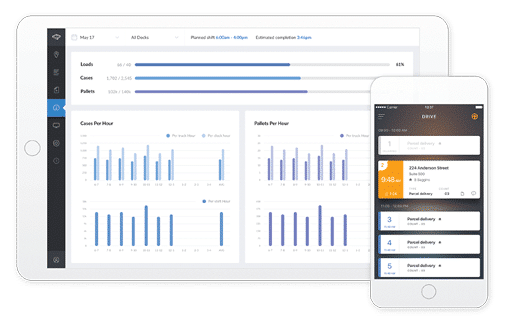
CapstonePay handles a smaller irritation with large practical consequences: paying unloading charges. Launched in February 2022, it lets drivers pay electronically from their cabs and receive digital receipts. Supported payment methods include major fleet-check and fuel-card providers. The warehouse task and the paperwork surrounding it belong to the same operational chain.
Technology can also create a temporary labor problem. In a supermarket case, a Manhattan WMS rollout produced learning-curve losses and backlogs. Capstone supplied experienced leadership and associates while employees trained. The company reports measurable productivity improvement within 72 hours. Buying software did not remove the need for people who knew how to keep shipping.
Its expertise also extends to maintaining the equipment that moves goods. Capstone’s automation program covers robotics, conveyors, sortation, and material handling systems. Preventive inspections and reactive repairs belong to the offering. Even an automated warehouse needs someone responsible when a machine stops cooperating.
An unloading business follows the goods
“In the beginning, we were unloaders,” says Capstone’s own history. Its predecessor dates to 1986; the Capstone combination formed in 2011 when Progressive Logistics Services merged with LMS Intellibound. Subsequent acquisitions extended the route: LoadDelivered added freight management in 2018, Priority Express expanded delivery in 2019, and Insource added workforce capabilities in 2022.

Today the company reports more than 700 North American locations and 22,000 associates. Grocery distributors, retailers, manufacturers, and other logistics providers use its services. Transport Topics placed it No. 36 in its 2026 logistics ranking. Private-equity ownership helped shape the expansion: H.I.G. sold Capstone in 2014, then returned as majority buyer in 2020.
GXO and Kenco offer overlapping warehouse services; local staffing firms and couriers address narrower needs. Capstone’s pitch brings workforce management, operating visibility, and transportation around an existing operation. Its last-mile work includes store replenishment, grocery delivery, and retailer-branded services. Customers can buy help with a task or entrust a wider stretch of the supply chain.
Capstone names its stated values SCRIPT: ownership, caring, results, integrity, putting others first, and transparency. Its community program includes volunteering and employee assistance. Those commitments describe how the company wants to operate; the customer’s daily experience depends on their local execution.
The useful buying question is specific: which bottleneck needs an accountable operator? Repetitive, measurable work gives performance pricing something solid to attach to. Erratic volumes, unreliable inventory data, or poorly defined quality standards make that bargain harder to judge. Copy the audit, the baseline, and the insistence on acceptable output. A busy warehouse should be able to explain what its busyness bought.