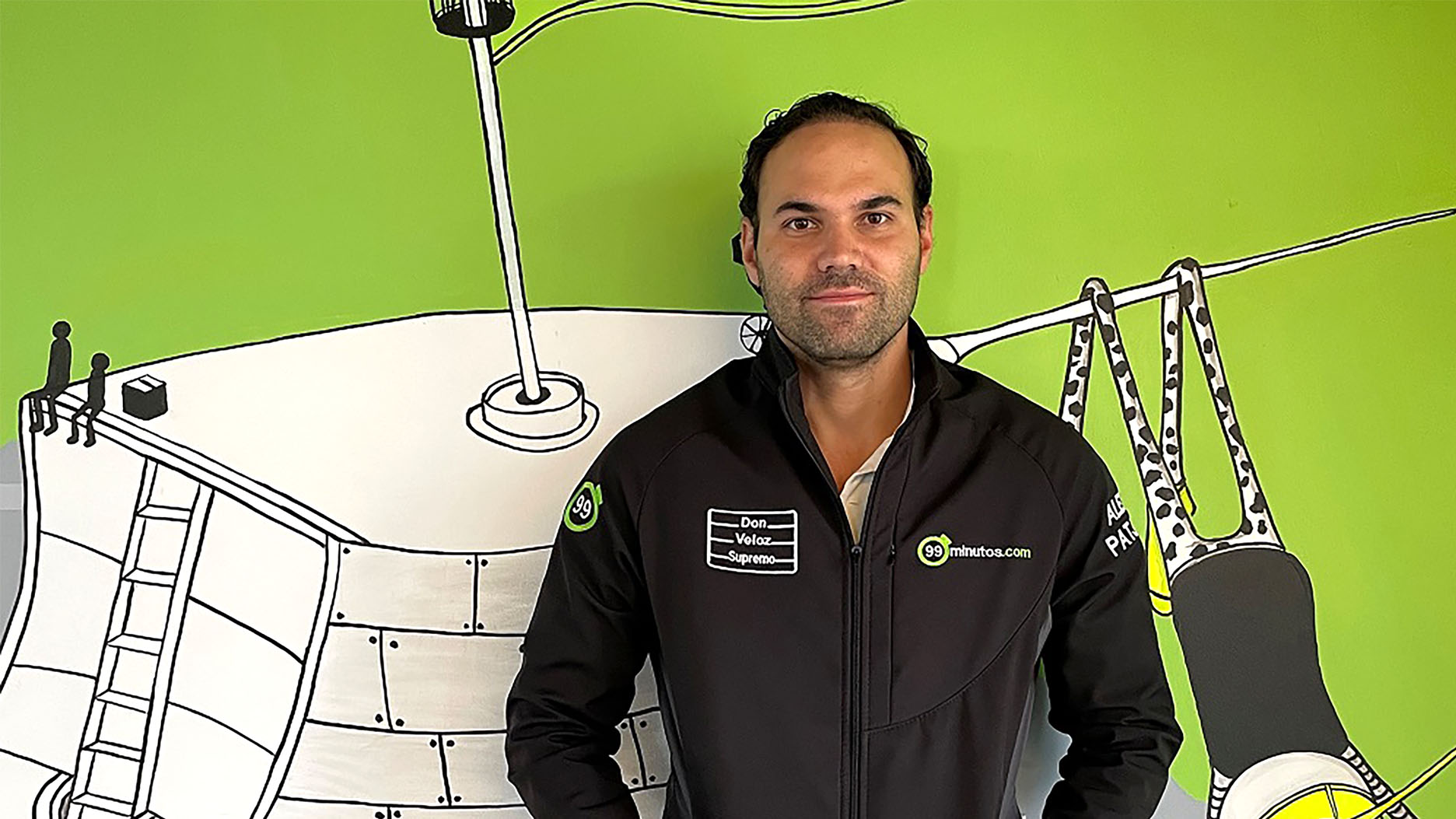
The hookah bar had run out of charcoal. In Alexis Patjane’s telling, that small inconvenience started 99minutos. He and two friends wanted something delivered immediately, discovered a gap, and launched an online shop promising delivery within 99 minutes in Mexico City. The shop would eventually disappear. The promise would survive, then acquire warehouses, pickup points and trucks.
- The pivot: stop selling the merchandise; sell the delivery.
- The expansion: connect fulfillment, freight and the doorstep.
- The useful lesson: inspect the operation behind the promise.
The shop was the experiment
Founded in 2014, 99minutos initially combined two businesses: choosing what people could buy and getting those purchases to them quickly. Patjane’s founder account describes abandoning the first because e-commerce was difficult to compete in. Other merchants could supply the shopping. His company could supply the journey.
That decision gave 99minutos a different place in the market. A retailer competes for the purchase. A delivery provider can work for many retailers at once. The skill developed to support one shop became a service other shops could buy. For a founder examining an awkward business, this is a useful question: which part would somebody else pay to use?
The company’s own history places its beginnings in a workshop in Mexico City’s La Doctores neighborhood. It identifies Movistar as an early major customer in 2016. The contrast is pleasing: a missing consumable at a bar becomes an operation capable of serving a telecommunications company.
An expensive lesson in company-building
The early years were more precarious than the tidy origin story suggests. In his Y Combinator account, Patjane says an early logistics investor put in $1 million, then describes a relationship that nearly bankrupted the company for three years. He identifies buying back shares in 2018 as the turning point. This is the founder’s account of the difficulty.
“we almost went bankrupt for 3 years”Alexis Patjane, recalling the early years
In 2019, 99minutos acquired Chile’s MUVSmart, a last-mile operator with an emphasis on electric delivery. David Berdichevsky and Pablo Casorzo joined as co-founders. The acquisition brought an existing local operation into the expanding network. It also connected 99minutos to experience in a different way of moving parcels.
The company joined Y Combinator’s Winter 2020 batch. Larger checks followed: a $40 million Series B announced in 2021, then an $82 million Series C led by Oak HC/FT in March 2022, with Kaszek and Prosus Ventures participating. Funding bought room to build. It also enlarged the operation that had to work.
Follow the package upstream
The Series C plan helps explain what changed. Alongside delivery, the company proposed expanding pickup and drop-off locations, storage, picking and packing, routing software and sustainability initiatives. A parcel’s final trip was becoming one part of a larger offering.
Consider an online order. Before a driver can carry it, someone must know where the inventory is, retrieve the right item, package it and prepare it for dispatch. Fulfill99 takes on those jobs, along with returns and stock management. Its technology connects merchant systems to the physical operation.
Farther upstream sits Freight99. T21 reported that it began operating in late 2024 to address customers’ need to move goods from ports or borders into distribution centers. By June 2025, reporting also described Cross99, a service spanning origin collection, customs handling and delivery in destination markets. A merchant could ask for help before the goods became individual parcels.
- 01Move the goodsFreight & cross-border
- 02Prepare the orderFulfill99
- 03Reach the buyerEnvíos99
- ↺Handle the returnReverse logistics
Tailor99 handles operations requiring a different setup: dedicated fleets, staff and processes for needs such as groceries, bulky goods or deliveries from stores. The distinction matters. A box of shirts and a large appliance place different demands on a delivery operation, even when both began with a click.
Selling fewer handoffs
99minutos now sells businesses a combination of physical logistics and software visibility. Customers include online merchants, retailers, marketplaces and fintech operations. The company reports more than 5,000 active customers and more than 99 million completed shipments. Those are company-reported scale figures; the shipment total is cumulative.
The business model follows the work: shipments and contracted logistics services, with fulfillment quoted according to volume, products and operational complexity. The website describes prepaid and credit accounts. Technology helps connect these services through tracking, dashboards and integrations, including Shopify, WooCommerce and APIs for custom systems.
Its competition changes with the job. For parcels, merchants can consider established courier networks or marketplace delivery. For storage and packing, specialist fulfillment companies are alternatives. Freight adds carriers and brokers to the comparison. 99minutos’ pitch is the ability to connect several stages through one provider.
That approach requires investment beyond a better dispatch screen. In June 2025, Patjane told T21 the company had invested nearly $12 million in infrastructure and technology that year and wanted to double that amount in 2026. The doubling was an ambition, rather than a reported result.
Read the cutoff, then run the pilot
The name is a memorable promise, but it is a poor substitute for the service agreement. Mexican parcel terms limit same-day service to eligible shipments originating at its fulfillment operation in Mexico City and the State of Mexico, received and confirmed before 10:30 a.m. Other services have longer transit windows.
A merchant should therefore test actual routes, inventory handling and exception recovery. Fulfill99 describes a pilot before wider implementation. That is a process another business can copy: agree on scope, observe real orders, then adjust. A seller whose goods fall outside parcel restrictions, or whose orders miss the cutoff, needs another service configuration.
By September 2026, the company was advocating inventory positioning ahead of Mexican holiday demand and road restrictions. The reasoning follows its evolution: a driver cannot deliver stock that has not reached the right place. The original shop vanished. The work behind its promise kept getting bigger.