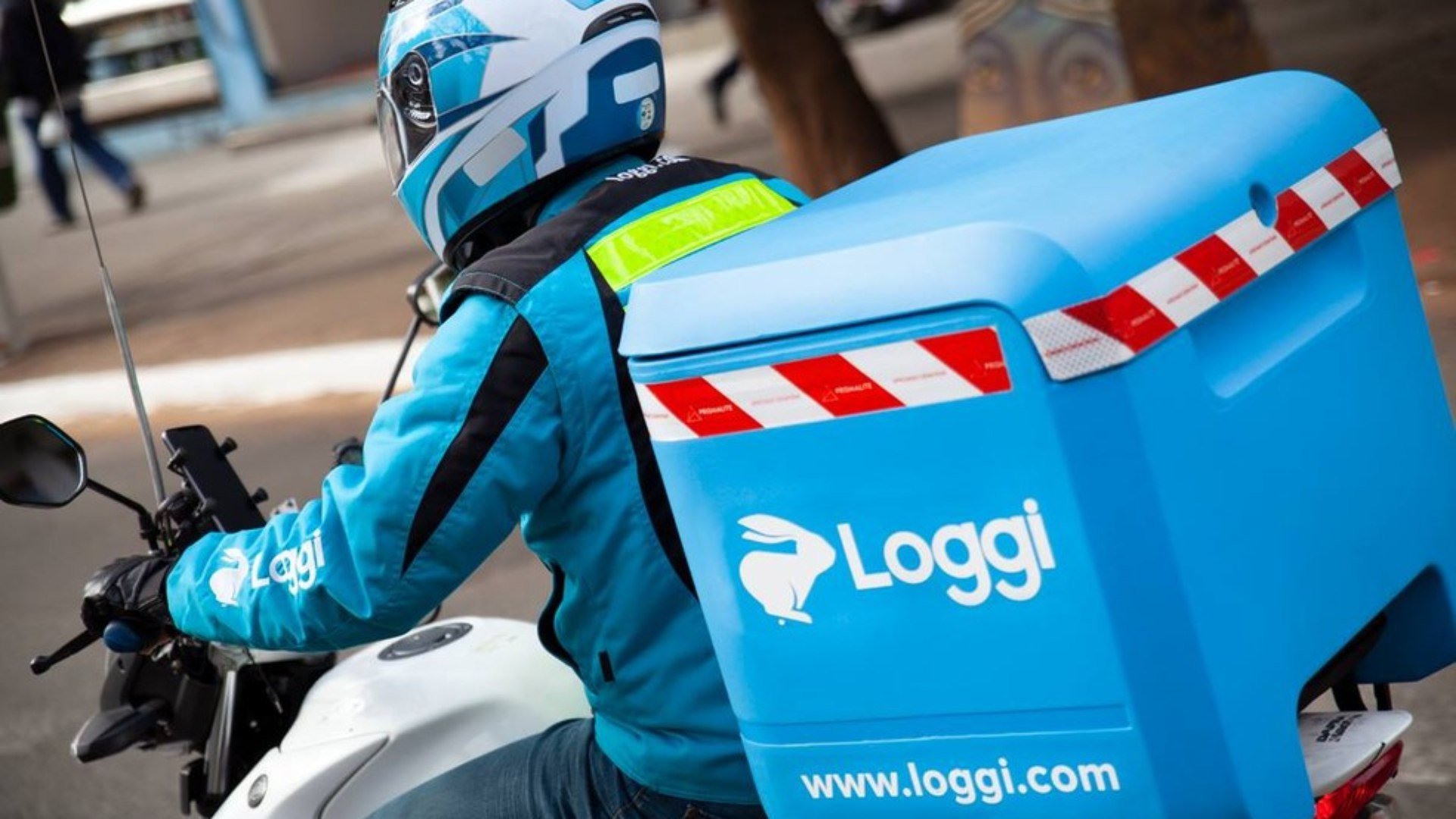
The man needed his keys. He was locked inside his own house, waiting for a locksmith. When the motorcycle courier arrived and removed his helmet, the courier turned out to be Fabien Mendez, the co-founder of Loggi. In a 2019 account of the episode, Mendez was doing deliveries himself to understand the work. It was a small errand with an unusually well-financed rider.
- Loggi connects local collection with national parcel delivery.
- Small sellers can enter the network through neighborhood drop-off points.
- Its history shows how expensive the gap between a shipping app and a working network can be.
That gap is the interesting part. A customer sees a blue box on a motorcycle. A seller sees a shipping quote. Between those two sightings are sorting facilities, transport partners, routing decisions and handoffs. Loggi’s story is about making that middle work, then finding more people who can use it.
01 / The spreadsheet said yes
Mendez and Arthur Debert started Loggi in São Paulo in 2013. The first service handled urgent local deliveries, including office documents. By 2015, the company was expanding into national e-commerce shipping. The ambition had changed: connecting a sender and a nearby rider was becoming a problem of connecting distant cities.
In an interview published in 2020, Mendez described the 2016 expansion with a wonderfully unromantic detail. They made a business plan, and the spreadsheet accepted everything. Reality proved more complicated. Loggi almost went under while spending to build its national operation; fresh funding arrived in early 2017.
“A planilha aceitou tudo. Mas a realidade era muito mais complicada.”
“The spreadsheet accepted everything. But reality was much more complicated.”
Fabien Mendez, 2020 interview · translation
It is a useful warning for anyone designing a business around physical movement. Software can allocate a job. It cannot make a half-empty truck economically full, remove distance between towns, or rescue a missed handoff merely by displaying a reassuring status message.

02 / The app needed a building
Investors supplied considerable room to experiment. A $150 million round in 2019 took Loggi to a valuation around $1 billion. In February 2021, it raised $212 million, led by CapSur Capital with investors including Verde, SoftBank and Microsoft. The valuation then approached $2 billion. Those are historical financing figures, rather than a price tag on today’s company.
One physical commitment was easier to picture. Loggi opened a 40,000-square-meter facility in Cajamar, São Paulo state, in November 2021. The reported investment was R$150 million. It used cross-docking: parcels arrived, were sorted and moved onward, rather than sitting on shelves awaiting a purchase. Automation helped organize that flow.
Reported investment in the Cajamar sorting facility
The distinction matters to a merchant. A carrier moving a sold item solves a different problem from a warehouse holding inventory and packing orders. Loggi’s expertise centers on moving parcels through a network. Calling everything “fulfillment” blurs the job the customer is actually buying.
03 / Growth gets a budget
The expansion carried a human cost. Loggi cut approximately 15% of staff in August 2022 and another 7% in February 2023. The company cited adaptation to the global environment and operational efficiency. More deliveries had not removed the need to make the economics work.
Thibaud Lecuyer, previously CFO, became CEO in 2022. He later recalled explaining EBITDA to employees using a household-budget analogy. The company reported positive EBITDA in the fourth quarter of 2023. That operating measure leaves out interest, taxes, depreciation and amortization; it does not establish net profitability.
A reusable lesson sits here: explain the constraint in terms people can act on. “Grow” leaves almost every expenditure defensible. A financial target forces a discussion about what a new route, location or feature must contribute.
04 / The counter becomes an entrance
Loggi’s next move offered smaller senders another way in. LoggiPonto lets a customer create a shipment online and leave the parcel at a partner location. The company tested five receiving points in late 2023. An existing last-mile network could now help bring packages into the system as well.
The result is visible in Loggi’s first-half 2026 shipment report. Receiving points handled 39% of its SME shipments. The study used shipments from 22,000 businesses across more than 5,000 municipalities. It describes Loggi’s activity, rather than every parcel shipped in Brazil.
- 01SellerCreate shipment
- 02CounterDrop off parcel
- 03NetworkSort and transport
- 04DoorstepDeliver parcel
For a merchant, the trade is straightforward. Drop-off requires a trip, but avoids arranging collection for every small batch. Scheduled collection offers convenience at a price: the published offer lists free collection from ten parcels and R$49.90 below that threshold. Parcel freight is separate and depends on the quote.
05 / Sell the route, wherever customers are
The customers range from individuals to large retailers; Loggi’s published examples include Sephora, Pandora and Vivara. Recurring sellers can connect shipping to commerce software and ERPs such as Bling and Olist Tiny. The business earns money from shipping and collection, with prepaid options and credit-approved monthly billing.
It also sells Correios labels. The postal operator is therefore both an alternative and part of the product menu. That is a sensible admission that different shipments need different routes. Loggi competes on access, integration and network execution; a seller still needs to compare actual prices and delivery estimates.
In 2025, Uber and Loggi launched national parcel shipping inside Uber’s app, starting with collection in Campinas and Curitiba. Uber supplies a familiar entrance; Loggi supplies the logistics. Available collection locations matter more than a broad promise of national reach.
Viviane Sales became CEO in January 2026 after leading customers and revenue. The small-business emphasis continues. For sellers, the practical experiment is modest: quote representative parcels, check the nearby counter, and compare delivery performance. Urgent cross-country goods, oversized items or inconvenient drop-off locations can make another service preferable.
The larger idea is copyable without copying the funding rounds: find the awkward entrance to your existing service. Loggi spent years assembling the road between cities. A neighborhood counter made that road easier to reach.