A delivery company can do everything that looks like success and still find itself in trouble. The parcels arrive. Customers recommend it. New contracts follow. Revenue climbs, obligingly, towards the upper right corner of the chart. Alexandre Felix has spent enough time inside logistics businesses to be interested in what happens underneath that handsome line.
In October 2026, Felix is describing the work of Nexallog, the transport and logistics advisory business he has founded. His concern is the operator that grows before its internal structure can support the expansion. Winning work is satisfying. Paying for the machinery of that work is a separate exercise. The congratulatory email tends to arrive before the awkward questions.
This is a new chapter for someone previously known as Loggi’s operations chief. It also fits the earlier chapters. Felix’s public discussions have repeatedly brought technology back to the operation it serves. Now he is bringing the conversation about growth back to the business that must finance it. The destination has changed; the habit of looking underneath remains.
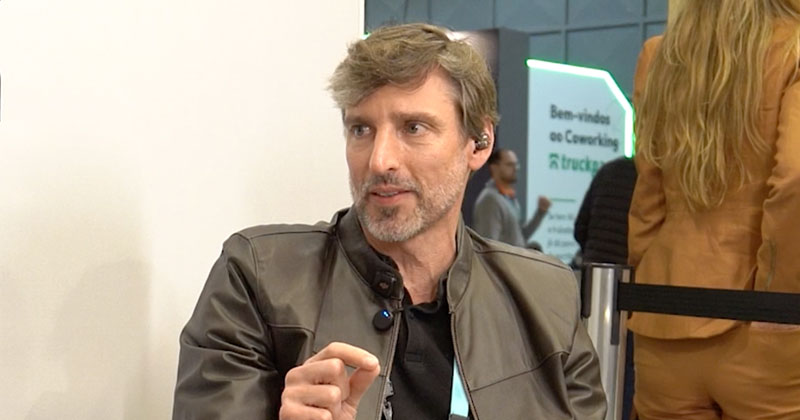
A warehouse education
Felix’s working life stretches across more than 25 years in logistics, operations and supply chains. His career includes CEVA Logistics, AGV Logística, Katoen Natie and Loggi, along with experience at CARGOBR, Grupo Folha and Grupo Abril’s Total Express. These are businesses concerned with the physical arrangements behind commerce: networks, distribution centres, contracts and the movement of goods.
His education connects the technical and managerial sides of that work. He trained in mechanical production engineering, added business administration study, took an executive MBA at Fundação Getulio Vargas and an MBA in Business Innovation at FIAP, and undertook executive education at Stanford. The combination is apt for a field in which a decision can be perfectly reasonable on a spreadsheet and awkward at a loading bay.
In September 2022, he became COO of Loggi. By July 2023, he was speaking from the company’s operation in Cajamar, São Paulo, as the first guest in the interview series Logística Decifrada. The discussion covered technology and the relationship between experienced logistics professionals and people who had grown up with digital tools.
A warehouse lends that conversation a useful discipline. Someone discussing software there remains close to the parcels the software is meant to help move. Felix’s subject was the conscious use of technology: how to employ it effectively, and how to find the balance that lets it serve the operation. That question would follow him into later appearances.
The parcel still has to arrive
During his Loggi years, Felix spoke about automation and artificial intelligence as practical operating tools. In 2025, when he was identified as vice-president of operations, he described the company as doing three times as much work with the same people.
“Hoje fazemos três vezes mais com as mesmas pessoas.”
Alexandre Felix, May 2025
The claim is his account of the operation, rather than a personal scorecard. Its appeal is that it connects a fashionable subject to a familiar question. How much useful work can the organisation complete with the resources it has? A logistics manager can do something with that question. The word “innovation” on its own leaves rather more homework.
One earlier example was Loggi’s Agência 2.0 model in Mooca. Felix and product chief Diego Cançado discussed the changes together in 2024. Loggi reported a 285% increase in parcel-processing capacity and a 35% productivity gain associated with technology, including AI and machine learning. Those figures describe different measures; capacity and productivity deserve their own labels.
Loggi’s reported Agência 2.0 results, Mooca, 2024. Separate measures, not a company-wide comparison.
There is a human partnership inside this technical account, too. An operations chief and a product chief were explaining the same project. A parcel network asks the software and the physical process to agree about what should happen next. When they agree, a screen becomes useful to someone with actual work to finish.
The speed of a promise
By September 2026, Felix was appearing as Nexallog’s founder at Summit Logística alongside Fernando Magnoler of Total Express, in a discussion moderated by Marcelo Vieira. He recalled how Brazilian e-commerce had changed the task: a system accustomed to larger retail shipments had to accommodate fragmented orders, more documents and many more destinations.
His argument about speed was specific. A network needs to be designed for the service it promises. Trying to force faster delivery through a structure built for something else can drive costs sharply upwards. He also emphasised collaboration among operators and the continued need to understand the physical work, even as algorithms improve.
Read together with his Cajamar discussion, these comments suggest a consistent test for technology: does it help the operation fulfil its purpose? That is an interpretation of his public arguments, and it explains the connection between the warehouse conversation and the conference stage. The delivery promise provides the test. The method has to survive contact with the journey.
A conceptual map of the decisions discussed here. No measured values.
That sequence gives speed a price and a place. It asks what has to be arranged before a merchant offers a shorter delivery window. A checkout page can make the promise in a few characters. Behind those characters sit people, sites, vehicles and decisions. The brevity of the message has little bearing on the size of the job.
The line below the headline number
Felix’s move into founding Nexallog brings another promise into view: that a growing logistics business can keep operating. In his October interview, he describes recurring difficulties at different companies, including companies led by capable entrepreneurs. Seeing the same problems repeatedly helped prompt the new venture, aimed at smaller and medium-sized transport operators.
One concern is concentration. He sketches a carrier dependent on a shipper for more than half its revenue. If that customer changes its operation, income can disappear while fixed costs remain. The example is a warning about exposure, rather than a disclosed client case. Growth and diversification have to be considered together.
His offer is grounded in “experiência de quem já fez” - experience from someone who has done the work. Nexallog describes its work as diagnosis followed through into execution alongside the client’s team. The proposition draws on his operating career: examine the numbers, locate the underlying problem and stay involved while people address it.
The shift is interesting because the subject has become less photogenic. A sorting operation offers movement, machinery and parcels. Cash flow offers a reconciliation. Yet both concern whether a business can keep its commitments. Felix’s new work follows that connection into the management of the companies doing the carrying.
Ninety days, with the doors still open
Nexallog’s D90 program provides a defined window for that work. It begins by gathering managerial and operational information together with financial projections. Next comes identifying structural causes. The action plan assigns priorities and responsibilities over a period of up to 90 days, followed by execution support from the company and specialist partners.
- 01Gather the operating and financial data
- 02Find the structural causes
- 03Set priorities and responsibilities
- 04Support the work inside the business
The method gives his latest chapter a concrete shape. Ninety days is the program’s planning horizon; it is not evidence that every business problem has a three-month solution. Nexallog presents the interval as a way to organise information, act on priorities and examine results while ordinary operations continue.
The financial side includes Nexacash. Its stated capabilities cover payables, receivables, bank reconciliation, transaction classification and cash projections, with Open Finance connectivity and AI analysis. These are the functions the business offers. Their relevance to Felix’s argument is straightforward: a manager needs a usable view of the money before deciding what the company can support.
The operational work can involve people, administrative processes, technology, warehousing and transport systems, automation or facilities. Specialist partners join where particular expertise is required. Nexallog says the diagnosis determines which areas enter the plan. That ordering matters to the story: the tool follows the problem that has been identified.
For a reader following Felix’s career, this is where the founder story takes its shape. The subject is still operations, but the point of entry is the financial picture. It invites a useful reading of his earlier work: throughput, service and cost belong in the same conversation. A carrier can be busy without being well organised. A manager can have information without a clear priority. His new venture is built around making those connections explicit enough to act on.
Felix’s ambition is to help smaller transport businesses endure. The word gives his career a different endpoint from the usual discussion of ever faster delivery. After years spent considering how a parcel network performs, he is examining the organisation underneath it. The package needs to reach its destination. Tomorrow, there will be another package, and someone must still be there to carry it.