Early in Veho’s life, a retailer offered its founders a wonderfully inconvenient invitation: “Call us when you can take the whole East Coast.” Fred Cook recalls that he and Itamar Zur had less than $100,000 in the bank. A coastline was rather beyond the budget. They began with smaller customers and a smaller geography, learning to deliver before promising to deliver everywhere.
- Veho sells parcel delivery to e-commerce brands, using its own network and independent driver-partners.
- Its new Ground Plus Suite lets merchants choose five speeds without separating their outbound loads.
- The useful test: measure shipping expense, delivery failures and repeat purchases together.
The telling detail came later. A perishables shipper allowed Veho to handle one truckload, one day a week. This was an experiment with boundaries: enough packages to test the operation, little enough exposure to make saying yes possible. It is a more useful founding lesson than the familiar instruction to dream bigger. Make the first customer’s risk smaller.
A parcel is a promise with corners
Founded in 2016, Veho operates between a retailer’s fulfillment operation and the customer’s door. Warehouses and trucks move the packages; independent driver-partners handle delivery routes; proprietary software coordinates the work. Merchants buy a transportation service. Shoppers encounter notifications, instructions, support and a photograph confirming that something has arrived.
That distinction matters. A retailer can choose its packaging, photography and checkout copy with exquisite care, then surrender the final impression to a carrier. A missed package becomes the retailer’s problem even when someone else missed the door. Veho’s wager is that this final interaction deserves the attention normally lavished on acquiring the customer.
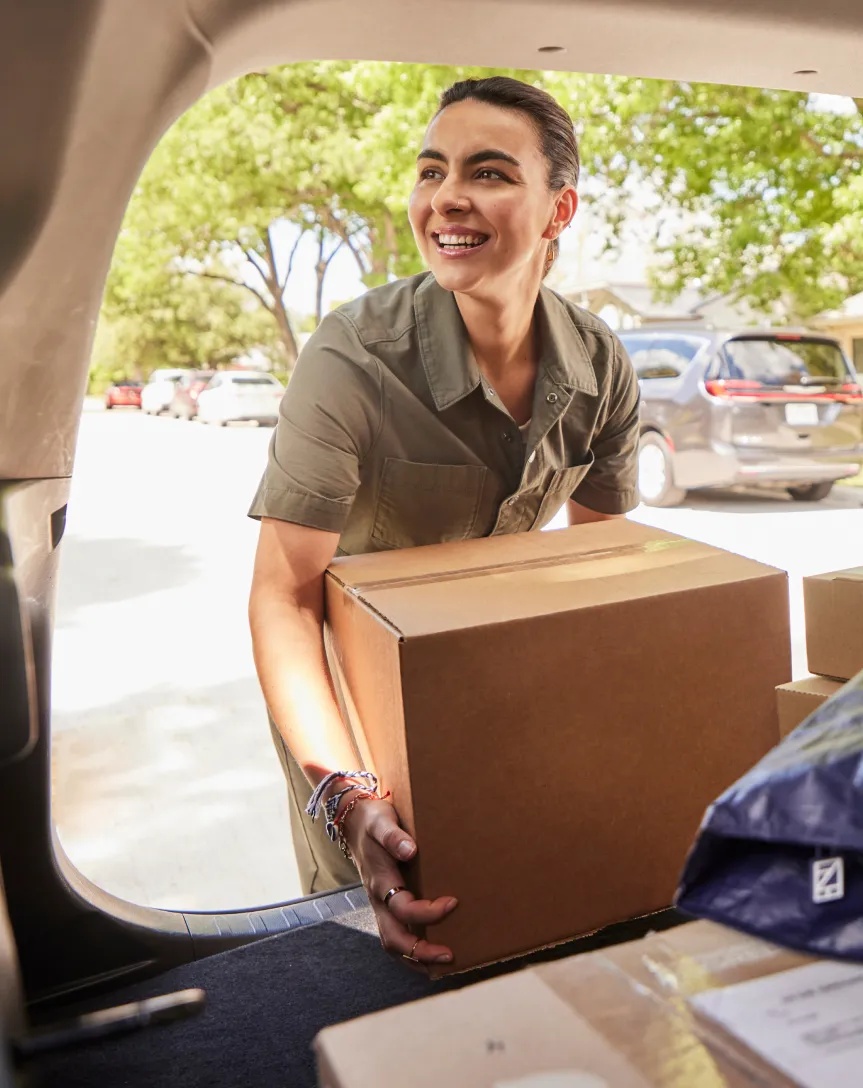
Its customers include HelloFresh, Macy’s, Sephora, Lululemon and Stitch Fix. These are different purchases with different anxieties. Dinner must remain dinner. A clothing order may matter because of an approaching occasion. The common requirement is visibility: tell the buyer what is happening before the buyer has to ask.
The photograph before the photograph
Consider Perfect Placement, introduced in March 2024. The customer photographs the place where a package should be left and shares it through Veho’s app or support workflow. The driver receives that picture alongside delivery instructions. After delivery, another photograph confirms placement. One picture expresses intention; the other records execution.
It is an appealingly plain solution to a problem hidden inside the word “address.” An address identifies a building. It may say remarkably little about a safe porch corner, a shaded spot or the correct entrance. Veho also sends delivery updates and allows recipients to provide access instructions. The recipient gains some control; the merchant gains another chance to avoid a refund or an irritated support conversation.
Fast enough for what?
By June 2026, Veho was asking a second question. Why should every order from the same retailer travel at the same speed? A loyalty member’s purchase and a routine replenishment order can justify different spending. Yet a single shipping policy can buy both customers the same urgency. Speed is pleasant. Unnecessary speed is an expense.
The Ground Plus Suite makes that distinction operational. Merchants select Zero, One, Two, Three or Four when creating an order. Zero is the fastest class; the others add time. Each shipment has a promise date. The merchant hands over a mixed load, while Veho handles the separation and movement. Five choices need not mean five piles on the warehouse floor.
Behind those choices is Maestro AI, Veho’s orchestration platform. The company describes software that prioritizes parcels according to service requirements and coordinates batching and routing. The economic idea is understandable without the initials: additional time can create opportunities to combine work. The product sells a date the customer can rely on while giving the operator room to arrange the journey.
The warehouse sends its own invoice
The ambition required substantial capital. Veho announced a $125 million Series A in December 2021 and a $170 million Series B in February 2022. The latter valued it above $1.5 billion. Those figures describe financing, not profits. The same announcement envisioned rapid market expansion, warehouse automation and a much larger staff.
Growth did not settle the economics. In early 2024, Veho cut about 65 corporate jobs, roughly 19% of that workforce, while pursuing profitability. Its CEO told Supply Chain Dive that revenue had risen nearly 90% in 2023. Revenue growth and cost pressure had arrived together. Warehouses, transport and support still had to be paid for.
“The winners are going to be those companies who are able to marry cost with customer experience”Itamar Zur, speaking to Supply Chain Dive, February 2024
That history gives the five-speed offering a practical context. It addresses the carrier’s need to use its network efficiently and the merchant’s need to keep a shipping promise affordably. UPS, FedEx, USPS and other parcel operators remain alternatives. Veho competes through its service mix, consumer communication and economics within covered destinations. A clever interface cannot deliver outside the network.

The brand promise has a street address.

Someone must make the promise routable.
Start with the orders you can measure
Tuckernuck’s published Veho case study reports roughly 35% lower average shipping spend and more than 26% fewer support calls about lost packages. These are company-published results from one customer, rather than a discount every merchant should expect. They suggest a sensible trial: compare total shipping expense and exceptions on similar orders, then look for changes in repeat purchasing.
The constraints belong in that trial. Check destination ZIP codes, package eligibility and collection arrangements. Reserve faster service for purchases that warrant it. Perishables and occasion-driven orders leave less room to defer delivery. Broader coverage does not make every address eligible, and a better route does not repair an inaccurate address.
The next customer may be smaller
Veho reported 78 markets with its Northern California launch in June 2026. August brought Shopify tracking integration. In September, EasyPost Wallet access opened without contracts or volume minimums, starting in Atlanta. These changes make the network easier to use through tools merchants already know.
There is room for stranger experiments too: Veho’s supervised Austin trial with RIVR robots reported more than 400 deliveries over two weeks and 95% success. A pilot is a pilot. The more immediately useful invention may be quieter: allowing a retailer to ask what this particular package needs, pay accordingly, and keep its word at the door.