The moment a prescription leaves a pharmacy counter, it enters an awkward little world. The medication is regulated, the patient may be waiting on a necessary dose, and the pharmacy may someday need to prove exactly what happened. Yet the trip itself can look surprisingly ordinary: a driver, a printed list, a string of addresses and a phone call asking where the package is. RxMile exists for that gap between clinical care and curbside logistics.
The Longwood, Florida company makes delivery management software for pharmacies. It gathers order intake, route planning, driver assignment, live tracking, signature capture, photographs, co-pay collection, refill consent and audit records into one system. Patients can follow a package through a link, without downloading an app. Pharmacies can use their own drivers, call on an outside courier or tap an on-demand option. Physician offices can receive visibility too. The delivery becomes one shared event instead of four parties trading status updates.
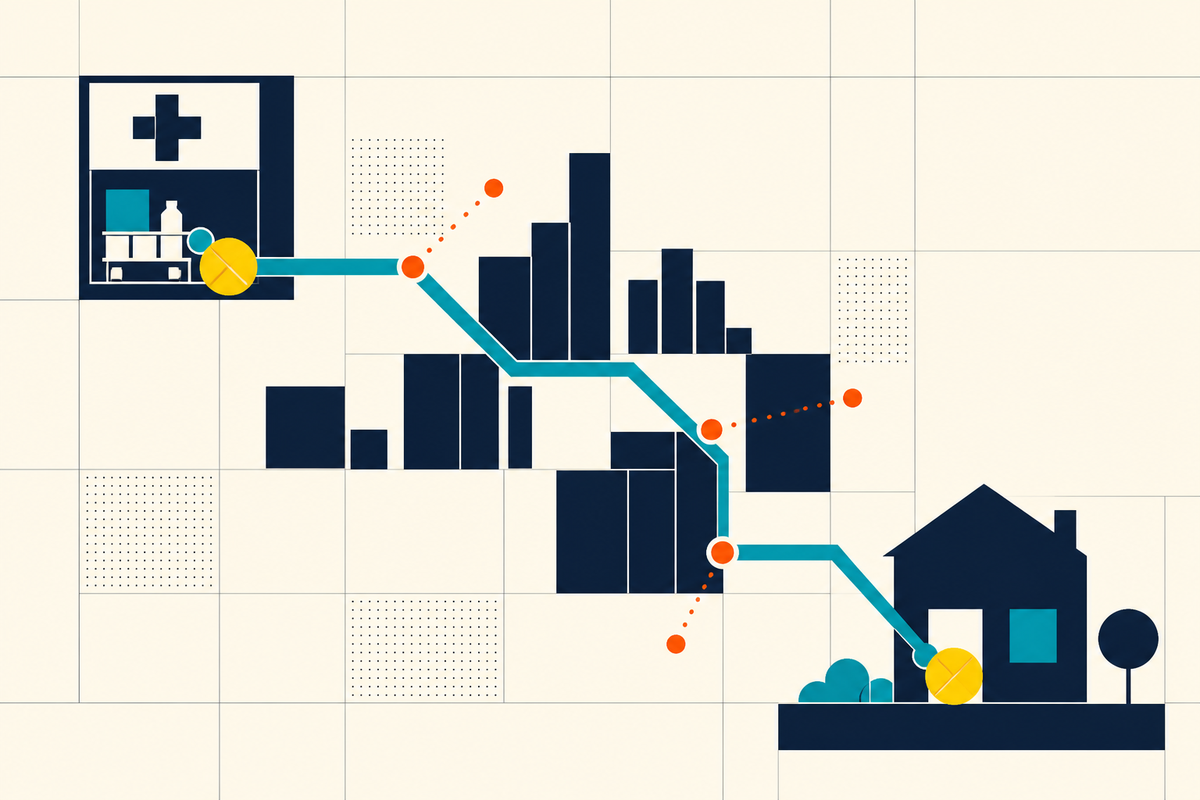
Built behind a real pharmacy counter
RxMile did not begin as a generic dispatch product looking for a healthcare customer. Co-founder and CEO Kunal Vyas had worked in health plans, pharmacy operations and pharmacy ownership. His pharmacy needed delivery, so the operation created a separate logistics company and built technology around the daily work. When Vyas sold the pharmacy in 2019, he kept the problem. DeliverSTAT took the service to other Florida pharmacies; RxMile later separated the technology into a product that could travel nationally.
That sequence matters. A route optimizer can tell a driver how to visit twelve addresses. A pharmacy system also has to ask whether the correct patient received the correct medication, whether a signature was required, whether the driver was at the right location, whether a co-pay was collected and whether the evidence can be retrieved years later. RxMile's product vocabulary comes from those operational details. Vyas founded the company with Ziad Elmalki, the technology builder he has described as the platform's engineering counterpart. RxMile formed in 2021 and publicly launched in 2022.
“Don't think about how to own the market; learn how to own the margin.”Kunal Vyas, speaking on The Business of Pharmacy Podcast
It is a fitting line for a product sold to independent pharmacies. They already compete with national chains, mail-order operations and digital pharmacies on convenience, but often without the same capital or logistics staff. Their advantage is local trust. RxMile's proposition is that they should not have to surrender that relationship to provide a modern delivery experience.
One trip, four different audiences
For pharmacy staff, RxMile is a control room. Orders can be entered individually or imported, grouped into routes and assigned to drivers. Pharmacy management system integrations reduce the need to retype the same data. KPI reports expose delivery performance and driver cost. Refill synchronization and consent tools try to keep the next prescription from becoming another last-minute phone call.
For the driver, the software is a sequence of required actions. Geofencing helps flag a misplaced handoff. The phone becomes a proof device for photographs, signatures and payment. For the patient, it is a live link and an estimated arrival rather than an afternoon spent listening for a knock. For a pharmacy or physician office, it is confirmation that the medicine reached its destination.
The documented mile
The company organizes those features around three plain promises: keep the pharmacy in control, compliant and cost-effective. The categories overlap. Better routes reduce miles and labor, but they also make arrival windows more reliable. A captured signature supports an audit, but it also ends an argument about a missing package. Co-pay collection protects revenue, while a clean tracking experience may help retain the patient who could otherwise move to a mail-order service.
03 / The wedgeWhy this is not DoorDash for medicine
Generic delivery platforms are broad by design. They move flowers, furniture, meals and documents. RxMile's differentiation is the inconvenient specificity of pharmacy: protected patient information, prescription-level records, refill consent, co-pays, contactless signatures and the possibility of an audit reaching into the past. The company says records can remain available for ten years. Its system also accommodates contracts and workflows that can limit how a prescription is delivered or how far it travels.
Generic last-mile tool
- Address and route
- Basic status update
- Photo or signature
- Broad industry workflow
RxMile's pharmacy layer
- Prescription-linked order
- Patient and physician visibility
- Co-pay and refill consent
- Long-lived compliance record
The other wedge is distribution through software the pharmacy already uses. RxMile lists PioneerRx, Outcomes - formerly Rx30 - and Liberty Software among its pharmacy management integrations. Its Uber connection adds on-demand delivery when an in-house driver is unavailable. That mix is more flexible than betting the product on a single courier fleet. The pharmacy remains the customer and can choose how the package moves.
This is also where RxMile behaves like classic vertical software. The product does not ask a pharmacist to abandon the system that fills prescriptions. It attaches itself to that system at the moment a filled order becomes a delivery, then returns status and documentation to the working record. That is less glamorous than replacing an entire software stack, but usually more useful. Pharmacy teams already have queues, billing procedures and habits shaped by regulation. A delivery tool earns its place by removing keystrokes and phone calls, not by introducing a second command center that must be reconciled at closing time.
Public testimonials show the range. CareMax described using RxMile analytics in a Medicare Advantage prescription delivery program. DeliverSTAT's work supporting Enclara Healthcare used RxMile technology for audit compliance. VITAS Healthcare described a customized workflow in which nurses could place emergency delivery orders and follow proof of delivery. These are not all the same kind of pharmacy, but each needs a reliable record around the handoff.
04 / The businessVertical SaaS with a courier-shaped edge
RxMile is a business-to-business software company, not a consumer pharmacy. It sells month-to-month subscriptions with pricing quoted for each customer and advertises a 30-day trial. No public list price appears on its site. That model lowers the commitment for a small pharmacy and gives RxMile recurring revenue, while managed delivery, driver placement and courier licensing widen the service around the core software.
The natural alternatives are a spreadsheet and paper manifest, a delivery module inside pharmacy software, a generic tool such as Onfleet or Tookan, or another pharmacy delivery provider such as ScriptDrop. RxMile sits between pharmacy management and physical logistics. It does not dispense the prescription and does not need to own every car. It coordinates the information, decisions and evidence that accompany the trip.
A medication delivery has two destinations: the patient's door and the pharmacy's audit trail.
That position became more consequential in November 2025, when RedSail Technologies acquired RxMile for an undisclosed sum. RedSail owns pharmacy technology products including PioneerRx, giving RxMile access to a larger installed base and deeper integration possibilities. The acquisition also answers a strategic question: delivery is moving closer to the pharmacy's core operating system. It is no longer merely an amenity arranged after the prescription is filled.
05 / The marketLocal care meets national expectations
Patients have learned to expect a moving dot on a map for dinner and furniture. Medication raises the stakes but does not erase the expectation. Independent pharmacies face an uncomfortable bargain: delivery expands access and can strengthen loyalty, yet every added route creates labor, documentation and service risk. A missed handoff is not simply a late parcel. It can mean an interrupted regimen, a worried caregiver and an unresolved compliance question.
RxMile's market is therefore larger than route planning and narrower than general logistics. It is part healthcare SaaS, part pharmacy infrastructure and part last-mile operations. Its expertise is in translating one regulated industry's quirks into steps ordinary people can complete: the technician imports an order, the dispatcher creates a route, the driver follows prompts, the patient taps a link and the pharmacist retrieves the record when needed.
There is a useful restraint in that position. RxMile does not need patients to choose a new pharmacy brand or persuade physicians to send prescriptions somewhere unfamiliar. It helps the existing local pharmacy extend its service beyond the counter. The customer acquisition belongs to the pharmacy; RxMile supplies the machinery behind the promise. In a market crowded with companies trying to own the patient relationship, the quieter role can be durable.
The company's public numbers are restrained. It does not disclose revenue, valuation, acquisition price or a verified customer total. Its website speaks of nationwide use, and RedSail says its broader network supports thousands of pharmacies and millions of patients each month, but those are not standalone RxMile counts. The better evidence is structural: integrations with major pharmacy systems, named healthcare use cases and an acquirer whose business depends on pharmacy workflow.
What RxMile built is easy to underestimate because the output is mundane when everything works. A prescription arrives. A patient knows when to expect it. A pharmacy knows who received it. Months or years later, someone can still find the proof. The software disappears into the trip, which is exactly where infrastructure wants to be.