outdoor-gear
(27)
Janji Built a Running Brand on a Promise - Then Had the Nerve to Rewrite It
Two college runners turned $35,000 in competition winnings into colorful performance gear and a million-dollar clean-water promise. Fourteen years later, Janji is testing a harder idea: a mission can change without becoming marketing mush.

Olight Turned the Humble Flashlight Into a Drop Culture Business - Then the Heat Arrived
The Marietta operation sells serious lighting like streetwear: frequent drops, fan-designed colors and a direct line to the people carrying the gear. A 215,100-unit recall showed the danger of that velocity - and why Olight's most useful product may be its feedback loop.

MAAK Built Gear for the Front Line. Then 568 Backers Took It Outdoors.
A Santa Barbara hardware team took its frontline power system to Kickstarter, raised 20 times its goal, and learned that the real product was not a battery. It was everything the battery could connect to.
The Flashlight That Refused to Leave California
Anthony Maglica turned $125 and a used lathe into an American icon - and then spent five decades refusing every reason to move the factory offshore.
Panther Vision Put a Flashlight in a Hat - Then Taught the Beam to Think
A flashlight-in-the-mouth mishap became a patented headwear business. Two decades later, Panther Vision is still finding oddly specific ways to free up a pair of hands.

The Jersey Factory That Still Makes Its Own Light
For 50 years Princeton Tec has done the unfashionable thing: keep the whole flashlight - the plastic, the tooling, the assembly - under one New Jersey roof. Here is why a 40-person shop still bets on American-made light.
Three Brands, One Screen Protector Empire Built in a Utah Suburb
Long before your phone had a case, a Utah startup was selling shields for your PDA. Two decades later, BGZ brands turned scratch anxiety into a three-label accessory house - and a quiet pivot toward packaging you can recycle.
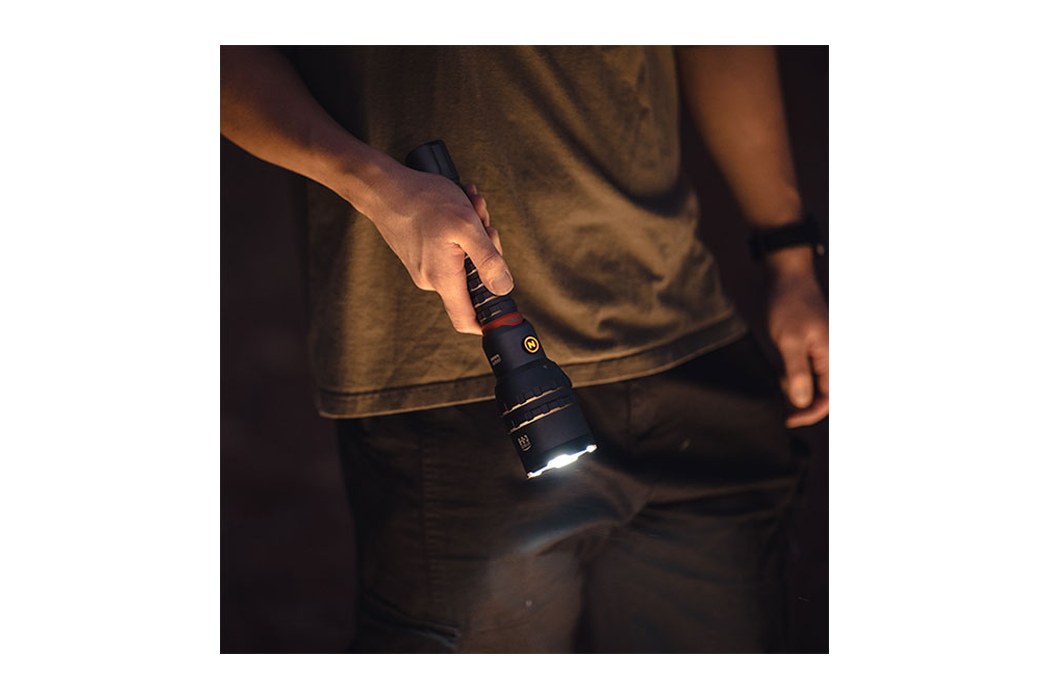
The Texas Company Quietly Behind the Flashlight in Your Junk Drawer
It doesn't put its name on a single box. But NEBO, HALO, TRUE and Thaw sit in 50,000 stores - and Alliance Consumer Group owns all of them.

The Guy Who Bet $22M That You'll Never Buy AA Batteries Again
Dennis Bertken spent nearly two decades researching why flashlights fail. His answer - Infinity X1 - is a light that carries two power sources so it never leaves you in the dark, and it has already sold more than 15 million units.
The $110 Million Backpack Named After a Bogart Movie
A father who sold Army-surplus goods and a son who studied design at IIT built one of America's most recognizable everyday-adventure brands - then sold it to the world's largest luggage company for $110 million.

Forty Outdoor Brands, One Dragonfly, and a $1.125 Billion Bet on Craftsmanship
Fox Racing, CamelBak, Bushnell, Simms - Revelyst is the maker collective quietly running the gear behind your weekend. Here is how a Vista Outdoor spinoff became a $1.125 billion private-equity prize, and what it is building next.

How a Kentucky Camp Store Became the Country's Biggest RV Dealer
One Kentucky store, sixty years, and a stadium with its name on it - inside the retailer that turned owning an RV into a subscription to the outdoors.

The Ski Shop That Deleted Its Own Stores and Won
In 1984 it was a rental counter on St. Denis Street. By 2016 the last store was gone and the whole company lived online. Here is how two employees bought the place and turned closing stores into the plan.
Thermacell Turned a 20-Foot Circle Into a Consumer Product
The Bedford company does not sell bug spray. It sells a temporary piece of outdoor real estate - and its newest system stretches that idea across an entire backyard.

REI Sold America a Lifetime Membership to the Outdoors - Now the Co-op Has to Prove It Still Fits
REI became the outdoor store for people who wanted more than a transaction: advice, a dividend and a vote. With 26 million members and $3.54 billion in annual sales, its next climb is making cooperative ideals work at chain-store scale.
Jacob Knudsen
Jacob Knudsen is the Chief Marketing Officer of Blade HQ, the Lehi, Utah knife and everyday-carry retailer that has grown from a 2003 startup into one of the largest online cutlery stores in the United States. An industrial designer by training - he earned a BFA from Brigham Young University - Knudsen joined Blade HQ in the mid-2000s and spent roughly sixteen years as its Chief Creative Officer before moving into the CMO seat in 2023. His fingerprints are on the brand's design language and on the content engine behind a YouTube channel with more than half a million subscribers. He is also a serious balisong collector, a subject he walked viewers through on Blade HQ's Collector's Corner, and a co-host of the first episode of the company's Steel and Stories podcast.
Blade HQ
Blade HQ is an online and brick-and-mortar knife retailer founded in 2003, offering thousands of pocket knives, tactical and outdoor blades, multitools, flashlights, and everyday-carry (EDC) gear from top brands like Benchmade, Spyderco, CRKT, Kershaw, and Microtech. Based in Utah with a second location in Marion, Virginia, the company is known for its enormous in-stock selection, Blade HQ Exclusives (limited-edition and collaboration knives made only for its customers), the Blade Club rewards program, and its long-running Knife Life content and video channels that have helped grow the modern EDC community.

Cotopaxi
Cotopaxi is a Salt Lake City outdoor gear and apparel brand built as a certified B Corporation around the promise of 'Gear for Good.' Founded in 2014 by Davis Smith, it makes colorful, durable backpacks, travel packs and jackets - including the one-of-a-kind Del Día packs sewn from remnant fabric - and channels 1% of revenue into the Cotopaxi Foundation to fight extreme poverty, largely in Latin America. Selling direct-to-consumer, through wholesale partners and a growing base of retail stores, Cotopaxi has grown past $150M in annual revenue while positioning purpose as central to the business rather than an afterthought.
Fleet Farm
Fleet Farm is a Midwestern big-box retail chain founded in 1955 that sells farm and ranch supplies, hunting and fishing gear, automotive parts, hardware, lawn and garden, pet supplies, clothing, footwear, toys and groceries under one roof. Headquartered in Appleton, Wisconsin, it runs roughly 50 stores across Minnesota, Wisconsin, Iowa, North and South Dakota - most paired with an auto service center, gas mart and car wash - plus a growing e-commerce operation. Known for its orange-roofed silo storefronts and the tagline 'Built for real life,' the company serves rural and outdoor customers who want everyday-value one-stop shopping.
L.L.Bean
L.L.Bean is a family-owned outdoor apparel, footwear and gear retailer founded in Freeport, Maine in 1912. Built on the Maine Hunting Shoe (the Bean Boot) and a mail-order catalog, it has grown into an omnichannel brand selling clothing, footwear, camping and fishing equipment, and home goods across retail stores, catalogs, telephone and online channels, with roughly $1.7-1.8 billion in annual revenue. The company pairs product sales with its Outdoor Discovery Programs, which teach skills like kayaking, fly casting and archery, and a mission of getting people outside.
Murdoch's Ranch & Home Supply
Murdoch's Ranch & Home Supply is a family-founded Western-living retailer that has grown from a single Bozeman, Montana store in 1994 into a roughly 40-store chain across the Mountain West and, more recently, Texas. It sells farm and ranch essentials, tools and hardware, livestock feed, pet supplies, power equipment, work and Western apparel, and lawn-and-garden goods - carrying more than 100 brands such as Carhartt, Ariat, STIHL and Traeger - through its stores and murdochs.com, backed by roughly 2,200 team members and about $500 million in annual revenue.
The North Face
The North Face is an American outdoor apparel, footwear, and equipment brand founded in San Francisco in 1966. Now a subsidiary of VF Corporation, it designs technical gear for climbers, hikers, skiers, and everyday adventurers - from the Nuptse and Denali jackets to Summit Series expedition kit - alongside a large lifestyle business, and generated roughly $3.7 billion in revenue in fiscal 2025. Its 'Never Stop Exploring' tagline anchors both a product philosophy and impact programs like the Explore Fund.

CSC Generation
CSC Generation is an AI-native retail holding company that acquires struggling store- and catalog-based brands and rebuilds them as profitable, digital-first businesses using its proprietary technology platform, Genesis. Founded in 2016 by Justin Yoshimura, the company operates a portfolio of more than a dozen consumer brands - including Sur La Table, One Kings Lane, Backcountry and Steep & Cheap - that together generate over $1 billion in combined revenue. Rather than liquidating distressed retailers, CSC folds them into a shared operating system of data, automation and AI operators, aiming to lift profitability quickly after each acquisition.

Schiller Bikes
Schiller Bikes (Schiller Sports, Inc.) is a Mill Valley, California company that makes the S1-C, a premium human-powered water bike. Built on a corrosion-resistant anodized aluminum catamaran frame with a Gates Carbon Drive belt, a proprietary gearbox and a retractable propeller, the bike lets a rider pedal across lakes, coastlines and open water at over 10 mph. Founded by Jessica Schiller after she became the first person to bicycle across San Francisco Bay in 2013, the company built a small, design-led business around a niche it largely invented: a real cycling experience on the water for fitness, exploration and fun.

Implus
Implus is a Durham, North Carolina-based consumer products company that builds and buys active-lifestyle accessory brands - insoles, performance socks, shoe care, home fitness, recovery tools and outdoor traction gear - and sells them through more than 60,000 retail outlets across roughly 60 countries. Founded in the late 1980s around the Sof Sole insole brand, it grew into a house of around 18 brands including SKLZ, Yaktrax, Balega, Spenco, TriggerPoint, Harbinger and RockTape, largely through a long string of acquisitions under private-equity ownership.
Curated
Curated is a San Francisco-based online marketplace that connects shoppers with vetted, passionate experts who deliver one-on-one product advice for high-consideration purchases - from skis and golf clubs to cameras and coffee gear. Founded in 2017 by Eduardo Vivas, Peter Ombres, Alex Vauthey and Annabel Liu, the company raised about $141.5M from CapitalG, Greylock and Forerunner Ventures before being acquired by Flip for $330M in stock in July 2024.
Tanner Johnson
Tanner Johnson is the Co-Founder and Former President of Curated, a San Francisco-based expert marketplace that matches shoppers with passionate product specialists for high-consideration purchases like outdoor gear, skiing equipment, golf clubs, and jewelry. A Princeton-educated psychology and neuroscience graduate with roots in outdoor education, Johnson helped build Curated from a 2017 founding concept into a $141.5M-funded platform with over 250 employees - until its $330 million stock acquisition by social commerce company Flip in July 2024.