Three Brands, One Screen-Protector Empire Built in a Utah Suburb
Long before your phone had a case, a Utah startup was selling shields for your PDA. Two decades later, BGZ brands turned scratch anxiety into a three-label accessory house - and a quiet pivot toward packaging you can recycle.
In 2002, a small Utah company called NLU Products was selling something almost nobody thinks about today: screen protectors for PDAs. The Palm Pilots and Pocket PCs those thin films were cut for are long gone. The company built around protecting them is not. It is now BGZ brands, and the thing it figured out early has aged remarkably well - people are careless with expensive gadgets, and they will pay a few dollars so the gadget survives the drop.
That single, unglamorous insight has carried the company through every device transition since. When the smartphone arrived, the screen-protector business did not shrink; it exploded. NLU Products rode the wave, launched the BodyGuardz brand in 2006, and kept going. By 2015 the operation had grown enough that BodyGuardz reorganized itself as a parent company - BGZ brands - to hold more than one label under one roof.
There is a version of this story where the company simply disappears. Accessory makers are tied to the hardware they protect, and hardware categories die: the PDA vanished, the netbook came and went, dozens of phone form factors were abandoned. A company built to shield the Palm Pilot could easily have followed the Palm Pilot into history. Instead, BGZ treated the specific device as disposable and the underlying need as permanent. Screens kept getting bigger, glassier, and more expensive to replace - and every new generation of gadget arrived with a fresh wave of owners nervous about the first scratch.
01 / What it doesThe business of protecting the thing in your pocket
BGZ brands designs and sells consumer-electronics accessories - phone cases, tempered-glass and film screen protectors, backpacks, cables, chargers, outdoor lanterns and laptop sleeves. The company is headquartered at 2801 North Thanksgiving Way in Lehi, Utah, the stretch of the Salt Lake City metro that has quietly become one of the state's busiest corridors for physical-product companies.
The catalog spans the ordinary and the specialized. Some BodyGuardz cases use athlete-grade impact material licensed from Unequal and cushioning the company markets as EcoShock, rated for 360-degree drop protection. Others are simple, slim shells. The screen protectors - the original product - are still cut to fit most major phone, tablet and laptop models. It is a category that looks boring from the outside and turns out to be one of the most durable in consumer electronics.
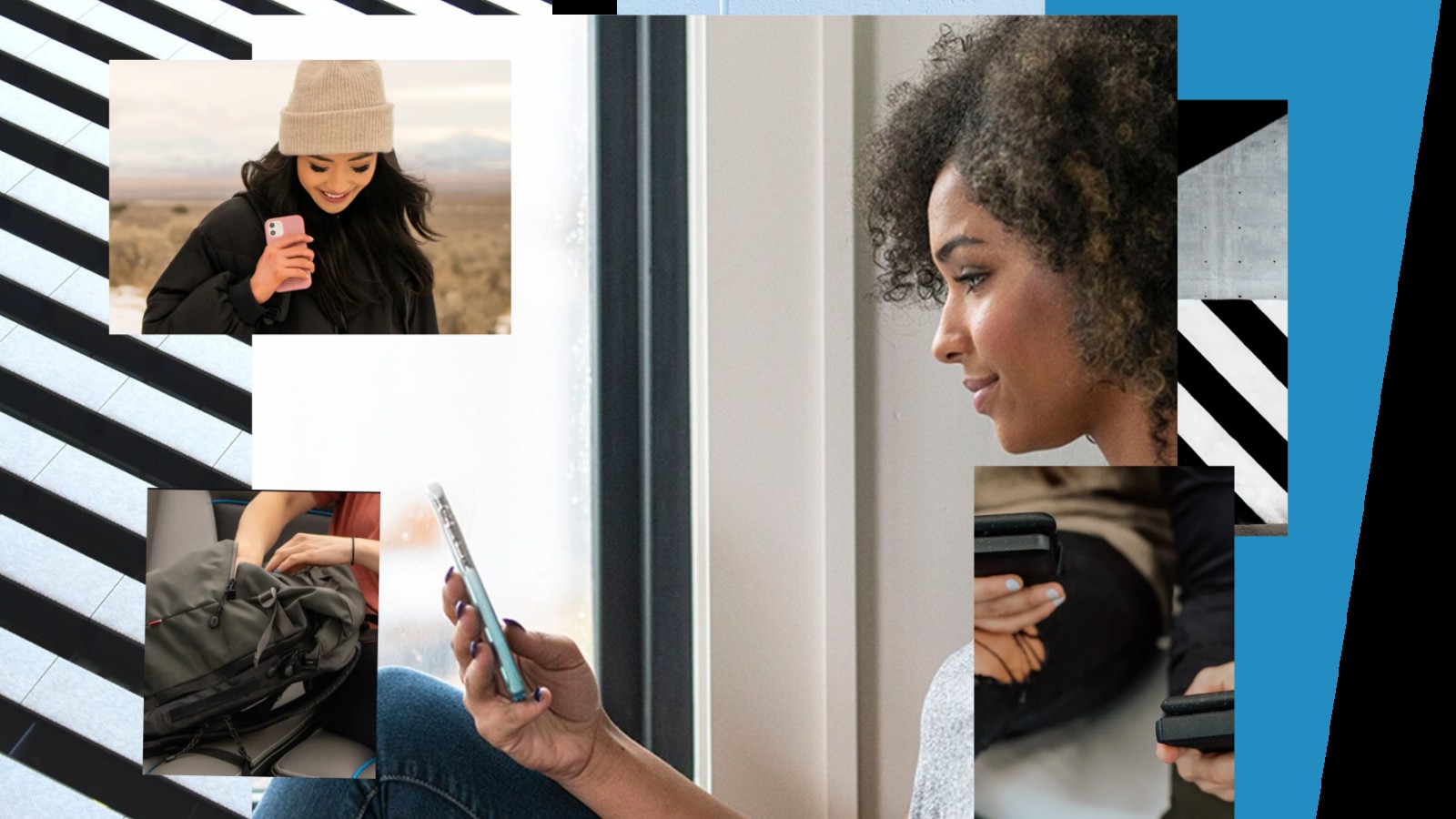
02 / The portfolioThree brands, one soul
The company's own tagline - "Three brands, one soul" - is also its strategy. Rather than sell everything under a single name, BGZ splits its lineup into three labels, each aimed at a different buyer and mood.
BodyGuardz
Protection · est. 2006The flagship. Screen protectors and impact cases, some with Unequal and EcoShock cushioning for 360-degree drop defense.
Lander
Outdoors · est. 2015Modern, outdoor-inspired gear - rugged cases, backpacks and lanterns built with sustainable and recycled materials.
Moxyo
Expression · est. 2015Style-forward accessories, including the Zigi Band lanyard system that turns a phone into something you wear.
The logic is straightforward: the person buying an armored case for a job site is not the same person buying a lanyard to sling a phone across their chest, even if both are technically buying "a phone accessory." Splitting the brands lets each one talk to its buyer without diluting the others. BodyGuardz carries the credibility on protection; Lander leans into the outdoors; Moxyo handles personality.
03 / Who buys itFrom Apple stores to the sporting-goods aisle
The customer is almost anyone with a phone, tablet or laptop they would rather not replace early. BGZ reaches them through three channels at once: its own direct-to-consumer sites like BodyGuardz.com, a wholesale and B2B operation, and shelf space at major retailers. That retail list is the real proof of scale - products have landed at Best Buy, Target, Walmart, REI and Apple stores worldwide, plus Amazon.
Getting onto those shelves is its own kind of moat. A slick DTC brand can spend its way to a launch, but negotiating and holding placement at Best Buy and Apple over years is a grind that favors companies who have been doing the unglamorous work for two decades. BGZ has.

04 / The pivotA quiet bet on packaging you can recycle
Around 2020, BGZ made a change that most accessory companies avoided: it started stripping plastic out of its packaging. The company rolled out plastic-free, recyclable retail packaging across the BodyGuardz and Lander lines, added soy-based inks, and folded recycled fibers - including material from Repreve, known for ocean-bound plastic - into its supply chain. Office-level programs to cut plastic waste came alongside it.
It is worth being precise here: this is a packaging and materials shift, not a reinvention of the product. But in a category where "clamshell blister pack" was the default for years, moving core brands to recyclable packaging is a real operational lift - it touches suppliers, cost, and every SKU on the shelf. The bet is that retailers and shoppers increasingly reward it.
The arc: from one film to a three-brand house
05 / How it's differentEscaping the commodity trap
The phone-case market is brutal. It is crowded with names like OtterBox and ZAGG at the premium end, Spigen and Speck in the middle, and an endless supply of unbranded shells racing one another to the bottom on price. The easy way to lose in this market is to compete only on cost. BGZ's answer has been to avoid being one brand fighting on price and instead run a small portfolio - protection, outdoors, expression - that each stakes out its own ground.
Its other differentiator is patience about infrastructure. The company adopted Centric Software's product lifecycle management platform to manage complexity across brands as it grew - the kind of back-office investment that does not show up in an ad but keeps a multi-label operation from collapsing under its own SKU count. Combined with the sustainability push, it is a positioning play: not the cheapest case, but a considered one.
The expertise here is easy to underrate. Cutting a screen protector that fits a curved-edge display to the millimeter, sourcing an impact material that actually survives a lab drop test, and shipping all of it in packaging a retailer will accept - that is manufacturing and materials knowledge accumulated over twenty years and many device generations. It is not the kind of moat that gets written up in tech press, but it is the kind that is genuinely hard for a new entrant to replicate quickly, because a lot of it lives in supplier relationships and hard-won tooling rather than software.
06 / The recordRecognition, and where it fits
The company has collected the trophies of a fast-growing private business: named the fastest-growing phone case company in the U.S. in 2016, repeated Inc. 5000 and Inc. 500 appearances, a ranking among Utah's fastest-growing companies, a CES Innovation Award for BodyGuardz in 2013, and Best of State and Top Workplaces honors. None of it makes BGZ a household name - most people who own its products could not name the parent company - and that is rather the point. This is a supplier business, where the brand on the shelf matters more than the brand on the building.
Where does it fit in the market? Somewhere between the mass-commodity floor and the premium giants - a mid-market, multi-brand accessory house with genuine retail reach, a two-decade head start, and a sustainability angle it is actively pressing. For a founder studying it, the lessons are unfashionable but real: pick a durable human problem, keep adapting the same product through every platform shift, split your portfolio to reach different buyers, and grind out the retail relationships that newcomers cannot buy overnight.
It would not work for everyone. The model depends on physical distribution, manufacturing discipline, and the willingness to run an unsexy business for twenty years without a viral moment. But for the specific game BGZ chose to play, that patience is the whole strategy.