The Veterans Who Turned Boring Laptop Bags Into a Multi-Brand Empire
A 1992 laptop-case brand, two Naval Academy roommates, and a plan to own every unglamorous accessory that keeps a company's laptops alive. Here is how CODi Worldwide built a quiet hardware business on the stuff IT departments never brag about.
There is a whole economy hiding behind the laptop your company handed you on your first day. Someone made the bag it travels in, the lock that tethers it to a desk, the dock that fans it out into two monitors and a keyboard, the case that saves the tablet when it slides off a cafeteria table. Almost nobody thinks about that gear. CODi Worldwide has thought about little else since 1992.
Based in Garnet Valley, Pennsylvania, CODi is a maker of the unglamorous stuff that keeps mobile computing alive: protective cases and backpacks, cable locks, docking stations, webcams, chargers and screen protectors. It sells to the buyers who purchase these things in bulk - Fortune 1000 IT departments, school districts, hospitals, government agencies - and to the individual who just wants a backpack that survives the commute. It is a roughly 39-person company doing an estimated $7.4 million in annual revenue, and it has quietly shipped into around 30 countries for more than three decades.
None of that would make a headline on its own. What makes CODi worth a look is what happened after 2018, and the specific, almost stubborn bet its owners made: that you can build something durable by owning the corner of a market nobody wants to photograph.
The OwnersTwo roommates, one wardroom philosophy
In 2018, Anthony Piccioni and Graham Cleveland bought CODi. The two had been roommates at the U.S. Naval Academy and carried two decades of military service between them. They partnered with John Ferretti, who serves as CEO, and with NewSpring Capital, the private-equity firm that had backed the company financially as far back as 2011.
They also brought a operating creed that reads less like a pitch deck and more like a pre-deployment checklist: preparation, teamwork, adaptability. In practice that means staying ahead of Apple, Samsung and Microsoft hardware cycles so a case exists the week a new tablet ships; knowing what a school district's IT lead actually needs before the quote goes out; and improvising when a supply chain hiccups. It is not a revolutionary philosophy. It is a reliable one, which in the accessory business turns out to be the same thing.
"Work Smarter. Think CODi."
Company tagline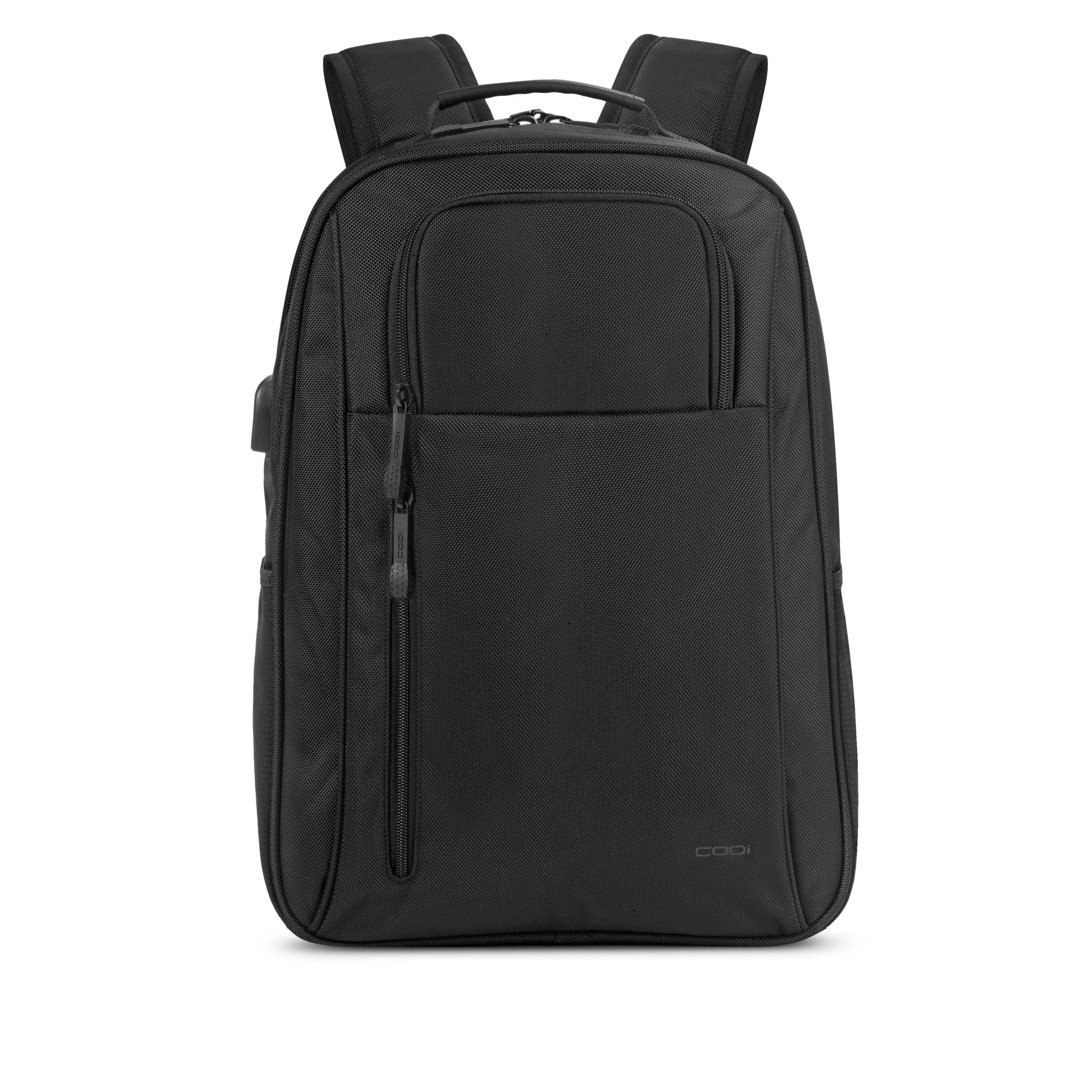
A catalog built for the whole desk
CODi's range is wide on purpose. If a device leaves a drawer and gets used by a human being, CODi likely makes something that protects, powers, secures or connects it. Cases and sleeves for iPad, iPhone, Samsung Galaxy, Surface and Chromebook. Tempered-glass and privacy screen protectors. Cable combination locks and keyed security locks for tethering hardware in classrooms and open offices. Power banks, wireless chargers and a tangle of USB-C and USB-A cables. HD webcams with Windows Hello infrared facial recognition and noise-reduction microphones for the video-call desk.
The crown of the range right now is a docking station. In January 2026, CODi's Centro1202 Pro USB-C dock was named a 2026 CES Picks Award winner in the TechRadar Pro category. The award-winning feature was not a flashy gadget - it was administrative. Through a portal called CODiConnect, IT teams can push firmware updates to docks remotely, across an entire organization, without a technician walking to every desk. For anyone who has managed a rollout of a few thousand devices, that is the difference between a Tuesday and a nightmare.
The award-winning feature wasn't a gadget. It was letting IT update the docks without leaving the office.
On the Centro1202 Pro, 2026 CES Picks Award winner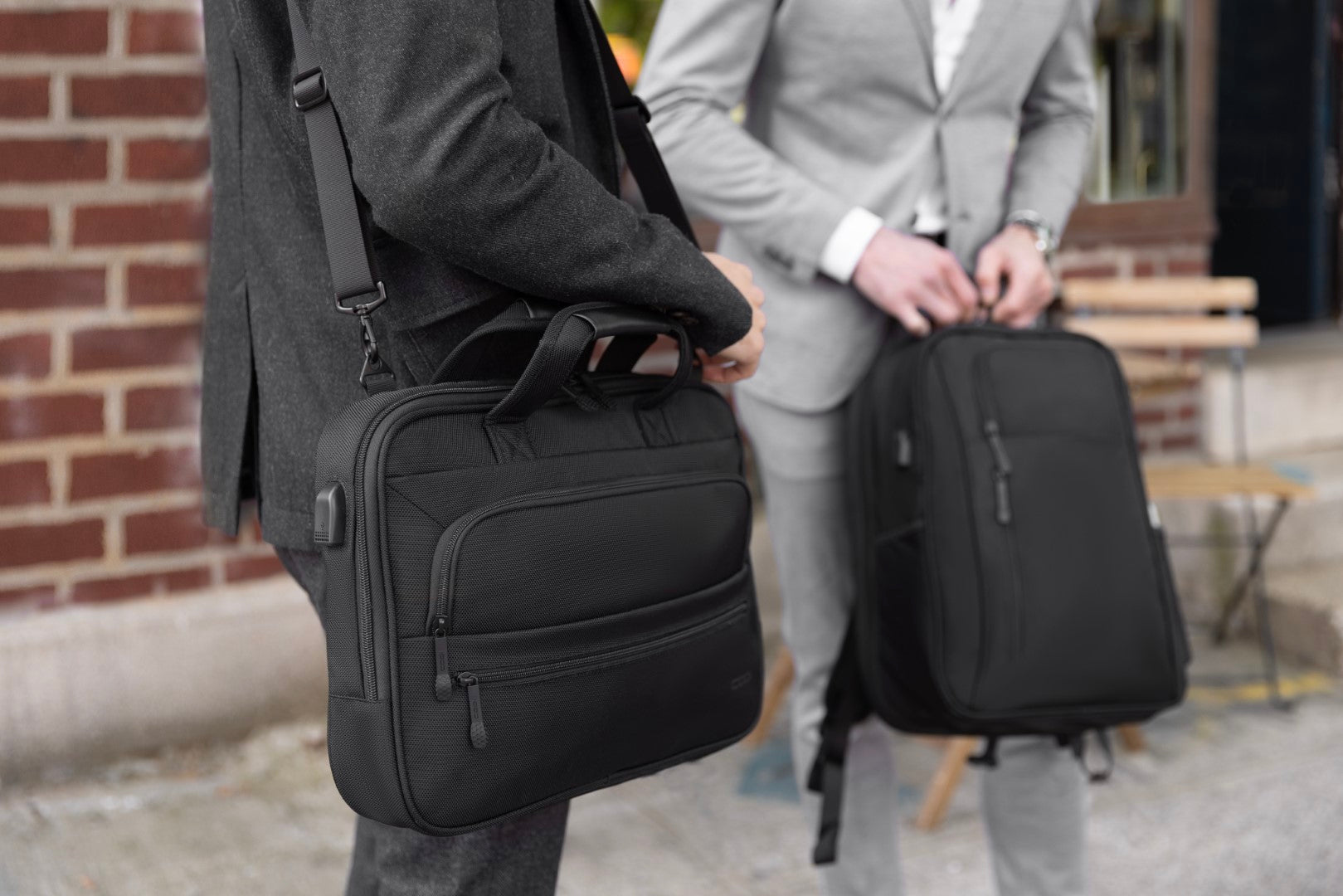
One supplier, three vibes
The most interesting move CODi has made is structural. In April 2026 it acquired Solo New York, the lifestyle and tech-carry brand, from United States Luggage Company. That gave CODi a three-brand portfolio, and the three are deliberately different animals.
CODi
Drop-tested cases, security locks and docks for corporate and government fleets.
Solo New York
Design-led everyday carry with retail recognition and a lifestyle following.
Peel
Slim, understated device protection for the buyer who wants almost nothing.
The logic is a purchasing-department logic. A reseller or a corporate buyer who wants rugged government gear, stylish consumer bags and minimalist cases can now get all three from one supplier group, on one invoice, with one support line. The brands stay distinct on the shelf; the plumbing behind them consolidates. It is the same instinct that makes a distributor's life easier, aimed squarely at the people who write the biggest orders.
"Solo New York is a proven retail and lifestyle brand with strong recognition and great design."
John Ferretti, CEOWhere CODi sits in the market
CODi plays in a crowded arena. Targus and Kensington own mind-share in bags and locks; Belkin and Anker crowd the charging and dock shelves; Solo used to be a direct rival before CODi simply bought it. CODi's answer is not to out-market the giants. It is to be the dependable, in-stock, government-and-education-friendly supplier that channel partners can count on - and to keep the catalog broad enough that a single account can be served end to end.
The business model matches the field. CODi runs a modern Shopify storefront and Amazon presence like a direct-to-consumer brand, while distributing through resellers such as CDW to reach enterprise and public-sector IT. It offers 30% GovX discounts to military, first responders, medical workers and teachers, runs CODiDirect for corporate buying and CODiCare for warranty support. It is an old-school distribution business wearing modern e-commerce clothes, and the mash-up is the point.
The Green AngleSustainability as a spec, not a slogan
A lot of companies talk about being eco-friendly. CODi attaches a number to it. The company reports repurposing more than 1.65 million plastic bottles into its cases and bags, and it prints the receipts on individual products - the Fortis Recycled backpack, for instance, is built from 29 ocean-bound plastic bottles. For an enterprise buyer with sustainability targets to hit, a countable claim is worth more than a leaf-green logo.

Three decades, four turning points
CODi is founded. The company begins making protective laptop cases and mobile-tech accessories.
NewSpring Capital backs CODi. The private-equity firm provides debt financing to fuel growth.
The veteran-led buyout. Naval Academy roommates Anthony Piccioni and Graham Cleveland, with John Ferretti and NewSpring, acquire the company.
Award and acquisition. The Centro1202 Pro dock wins a 2026 CES Picks Award, and CODi buys Solo New York to build a three-brand portfolio.
What you can borrow from CODi
The CODi story is a quiet argument against a loud assumption. You do not have to invent a category to build a company that lasts. You can find the unglamorous corner of an existing one - the cases, the locks, the docks - and own it patiently for 30 years, then buy your neighbors when the timing is right. Solve the buyer's real problem (let IT update the docks from a desk) rather than the flashy one. Put a number on your claims. Keep the catalog broad enough that one account can be served completely.
Where might it not work? Thin-margin hardware is unforgiving, and a portfolio of three brands only pays off if the back-end consolidation is real and the shelf-level distinction holds. Ride a category that a platform giant decides to enter directly, and reliability alone may not save you. But for a 39-person company in Garnet Valley that has been at this since 1992, the model has held up longer than most of the startups that would never be caught dead making a laptop bag.