There is a moment almost every household with a newborn knows and almost no pitch deck ever mentions: the baby who nurses happily at the breast turns and refuses the bottle. Bottles get warmed, tested, offered, and rejected. Momtech Inc., a small consumer-goods company in Charlotte, North Carolina, was built around exactly that moment - and its answer is not a gadget or an app. It is a rethink of the bottle itself.
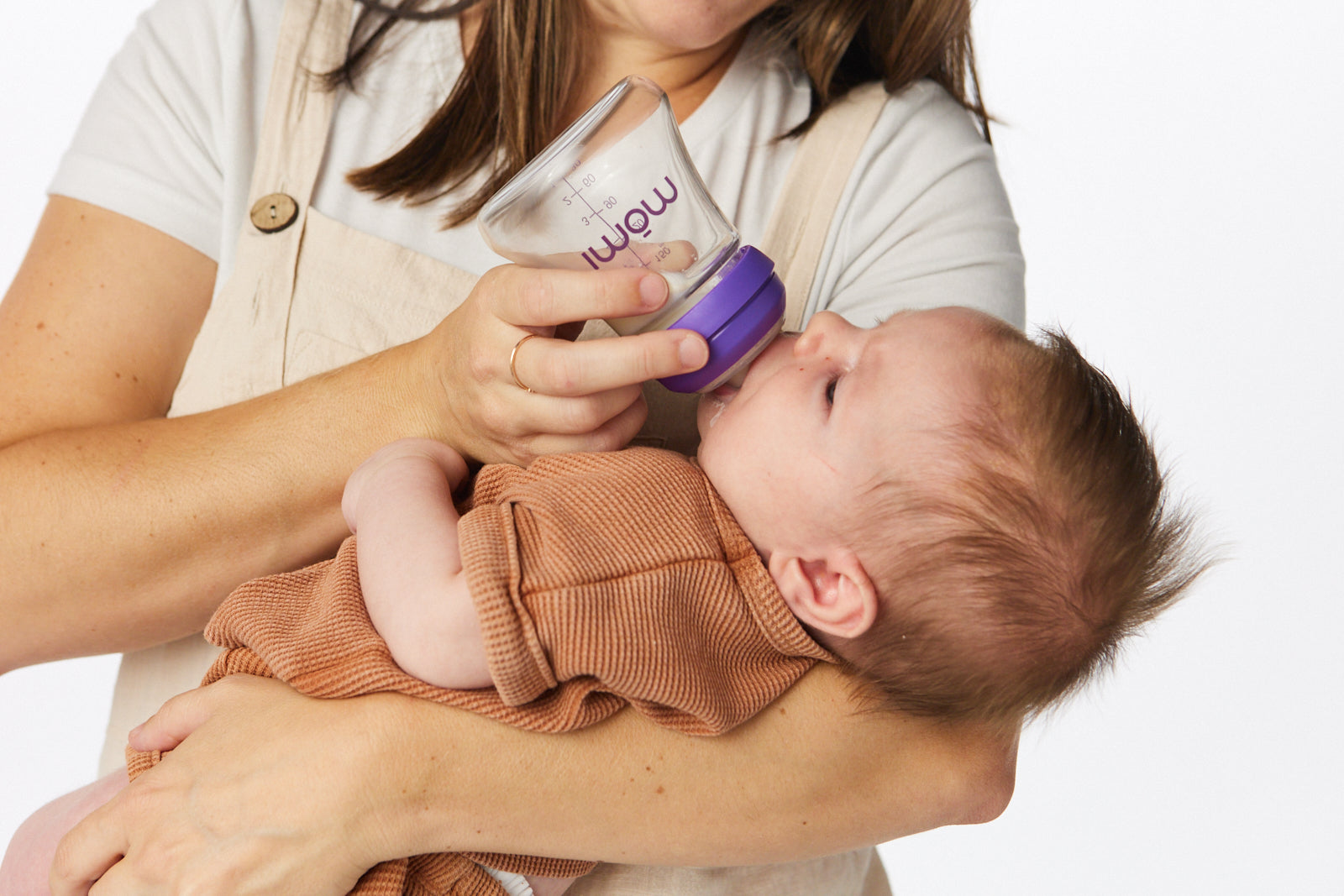
Momtech sells under the brand mōmi, and its founding claim is unusually specific for a baby-products company. Most bottles market softness and a vague sense of "natural." Momtech argues the problem is mechanical: a conventional bottle nipple does not move the way a breast moves, so a baby's mouth has to do something different to feed from it. Fix the mechanics, the theory goes, and the refusal problem shrinks. The company describes its products plainly - "a breastfeeding bottle and pacifier designed to work like mom."
The foundersTwo people who already knew the category cold
The credibility here is in the resumes. Momtech's chairman and inventor is Carr Lane Quackenbush, the former president of Medela's U.S. division - Medela being one of the largest breast-pump companies in the world. Somewhere in 2011 he became fixated on the breast-to-bottle transition and started designing against it. He was joined by Hal Eason, a serial entrepreneur with a strategy-consulting background and a Harvard MBA, who runs the company as CEO and co-founder.
That pairing matters. A lot of consumer-hardware failures come from founders who love a category but do not understand how it is actually made or sold. Momtech's founders came from inside the feeding business and picked the problem sitting one step to the side of the pump - the bottle the pumped milk goes into, and whether the baby will accept it.
"We could never have gotten where we are without a true spirit of partnership."
Hal Eason, CEO and Co-FounderThe productWhy the nipple is solid, not hollow
The centerpiece is the mōmi nipple. Conventional bottle nipples are hollow at the tip; mōmi's is a solid, soft silicone tip. The design premise is that a baby feeding from it uses the same oral mechanics - the same tongue movement and compression - as at the breast, rather than the passive suck a fast-flowing hollow nipple encourages. Paired with a slow, baby-paced flow, the idea is that the baby regulates milk with its tongue instead of being flooded.
Getting there was a materials problem as much as a design one. Momtech developed the nipple with Silcotech North America, a Canadian liquid silicone rubber (LSR) processor. The first-generation tip blended three different types of LSR to hit the functional and safety targets at once. The second generation simplified that to a single formulation and adjusted the geometry based on how babies actually used it. This is the unglamorous middle of hardware that consumer brands rarely show.
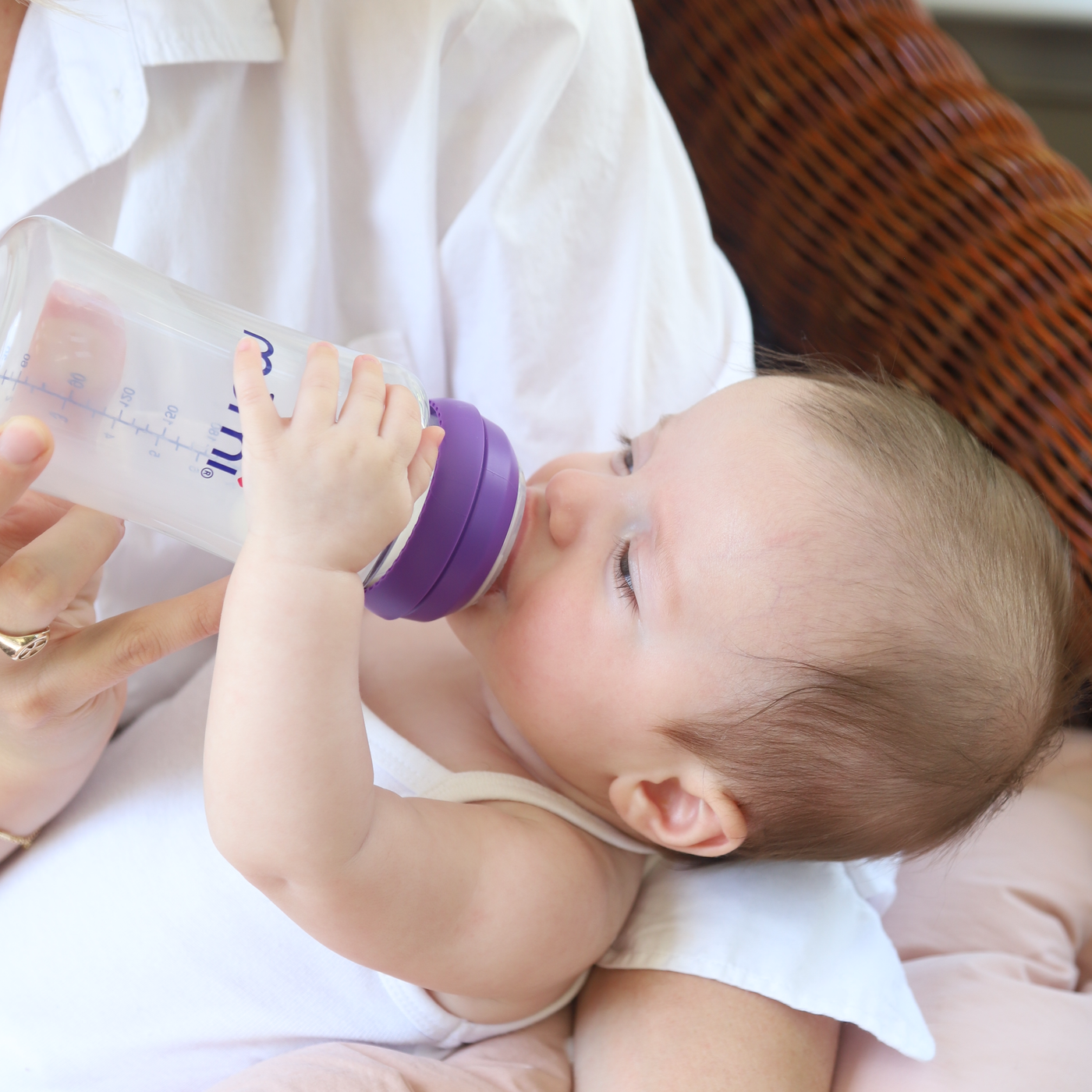
The nipple reached the market in 2023. The bottle followed, in glass and BPA-free plastic, with a patented pacing system. Then, in April 2025, Momtech relaunched the bottle in a taller shape with a narrower base. The reason is almost funny in its ordinariness: customers said the previous bottles did not fit in stroller and car cup holders or standard bottle warmers. The redesign is a small lesson in the gap between a clever product and a used one.
"The acceptance of failure and the ability to fail fast is critical."
Michael Maloney, Silcotech Co-FounderThe timelineA fourteen-year baby bottle
Momtech is not a fast story, and it does not pretend to be. The concept dates to 2011. The company - originally MOMI Brands, Inc., out of Winston-Salem - closed a $1M seed round in November 2020, led by Charlotte-area medical and product firms. The first nipple shipped in 2023, the feeding system grew through 2024, and the redesigned bottles arrived in 2025 alongside new financing.
The moneySix people, roughly $5.6M
By reported totals, Momtech has raised in the region of $5.6M to commercialize its technology, including the 2020 seed round and $552,794 in debt financing in early 2025. It does this with about six employees. That ratio - small headcount, patient capital, physical product - is the actual business model as much as the D2C storefront is.
The businessDirect to the parent
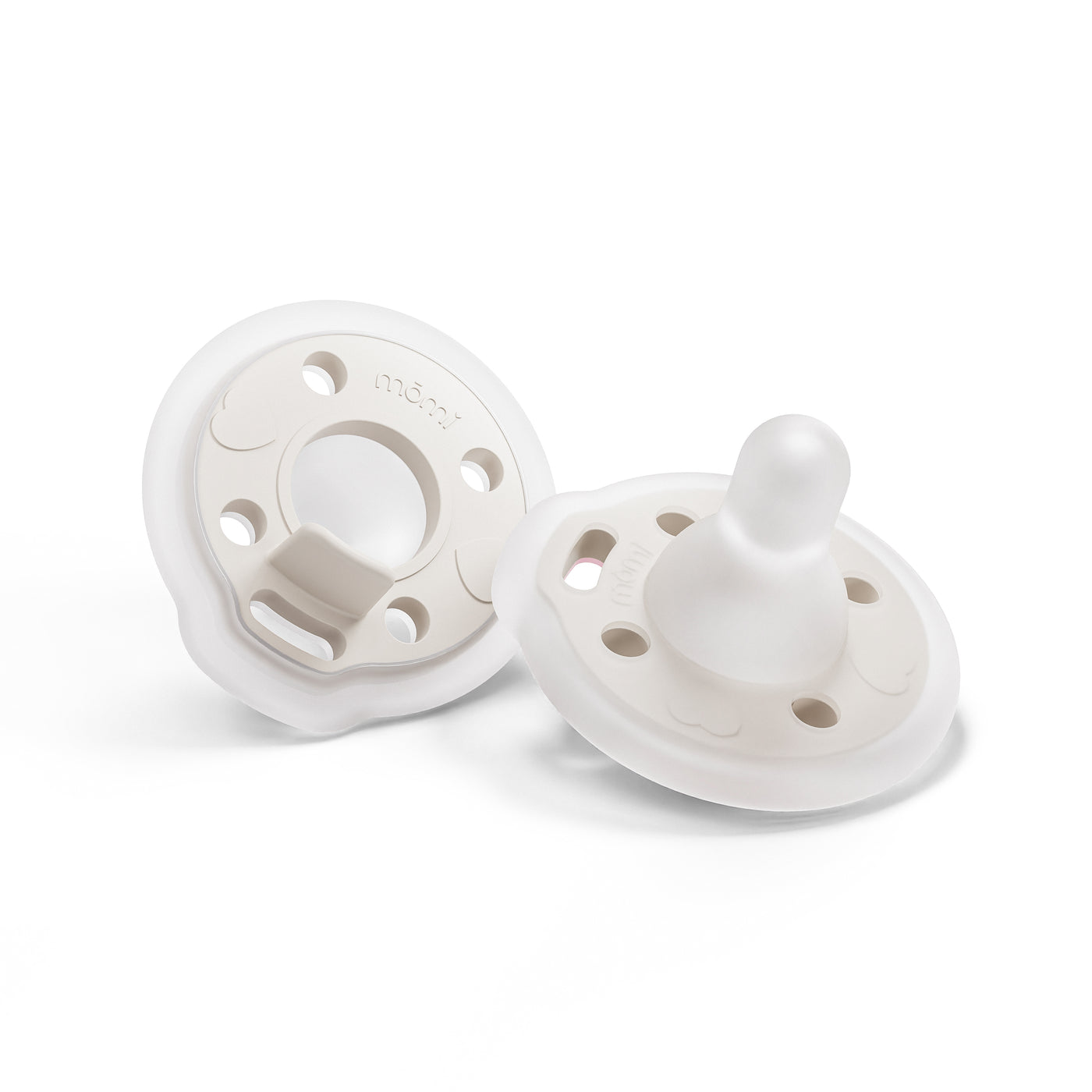
Momtech sells the way a modern hardware brand does: direct-to-consumer through its Shopify store at momi.baby, plus Amazon and baby registries such as Babylist. The catalog runs from single bottles to glass and plastic multi-packs, replacement parts, and the babypace pacifier, which the company markets as IBCLC-recommended - meaning lactation consultants sign off on it. Replacement parts and bundles give a consumables business a bit of recurring shape.
The marketAgainst the incumbents
The baby-bottle aisle is crowded and old. Comotomo, Philips Avent, Dr. Brown's, Lansinoh, MAM, Nanobebe and Medela's own feeding line all sell some version of "closest to natural." Momtech's differentiation is narrower and more technical: the solid-tip nipple and the claim that a baby's mouth does the same work at the bottle as at the breast. Whether that wins shelf space against brands with decades of distribution is the open question. What Momtech has is a specific engineering argument and founders who know how the category is built.
The honest read on Momtech is that it is early. It is a six-person company selling a patient, engineering-led product into a category dominated by giants, and the numbers are still small. But the thing it is selling is real, testable, and aimed at a problem every breastfeeding household recognizes. For a reader building consumer hardware, the copyable move is here: pick the specific, universal moment of friction that incumbents have stopped noticing, and out-engineer the boring part.