b2b-hardware
(26)
The Computer That Survives the ICU (and the Oil Refinery)
A 1989 PC company quietly reinvented itself around the two markets everyone else avoids: hospitals that hose down their hardware and factories where a spark can kill. Here is how a 150-person shop in Burlingame carved out both.

How the Company That Made Korea's First Radio Quietly Became a Software Business
It started by building Korea's first radio in a country still rebuilding from war. Nearly 70 years later, LG's fastest-growing money comes from the software inside the TV, not the TV itself.
The Garage That Sold Google Cardboard, Then Sold America Its Whole VR Stack
A bootstrapped LA outfit began by folding cardboard goggles in a garage. A decade and 10,000-plus headsets later, it sells the whole spatial-computing stack to hospitals, factories and defense labs.

The Budget-Phone Brand That Grew Up and Went Enterprise
NUU spent a decade selling cheap unlocked Androids to Americans who hated overpaying. Then a pandemic pushed it into a stranger, stickier business: building custom phones for companies who never wanted to be phone companies.
The company that makes 4,000 radios talk at once - without crossing a single wire
It started when NASCAR had a radio problem nobody else could fix. Four decades later, a seven-person shop outside Atlanta still keeps the whole paddock talking.
The Veterans Who Turned Boring Laptop Bags Into a Multi-Brand Empire
A 1992 laptop-case brand, two Naval Academy roommates, and a plan to own every unglamorous accessory that keeps a company's laptops alive. Here is how CODi Worldwide built a quiet hardware business on the stuff IT departments never brag about.

The $4.5 Billion Company Hiding Under Your Palm
Logitech turned a 1981 farmhouse and a wooden mouse into the hardware layer of modern work, play and streaming - and it is quietly betting the next decade on AI, video and recycled plastic.

Applied Materials
The company behind the machines that build almost every chip you own - and the atomic-scale materials engineering that keeps Moore's Law alive.

Advanced Navigation
Advanced Navigation is a Sydney-based deep-technology company building navigation and autonomy systems that let robots, ships, aircraft, submarines and spacecraft know where they are when GPS is jammed, denied or simply unavailable. Founded in 2012 by Xavier Orr and Chris Shaw to commercialise AI-based inertial navigation research, it now designs and manufactures fibre optic gyroscopes, MEMS inertial sensors, underwater acoustic positioning and a miniature autonomous underwater vehicle across defense, space, marine, mining and commercial markets. In March 2026 it raised US$110M in Series C funding to accelerate its expansion into photonics, AI and quantum sensing.
PlasmaLeap Technologies
PlasmaLeap Technologies is a Sydney-based cleantech company building modular, non-thermal plasma reactors that make ammonia, nitric acid, fertiliser and hydrocarbon eFuels from just air, water and renewable electricity. Spun out of the University of Sydney in 2019, its 'lightning-mimicking' process replaces the century-old, fossil-fuelled Haber-Bosch route with room-temperature, on-site chemical production. Its eNFix containerised units let farmers make green nitrogen fertiliser at the farm gate, cutting emissions and supply-chain dependence. The company raised roughly A$30 million in a Series A led by the Gates Foundation, Investible and Yara Growth Ventures to build first-of-a-kind fertiliser hubs in New South Wales and Tasmania.

Tom Yeshurun
Tom Yeshurun is the co-founder and CEO of Civ Robotics, a San Francisco construction-technology company building autonomous robots that automate land surveying and site layout. A civil engineer by training who managed a $100 million road project in Israel before founding the company, Yeshurun watched surveyors spend millions marking coordinates by hand in desert heat and set out to automate the task. Civ Robotics' CivDot robots now stake out survey points with roughly 8-millimeter accuracy and mark up to 3,000 points a day, and its technology has been deployed on solar projects representing more than 20 gigawatts of capacity. In July 2025 the company raised a $7.5 million Series A led by AlleyCorp.
ePropelled
ePropelled is a New Hampshire-based engineering company that designs intelligent electric motors, motor controllers, starter generators and power-management systems for uncrewed vehicles across air, land and sea. Built on patented magnetics technology - including its Dynamic Torque Switching (eDTS) architecture that reconfigures motor windings on the fly to boost efficiency - the company supplies drone and UAV manufacturers, defense programs and industrial customers with lightweight, high-efficiency propulsion. Founded in 2018 by serial entrepreneur Nick Grewal, ePropelled raised a $15M Series A in 2021 and has grown to roughly 110 employees with operations in the US, UK and India.

Infinitum
Infinitum is an Austin, Texas company reinventing the electric motor. Founded in 2016 by Ben Schuler, it replaced the century-old iron-and-copper stator with a printed circuit board (PCB) stator, producing air core motors that are roughly 50% smaller and lighter, use 66% less copper, and consume about 10% less energy than conventional motors. Its Aircore EC motor system integrates a variable frequency drive and targets HVAC fans and pumps, data center cooling, industrial equipment, power generation and mobility. Backed by more than $385M in funding and partners such as Rockwell Automation, Infinitum was named to Fast Company's 2025 list of the World's 50 Most Innovative Companies, ranking No. 1 in energy.

RanMarine Technology
RanMarine Technology is a Rotterdam-based marine robotics company that builds autonomous, electric aquadrones - led by its flagship WasteShark - to remove floating plastic, debris and biomass from ports, marinas, harbours and inland waterways while collecting water-quality data. Founded in South Africa in 2015 and re-incorporated in the Netherlands, the company sells hardware plus a connected data platform to ports, municipalities, water authorities, facilities firms and NGOs across several continents.

TEKVOX, Inc.
TEKVOX, Inc. is a New Braunfels, Texas manufacturer of commercial audiovisual systems best known for its patented Drop-In A/V solutions - factory-built, pre-programmed and tested room systems for classrooms, meeting spaces and government facilities. Rather than custom-engineering every install, TEKVOX standardizes whole-room AV around its own award-winning control system, layering in IoT and enterprise management so systems arrive ready to use and are supportable at scale. Its customers span K-12 and higher education, corporate offices and civic/government spaces that want reliable, easy-to-use AV without the cost and complexity of traditional integration.

DTEN
DTEN is a San Jose-based hardware company that builds all-in-one video conferencing and collaboration devices for hybrid workplaces, schools, and healthcare. Founded in 2015 by Wei Liu and closely tied to Zoom, DTEN pioneered the all-in-one touchscreen meeting appliance with its D5 and D7 lines and today ships AI-enhanced systems certified for both Zoom Rooms and Microsoft Teams Rooms, combining 4K cameras, microphone arrays, touch whiteboarding, and cloud device management in a plug-and-play package.

Ayar Labs
Ayar Labs is a San Jose-based semiconductor company building optical input/output (I/O) technology that moves data between chips using light instead of copper. Its silicon-photonics chiplets - the TeraPHY optical engine and the SuperNova multi-wavelength light source - are designed to be co-packaged directly with GPUs and other processors, letting AI and high-performance-computing systems scale across thousands of accelerators with far higher bandwidth and far lower power than electrical interconnects. Spun out of a DARPA-funded university research effort, the company raised a $500M Series E in 2026 with backing from NVIDIA and AMD.

Civ Robotics
Civ Robotics builds autonomous ground robots and software that automate the slow, error-prone work of construction layout and land surveying. Its flagship CivDot robots mark thousands of survey coordinates per day at millimeter accuracy - up to 8x faster than traditional survey crews - letting a single operator stake out solar farms, roads, airports and earthworks without specialized surveying expertise. Founded in 2018 and based in San Francisco with roots in Tel Aviv, the company has deployed over 100 robots across 40+ countries and marked more than 10 million coordinates.

AheadComputing
AheadComputing is a Beaverton, Oregon semiconductor startup founded in 2024 by four former Intel CPU architects who left to build high-performance 64-bit RISC-V processor cores from a clean slate. Betting that the future bottleneck in AI and data-center computing is the CPU rather than the GPU, the company is designing a 'Big Core' out-of-order engine that maximizes per-core performance without the legacy baggage of x86. Backed by roughly $53M in seed funding from Eclipse, Toyota Ventures, Cambium and legendary chip designer Jim Keller, AheadComputing wants to prove that an open instruction set can deliver top-tier performance.
Anode Technology Company
Anode Technology Company is a San Francisco startup building AI-orchestrated, battery-native mobile microgrids that deliver clean, quiet, on-demand power as an alternative to diesel generators and fuel-delivery rentals. Founded in 2024 by Paul Huelskamp and Eric Hanson - veterans of failed battery startup Moxion Power - Anode pairs purpose-built hardware (its mobile battery energy storage system, or mBESS) with proprietary software and AI services to serve EV fleet charging, construction sites, data centers, and live events. The company emerged from stealth in September 2025 with a $9M seed round led by Eclipse.

Crystal Sonic
Crystal Sonic is a Phoenix, Arizona deep-tech startup that uses sound to cut semiconductor costs. Its patented Sonic Lift-off (SLO) technology acts as an 'acoustic scalpel,' peeling thin device layers off expensive wafers so the underlying substrate can be reused instead of ground into dust. Legacy manufacturing wastes 90% or more of substrate material, and substrates can account for up to half of a device's cost - Crystal Sonic wants to reclaim that. Spun out of an Arizona State University lab in 2018, the company has won backing from NASA, the Department of Energy, the NSF, and Lam Capital.

Podium Automation
Podium Automation is a Brooklyn-based manufacturer rebuilding how industrial control panels are designed and built. Using a software-enabled configuration and fabrication process, Podium designs, wires, tests, and ships UL 508A and UL 698A control panels in under four weeks - roughly a third of the industry-standard lead time - with real-time transparency from purchase order to delivery. Founded in 2024 by Jamie Niu Serota (CEO) and Jacob Buser (CTO), the company aims to become the 'Protolabs of control panels,' serving customers from hardware scale-ups to Fortune 500 manufacturers.
Solidec
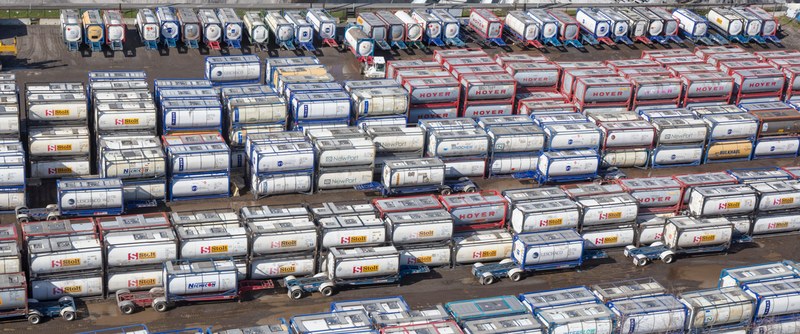
Solidec is a Houston-based climate-tech company spun out of Rice University that builds modular electrolyzers to make essential chemicals - starting with ultra-pure hydrogen peroxide - on-site from just air, water, and electricity. Its porous solid-electrolyte reactor skips the centralized plants, hazardous trucking, and fossil-fuel feedstocks of conventional chemical production, cutting emissions by as much as 90%. Founded in 2023 by Ryan DuChanois, Yang Xia, and Rice professor Haotian Wang, the company raised an oversubscribed $2M pre-seed round and has been backed by Chevron Technology Ventures' Catalyst Program, the Activate Fellowship, and a NASA SBIR award.
Boston Micro Fabrication (BMF)
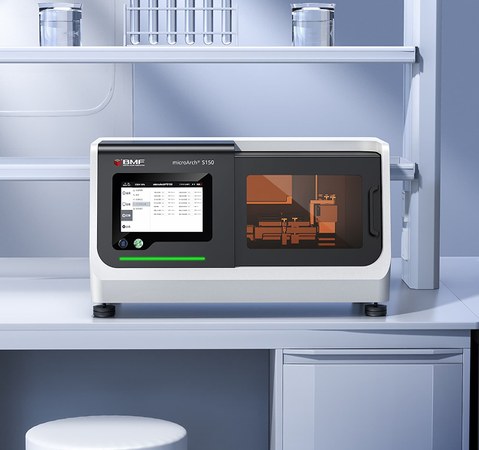
Boston Micro Fabrication (BMF) builds 3D printers that work at a scale most machines can't reach - resolutions down to 2 microns with tolerances of about plus or minus 10 microns. Its microArch printers use a proprietary process called Projection Micro Stereolithography (PuSL) to make tiny, complex parts for medical devices, microfluidics, optics, connectors and semiconductor packaging. Founded in 2016 and headquartered in Maynard, Massachusetts, BMF has placed machines with more than 2,000 customers across roughly 35 countries.
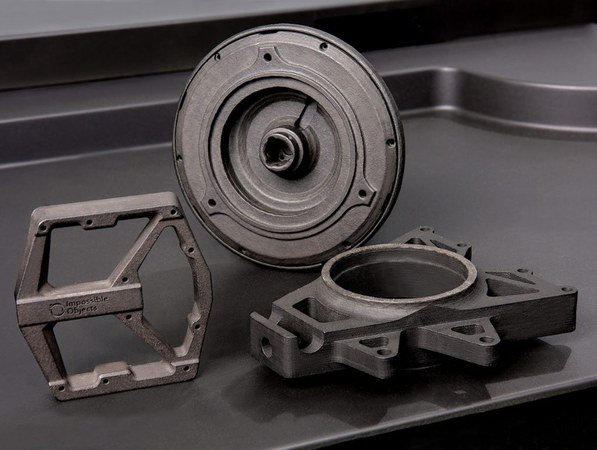
Impossible Objects, Inc.
Impossible Objects is a Northbrook, Illinois manufacturer of industrial 3D printers built around its proprietary CBAM (Composite-Based Additive Manufacturing) process. Instead of melting plastic filament, CBAM stacks long-fiber sheets of carbon fiber or fiberglass, inkjet-prints each layer with a fluid, bonds them with high-performance polymer powders like PEEK and nylon, then compresses and heats the stack into a solid composite part. The result is parts the company says are stronger, more dimensionally accurate, and printed up to 15x faster than competing methods - aimed at aerospace, defense, automotive, and electronics customers that need composite parts at production volume.

Qunnect
Qunnect is a New York-based deep-tech company building hardware that turns ordinary telecom fiber into scalable quantum networks. Its room-temperature, field-deployable devices distribute entangled photons over existing infrastructure - no cryogenics or vacuum chambers required. The flagship Carina product suite powers real-world quantum testbeds in New York and Berlin, and is sold to customers across finance, energy, telecom, and defense.