The Rotterdam company that built a robot to eat plastic out of the world's harbours - one marina at a time.
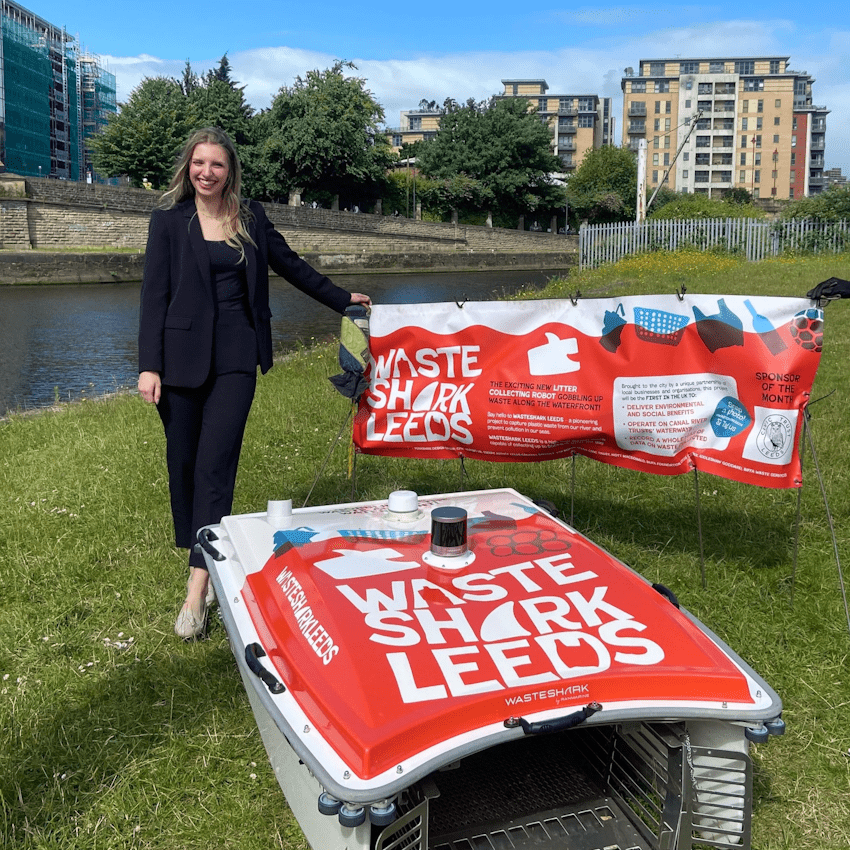
THE WASTESHARK. RanMarine's flagship electric aquadrone, shown on patrol. Named for the whale shark, it feeds by skimming the surface - collecting plastic, biomass and debris while logging water-quality data.
Most of the plastic that ends up in the ocean doesn't start there. It starts upstream - in ports, canals, marinas and harbours, the working edges of water that people stopped looking at. RanMarine Technology's bet is that if you catch the trash there, it never reaches the sea. The tool for that bet is the WasteShark: a low-slung, electric, autonomous drone that glides across the surface and swallows floating debris into an onboard basket.
Founded by Richard Hardiman in South Africa in 2015 and later re-incorporated in the Netherlands as RanMarine Technology B.V., the company grew out of a Rotterdam port-innovation accelerator. The premise was unglamorous and practical: harbour cleanup was being done by hand, or not at all. A small, agile machine that could run on batteries, navigate on its own, and skim waste off the top of the water could do the job cheaper, quieter and more consistently.
Nearly a decade later, RanMarine reports more than 200 aquadrones deployed across four continents, over 32 million liters of waste collected since 2016, and 40,000-plus kilometers of waterway patrolled each year. The machines have names, jobs and, increasingly, autonomy - and they carry sensors that turn every cleanup run into a stream of water-quality data.
RanMarine designs and manufactures autonomous surface vessels - "aquadrones" - that remove floating plastic, biomass and debris from water while measuring pH, salinity, temperature and depth. The vessels run on electric power with zero direct emissions and can operate by remote control or on autonomous waypoint routes.
Where much cleanup tech is static (booms, bins) or focused on the open ocean, RanMarine is mobile, autonomous and upstream. A WasteShark can be dispatched anywhere in a harbour, cleans and senses at the same time, and feeds a fleet-management platform. It's hardware you can watch work - not a pledge, a machine.
One platform, several purpose-built sharks - plus the software that keeps them in formation.
The core aquadrone. Skims plastic, biomass and debris from calm waters; available as a manual Classic, a remote-controlled Plus, and an autonomous, LiDAR-guided Plus Pro.
Heavy-duty, high-capacity vessel built for large-scale waste removal in ports, rivers and industrial waterways.
Targets and removes harmful blue-green algae (cyanobacteria) blooms from lakes and reservoirs through chemical-free filtration.
A unified data platform for real-time water-quality monitoring and fleet management across all deployed aquadrones.
A docking station that lets aquadrones autonomously return, offload collected waste and recharge - extending unattended operation.
Every vessel doubles as a floating sensor, logging pH, salinity, temperature and depth as it cleans - turning janitorial work into environmental data.
Relative scale of RanMarine's reported operating footprint. Figures are company-stated; bars are illustrative.
RanMarine sells B2B hardware - the aquadrones themselves - alongside optional recurring software and data subscriptions through RanMarine Connect. Buyers are ports, municipalities, water authorities, facilities firms, resorts and NGOs. A North American sales hub, RanMarine USA, handles the US market.
The company sits at the intersection of cleantech, robotics/AI and environmental data. Its competitors range from static solutions like the Seabin and trash booms to mobile players such as Clearbot and The Great Bubble Barrier, and large open-ocean efforts like The Ocean Cleanup. RanMarine's niche is upstream, autonomous, harbour-scale interception.
In 2023, PortsToronto brought two WasteSharks - christened Ebb and Flow - to the Toronto waterfront for their Canadian debut, supported by a grant from the Netherlands Ministry of Foreign Affairs tied to the UN Sustainable Development Goals. They joined the port's network of Seabins on the water.
The results were concrete. Between May and October 2024, the program removed more than 600 kilograms of human-made debris from Toronto Harbour - including over 100,000 small plastic pieces such as bottle caps, foam fragments and cigarette butts - keeping that material out of Lake Ontario.
Richard Hardiman starts the company in South Africa to automate harbour waste collection.
The flagship aquadrone begins operating; the start of the company's cumulative-waste tally.
Wins European Commission SME Instrument funding for autonomous marine-litter drones.
Becomes RanMarine Technology B.V., headquartered in Rotterdam.
Raises a Series A led by Boundary Holding to scale production and sales.
WasteSharks Ebb and Flow make their Canadian debut in Toronto Harbour.
Files Form F-1 for a listing under ticker RAN, then withdraws the ~$9M offering in January 2025.
Product demos and founder interviews from public sources.
Autonomous, electric surface drones - led by the WasteShark - that remove floating plastic, debris and biomass from ports, marinas and inland waterways while collecting water-quality data.
A single WasteShark can collect over 500 kg (about 1,100 lbs) of debris per day, running on batteries with zero direct emissions.
Ports and marinas, municipalities, water authorities, facilities-management firms, resorts and NGOs across four continents, including PortsToronto and the Canal & River Trust.
It is headquartered in Rotterdam, Netherlands, as RanMarine Technology B.V., with a North American sales hub, RanMarine USA.
It filed for a Nasdaq IPO under ticker RAN in 2024 but withdrew the roughly $9M offering in January 2025, so it is not publicly traded.
Profile compiled from public sources including ranmarine.io, PortsToronto, designboom, Ventureburn, Crunchbase and SEC filings. Figures are company-stated where noted.