The Computer That Survives the ICU and the Oil Refinery
A 1989 PC company quietly reinvented itself around the two markets everyone else avoids: hospitals that hose down their hardware and factories where a spark can kill. Here is how a 150-person shop in Burlingame carved out both.
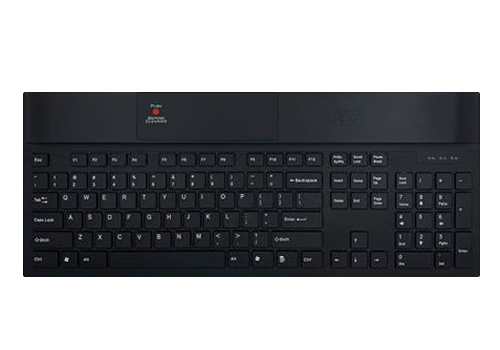
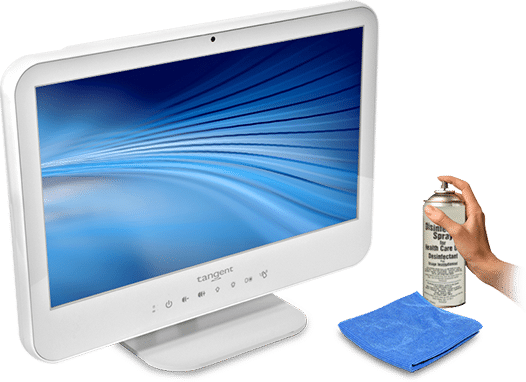
Walk into an intensive care unit and look at the computer bolted to the cart by the bed. It gets wiped with harsh disinfectant a dozen times a shift. It has no fan, because a fan would blow whatever is floating around the room straight at a patient. Its keyboard can be scrubbed with bleach. Its battery can be swapped without the machine ever powering down. That computer is not the one on your desk. In a lot of hospitals, it is a Tangent.
Tangent Computer, Inc. is a hardware company in Burlingame, California, founded in 1989 by Douglas Monsour and Mike Zabaneh. For its first fifteen or so years it did what a lot of computer companies did in the 1990s: it built PCs and servers and sold them to schools, government offices and businesses. That is a fine business until it is not. Commodity PCs are a race to the bottom, and the bottom belongs to companies far larger than a 150-person shop on Airport Boulevard.
So Tangent stopped competing where it could not win. Over the last two decades it rebuilt itself around a much stranger, much stickier idea: computers for the places a normal PC dies fastest.
The best niches hide in plain sight, because they look like too much work.
The Tangent thesis, in one lineWhere ordinary computers go to die
There are two environments that punish electronics in opposite ways, and Tangent decided to serve both. The first is healthcare. A hospital wants a computer that can be disinfected constantly, that will not harbor bacteria, that will not stir the air, and that will not die mid-shift when a nurse needs it. The second is heavy industry - factory floors, oil and gas sites, chemical plants - where a computer has to shrug off dust, vibration, temperature swings, and in the worst cases, an atmosphere where a single spark could set off an explosion.
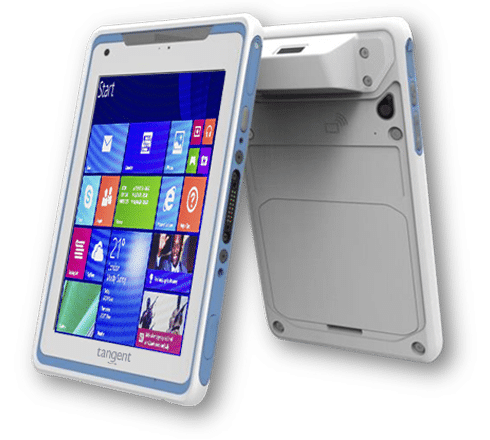
What is clever is that both customers want the same underlying thing - hardware that refuses to quit - and both are willing to pay a premium for it because the cost of failure is measured in lives or in downtime, not in inconvenience. That is a much better place to sell a computer than a big-box store.
The customers who cannot afford a reboot
Tangent's buyers are not shopping for a deal. They are hospitals and healthcare systems that need computers at the bedside, in the operating room, and on mobile carts making rounds. They are industrial manufacturers who need a panel PC that runs a production line without a technician hovering over it. They are oil, gas and chemical operators working in zones where ordinary electronics are simply not allowed. Add education, government and military buyers - customers Tangent has served since its early days - and the pattern is clear: these are organizations where a frozen screen is not an annoyance but a genuine problem.
That profile shapes everything. When your customer measures downtime in patient safety or lost production, you sell reliability first and features second. It also explains why Tangent leans so hard on worldwide technical support and on customization - a medical computer often has to be tailored to a specific cart, mount, or clinical workflow before it is any use at all.
The productA spec sheet that reads like a hazmat manual
Tangent's medical line - all-in-one computers, tablets, and monitors - carries certifications most people never think about. UL60601 is the safety standard for electrical equipment used near patients. IP65 means the enclosure is sealed tight enough to be sprayed down without water getting in. Add antimicrobial housings, fanless cooling, and hot-swappable batteries, and you have a machine engineered around a single question: can it live in a hospital?
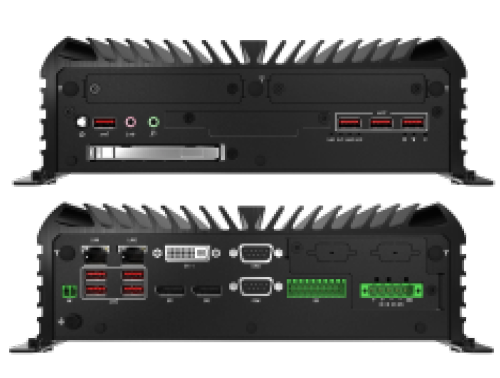
The industrial side answers a different question: can it survive the plant? Rugged mini PCs and industrial panel PCs are built for heat, dust and vibration. And then there is the genuinely eyebrow-raising category - explosion-proof computers, certified C1D2, C2D2 and ATEX, for hazardous locations where flammable gases or dust are part of the workday. A computer that is designed specifically not to ignite the room around it is not a product most people know exists. Tangent builds it.
The software a hardware company built
Tangent is not only a box maker. In 2008 it launched DataCove, an email archiving and eDiscovery appliance that indexes and stores email, faxes and instant messages so organizations can retrieve them on demand - useful for anyone facing compliance or legal-hold requirements. It later added hosted and 2.0 versions, with pricing that started in the low thousands and scaled from 250 to tens of thousands of users.
Around that sit web filtering, DMARC email security, spam filtering, and virtual desktop (VDI) appliances. As a Microsoft Gold Partner, Tangent also sells and supports Microsoft 365, Azure, Intune, SCCM, Power BI and Teams. The result is an unusually wide footprint for its size: hardware margins on the devices, software margins on DataCove and filtering, and recurring services revenue on the cloud work.
Illustrative mix, not to scale - hardware remains the core, with software and cloud services layered on top.
Tangent delivers computer solutions engineered for applications not served by traditional PCs.
Tangent, on its own marketCertifications as a competitive wall
Here is the part worth stealing if you build anything for business customers. Tangent competes with specialists like Advantech, Onyx Healthcare, Cybernet, Teguar and ADLINK, and on the commodity end with giants like Dell and HP. It does not win on raw price or brand recognition. It wins by living in markets where the barrier to entry is paperwork - the testing, certification and validation that scares off casual competitors and, more importantly, that hospital and industrial buyers absolutely require before they will plug anything in.
Those certifications are slow and expensive to earn. That is exactly what makes them a moat. Once a computer is qualified into a hospital's workflow or a refinery's safety plan, swapping it out is a project nobody wants to run. Difficulty, in this case, is the whole point.
There is a second, quieter advantage. Because Tangent designs and customizes its own machines rather than reselling someone else's, it can meet the odd, specific requirements that big vendors treat as too small to bother with - a particular mount, a certain screen brightness, an enclosure that fits a proprietary cart. For a hospital IT team or a plant engineer, that willingness to solve the last-mile problem is often worth more than a spec bump. It is also the kind of relationship that does not show up on a comparison chart but keeps customers coming back.
Thirty-five years, one big pivot
A long bet on the unglamorous
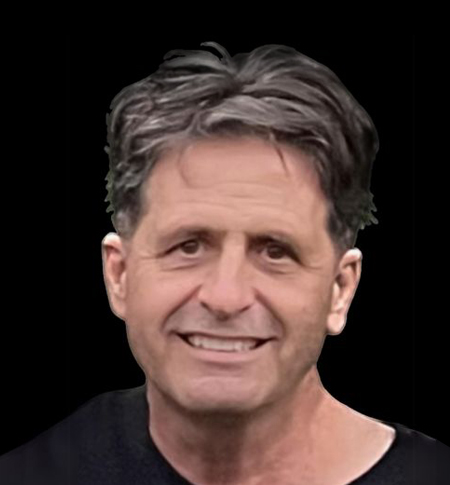
Douglas Monsour has run Tangent since he co-founded it. That kind of tenure is unusual in technology, and it maps neatly onto the company's personality: patient, specialized, and comfortable being invisible to consumers while being essential to the buyers who matter. The values the company lists - excellence, accountability, workplace safety, environmental responsibility - read like a company that expects to be around for the long haul rather than one chasing a headline.
The takeawayWhat you can copy
The Tangent playbook is not about medical computers. It is about a choice. When you cannot win on price or scale, find the customers who literally cannot tolerate failure, then build the boring, certified, hard-to-replicate thing they will pay a premium for. Stack software and services on top so you are not a single product but a system the customer would rather not unpick. And be willing, as Tangent was, to walk away from your original business when it stops being defensible.
It will not work everywhere. If your market has no real cost of failure, no certification barrier, and no switching cost, the moat never forms and you are back to competing on price. Tangent's advantage exists precisely because hospitals and refineries are unforgiving. The lesson is to go looking for that kind of hard problem - not to avoid it.