The interesting thing about a cube is how little ambiguity it allows. Six faces. Clean edges. A shape that makes immediate sense. Healthcare, the field in which Kabir Gulati has spent his entire career, offers no such courtesy. It is a world of shifting workflows, specialized language, constrained budgets and rooms that must keep functioning while somebody attempts to improve them. Gulati has spent 16 years translating that complexity into products. In June 2026, the job became literal: he was named chief executive of Carecubes, a company whose principal product is a modular negative-pressure isolation chamber.
The appointment puts a product operator in charge of a physical piece of hospital infrastructure. Carecubes arrives with regulatory clearance, a recently closed $6.5 million Series A and adoption that the company counted across 47 communities in 15 states and territories at the time of Gulati's appointment. Founder Alex Laskey moved into the role of executive chairman. Gulati inherited the next verb in the startup grammar: scale.
The long apprenticeship
Gulati's route to the corner office began with cognitive science at Case Western Reserve University. The choice looks apt in retrospect. Product work is partly the study of how people perceive, decide and behave when the interface is only one small part of the environment. His campus life also mixed healthcare leadership, a student newspaper and fraternity life. The ingredients were varied: systems, language and groups of humans attempting to coordinate.
After graduating in 2010, he joined The Advisory Board Company as a dedicated advisor. In 2013 he moved into product at Lumere, then known as Procured Health, where the problem was evidence-based decision-making around clinical supplies. The company sat in the uncomfortable territory between cost, evidence and physician preference. It was an early lesson in a fact that follows every healthcare product builder: the person using a product is rarely the only person affected by it.
A career moving closer to the care setting
At SwipeSense, beginning in 2018, Gulati worked on new product development around nurse operations and infection-prevention workflows. DawnLight followed in 2020, with contactless monitoring and an AI-centered product brief. CancerIQ brought him to the vice president level in 2022, leading product, design and analytics for tools used in precision prevention. A public account of his team's work is tellingly specific: they relaunched a pedigree tool around updated professional standards, more detailed information collection, customer feedback and better usability. Strategy, in this version, is not a thunderclap. It is a standard corrected, a field clarified, a workflow made less irritating.
“What stood out to me from the start is how intentionally this team listens to the people on the frontlines.”Kabir Gulati, on joining Carecubes
Proprio recruited him in 2024 as vice president of data applications. The remit put software design and computer vision beside surgical workflows. It also sharpened a theme already visible in his resume: Gulati keeps choosing technology that must work in consequential, highly choreographed environments. A clever product can still be a bad colleague. It can interrupt the wrong person, introduce a second source of truth or demand attention at precisely the moment attention is scarce.
Pragmatism in the age of AI
In a 2024 essay on artificial intelligence, Gulati resisted the easy binary of miracle or menace. He wrote about capabilities and limitations, predictable and unpredictable outputs, transparency and human oversight. The position was neither timid nor theatrical. He saw useful applications across diagnostics, planning, monitoring and administration, while insisting that the systems be accessible and straightforward enough to enter daily work.
That is the sort of opinion one acquires by watching software meet a shift schedule. Healthcare technology has an awkward habit of performing beautifully in abstract nouns and less beautifully at 3:17 on a Tuesday afternoon. Gulati's answer is a product manager's answer: set realistic expectations, teach people how the system behaves, preserve expert judgment and improve the interface between machine output and human action.
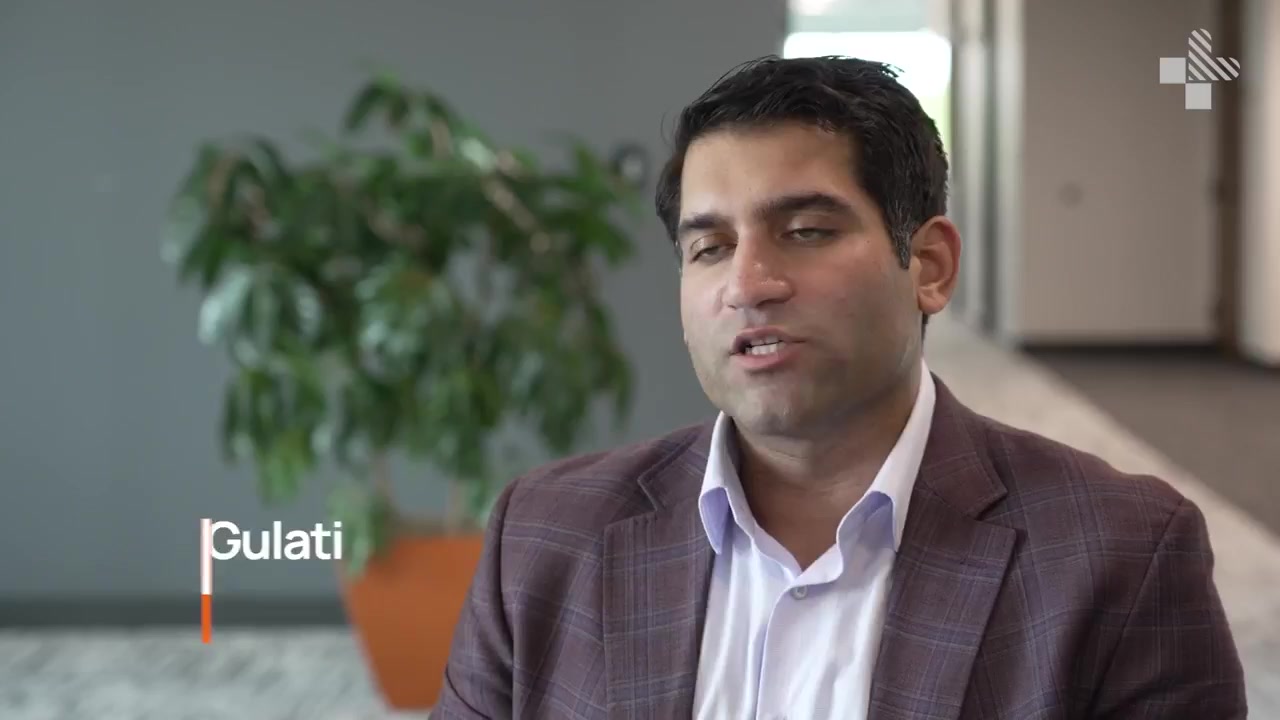
There is a pleasant irony in his move from surgical intelligence to a chamber with fabric walls and a visible frame. Carecubes is tangible, but it still behaves like a systems product. It has to fit a room, arrive quickly, support established care protocols, manage airflow and become understandable to the people working around it. Its FDA record describes reusable and disposable components assembled into a modular patient-care system. You can touch the hardware, but adoption still depends on choreography.
The room is the interface
Traditional isolation capacity is tied to architecture. Carecubes proposes another unit of deployment: equipment. The distinction changes procurement, setup and flexibility. A facility can add a chamber where it needs one, then move or store it as circumstances change. The idea developed over more than a decade, beginning in work connected to the University of Nebraska Medical Center and supported in part by federal preparedness agencies. The permanent FDA 510(k) decision arrived in January 2024.
Commercial momentum followed. In March 2026, when the Series A was announced, the company counted purchases across more than 36 communities in 13 states and territories. By the June CEO announcement, its reported footprint was 47 communities in 15 states and territories. Two snapshots do not make a hockey stick, and restraint is useful here. They do show the shape of Gulati's assignment: turn early institutional adoption into a repeatable operating system.
Two public snapshots of adoption
Scaling hardware will ask different questions than shipping software. Manufacturing tolerances replace browser compatibility. Training travels with the unit. Service has a geography. A regulated product has paperwork that cannot be wished into a sprint backlog. Gulati does not arrive as a manufacturing lifer, which may be precisely the point. His experience is in making complex clinical tools intuitive, gathering signals from frontline users and organizing teams around what those signals mean.
He also arrives with a founder still close to the work. Laskey, who recruited him, remains executive chairman and will continue shaping strategy and partnerships. Founder transitions are delicate because authority has to move without institutional memory leaking out of the building. The announced arrangement gives Carecubes two distinct jobs: Laskey can carry history and relationships while Gulati builds the company that follows the first wave of adoption.
The investors and advisers around the company add another layer of expectation. Its financing included people with experience at insurers, medical-device makers, public agencies and hospital suppliers. That is a useful network for a company selling into institutions, but impressive names do not assemble, train or maintain a unit. Gulati has to convert access into a dependable commercial rhythm. The unglamorous measures will matter: how smoothly a site prepares, how clearly staff learn the system, how reliably a unit is supported and whether the next purchase feels easier than the first.
There is also a category-building task hidden inside the sales job. Hospitals understand rooms and they understand equipment. A modular chamber lives between those familiar budgets and habits. It asks a buyer to treat adaptable space as something that can be procured, deployed and redeployed. Product leaders often talk about changing behavior; here the behavior belongs to an institution. The pitch must make sense to clinical teams, facilities staff, infection-prevention leaders, procurement officers and executives, each of whom sees a different face of the same cube.
The operator outside the org chart
Public details about Gulati away from work are modest but nicely ordinary. A CancerIQ introduction placed him in one of three states: buried in a book, exploring San Francisco or out of the country. The portrait fits the resume. Reading is sustained attention; city wandering is curiosity without a dashboard; travel is a reliable way to discover that your defaults are local customs wearing a fake moustache.
His own LinkedIn description begins with “adaptable” and “hands-on.” Those adjectives are easy to paste into a bio and difficult to maintain over a decade of increasingly senior roles. Yet the work history lends them some weight. He has crossed advisory services, procurement analytics, sensor-enabled workflows, contactless monitoring, prevention software, computer vision and medical hardware. The common subject is less a technology than a setting: the clinical frontline, where a product earns the right to stay by being useful.
“AI's potential in a patient-centered environment hinges on understanding its capabilities, limitations, and the critical role of human oversight.”Kabir Gulati, 2024
The next chapter will reveal how that sensibility changes at CEO scale. A product leader can advocate for the user. A chief executive must also finance inventory, align sales with delivery, manage a regulated organization and decide which opportunities deserve a polite no. Listening remains essential, but the microphone now picks up investors, partners, employees and customers at once. The trick is not hearing every voice equally. It is knowing which signal belongs to which decision.
Gulati called the moment an inflection point and spoke of the runway ahead. The more revealing phrase was his praise for listening to the frontline. It locates Carecubes' future in observation rather than prophecy. Hospitals already know the cost of inflexible space. Clinicians already know how a room shapes care. The company has built one answer in the form of a cube. Gulati's task is to make that answer easier to deploy, support and trust, one real room at a time.