Shyld AI deploys autonomous UV-C disinfection at Stanford Health Care Mohammad Noshad raises $14M to fight hospital-acquired infections AI kills MRSA in 10 seconds from 6.5 feet away Harvard researcher turns photonics PhD into hospital safety startup Shyld AI awaits FDA approval as clinical trials expand nationwide Co-founders: two brothers, two PhDs, one mission Shyld AI deploys autonomous UV-C disinfection at Stanford Health Care Mohammad Noshad raises $14M to fight hospital-acquired infections AI kills MRSA in 10 seconds from 6.5 feet away Harvard researcher turns photonics PhD into hospital safety startup Shyld AI awaits FDA approval as clinical trials expand nationwide Co-founders: two brothers, two PhDs, one mission
Founder & CEO • AI • Healthcare

Mohammad
Noshad

The ceiling is watching. That's by design.

He built a device that hangs from your hospital ceiling, watches for pathogens in real time, and disinfects surfaces before anyone touches them. MRSA gone in 10 seconds. No humans required.

Shyld AI UV-C Disinfection Edge AI Healthcare Harvard Seed Stage
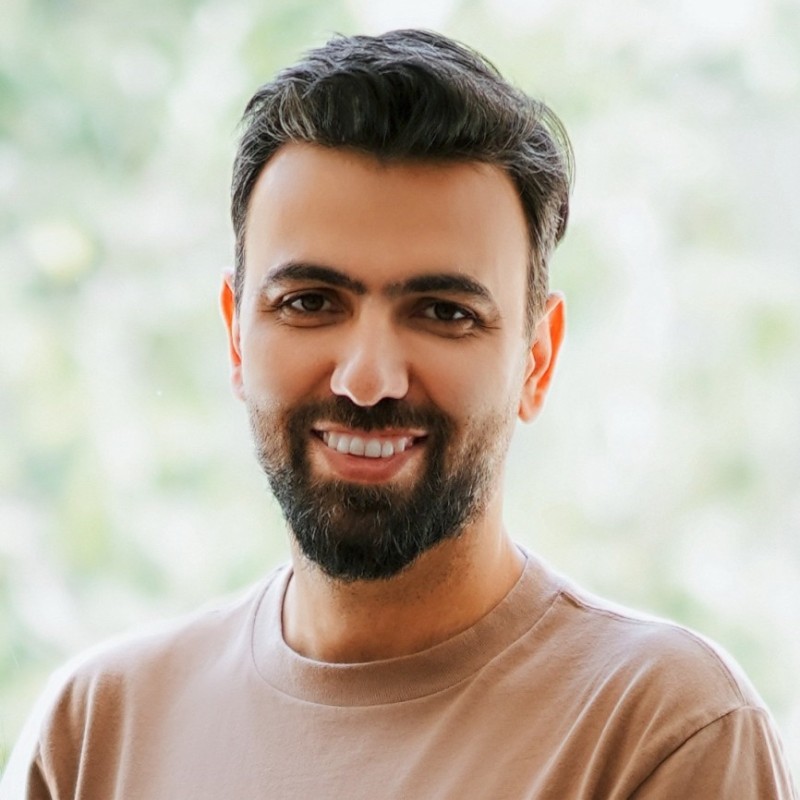
Mohammad Noshad, Co-Founder & CEO of Shyld AI
Co-Founder & CEO, Shyld AI
$14M
Seed Funding Raised
10s
To Kill MRSA at 6.5ft
20+
Units at Stanford Health Care
32
Employees & Growing

The Scientist Who Got Tired of Waiting

Mohammad Noshad's office at Harvard wasn't a place where things got built fast. It was a place where things got understood deeply - signal processing, photonics, the mathematics of how information travels through light. He published. He cited. He won awards. Then he left.

The pivot wasn't dramatic. It was logical. Noshad had spent years at the intersection of sensors, AI, and optical systems. When the COVID-19 pandemic exposed how badly hospital infection control had stalled - still relying on manual cleaning schedules, human judgment, and mercury-lamp UV carts that required rooms to be evacuated - he saw a gap that his exact skill set could fill.

In 2020, Noshad co-founded Shyld AI with his brother Morteza, a Stanford-trained engineer with deep expertise in edge computing. They bootstrapped the first device themselves. The concept was simple in ambition, intricate in execution: mount a sensor array on a hospital ceiling, give it enough compute to run AI inferences in real time, train it to identify contaminated surfaces based on room activity patterns, and arm it with UV-C LEDs precise enough to disinfect targeted zones without irradiating the humans below.

We need to make AI as easy as possible to adopt.

- Mohammad Noshad, Shyld AI

The resulting product - also called Shyld AI - can inactivate MRSA pathogens in 10 seconds from 6.5 feet away. It operates on a field of view that covers 6 to 8 feet and completes full surface disinfection in 20 to 60 seconds. Unlike traditional UV-C systems, it uses LED-based UV-C rather than mercury vapor lamps, eliminating material degradation and toxic off-gassing. It can run while a room is occupied, targeting aerosols and droplets in overhead space that humans never reach with a mop.

That last detail matters more than it sounds. Hospital-acquired infections kill tens of thousands of patients per year in the United States. The annual cost to the healthcare system exceeds $50 billion. Most of that burden comes not from catastrophic lapses in hygiene but from the mundane impossibility of disinfecting every surface in every room between every use - especially when a room turns over in under an hour. Shyld AI doesn't solve the problem by getting humans to clean better. It removes humans from the equation entirely.

Key Specification

Shyld AI's device operates continuously - even while the room is occupied - disinfecting aerosols and droplets in overhead spaces that manual cleaning never reaches.

Stanford Health Care was an early believer. A pilot that began with a handful of units expanded to more than 20 across the facility. Loma Linda University Medical Center followed. A peer-reviewed study published in ScienceDirect in 2025 validated the system's effectiveness in endoscopy units - one of the most infection-prone environments in any hospital.

The business model is structured to remove another barrier: hospitals pay no upfront hardware cost. Shyld AI operates on a subscription model starting at $200 per device per month, with pricing tiers based on volume and contract length. It's a SaaS structure applied to physical hardware - a choice that reflects Noshad's understanding of how hospital procurement actually works.

/// BACKGROUND ///

PhD to Photonics to Patient Safety

Noshad earned his PhD in Electrical Engineering from the University of Virginia in 2013, the same year he won the Best Paper Award at the IEEE Global Communications Conference - Globecom, one of the most competitive venues in communications engineering. His dissertation work touched the deep mathematics of information and coding theory, statistical signal processing, and optical wireless systems.

He followed that with postdoctoral research at Harvard, where he eventually became a Lead Scientist and Research Associate, working on multidimensional time-series analysis with applications in both finance and medicine. The medicine half of that equation turned out to matter.

In parallel, Noshad co-founded VLNComm in 2013, a startup building visible light communication systems - technology that transmits data through LED light, enabling applications in homes, airports, parking garages, and libraries. VLC was an elegant idea ahead of its infrastructure curve, and Noshad's time there deepened his understanding of what photonics could do when released from the lab.

Before launching Shyld AI, he spent time at SA Photonics, an optical communications company that was acquired by defense contractor CACI International in December 2021 for $275 million. The acquisition came after Noshad had already moved toward healthcare, but the trajectory - cutting-edge optics, high-stakes applications, institutional buyers - was consistent.

The Noshad brothers are an unusual founding pair: both hold PhDs in Electrical Engineering, one from UVA and Harvard, one from Stanford. They bootstrapped Shyld AI's first prototype together before raising a dollar of outside capital.

Noshad also runs Wodio.AI, a generative AI engagement platform he co-founded. He serves as a Strategic Advisor at Field AI. The parallel ventures point to an entrepreneur who thinks systematically about where AI has yet to reach operational deployment - and then tries to get there before the market has finished deliberating.

With $14 million raised from Demos Capital, Plug and Play Tech Center, and Camford Capital, FDA approval pending as of early 2025, and partnerships including Shimadzu on the hardware side and Seal Shield on distribution, Shyld AI is moving from pilot to platform. Noshad's stated goal: 40+ hospitals in the US and internationally within the next year.

The device on the ceiling will keep getting smarter. That's the part he's most focused on - not just cleaning, but continuous ambient monitoring, real-time pathogen scoring, and AI-driven protocols that respond to what's actually happening in a room rather than what a cleaning checklist assumes. Infection control as a data problem. Mohammad Noshad figured out the hardware. Now he's working on the intelligence layer.

/// TIMELINE ///

From Signal Theory to Hospital Ceilings

2013
PhD, Electrical Engineering, University of Virginia - Best Paper Award, IEEE Globecom. Co-founded VLNComm as CTO.
2014-2016
Lead Scientist & Research Associate, Harvard University. Multidimensional time-series analysis applied to finance and medicine.
2016-2020
SA Photonics - optical communications technology development. Company later acquired by CACI International for $275M (Dec 2021).
2020
Co-founded Shyld AI with brother Morteza Noshad. Bootstrapped first autonomous UV-C disinfection prototype.
2024
Showcased at HIMSS 2024 and VIVE 2024. Stanford Health Care pilot expanded to 20+ units. Co-founded Wodio.AI. Became Strategic Advisor at Field AI. Closed $14M seed round.
2025
Peer-reviewed clinical study published in ScienceDirect. FDA approval pending. Targeting 40+ hospital deployments globally.
/// ACHIEVEMENTS ///

Awards & Milestones

  • Best Paper Award, IEEE Global Communications Conference (Globecom), 2013
  • Louis T. Rader Graduate Research Award, UVA Electrical & Computer Engineering
  • Charles L. Brown Fellowship for Excellence, University of Virginia
  • TRANE Graduate Fellowship & UVA Engineering Foundation Fellowship
  • 1,148+ researcher citations across published academic work
  • Clinical deployment at Stanford Health Care - expanded to 20+ units
  • Peer-reviewed study validating pathogen reduction in endoscopy units (ScienceDirect, 2025)
  • $14M raised from Demos Capital, Plug and Play Tech Center, Camford Capital
  • Featured at HIMSS 2024, VIVE 2024, and EVOLVE 2024 healthcare conferences
  • Speaker at FTS Pod and Infection Control Today media coverage

Autonomous Infection Control at Scale

🏥 20+ Units at Stanford Health Care
10s MRSA inactivation time
💡 LED UV-C (no mercury, no evacuation)
🤖 24/7 Autonomous operation
📊 $14M Seed funding raised
🔬 FDA Approval pending 2025

In the News

Healthcare Brew
Meet Shyld AI, the startup using AI to keep hospitals clean
December 2024
Infection Control Today
Revolutionizing Infection Prevention: AI-Driven UV Sanitization and Targeted Solutions
2024
HPN Online
Raising Standards in UV Disinfection with AI
2024
ScienceDirect (Peer-Reviewed)
Pathogen reduction in an endoscopy unit using AI-enabled autonomous UV-C disinfection
2025
Medical Device Network
Shimadzu and Shyld to launch UV-C hospital disinfection technology
2024
Hospimedica
Groundbreaking AI-Powered UV-C Disinfection Technology Redefines Infection Control Landscape
2024

Find Mohammad Noshad Online

Professional profiles, research, and company links