A camera needs the top of the computer. The batteries need somewhere to go. In the design of a hospital workstation, this sounds like a minor disagreement between accessories. At DT Research, it became the reason to rearrange the machine.
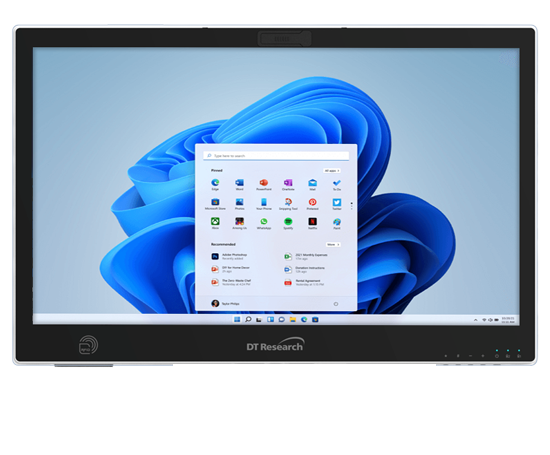
When the company introduced its DT574 medical all-in-one in March 2026, it explained that customers wanted the top left clear for telehealth cameras and peripherals. The solution was wonderfully physical: put the dual battery slots on the sides. The person on the other end of a video consultation would still have a place in the room.
- DT Research makes rugged and medical computers for work in vehicles, hospitals, warehouses and the field.
- Its selling proposition lives in configurable readers, displays, batteries, mounts and software integration.
- The useful lesson: study the interruption before you specify the computer.
That is a good way into this company. Computing has a habit of presenting itself as a race between processors. DT Research’s public record suggests a different set of questions. Where will the camera sit? Who can read the patient’s test? Can the next shift take over without waiting for a charge? The answers determine whether the technology belongs in the workflow.
01A camera gets the right of way
The DT574 has a 23.8-inch touchscreen, a fanless design and an antimicrobial enclosure. Its medical certification and sealed surfaces are part of its intended clinical use. But the placement of the batteries explains the product more vividly than the diagonal of the screen: the computer has to share space with the tools that make a remote consultation possible.
Power also has a shorter life than the equipment it serves. In the launch announcement, product engineering executive Kevin Tsai put a typical battery’s operational lifespan at two to three years, while the computers may remain in service much longer. This is the failure point the company chose to address with WebDT Battery Fleet Manager: health, charge, temperature and replacement alerts made visible to the people managing the fleet.
Typical battery operational lifespan cited by DT Research’s product engineering team. A maintenance planning estimate, not a runtime or warranty.
The smaller medical systems reveal another constraint. Announced alongside the DT574, the DT556 and DT573 use 15.6- and 17.3-inch screens. Their compact form is intended for stick carts, walls, arms and kiosks. Rear battery slots preserve space for cameras and speakers. For a cart, the size and position of the computer affect balance as well as readability. A procurement spreadsheet should leave room for gravity.
02Care starts before the ambulance arrives
Consider the Washington County Regional Medical Center deployment in rural Georgia, described in November 2024. Ambulance crews use DT Research 313MD medical tablets with swyMed video software, supported by the PAVES network. A pan-tilt-zoom camera supplies a hands-free view. Remote physicians can help assess patients and guide the crew while the vehicle is still en route.
“With this technology, we can kickstart the treatment process in the ambulance.”
Tetra Jenkins, nurse and Stroke and Trauma Program Coordinator at WCRMC
The center’s EMS director described a staffing problem: some crews lacked the practitioner needed to interpret a 12-lead EKG. The system lets an emergency department physician interpret it remotely and direct the crew. The tablet contributes a durable, battery-powered platform; swyMed contributes video transport, including support for low bandwidth. Clinical expertise comes from the connected medical team.
The lesson is the division of labor. A tough enclosure does not create a telemedicine service by itself. The camera, audio, software, connectivity and available clinician all have to work together. This deployment makes DT Research’s market position legible: it supplies the computing platform on which specialists build a service.
A schematic of the documented WCRMC system, not a measurement of treatment outcomes.
03A tablet is a place for other people’s expertise
In June 2025, DT Research announced a partnership with Homeland Language Services. The mobile interpretation stations pair a 17-inch medical tablet or a 24-inch all-in-one with 5G connectivity, speakers, microphones and hot-swappable batteries. The interpreting service supplies more than 120 languages, including American Sign Language. A large screen has an obvious job when the person communicating uses their hands.
In another setting, the partner is Mobilicom. Their November 2024 collaboration produced the 8-inch Controller Pro ground control station, combining DT Research rugged tablets with Mobilicom communications technology for unmanned systems. The application changes; the arrangement is recognizable. DT Research brings the computer, and a specialist brings capabilities the user needs around it.
The same logic appears in naval shipyards. In February 2023, DT Research announced a third consecutive contract award, secured with Akira Technologies, for a further three years. The named yards were Norfolk, Portsmouth, Puget Sound and Pearl Harbor. The DT311Y platform included smart-card access, with options for data capture and mounts, and batteries intended to support handoffs between shifts.
President Daw Tsai described the process in a short phrase: “we listen and create a continuous improvement cycle.” The repeat award gives that statement some weight. It establishes another purchase, however, rather than a universal verdict on every rugged computer.
04The warehouse wants familiar software
DT Research’s April 2026 DA323EP announcement makes the warehouse version of the argument. The 13.3-inch Android tablet includes Google Mobile Services. The release emphasizes familiar applications such as Maps, Gmail and Drive, enterprise deployment and centralized management. Optional barcode scanning and LTE connect the screen to stock movements and work beyond the loading dock.
Here, the obstacle can be the application environment as much as dust or vibration. An organization already using Android tools has a reason to care about compatibility and administration. The larger display is intended for inventory, picking and asset tracking interfaces. Hot-swappable batteries support work that continues beyond one battery charge.
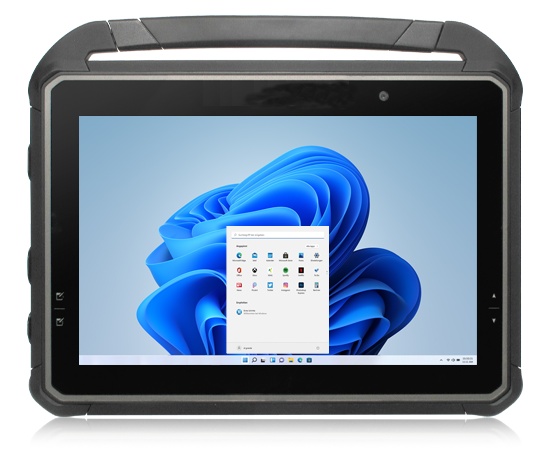
The Windows range offers its own configuration choices. The DT302PA, DT312PA and DT323PA span several screen sizes, use Intel Core Ultra processors and offer quick-access SSD replacement. DT Research also sells rugged laptops, point-of-service tablets and industrial micro PCs. Its digital signage business combines display appliances with WebDT content management software. The portfolio reaches from the worker holding a screen to the organization managing screens on a wall.
Some details are delightfully specific. The six-inch DT361AM tactical tablet has walkie-talkie capability and optional night-vision-compatible screens. A display that must cooperate with night-vision equipment has a different assignment from a bright warehouse interface. The surrounding equipment helps write the specification.
05The price of the bits around the screen
DT Research was founded in Silicon Valley in 1995. Its account of its operating process describes engineering teams in California and Asia, assembly to order, long product life cycles and customer-driven improvements. It sells through qualified distributors and resellers worldwide. This is a business built around organizational purchases and deployment requirements.
Panasonic TOUGHBOOK and Getac offer competing rugged tablets and laptops. Ruggedness alone therefore does not settle the choice. The buyer needs to compare the exact configuration: operating system, readers, display, battery plan, vehicle mount and support arrangements. DT Research’s case rests on how those pieces can be configured for a particular use.
A concrete price illustrates the scope of the decision. Havis’s January 2026 MSRP schedule lists its DT323 docking package with a power supply at $946. That buys an accessory package. The computer, installation, applications and other peripherals are additional parts of the project. The figure is a useful antidote to treating the tablet’s purchase price as the whole budget.
Havis DT323 docking package with power supply · January 2026 MSRP · accessory only
Havis introduced the dock in October 2025 for mobile work including public safety, EMS and utilities. One-handed docking, cable management and compatibility with extended batteries sound mundane until someone has to leave a vehicle with the tablet. These are the details that connect a product demonstration to a working installation.
06Copy the observation, then choose the computer
For a reader designing or buying equipment, the transferable method is straightforward: observe a complete task. Watch the battery change, the shift handoff and the moment a peripheral gets attached. Record which obstacle interrupts the user. DT Research’s side-mounted batteries are evidence that this sort of observation can alter the physical product.
Then test the whole configuration in its intended setting. A battery swap needs charged spares and a workable charging routine. An ambulance consultation needs connectivity and clinical staffing. A warehouse application needs compatibility with the selected operating system. Medical mounting and cleaning requirements belong in the same conversation as performance. Options also need checking together: the DT302PA product page says its LTE module, barcode scanner and GPS cannot all be built into the same device. A list of available features is not a promise that every combination fits.
In a desk-based operation with convenient power, little exposure and no specialized peripherals, the reasons for choosing this hardware may be much weaker. The practical value appears where the conditions impose an extra requirement. DT Research’s most instructive design decision remains that modest relocation of two battery slots: a customer needed space for a camera, and the computer made room.
Take a closer look
Explore the equipment, applications and conversations behind the company.