In 2020, a Florida hospital already working with Sevaro took an average of 46 minutes to give a stroke patient a clot-busting drug after arrival. The service was connected. Specialists were available. Yet there was still time to recover from the process itself. Hospital leaders and Sevaro changed the emergency-room protocol. In the following measurement period, the average fell to 37 minutes. The most revealing thing about this story is that buying access to a neurologist had been only the beginning.
- The offer: virtual neurology specialists plus software for the hospital team.
- The hook: a reported connection to a stroke neurologist within 45 seconds.
- The lesson: faster calls need better local workflows to become faster care.
01 The telephone is part of the treatment
Sevaro is a physician-led company serving hospitals and health systems across the United States. Its signature move sounds almost offensively simple: let the emergency department call the neurologist directly. OneCall bypasses the call center, a familiar institution whose talent for passing messages becomes less charming during a medical emergency.
At OneCall’s public launch in March 2021, founder Rajiv Narula described the culprit: intermediary calls complicated workflows, distorted information and delayed treatment. The company had asked its developers to route one call to a neurologist credentialed at the hospital. It also offered the technology separately from its clinical service. A hospital could keep its doctors and change how it reached them.
Sevaro’s reported specialist response time. Examination, imaging review and treatment decisions still follow.
That distinction matters. A phone answered quickly is one milestone; medication delivered promptly is another. Sevaro’s proposition is to work on the space between them. The Florida example suggests why an apparently functioning service can still leave minutes stranded in the handoffs.
02 A doctor declines the obvious career
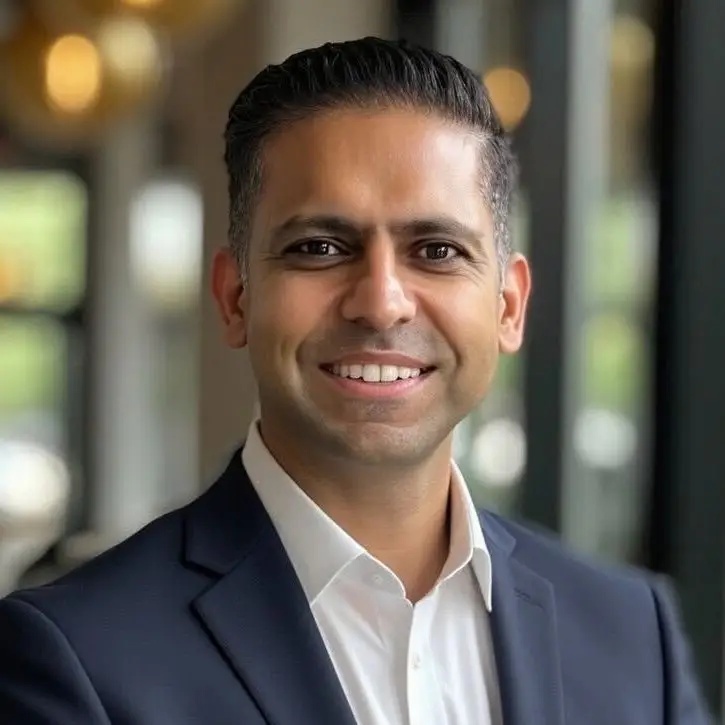
Narula’s account begins with a choice in 2017: pursue further neurointerventional training or build a company. Procedural medicine offered the satisfaction of helping one patient at a time. A business offered the possibility of reaching many more. He says he funded Sevaro himself and went three years without a salary.
The motivation included dissatisfied, exhausted neurologists and poorly organized telemedicine. But the habits of a trained physician did not all travel comfortably into management. Narula has described learning to hand responsibility to other people. For a profession that rewards personal precision, delegation can feel like leaving something unattended.
“Delegating to others was very difficult for me, but it’s been essential to our success.”Rajiv Narula · Founder & CEO
Sevaro’s name combines Sanskrit words invoking selfless service. Its stated values include empathy, ethical practice and collaboration; the company says every team member is a part owner. Those commitments put a human question beside the technical one: can the system support the doctors as well as the patient?
03 What the hospital actually buys
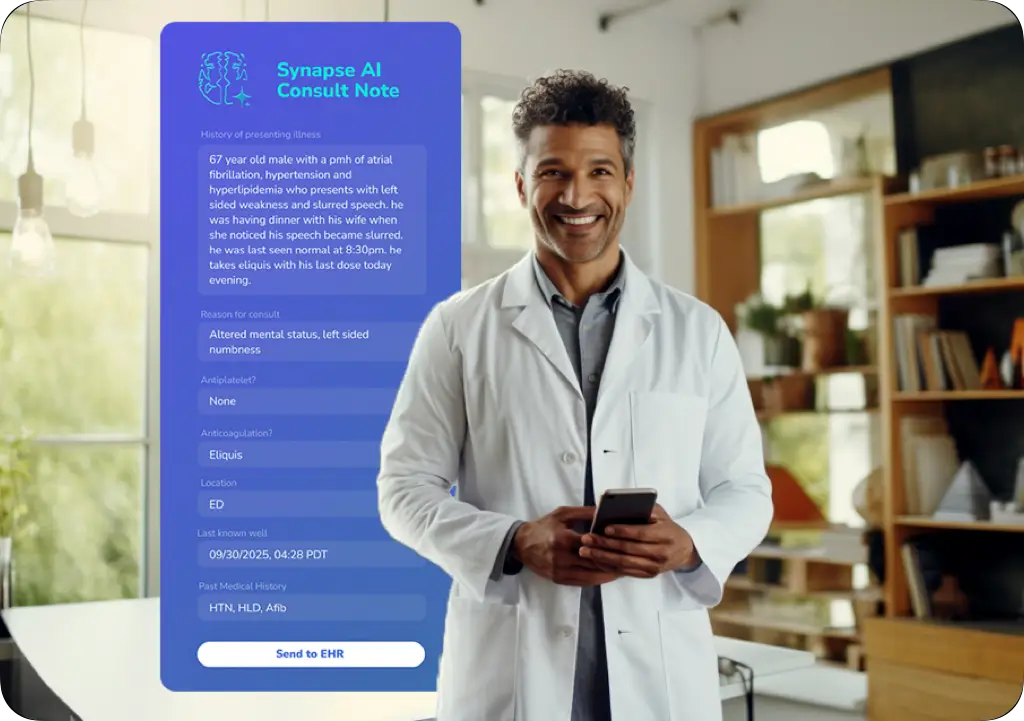
Synapse AI is Sevaro’s software layer. It brings together scheduling, video, imaging, electronic health record integration and documentation. Premium Analytics adds performance reporting. Hospitals can use the platform with their own neurology team or bundle it with Sevaro’s virtual specialists. That makes the company both a clinical services provider and an enterprise software supplier.
The service menu follows the patient beyond the first stroke alert: acute neurology, inpatient neurohospitalist rounding, remote EEG interpretation, neuro-intensive care, rehabilitation and ambulatory clinics. EEG support helps interpret brain electrical activity; rounding brings a specialist back for the next assessment. Continuity has less advertising sparkle than speed, but a patient’s needs rarely end when the emergency call does.
The business runs through hospital and health-system contracts. For a buyer, the practical choice is which combination of software, coverage and follow-up fits the existing team. An emergency department without reliable overnight support has a different problem from a large network with specialists already on staff.
04 The patient who gets to stay
At a 99-bed eastern Missouri hospital, the first thing to disappear was inpatient neurology coverage, lost in 2020. Sevaro began emergency and inpatient services in June 2021. Its case study reports that 131 neurological patients avoided transfer in the following six months, alongside a 36% reduction in the transfer rate.
Freeman Hospital West in Joplin offers a named example. Its virtual program launched in April 2024. Sevaro reports stroke transfers fell by half over a period ending in November 2025, with ongoing rounding and remote EEG supporting local care. These are company-published observations, rather than proof that every hospital will see the same result.
The financial logic follows the clinical one. A hospital able to manage an appropriate case locally can retain the admission and reduce transfer coordination. The family has less travelling to do. The important word is appropriate: expertise on a screen cannot supply a procedure, equipment or bedside capacity the hospital lacks.
05 One playbook beats four
Sevaro’s Tennessee case describes six rural hospitals using four separate teleneurology vendors. Each brought its own training, escalation and reporting. The health system chose Sevaro in May 2024 and consolidated workflows, competency standards and analytics, while adding virtual rounding. The useful idea to copy is standardization: decide who calls whom, what happens next and how the whole network measures it.
- 01ActivateLocal team requests help
- 02ConnectSpecialist joins the team
- 03CoordinateReview, decide, document
- 04ContinueRounding and follow-up
The hybrid workforce also explains Sevaro’s 2024 partnership with Rosman Search. Virtual coverage sits alongside permanent recruitment and locum staffing. A screen works best when responsibilities are agreed, local staff are prepared and information moves with the patient.
06 The bigger test after $39 million
In September 2025, Sevaro announced a $39 million Series B led by Valtruis and Intermountain Ventures, with support from APA and Catalyst. It outlined expansion toward other specialties. Access TeleCare already offers a competing range of hospital neurology services; breadth alone is therefore a crowded sales pitch.
Sevaro joined the 2025 CB Insights Digital Health 50, added technology and growth leaders in January 2026, and became a technology collaborator in February’s National Specialty Care Access Coalition. Its next test is whether the coordination learned in neurology can serve a wider clinical workforce. The first call remains an elegant place to start. The rest of the care is where the promise earns its keep.