In 1983, a man in London named Neil Bruce-Copp looked at the expensive, fragile computers people were starting to carry around and asked a very simple question: what holds it? His answer - a padded case built to protect a portable computer - didn't just launch a product. It created a category. That company became Targus, and more than four decades later it is still doing the same unglamorous, essential thing: making the stuff that goes around your computer.
You have almost certainly owned one. The laptop backpack on a commuter's shoulder, the black docking station bolting a monitor to a work-from-home desk, the privacy screen on a seatmate's laptop, the security lock tethering a display in a hotel lobby - a striking share of that hardware carries the Targus name. It is one of those brands that is everywhere and nowhere at once: recognizable on a shelf, forgettable in conversation, and quietly enormous in the aggregate.
01 / THE CATEGORYHow you win a market by inventing it
Targus's origin is the kind of story founders love to retell. Bruce-Copp built the first personal-computer carrying case and used early orders from the era's computing giants - names like IBM and Toshiba - to fund the company. The first real hit, a case called the T3100L, reportedly launched off a 250-unit order from Toshiba. From there the pattern repeated across every wave of hardware. New laptops needed new bags. New ports needed new adapters. New security worries needed new locks.
By 1995 the business had become Targus Group International, with offices spread across North America, Asia-Pacific and Europe. In 2000 it planted its headquarters in Anaheim, California, where it remains. The strategy never really changed: don't try to be the computer. Be everything the computer needs.
02 / THE CATALOGBags, docks, locks, and the things you plug in
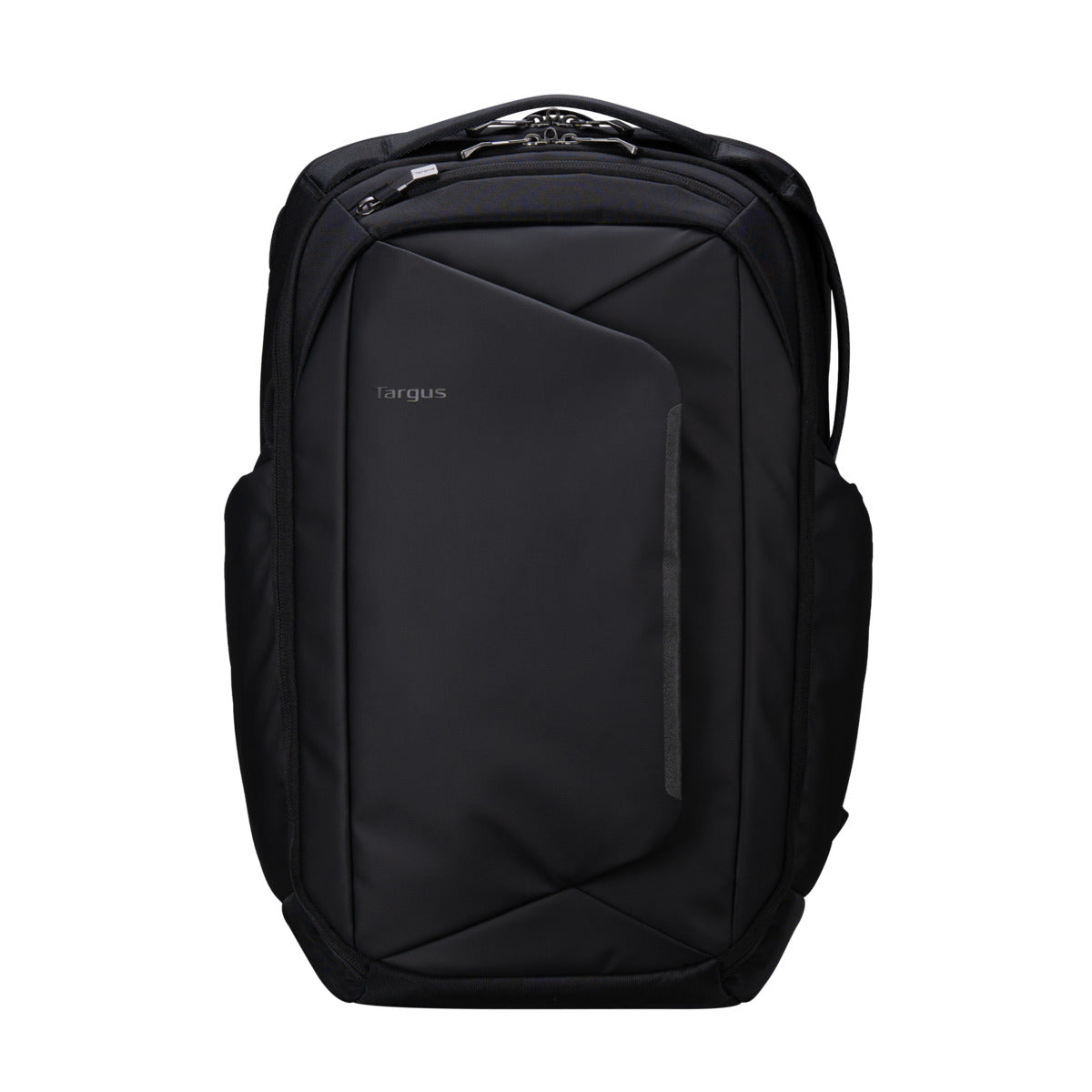
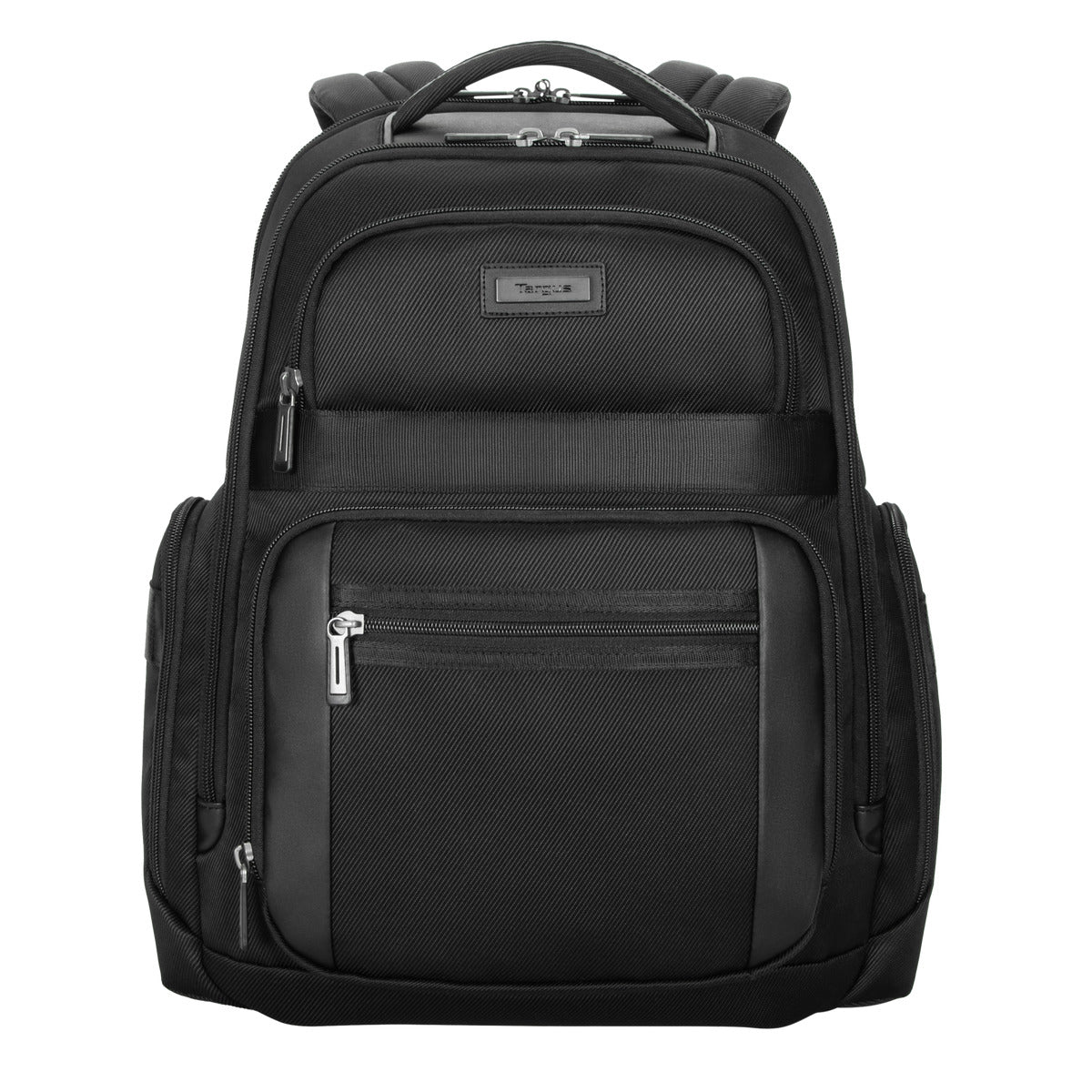
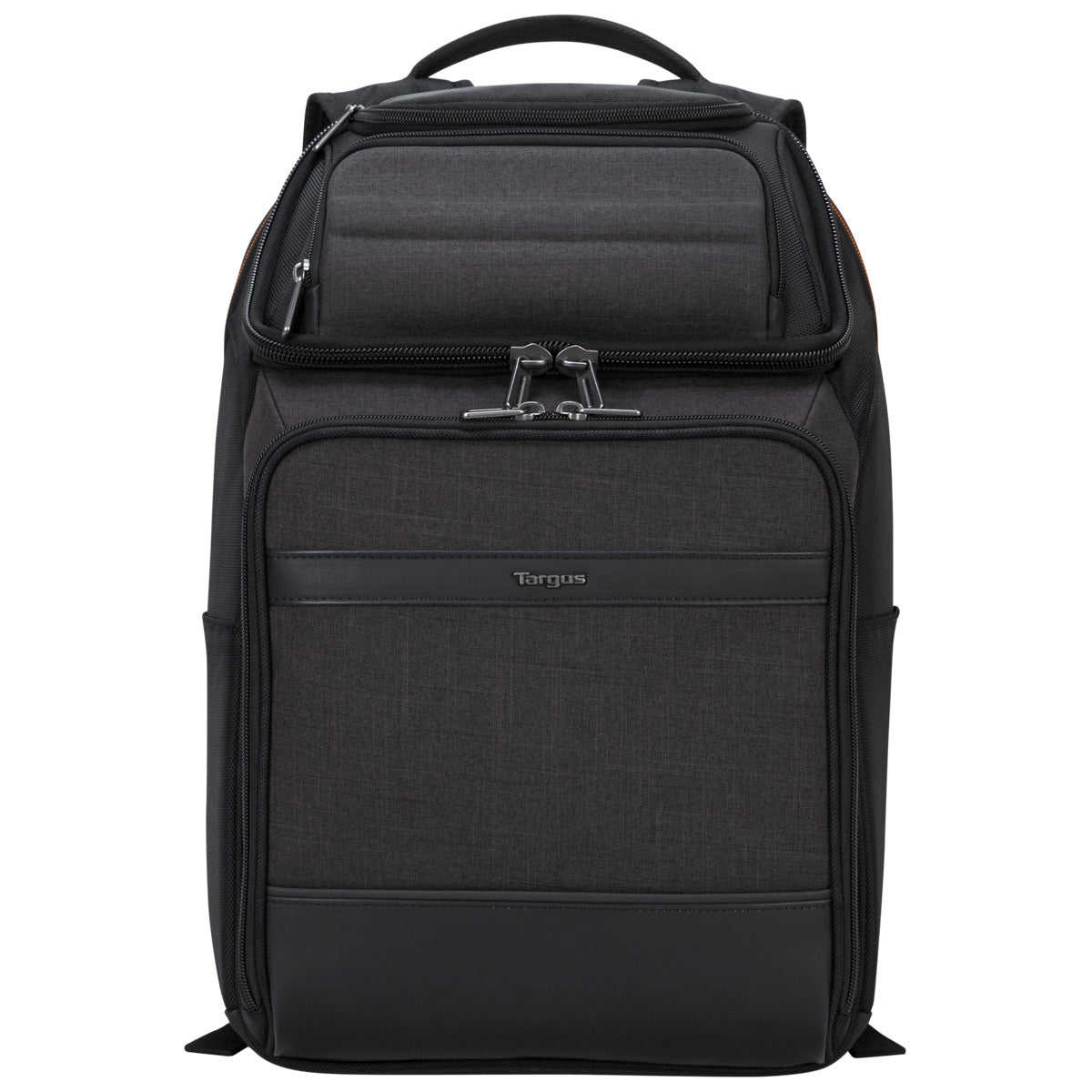
Walk the Targus catalog and you can see the whole map of modern mobile work. There are the bags - backpacks, briefcases, messenger bags, sleeves, and the checkpoint-friendly designs engineered around airport security trays. There are the universal docking stations, the ones that turn a single USB-C cable into a workstation of monitors, keyboards and power. Recent docks support USB4, deliver up to 140W of charging, push 8K or dual-4K video, and move data at 10Gbps - all while claiming to work across Windows, macOS, Chrome OS and beyond.
Then there's the security side, sold under the slightly cinematic name DEFCON: cable locks, privacy screens, and device-security accessories that big organizations deploy in bulk, some managed through a cloud portal for corporate IT. Around all of it sits a long tail of accessories - USB hubs, webcams, cables, wireless presenters, cooling pads, laptop stands, power adapters. Individually, forgettable. Collectively, a business.
The EcoSmart math — recycled bottles per bag
Plastic bottles are shredded into flakes, re-polymerized into chips, spun into yarn, and sewn into fabric. Materials are certified to the Global Recycled Standard.
03 / THE ANGLESustainability written as a spec sheet
Plenty of brands slap a green leaf on a product and call it a day. Targus's EcoSmart line is more interesting because it reads like an engineering claim rather than a mood. A GeoLite backpack is lined with the equivalent of roughly six recycled plastic bottles; its slim brief cousin, about two. Some DEFCON docking stations are built with up to 75% recycled materials. The pitch isn't "feel good" - it's "here is the count, here is the certification, here is the water-resistant shell over the recycled inside."
For a company selling into corporate and government procurement, that specificity matters. Sustainability targets are increasingly line items in enterprise purchasing, and a bag you can quantify is a bag a buyer can defend. It's a quietly clever move: the eco story doubles as a sales tool for the exact customers who buy accessories by the thousand.
04 / THE CUSTOMEREveryone with a laptop, and the people who buy for them
Targus sells in two directions at once. On the consumer side it's the backpack you grab at a big-box store or online marketplace. On the enterprise side it's a vendor in the procurement catalog - the default accessory brand for IT departments outfitting fleets of laptops, and for schools and government offices buying in volume. That dual identity, part B2C and part B2B, is the whole reason the company has lasted through so many shifts in the hardware itself.
Distribution is the moat. Targus reaches more than 100 countries through 24-plus offices and a mix of retail, direct e-commerce and online channels. When you sell products that individually cost less than a nice dinner, getting them onto shelves and into purchasing systems across the world is harder than the products themselves - and it's exactly what a would-be competitor can't replicate overnight.
05 / THE OWNERSWhat B. Riley bought for $250 million
In October 2022, the investment firm B. Riley Financial acquired Targus in a transaction valued at approximately $250 million on an enterprise-value basis - a multiple of roughly 5.2 times trailing adjusted EBITDA. For the twelve months ending that June, Targus had generated around $415 million in revenue. Longtime CEO Mikel Williams stepped off B. Riley's board and stayed on to run Targus as a portfolio company.
What does an investor actually buy in a deal like that? Not hype. Cash flow, a recognizable brand, and that hard-won global distribution. It's the unsexy-moat thesis in action: a company that owns a durable, essential, low-drama market can be worth a quarter of a billion dollars precisely because it isn't chasing the next shiny thing.
06 / THE ROAD SO FARFour decades, one lane
07 / THE TAKEAWAYThe case for boring hardware
There's a lesson founders can quietly steal here. The flashy product - the laptop, the phone, the tablet - is a brutal place to compete. The space right next to it is calmer and, over enough years, remarkably durable. Targus picked the adjacent lane in 1983 and simply refused to leave it. Every new device is a new reason to buy a case, a dock, a lock or a cable, and Targus is there each time.
Where does the model strain? Accessories are low-margin and endlessly cloneable; a wave of low-cost rivals can undercut any single product overnight. The defense isn't a better zipper - it's distribution, enterprise trust, and a brand that buyers reach for without thinking. That's a slower, less glamorous kind of advantage. It's also the kind that lasts 40 years.