The Printer Jammed. So They Ripped Off the Nozzle and Started a Company.
A jammed 3D printer, a $30,000 Kickstarter ask, and $2.3 million later - how three toymakers turned a mistake into the pen that draws in mid-air.
In early 2012, inside a cavernous hackerspace in Somerville, Massachusetts, a small desktop 3D printer did what desktop 3D printers do best: it screwed up a print. A toy leg came out with a gap in it. Two toymakers stood over the machine, annoyed. Then one of them, Peter Dilworth, said the sentence that would rewrite the next decade of their lives - it was too bad you couldn't just pull the nozzle off the printer and fill the gap in by hand.
His partner, Maxwell Bogue, paused on that. Why couldn't you? Within days the two had a "quick and dirty" prototype of a handheld device that squeezed out heated plastic which cooled, almost instantly, into a solid line - a pen that drew not on paper but into the air. They checked to make sure nobody had built one before. Nobody had. That accidental workaround, born from a machine's mistake, became the 3Doodler, and it turned their scrappy toy-invention shop, WobbleWorks, into the company that created an entirely new product category.
01What WobbleWorks actually makes
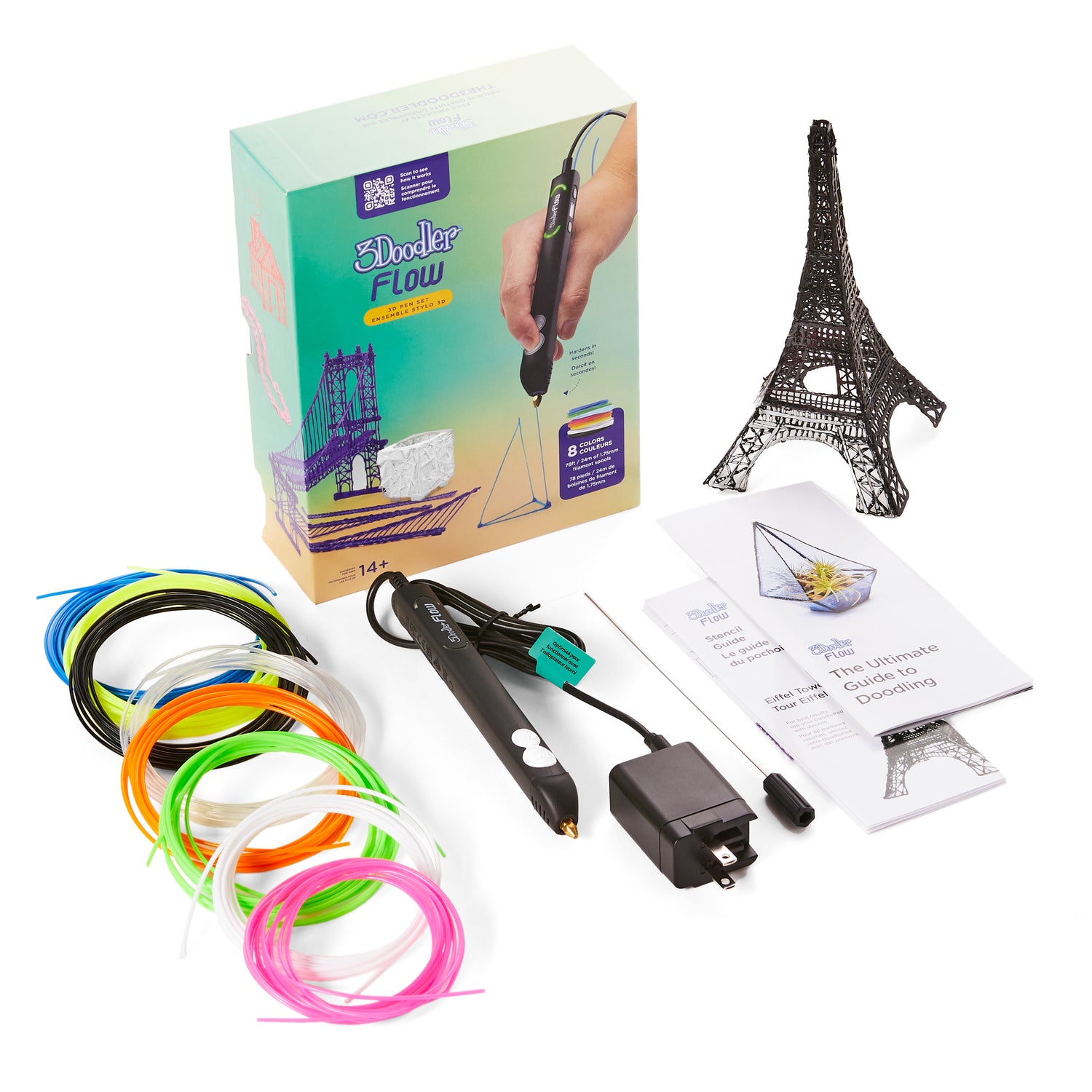
Strip away the origin story and WobbleWorks, Inc. is a consumer-hardware company with one very legible product: a 3D printing pen. You load a strand of plastic filament in one end, a heating element melts it, and you draw. Move across a flat surface and you get shapes you can peel off and assemble. Lift the pen off the page and you draw freestanding structures - lattices, letters, a plastic Eiffel Tower - straight into three dimensions. No print bed, no software, no slicing, no waiting hours for a job to finish.
That simplicity is the whole thesis. In 2013, when consumer 3D printing was the loud, expensive, hyped future, WobbleWorks shipped something you could understand in one sentence and use in one minute. It held like a fat marker and cost a fraction of a printer.
Hey, it's too bad you can't just take the nozzle off the printer and use it to fill in the missing gap.The offhand remark that became the 3Doodler
02The Kickstarter that broke its own goal
On February 19, 2013, WobbleWorks LLC put the 3Doodler on Kickstarter and asked for $30,000. It cleared the goal in hours. It passed $1 million in two days. By the time the campaign closed on March 25, it had raised more than $2.3 million from over 26,000 backers - roughly 6,700% of what it asked for. Two years later, a second campaign for the redesigned 3Doodler 2.0 pulled in another $1.5 million.
The useful way to read those numbers is not "lucky windfall." It is validated demand with a receipt. Before manufacturing a single retail unit, the founders had proof that tens of thousands of strangers wanted to draw in plastic. Crowdfunding here worked as market research that also happened to pre-fund the tooling.
03Who's actually holding the pen
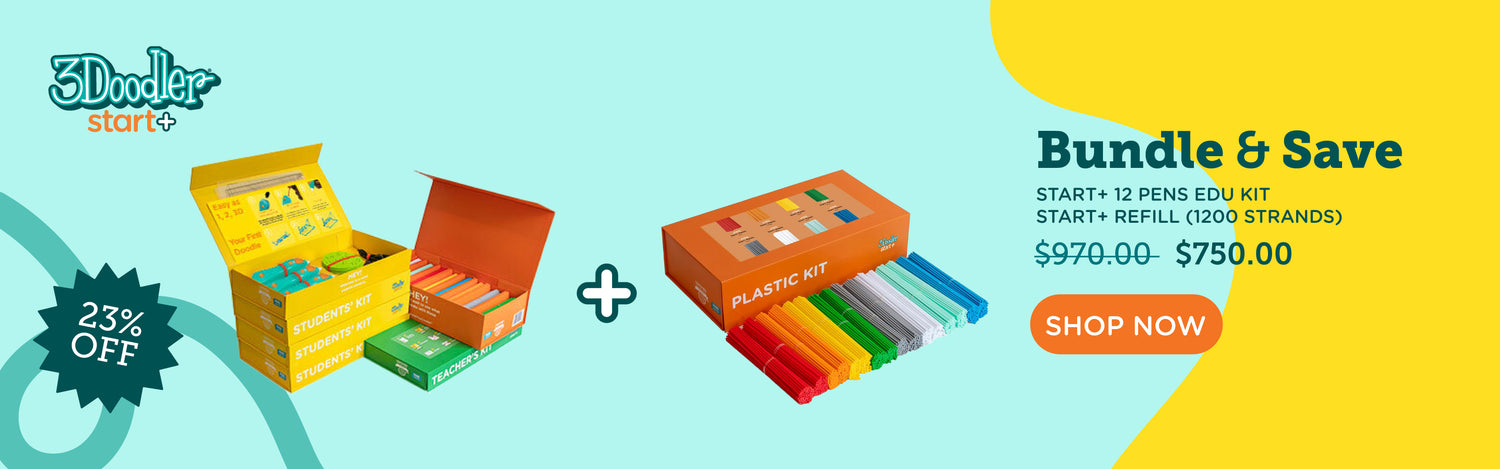
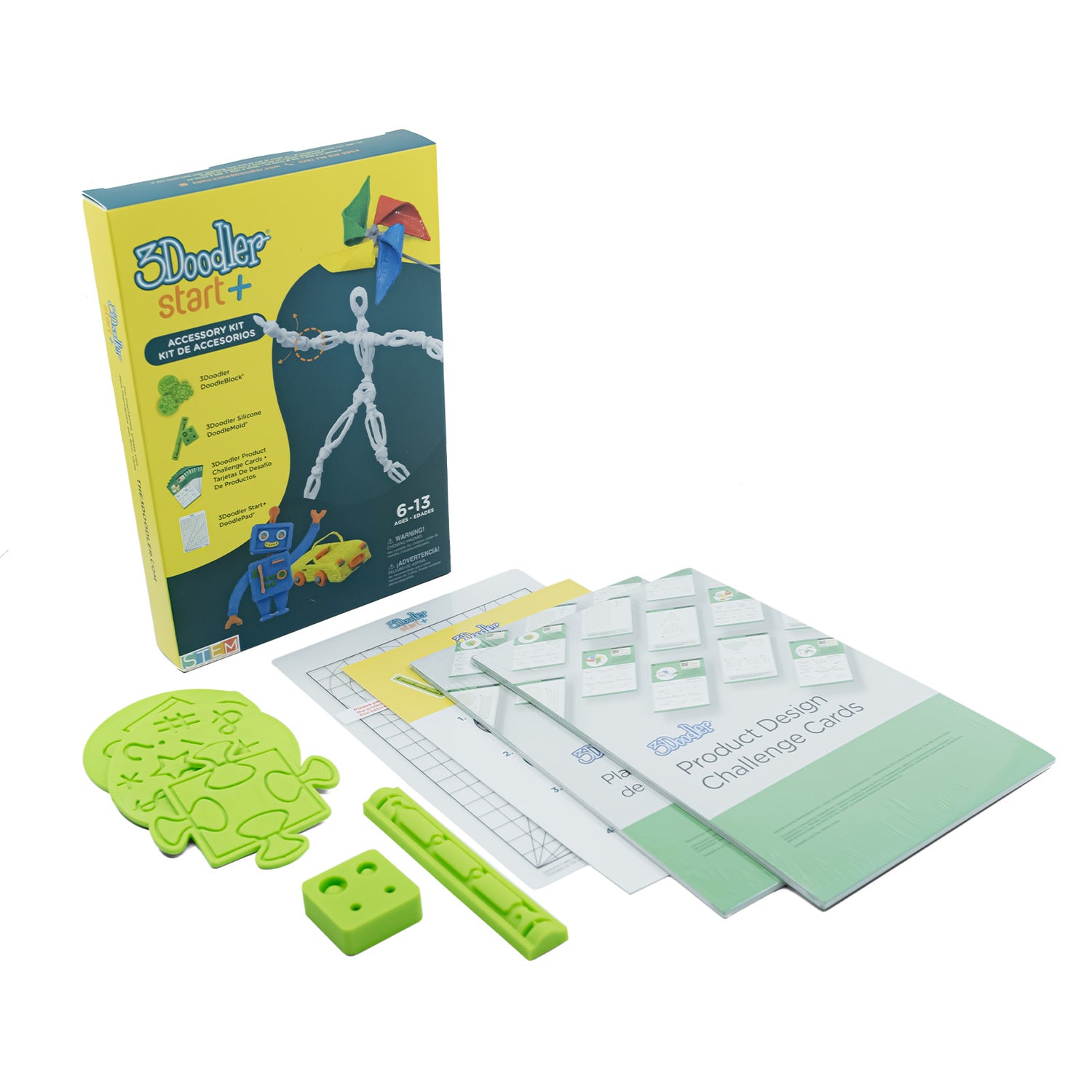
The clever part of WobbleWorks' business is that it took one core technology - a handheld extruder - and split it by audience and by safety. The same basic idea ships as a kid's toy and as a professional design tool, at different temperatures, price points, and materials. A parent buying for a six-year-old and an architect sketching a physical model are, technically, buying cousins of the same device.
04The problem it quietly solves
A 3D printer answers the question "how do I manufacture a designed object?" The 3Doodler answers a different one: "how do I make a physical thing right now, with my hands, without learning CAD?" For a kid, that is play and fine-motor practice. For a teacher, it is a way to make geometry and engineering tangible - which is why the EDU line, certified for pedagogical quality by Education Alliance Finland, found a home in classrooms. For a professional, it is a repair-and-sketch tool: patch a prototype, weld two printed parts, rough out a form in space before committing it to a machine.
It also solves a subtler business problem for the company itself. Because the pens run on proprietary plastic, every pen sold seeds a stream of filament refills. The razor sells the blades.
They confirmed they were the first to have the idea - then, in a few days, built a rough prototype of what became the world's first 3D printing pen.On the birth of the 3Doodler
05How it's different from the copycats
Inventing a category is an invitation for imitators, and they came - MYNT3D, Polaroid-branded pens, CreoPop, Scribbler, AIO Robotics, and a long tail of cheap look-alikes. WobbleWorks' defense was not to win a spec war. It was to hold the ground it created: the "first and best" brand story, a genuine product ladder across audiences, real safety engineering on the kids' line, and distribution into serious retail - Michaels, Blick, Kohl's - rather than only marketplaces. The broader competitor is philosophical: desktop 3D printers, which promise precision the pen can't, but demand patience, software and money the pen doesn't.
06The founders' unlikely resume
The reason this team could turn a printer glitch into a shippable product in days is buried in their backgrounds. Peter Dilworth spent years in robotics and engineering, including work on walking dinosaur robots and a powered prosthetic ankle at MIT. Maxwell Bogue had been a project manager in R&D at toymaker WowWee, living in Hong Kong and dealing directly with the factories that actually make things. The third founder and CEO, Daniel Cowen, was a lawyer Bogue had met in Hong Kong who - as the story goes - was crashing on Bogue's air mattress when the product launched, and stayed to help build the company.
Engineer, factory operator, dealmaker. It is close to the minimum viable team for taking a weird idea from a hackerspace bench to a shelf at a national retailer, and it shows in how fast they moved.
07Where it sits in the market
WobbleWorks is not a giant. It's a lean operation of roughly 29 people, headquartered in New York, that reached an estimated $20 million in revenue by 2017 largely without venture capital, funded instead by crowdfunding and its own sales. Its position is specific and defensible: the company that created the consumer 3D-pen category and still leads it, extending from a $2 kids' toy up to professional and edible variants. In a decade where a lot of 3D-printing companies chased the expensive, complicated dream and stalled, WobbleWorks sold the cheap, simple, obvious thing - and it's still selling it.
The lesson is portable, if you want to steal it: verify the empty space before you build, use pre-orders as proof instead of a press release, and take one piece of technology as far across audiences as safety and price will let you. It started, of all places, with a machine that made a mistake and two people who refused to throw the result away.