The useful company stories usually begin with a small humiliation. Panther Vision’s begins on a sailboat at night, in a sudden storm, with founder Mike Waters’ hands busy at the rigging and wheel. The only available flashlight ended up between his teeth. It worked, in the narrow sense that there was light. It failed in every other sense: awkward, distracting and poorly aimed. Waters’ question was not how to build a brighter flashlight. It was why the light had to occupy a hand at all.
His answer became POWERCAP, a baseball cap with LEDs integrated into the brim. Waters launched the Illinois company from a garage that doubled as a laboratory, and Panther Vision dates its founding to 2005. The early product looked almost comically simple. That is its charm. People already wore caps; people already carried lights. Put the two together and the wearer could tie fishing line, peer into an engine bay, set up a tent or walk a dog without clenching a torch or strapping a plastic pod across the forehead.
01 / The objectThe hat is ordinary. The beam is not.
A 2010 POWERCAP version used concealed-under-brim lighting: two LEDs aimed down for close work and a central LED pushed forward for distance. The company said the beam reached roughly 30 feet, and offered the cap at a suggested $19.99 to $24.99 through outdoors retailers including Cabela’s, Bass Pro Shops, Dick’s Sporting Goods, Academy and Gander Mountain. Current rechargeable POWERCAP 2.5 caps start at $22.99 on the company store and offer four brightness settings, topping out at 150 lumens. On low, Panther Vision lists up to 10.5 hours of run time; at maximum, 50 minutes. That tradeoff is physics, not fine print.
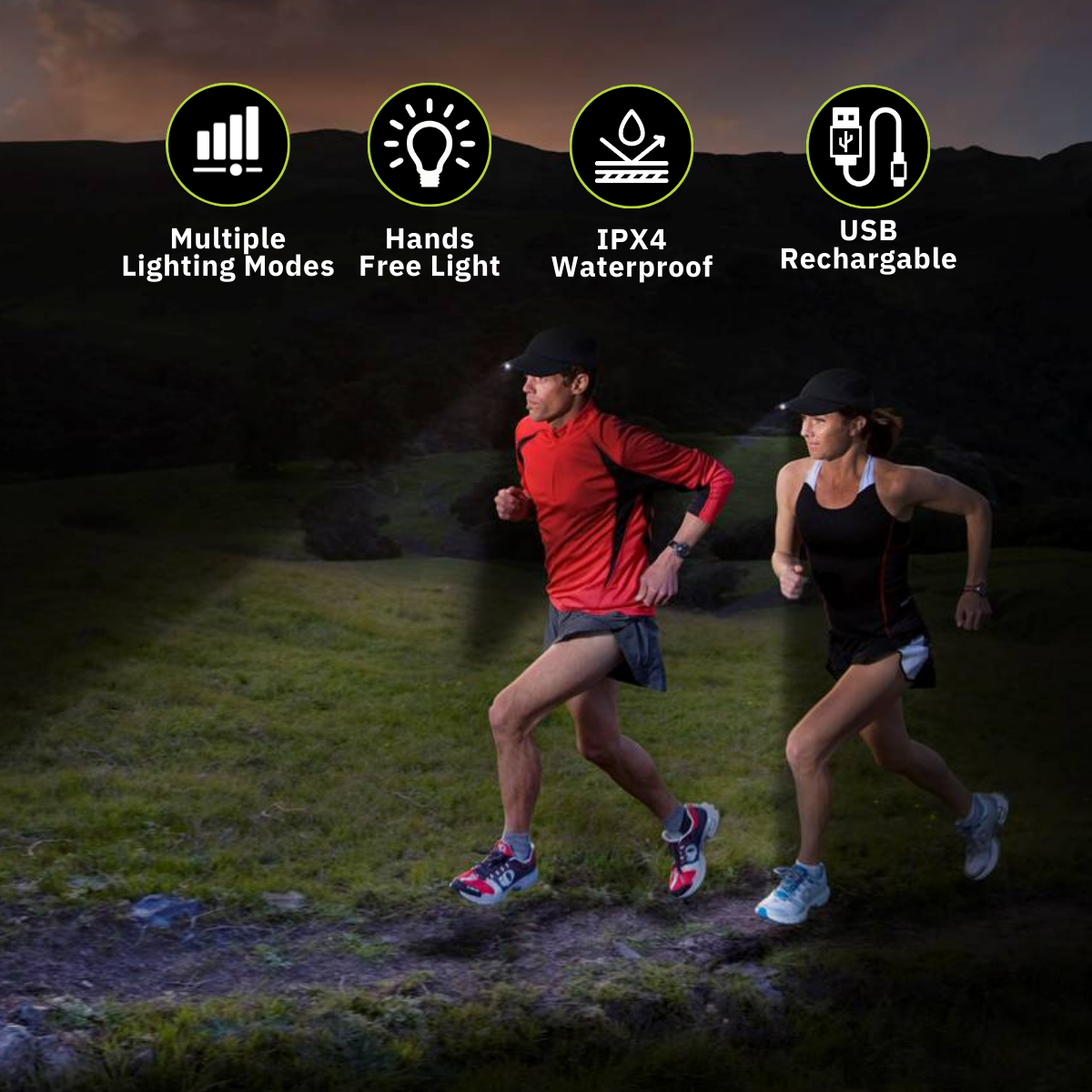
Panther Vision’s customers are a coalition of people temporarily inconvenienced by darkness: hunters before dawn, anglers working a knot, mechanics under a hood, utility crews in low light, runners on an unlit shoulder, homeowners at the breaker box and parents negotiating a campsite after sunset. That makes the product simultaneously work gear, outdoor equipment, an emergency item and a Father’s Day gift. A limited lifetime guarantee reduces the novelty-gadget whiff. IPX4 splash resistance and a removable light module make the rechargeable cap practical in rain and washable once the electronics come out.
“Put light where you look” is both the product brief and the entire distribution pitch.Panther Vision’s design logic, condensed
02 / The catalogOne idea, many hiding places
The company’s real expertise is not making LEDs. It is choosing where to put them. LIGHTSPECS puts lamps in the temples of reading and safety glasses. BUTTON LAMP is a quarter-sized adhesive light that can stick to a wall, fixture or other smooth surface. FLATEYE changes the flashlight’s silhouette: an “unround” body sits flatter in a pocket and stays put on a sloped workbench. GUMBI shrinks a rechargeable headlamp into an anti-slip silicone band. These products share a modest ambition - stop the tool from rolling, dangling, occupying a hand or pointing somewhere unhelpful.
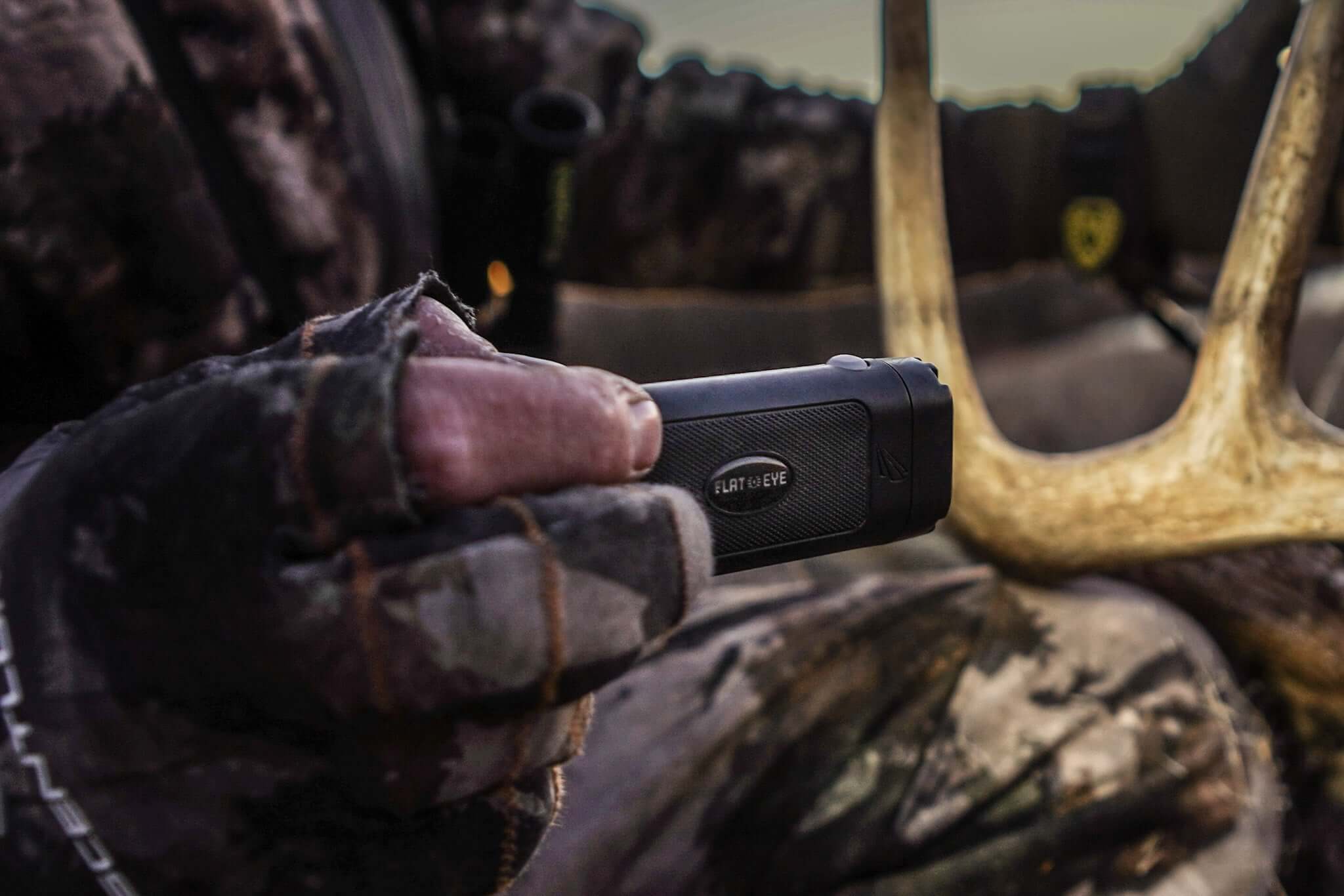
Prices reveal a broad consumer model. The store’s rechargeable POWERCAP and compact FLATEYE lights live around the low-$20s. An ADAPTEV headlamp lists near $52. Specialized high-output FLATEYE models climb into the hundreds. Panther Vision sells direct through Shopify, through retail and specialist dealers, and through a promotional-products arm that can put corporate logos on lighted caps. Its creator program offers 15 percent commission and advertises a roughly $65 average order value. In other words: part useful gadget, part gift, part branded merchandise, part job-site tool.
The portfolio has also wandered beyond illumination, though not entirely beyond the outdoors. POWERPAW is a family of rechargeable waterproof hand warmers. POWERCAP ICE uses reusable cooling packs under sun-protective headwear. POWERCAP HEAT combines four heating levels with four lighting modes and up to 300 lumens in a beanie. Sting Stick applies localized heat to insect bites. The adjacency is clearer in a tackle box than in a spreadsheet: light, warmth, cooling and itch relief are small comforts people want when the weather, hour or mosquitoes become annoying.
03 / The proofA headlamp that reads the room
ADAPTEV is where Panther Vision’s old thesis acquired a sensor. The rechargeable headlamp contains an inertial measurement unit and several directional groups of LEDs. Turn left and light joins the left side; tilt up or down and the corresponding beams respond, while a central beam remains available. Users can also choose all-on or center-only modes, three brightness levels and sensitivity settings. At full output, the company specifies 860 lumens; run time ranges from about 45 minutes at the most demanding setting to 14 hours in a low center-only mode. Its IP67 rating is considerably tougher than the cap’s splash resistance.
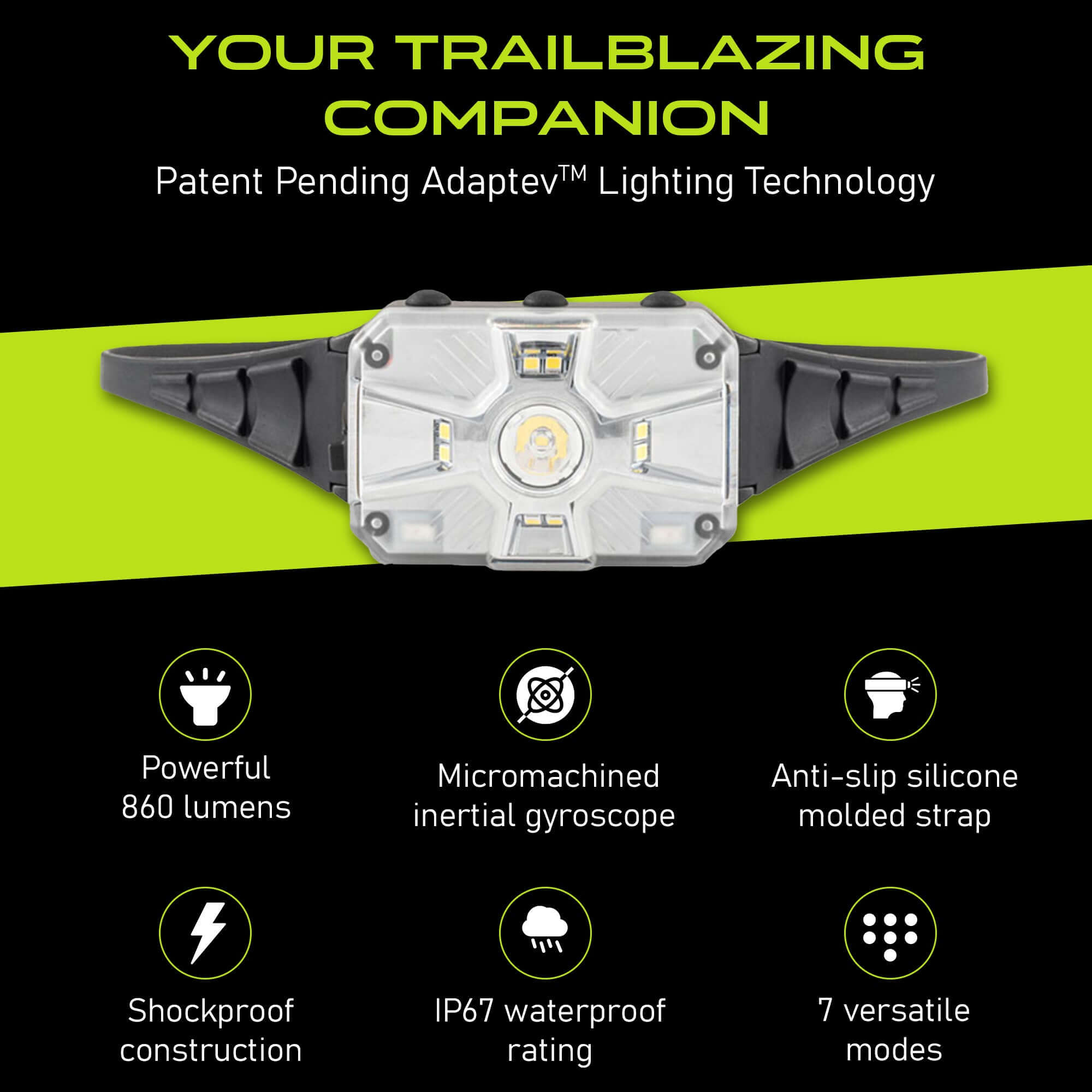
Crowdfunding turned that trick into unusually legible market proof. In September 2023 Panther Vision asked Kickstarter backers for $5,000. It reached the goal in just over two hours and finished 30 days later at $116,475 from 1,729 backers - 2,329 percent funded. The average pledge was about $67. It was a good campaign object because the benefit could be shown in seconds: a head turns, a side beam appears. No white paper required.
$116,475Goal
$5,000
It also showed what changed as the company matured. Early POWERCAP removed a hand from the lighting equation. ADAPTEV removes manual beam adjustment as well. The leap is not from “dumb” to “smart” for its own sake. It is from one layer of friction to the next: first hold nothing, then fiddle with nothing. That is the version worth copying.
04 / The moatPatents help. Specificity helps more.
Panther Vision says Waters’ work has produced more than 25 patents. Its public patent-marking page stretches across generations of POWERCAP headwear, LIGHTSPECS eyewear, BUTTON LAMP, rechargeable FLATEYE bodies and licensed products. Outdoor Cap and Foster Grant appear among licensees. Patents matter in a category where a visible idea can be copied quickly; a 2024 federal complaint involving lighted hats underscores how real that tension can become. Still, legal protection is not the whole difference. Conventional headlamps from Petzl or Black Diamond may deliver better specialized fit, optics or trail credibility. Major flashlight brands have scale. Cheap LED beanies are abundant.
Panther Vision’s sharper advantage is product specificity plus channel range. It can explain a separate close-task beam to an electrician, camouflage fabric to a hunter, a flat body to a mechanic and an embroidered cap to a corporate buyer. In 2018 it also gave the BUTTON LAMP a public-service use, donating more than $17,000 in products to disaster-response nonprofit Team Rubicon and pledging a dollar from qualifying purchases toward a further campaign. A tiny adhesive light sounds less frivolous after the power goes out.
05 / The stealCopy the question, not the cap
The transferable Panther Vision playbook has five moves. Watch for an improvised workaround in a repeated task. Combine two familiar objects instead of demanding a new habit. Design around adjacent moments - close work and distance, not a single generic beam. Make the benefit demonstrable in one glance. Then stretch the thesis carefully across formats before jumping categories. A founder could apply that sequence to kitchen tools, accessibility products, workshop gear or travel accessories without touching an LED.
The company also demonstrates a useful pricing architecture: accessible entry products, bundles that raise basket size, premium technical variants, wholesale decoration and licensing. Crowdfunding gave the riskier sensor-driven product a demand test before relying on ordinary retail. Retail reviews provide another loop. A lighted hat may seem silly in a pitch deck; it feels sensible in a crawlspace.
When the idea stops working
- A built-in cap light is the wrong answer when certified protective headgear must take priority.
- IPX4 handles splashes, not immersion; wet environments call for an IP67 product such as ADAPTEV or another rated tool.
- Maximum brightness shortens run time sharply, so an all-night high-output job needs spare power or a different light.
- Integrated headwear loses its advantage when users dislike the fit, already own a comfortable headlamp or need to aim light independently of their gaze.
Panther Vision occupies a funny, durable patch of the hardware market: too practical to be a toy, too inexpensive to be industrial capital equipment, too patented to be merely a novelty. Its products earn their place when darkness collides with a task. The company’s best trick is to notice what the user’s hands are doing at that exact moment - and politely get out of their way.